

Plumbing web design that make the phone ring.
Plumbing web design is the craft of building websites that book plumbing jobs. Homeowners with water on the floor skip long company stories. They check 3 quick facts in 5 seconds. Visitors want to know your services, your coverage area, and your phone number.
Our plumbing SEO services begin with a new website and 100 pages on Google in your first month, then keep your Google Business Profile and reviews in shape all year.
See your new homepage free before you pay. Cancel anytime.
For plumbing businesses
organic traffic growth over 14 months
growth on a second SEO campaign
job success score across Upwork projects
Trusted by local service businesses across the country and by brands like

What you get
Four things. One phone that rings.
Everything a plumbing business needs to show up on Google and turn searches into booked jobs.
A new website, built for you
Fast on a phone, tap-to-call at the top, and a booking form people see right away.
100 pages in your first month
Service pages and town pages, each written around what homeowners there type into Google.
Climb the map
Your Google Maps position checked across your whole service area, not just from your address, so the work goes where you are losing calls.
See what it brings in
Calls, bookings and form fills, each matched to the search that sent them, so you know what it earns.
Free checklist
The plumber's Google checklist
Section by section, what Google and homeowners check before anyone calls a plumber, and what to fix first.
- Your Google Business Profile verified, owned by you, with "Plumber" as the primary category
- The same name, address and phone on your website, Google and every listing
- A page for every service you offer and every town you serve
- A review request after every finished job, sent as a one-tap link

Send me the full checklist
On its way. You can also open it now.
We will email you the checklist and the occasional tip. Unsubscribe anytime. PDF
Your site must ring the office phone rather than sit online collecting dust. A focused page turns urgent leaks and planned upgrades into steady dispatch work.
What Is Plumbing Web Design?
Plumbing web design is a system for turning local searchers into booked dispatch calls. A strong plumber site acts as a working sales tool rather than a static brochure.
Every key element points visitors toward one clear action:
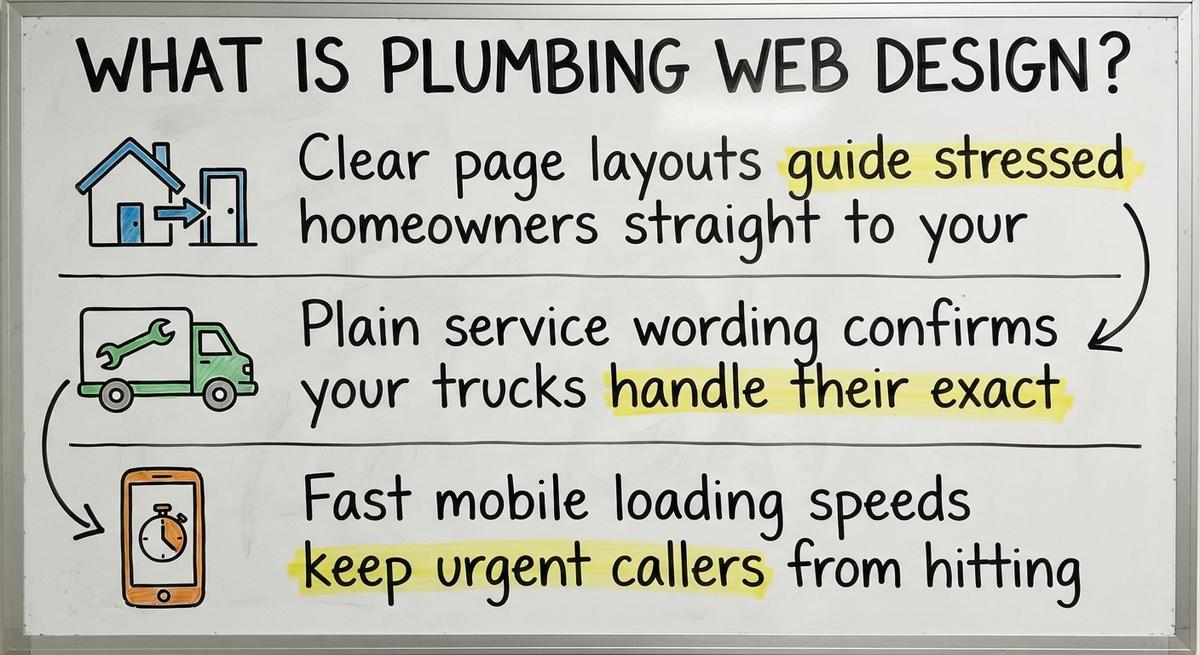
- Clear page layouts guide stressed homeowners straight to your office contact details.
- Plain service wording confirms your trucks handle their exact repair needs.
- Fast mobile loading speeds keep urgent callers from hitting the back button.
When every button drives action, your site stops leaking ready customers.
See your new homepage before you pay anything
Your plumbing homepage, rebuilt free. You see it before you pay anything.
Past SEO campaigns grew organic traffic 26x in 14 months.

Why a Plumbing Website Is Not Like Other Websites
Trade websites are emergency tools for homeowners facing sudden leaks or backups. People with a burst pipe or clogged main line call fast rather than reading long paragraphs.
Trust carries extra weight here. A technician walks right inside a stranger's home. Google Business Profile Help states that "Local results are mainly based on relevance, distance, and popularity." Your pages must support that local presence while showing the next step fast.
Designing for speed and immediate trust separates a working trade site from a generic business page.
How Do People Find a Plumber Online?
Three main channels are how homeowners find a local plumber online today. Searchers use Google search, the Google Map Pack, and AI tools like ChatGPT, Gemini, and Perplexity.
Most buyers open 2 or 3 listings and scan each page for 10 seconds:
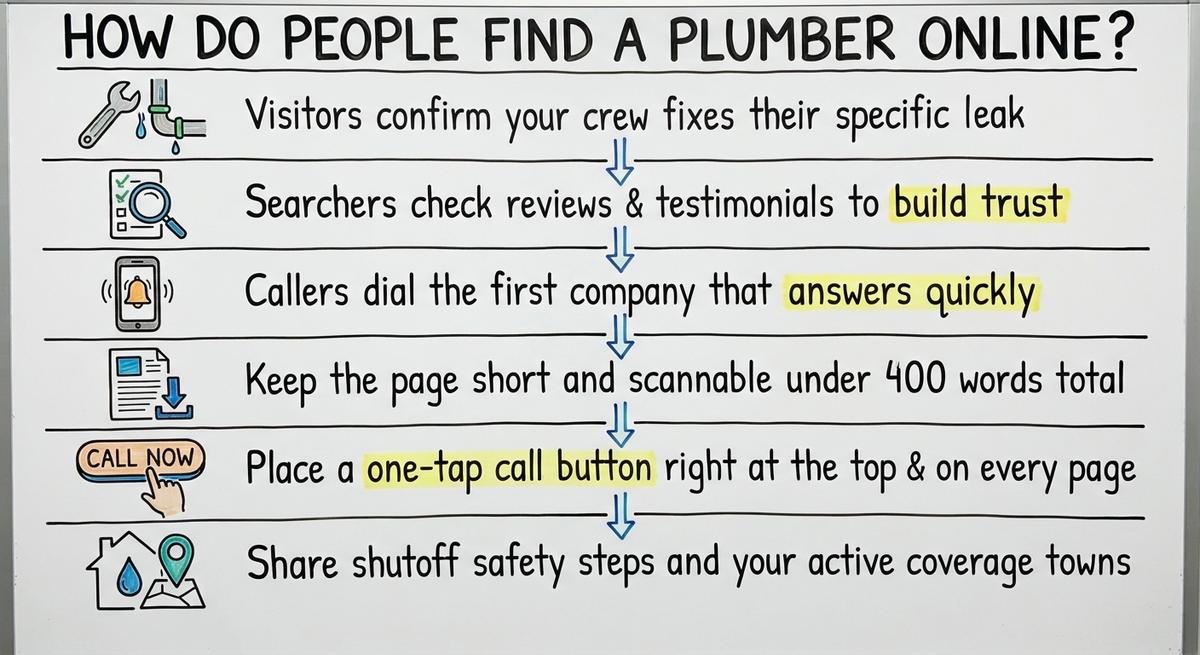
- Visitors confirm your crew fixes their specific leak, clog, or broken fixture.
- Searchers check that your service vans actually drive to their neighborhood.
- Callers dial the first company that looks reliable and easy to reach.
Even a top map spot loses callers if your landing page feels slow. A clear website protects the calls your rankings earn.
Emergency Jobs vs. Planned Jobs on a Plumber Website
Two distinct buyer types are visiting your site every single day. Never force urgent repairs and planned upgrades onto one crowded page.
Emergency plumbing pages serve panicked callers:
- Keep the page short and scannable under 400 words total.
- Place a one-tap call button right at the top.
- Share shutoff safety steps and your active coverage towns.
Planned job pages serve remodel and replacement shoppers:
- Write 600 to 1,000 words covering equipment brands, steps, and FAQs.
- Pair a short quote form with your main office number.
Never claim 24/7 hours unless your crew truly answers overnight. Separating urgent repairs from planned upgrades removes friction for every visitor.
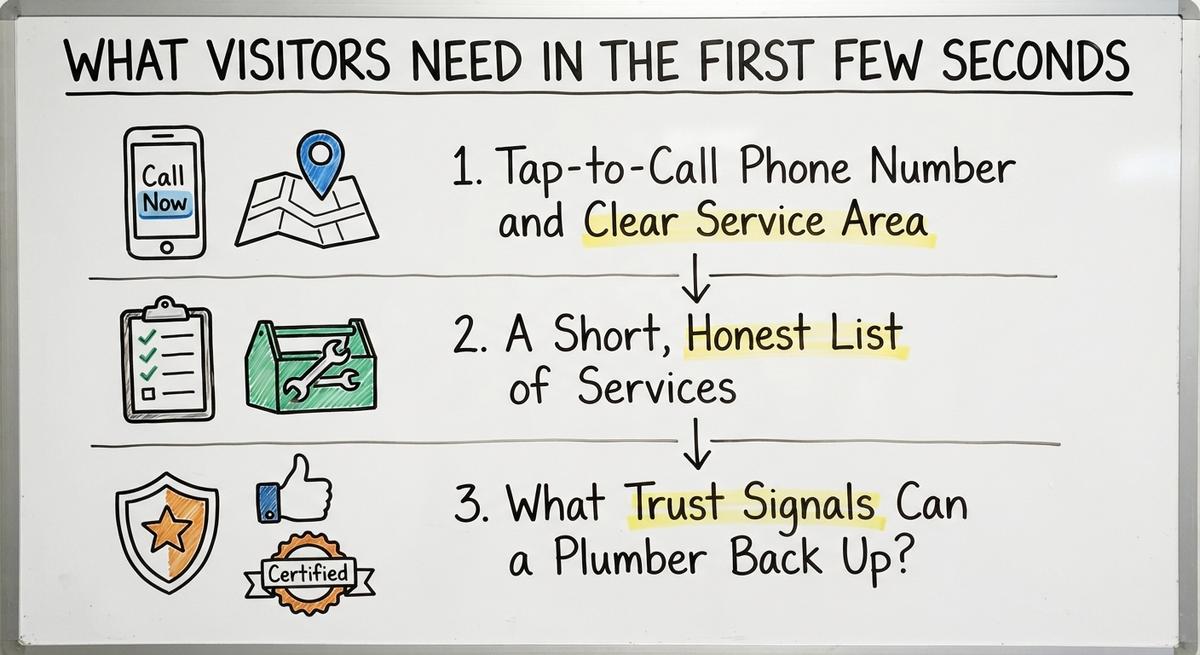
What Visitors Need in the First Few Seconds
Five seconds is all the time a homeowner spends sizing up your site. Every visitor asks 3 silent questions right after opening your page:
- Do your technicians handle the exact repair or installation I need today?
- Do your service trucks cover my town or neighborhood?
- How do I reach your office right now without hunting?
Photos, reviews, and extra text lower down simply back up those 3 answers. If a visitor hunts for basic facts on the opening view, you lose the job.
Tap-to-Call Phone Number and Clear Service Area
A tap to call link is a mobile button that dials your office in one press. Place your phone number in large type at the top of every page.
Keep your contact details easy to spot and read:
- Leave your phone number outside drop-down menus so mobile callers see it at once.
- List your target towns in plain text right beside or below that number.
- Link each city name to its own page so search engines confirm coverage.
Flat map images hide town names from search tools. Visible numbers and plain-text town links turn confused browsers into confident callers.
A Short, Honest List of Services
A focused service list is a menu showing exactly what work your trucks want. Display your core jobs near the header and link each item to its own page:
- Drain Cleaning: Clearing kitchen sinks, tub backups, and sewer clogs keeps urgent residential calls flowing.
- Water Heaters: Repairing or replacing tank and tankless units brings high-value jobs from cold-shower homes.
- Repipes: Replacing aging galvanized or leaking copper lines captures major whole-home plumbing projects.
- Sewer Lines: Inspecting and repairing underground main lines wins complex jobs handymen cannot handle.
- Fixtures: Installing faucets, toilets, and disposals fills daily schedule gaps with steady work.
Skip unwanted services so callers never waste your staff's time.
What Trust Signals Can a Plumber Back Up?
Real proof is far stronger than flashy graphics on a local trade site. Homeowners look for signs that a real local crew will show up at their door.
Pair real photos with verified reviews and honest credentials:
- Post genuine pictures of your own trucks, uniformed techs, and completed pipe work.
- Show verified reviews like Highland Plumbing stating: "With hundreds of 5-star reviews, our clients appreciate our professionalism, pricing, and responsiveness."
- Display only licenses, insurance details, and awards you can prove on paper.
Never copy badges from another firm. Honest photos and real reviews build the confidence homeowners need before inviting crews inside.
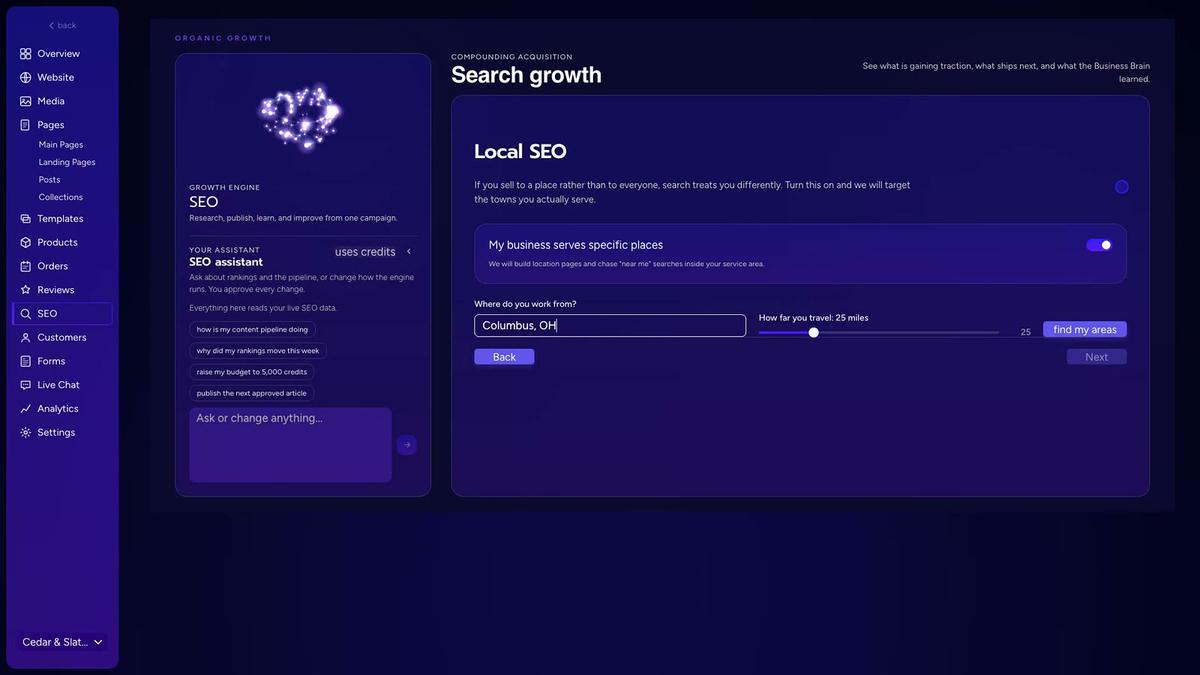
Find out where you show up on the map
A free map check for your plumbing company. See which towns find you and which call a competitor.
Plumbing Web Design for a Plumber Homepage
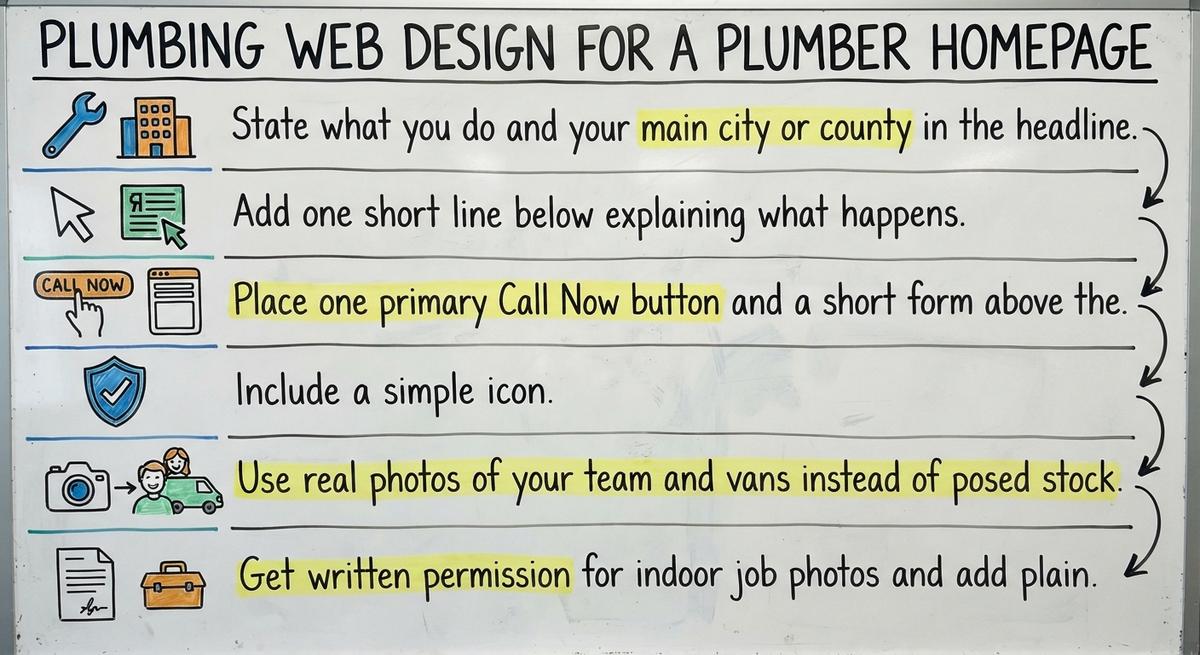
Your plumber homepage is both your front door and a traffic hub. Logical top-to-bottom order guides visitors straight to the right repair or city page.
Effective web design for plumbing skips clever slogans and opens plainly:
- State what you do and your main city or county in the headline.
- Add one short line below explaining what happens when a homeowner calls.
- Place one primary Call Now button and a short form above the fold.
Avoid offering 5 confusing button choices at page start. A clean homepage guides visitors straight to a call without making them guess.
Service Blocks and Real Photos on the Homepage
Service blocks are tidy visual cards arranged right below your main homepage banner. Order them with your most profitable jobs first so visitors scan fast.
Build each block and photo with speed and honesty in mind:
- Include a simple icon, short title, one-line summary, and full page link.
- Use real photos of your team and vans instead of posed stock models.
- Get written permission for indoor job photos and add plain descriptive alt text.
Compress every image file so mobile pages stay snappy. Real visuals in clear blocks help visitors pick their service in seconds.
Should Plumbing Web Design Start on Mobile?
Mobile-first layout is the standard for modern plumber web design. Most homeowners search for a plumber on a smartphone during a leak or backup.
Building the phone view first keeps text readable and buttons thumb-friendly. Nothing gets cut off on small screens before you expand layouts for desktop monitors. Always test finished pages on an actual cell phone over cellular data. Shrinking a desktop browser window in your office misses real mobile speed issues.
When a site feels effortless on a small screen, mobile callers book with you instead of hitting back.
Sticky Call Bar and Page Speed on Mobile
A sticky call bar is a slim banner pinned to the bottom of a phone screen. It keeps your phone button visible at every scroll depth.
Speed and clean layout work together when water drips through a ceiling:
- Keep the bottom call bar slim so it never hides text or submit buttons.
- Remove heavy page builders and bloated plugins that slow down mobile loading.
- Shrink oversized photo files so pages snap open fast over cellular data.
Fast mobile pages paired with an unobtrusive bottom bar capture impatient callers before they leave.
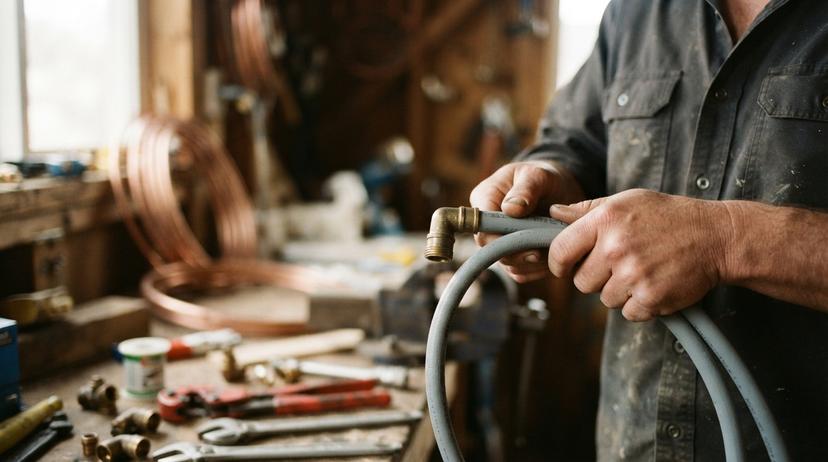
Plumbing Service Pages That Earn Calls
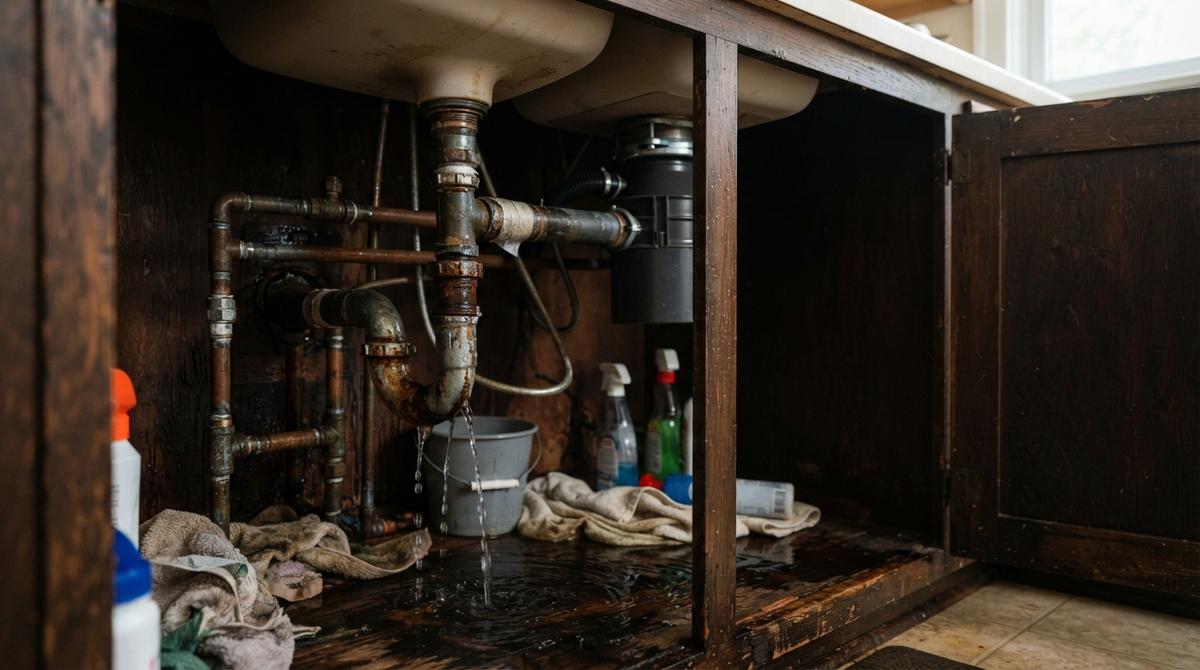
A plumbing service page is a dedicated page focused on one core repair. One page covering every repair makes ranking for specific plumbing searches nearly impossible.
Separate service pages give each major job its own home online. Someone searching for sewer repair lands on a page written entirely about sewer lines. Avoid thin, copied pages that repeat identical paragraphs with only the service name swapped.
Include specific repair facts, real job photos, and common customer questions on each page. Giving every core service its own detailed page helps Google match your site to high-intent searches.
Drain Cleaning and Water Heater Service Pages
Detailed service pages are your best tool for pre-qualifying buyers before they call. Walk homeowners through warning signs like slow tubs, gurgling toilets, and bad smells.
Include practical, honest details on your top repair pages:
- Explain the exact steps your crew takes during a drain cleaning visit.
- List every type of drain you clear alongside a call button and form.
- Compare water heater repair versus replacement for both tank and tankless setups.
- Name only equipment brands your trucks actually stock and install on jobs.
Mention failing heater signs like rusty water or popping noises. Honest details turn uncertain visitors into ready callers.
Fixture and Sewer Line Service Pages
Sewer and fixture pages are key drivers for steady daily schedules and high-ticket work. Homeowners replace toilets, faucets, and disposals every week, and underground main lines fail without warning.
Give these 2 core services their own focused pages:
- Detail camera inspections, root clearing, and trench or trenchless sewer repairs clearly.
- List standard fixture upgrades with transparent steps from removal to cleanup.
- Show real local photos of completed line replacements and clean fixture installs.
Dedicated pages capture both quick daily jobs and major underground repairs. Clear explanations help homeowners book estimates with confidence.
How Should a Plumber Handle Emergency Plumbing Pages?
An emergency plumbing page is a fast-loading guide built for active home leaks. Give immediate safety steps first, followed right away by a prominent phone button.
Help panicked homeowners stop damage before asking for their business:
- Show how to shut off a main water valve in plain, simple steps.
- Explain how to cut power to a leaking water heater right away.
- Keep the page brief so callers read the tip and tap to dial.
Never promise 30-minute arrivals or overnight dispatch unless your team truly staffs those shifts. Putting safety first protects both the homeowner and your reputation.
Results you can check
Past SEO campaigns grew organic traffic 26x in 14 months, and 15x on another. Top Rated Plus on Upwork with 99% job success.
Work for hundreds of small businesses and large clients like New Balance and Planned Parenthood.
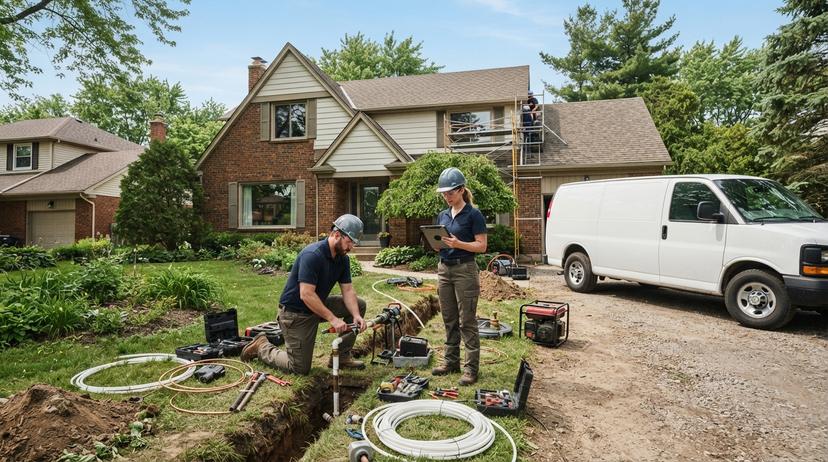
Plumbing Town Pages for Every Area You Serve
A plumbing town page is a local landing page built for one target city. Homeowners often type a town name alongside their plumbing problem when searching online.
Dedicated city pages tell Google and local residents that your trucks work nearby. Only build pages for towns you genuinely serve and want to drive to. Never copy and paste one page 20 times with only the city name swapped. Near-duplicate pages add little value for searchers or map rankings.
Fewer well-written pages packed with true local details always outperform dozens of weak, repetitive pages.
What Makes a Good Town Page and a 17-Town Example
True local details are what separate a strong town page from generic filler. Include neighborhood names, common home ages, and known pipe or water hardness issues. Link to services offered there and share approved job examples.
Long-standing local proof builds trust, just as Bumble Bee Home Services states: "Since 2011, Bumble Bee Home Services has proudly served our community in Glendale, AZ, the Greater Phoenix Area, and nearby communities."
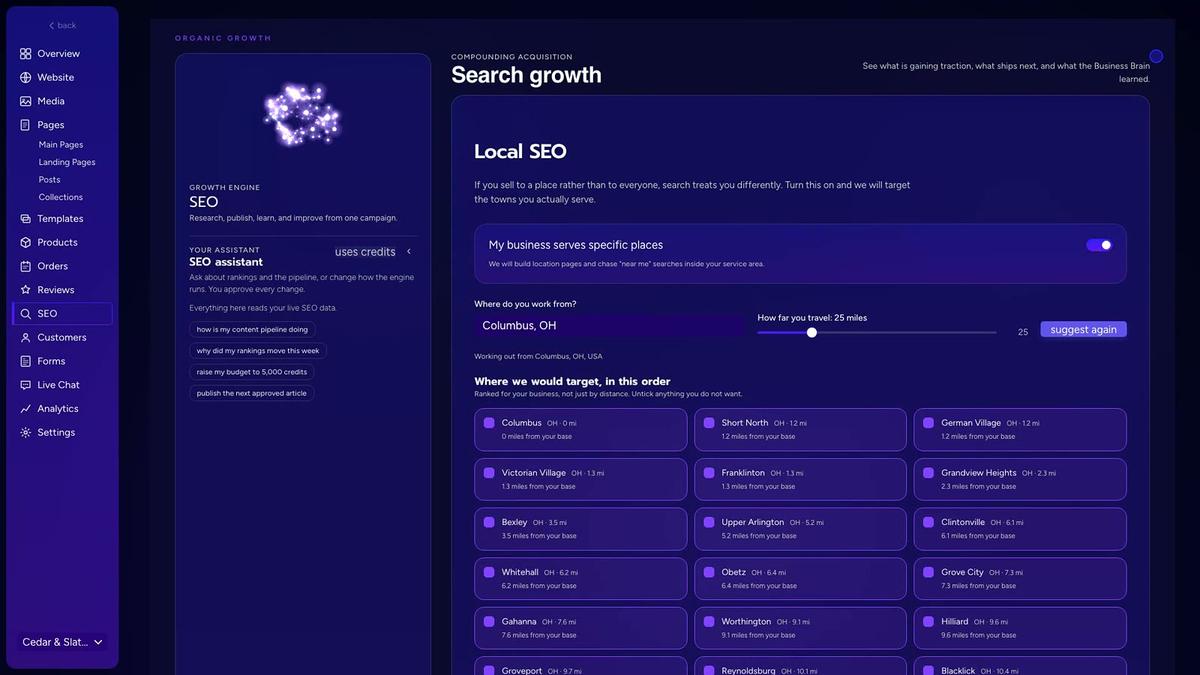
We also built dedicated local and repair pages across 17 central Ohio towns for a roofing client. That roofing website design blueprint translates directly to multi-town plumbing companies.
How Does a Website Help a Plumber Show Up on Google Maps?
Your website is a core relevance and trust signal for your Google Business Profile. Strong plumbing website design helps your shop compete in the local Google Map Pack.
No honest agency can promise a top map spot. Still, a structured site with clear repair and city pages proves what you do and where your vans drive. Strong local plumbing SEO connects your website directly to your map listing.
When your site and map listing reinforce each other, both tools earn more neighborhood calls.
Relevance, Distance, and Popularity in Local Plumbing SEO
Three main factors are behind how Google evaluates local map visibility. Separate pages and consistent business data help strengthen your local footprint:
- Relevance: Specific repair pages match what searchers type far better than one generic homepage.
- Distance: Plain-text city pages clarify your service area around your shop's physical location.
- Popularity: Verified customer reviews, local links, and brand mentions build lasting trust online.
Match your business name, main phone number, service areas, and service list word for word between your website and Google listing. Link your map profile straight to the most helpful landing page.
Why a Map Grid Scan Shows More Than One Ranking Check
A map grid scan is a rank check across dozens of GPS points. Checking map rankings from your office desk only shows one street corner.
Map positions shift block by block across a county. You might rank in the top 3 near your shop and vanish 5 miles away. For our central Ohio roofing client, we run monthly grid scans across their 17-town footprint. That scan spots strong pockets and weak zones clearly.
Using grid scans to guide where you build stronger town content gives you real data instead of false promises.
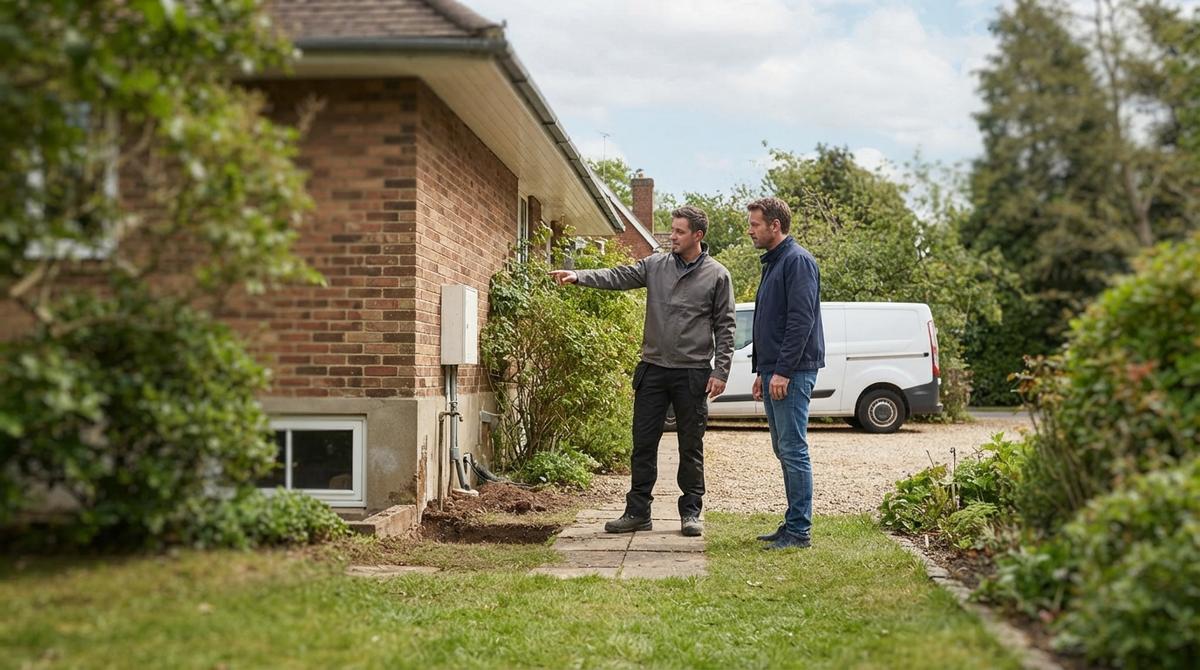
Forms and Call Tracking in Plumbing Web Design
A simple contact form is a second easy option for after-hours planned shoppers. Not every homeowner wants to call right away when pricing a fixture upgrade or water heater quote.
Short forms paired with clean tracking capture quiet leads and show which pages earned them. Before buying plumbing leads for sale or paying for pay per call plumbing leads, fix your own forms first. Many owners find that fixing forms and tracking brings better exclusive plumbing leads over time.
Making requests effortless prevents quiet prospects from slipping away to another shop.
What Happens After a Customer Submits a Form?
Clear next steps are what reassure homeowners right under your form submit button. Send every completed request straight to a clean thank-you page.
Stick to 4 needed fields with large boxes for easy mobile tapping:
- Name: Ask only for a first and last name so typing stays quick.
- Phone Number: Collect one reliable callback number for your dispatch team.
- Town: Confirm the caller lives inside your active service footprint.
- Problem Box: Provide a short space for homeowners to describe the issue.
Skip extra fields that make tired visitors quit. Never promise an exact callback time unless your staff meets it daily.
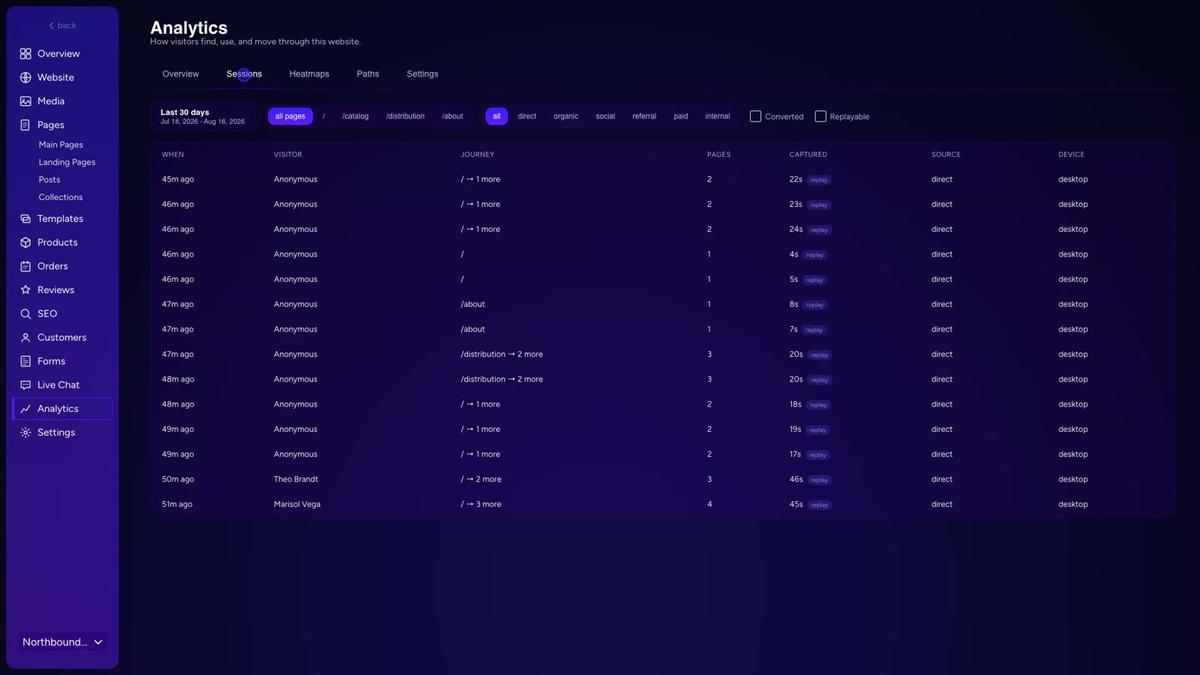
Tracking Calls, Forms, and AI Tool Visits by Source
Call tracking is a measurement tool that ties phone leads to their source. Split incoming calls and forms by true channel so you stop guessing where marketing dollars go:
- Organic Search: Measure regular link clicks to see which repair and city pages book jobs.
- Google Maps: Separate map clicks and calls to gauge how well your local listing performs.
- Paid Ads: Isolate paid clicks from free search growth to track true ad return.
- Bots and Spam: Filter junk calls and spam forms so fake numbers never inflate reports.
- AI Tool Visits: Track ChatGPT, Gemini, and Perplexity referrals as their own distinct channel.
Keep your main phone number unified across directories and your Google listing. Honest numbers help you grow.
Get a second opinion on your current setup
Already paying for plumbing marketing? Get a free second opinion on what works and what wastes money.
Technical Basics Every Plumbing Company Website Needs
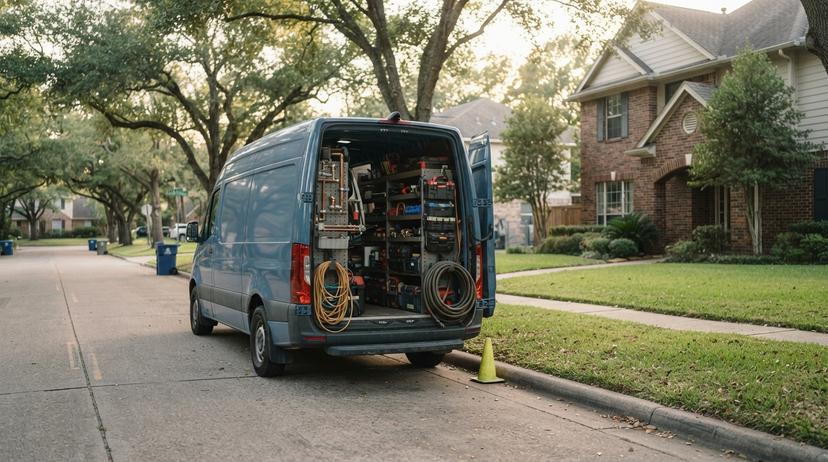
Three core technical standards are needed behind your visible buttons and photos. They keep pages safe, fast, and easy for search engines to read.
Check that your plumbing company website covers these basic foundations:
- HTTPS Security: Use a secure connection so browsers never flash scary warnings to visitors.
- Clean URLs: Create short, readable web addresses for every individual service and city page.
- Mobile Speed: Load pages quickly on cellular data with zero sideways screen scrolling.
Solid technical setup keeps your site visible and trustworthy behind the scenes. Clean foundations also help new pages index faster after launch.
Schema Markup for Local Plumbing Companies
Schema markup is a code layer that gives search engines structured business facts. Visitors never see this hidden code, yet Google and AI tools read it instantly.
Add local business and service schema to reinforce key details:
- Confirm your official company name, address, phone number, and dispatch hours.
- Define your exact service area cities and core plumbing job types.
- Tie each service page topic directly to structured data for clearer matching.
Accurate schema removes guesswork for search bots and AI assistants. Structured code gives your trade pages an extra edge in local search results.
How Should You Choose a Plumbing Web Design Platform?
Fast editing is the main test for any plumbing web design platform. You need to add a new town page or swap an emergency phone number in minutes.
Protect your business before signing any website agreement:
- Asset Ownership: Confirm you own your domain name, written copy, and photos outright.
- Direct Support: Ask who edits pages so simple fixes never stall behind support tickets.
- Fast Updates: Test how quickly you can publish new services or update dispatch numbers.
Slow, clunky systems cost real calls when urgent details change. Picking a fast platform where you own your assets keeps you in full control.
Common Plumbing Web Design Mistakes
Five avoidable layout errors are costing plumbing sites ready callers every single week:
- Hiding the Phone Number: Placing your number inside a mobile menu forces urgent callers away.
- Lumping Everything Together: Putting every service and city on one page hurts local search matching.
- Using Fake Visuals: Posting stock photos or copied badges destroys trust before techs arrive.
- Building Long Forms: Asking 10 required questions on a phone makes homeowners abandon quotes.
- Skipping Lead Tracking: Running without source tracking leaves you blind to what brings calls.
Fixing these 5 common leaks turns a quiet website into a steady source of booked dispatch calls.
A Practical Plumbing Website Checklist
Seven core items are all you need to audit a current site or new build:
- Top Phone Number: Place your main number at the header with working one-tap mobile links.
- Clear Coverage List: Display core services and target towns in plain text near the header.
- Dedicated Pages: Build one unique page for every major service and target town.
- Authentic Proof: Feature real photos of crews, trucks, and work beside verified reviews.
- Simple Form Flow: Keep forms down to 4 fields and use a dedicated thank-you page.
- Fast Mobile Speed: Compress images and trim heavy scripts for quick cellular loading.
- Complete Source Tracking: Track calls, forms, map clicks, spam bots, and AI referrals monthly.
Checking off all 7 items ensures your site turns searchers into customers.
Questions to Ask Any Plumbing Web Design Provider
Six direct questions are enough to protect your budget before hiring a plumbing digital marketing company. Ask these before shopping for web design and seo services:
- Design Preview: Will I see a working homepage design before paying any money upfront?
- Direct Contact: Who do I talk to monthly, and does that person do the work?
- Lead Reporting: How do you track calls and forms, and do you filter spam?
- Ranking Promises: Do you guarantee top spots, knowing an honest provider will say no?
- Edit Speed: How fast can you swap a phone number, photo, or service page?
- Asset Ownership: Will my company own the files, domain name, and copy if we leave?
Honest answers help you pick reliable plumbing seo services without long-term headaches.
Timeline for Calls From a New Plumber Website
Three local factors are what decide how fast a new site brings in calls. Town size, local competition, and page quality all shape your early results.
Launching a cleaner, faster site with clear call buttons helps convert existing visitors right away. Growing steady search and map traffic across new service and city pages takes consistent work over time. No honest provider can promise an exact timeline for top rankings.
Focusing on strong pages and real tracking builds lasting momentum that compounds month after month.
Next Steps for Your Plumber Website
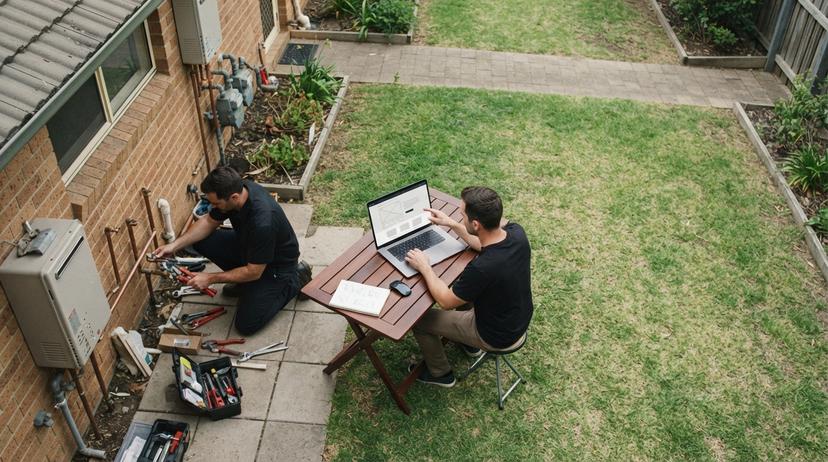
Your smartphone is the best place to start testing your current plumbing site today. View your homepage as a stressed homeowner standing near a leak.
Run through 3 quick checks before hiring anyone:
- Confirm your opening screen shows what you do, where you work, and your number.
- Replace stock photos and build dedicated service and town pages for your market.
- Set up clean call and form tracking so every lead source stays clear.
Ask any prospective provider for a real homepage preview and a clear tracking plan before committing monthly. That simple step helps you build the best plumbing website for your market.
Frequently asked questions
What should a plumbing website include?
Every plumbing site needs a top phone button, dedicated service and town pages, real crew photos, verified reviews, a short contact form, and source-based call tracking to turn visitors into booked jobs.
How many pages does a plumbing company need?
Most plumbing companies need a clear homepage, a contact page, individual pages for each core repair, and separate pages for every town their trucks cover regularly.
Do I need a page for each town?
Yes, separate town pages with real local details help homeowners and search engines confirm where your crew works without relying on duplicate copy-and-paste text.
Does a website help me show on Google Maps?
Your website reinforces your Google Business Profile by supplying detailed service and location signals that match what local searchers type into the map.
Should I show prices?
Exact pricing is optional since home conditions vary widely, though explaining cost factors or listing a standard service call fee helps set clear expectations.
How do I know if my website is working?
Your site is working when genuine phone calls and completed forms from search, maps, and AI referrals climb steadily after filtering out spam.
Start with a free homepage rebuild
Book a short call. Your new plumbing homepage is free to see and yours to keep.
Ready when you are
Ready for the phone to ring more?
Book a short call. We rebuild your homepage first, and you decide after you have seen it.