


Contractor website design company that win more jobs.
A contractor website design company is a firm that builds trade sites.
A new website for your trade, built for you and hosted, fast on a phone with tap-to-call right at the top.
See your new homepage free before you pay. Cancel anytime.
For contractors
organic traffic growth over 14 months
growth on a second SEO campaign
job success score across Upwork projects
Trusted by local service businesses across the country and by New Balance. Before The Software Society, our founders' agency worked with Planned Parenthood.

What you get
One website. Built to book jobs.
A fast, clear site that turns the people who find you into calls. Add Google pages whenever you want more of them.
A new website, built for you
Fast on a phone, your best projects up front, and an estimate button people see right away.
Pricing
One price. Everything included.
Everything included
$50a month
- Website design for your trade
- Hosting, security and updates
- Tap-to-call and a quote or booking button up top
- Edit it yourself, or ask the AI assistant
- Month to month, no contract
Free checklist
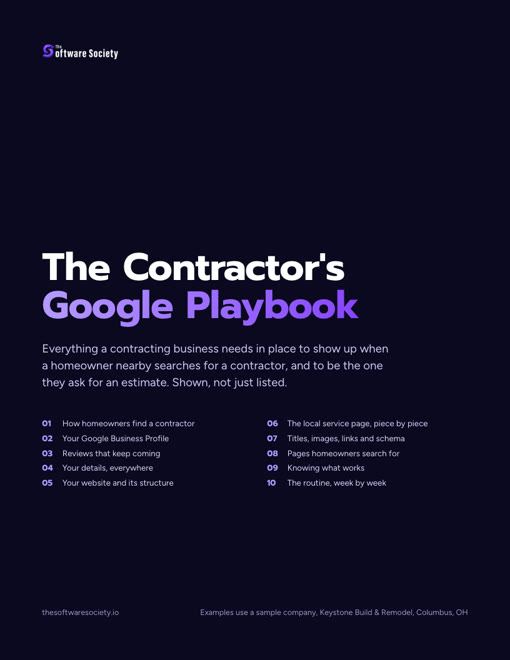
The contractor's Google playbook
Every part of showing up on Google for a contracting business, shown page by page: your profile, reviews, listings, website and the pages homeowners search for.
- Your Google Business Profile set up field by field, with "General contractor" as the primary category
- The service and the town in the address, title, headline, first sentence and photo names of every page
- The same name, address and phone on every listing, checked line by line
- A review request sent at every final walkthrough, with reply scripts
Send me the full checklist
On its way. You can also open it now.
We will email you the checklist and the occasional tip. Unsubscribe anytime. PDF
Homeowners search on phones during a leak or an outage. They call the first clear shop they see.
Your site needs fast pages, tap-to-call buttons and real job proof.
What a Contractor Website Design Company Does
A contractor website design company builds sites for skilled trades. It serves roofers, HVAC pros, electricians and builders.
General web shops focus on pretty layouts and brand stories.
Trade specialists build every page for phone calls and booked jobs.
Website design for contractors puts your phone link, service towns and reviews first. Every button guides a hurried homeowner to book an estimate.
Every detail works toward one goal. You want more signed estimates on the calendar each week.
See your new homepage before you pay anything
Your homepage, rebuilt free. You see it before you pay anything.
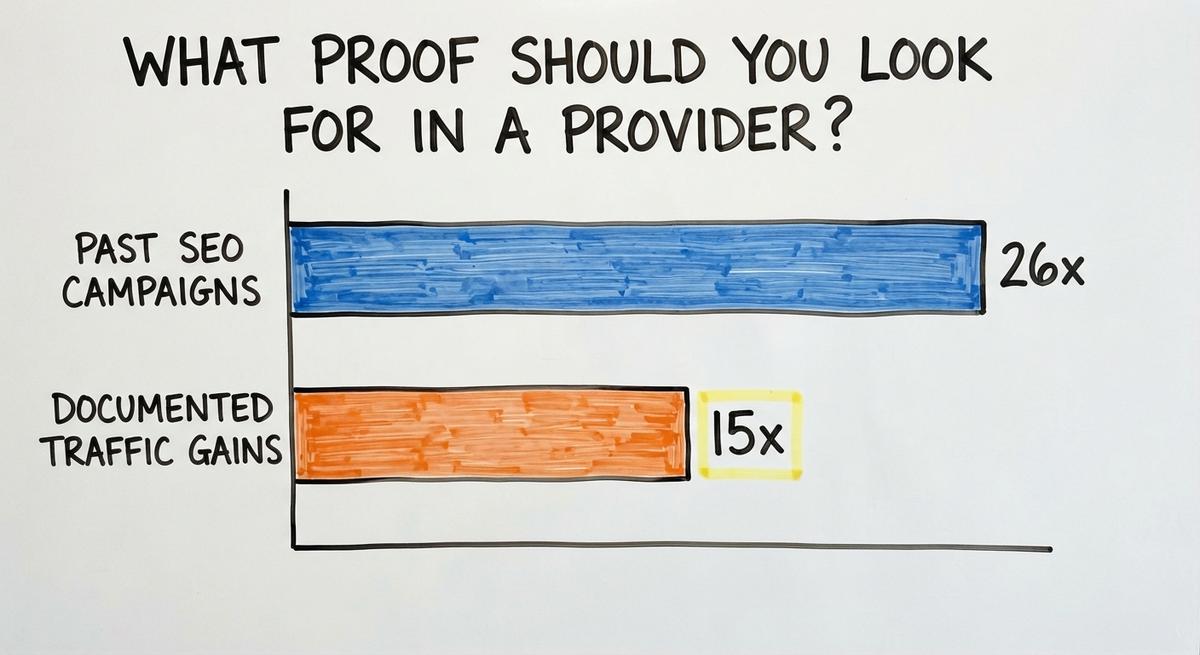
Past SEO campaigns grew organic traffic 26x in 14 months.
New website: $50 a month, built and hosted, cancel anytime
Why Contractors Need a Site Built for Their Trade
A trade website is a sales tool for urgent local calls.
Homeowners look for help in a rush, on a phone.
People judge your site by one thing: can they reach you fast?
Flashy animations and design awards do not pay your crew.
A contractor site needs 3 core parts to win local work.
- Service pages. Each repair job gets a clear page with exact answers.
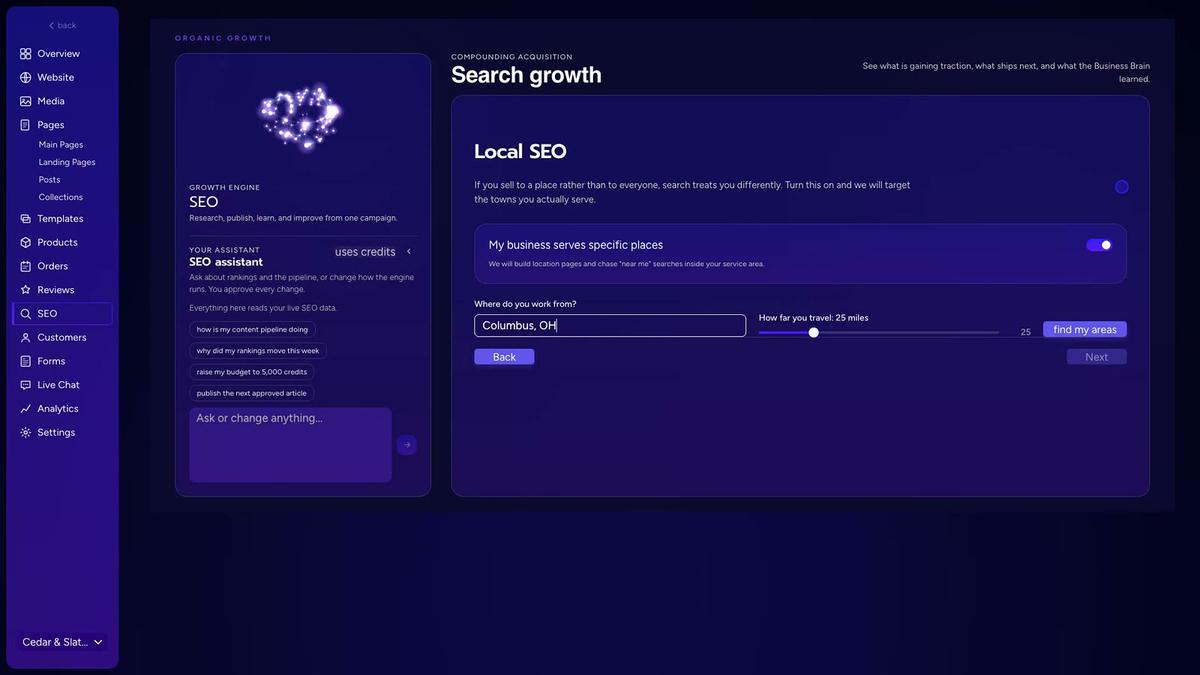
- Town pages. Separate city pages show search engines where your trucks drive.
- Job proof. Real project photos and genuine reviews help hesitant callers dial.
Google Business Profile Help explains local ranking.
It says "Local results are mainly based on relevance, distance, and popularity."
Those are the 3 local signals.
Generic templates rarely build pages around those 3 local signals. A trade-focused design company does.
What Should a Good Contractor Website Include?
A good contractor site is a fast mobile hub. It has clear buttons and local pages.
Homeowners leave confusing sites in seconds. Your layout must remove friction and make the next step clear.
- Visible phone button. A clickable number near the header on every screen.
- Service pages. Every major job gets its own page with plain answers.
- Town pages. Unique pages for the towns your crews serve each week.
- Real crew photos. Your own trucks, uniforms and roofs, never stock art.
- Short forms. Name, phone and a brief job note only.
- Fast loading. Small files so pages open fast on a weak signal.
Good home service website design wins customers before they hit the back button.
A Phone Number People Can Tap
A tap-to-call button is a clickable phone link at the top of the screen.
Mobile users never have to scroll or copy digits.
Your website must show the same number listed on your Google profile.
Matching numbers across the web build trust and prevent lost calls.
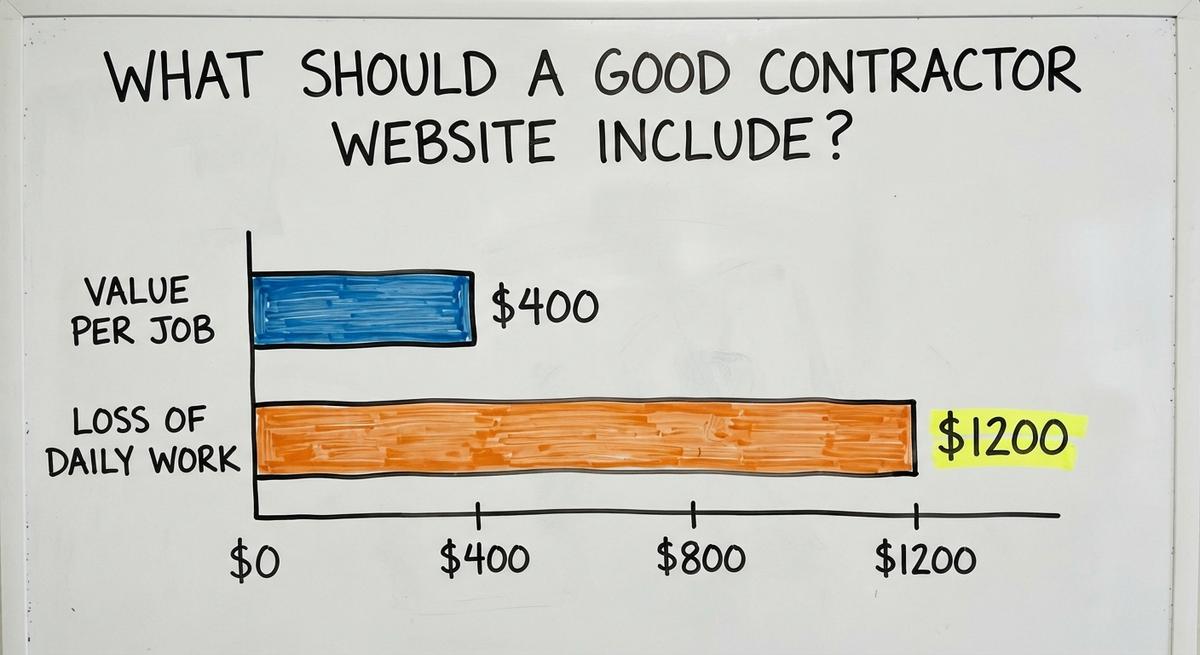
Missed calls cost real money. Say 3 homeowners leave your site each day with no easy call button.
At $400 per job, that is $1,200 in lost work a day.
Pin the phone link on every page. Make dialing easy for any stressed homeowner.
One Page for Each Service
A service page is a web page for one repair or install job.
Roof repair, AC repair and panel upgrades never belong on one list.
Search engines match a homeowner's exact search to the best single page.
Each page should answer the common questions for that job.
- Roof repair pages. Explain leak checks, shingle matching and storm tarping in plain words.
- Roof replacement pages. Cover tear-off steps, material choices and cleanup.
- AC repair pages. Detail diagnostic checks, thermostat fixes and urgent cooling calls.
- Panel upgrade pages. Outline load checks, permits and inspection for homeowners.
Focused pages give each trade service room to rank and convert.
See examples in roofing website design and painting contractor website design.
One Page for Each Town You Serve
A service area page is a local page for one town your crew serves.
Each one needs neighborhood names, weather notes and recent jobs nearby.
Copying one paragraph and swapping only the city name hurts rankings. Google's spam policies call this "Doorway abuse".
Real local detail solves it.
Picture a contractor serving a dozen towns, with real project notes on each town page.
Genuine city pages prove your reach without breaking search rules.
Read local SEO for contractors for the full method.
Real Photos and Proof of Your Work
Real photos are instant trust builders for a contractor. Show your crew, branded trucks and finished jobs.
Stock models in clean hard hats make callers doubt you.
Homeowners check proof before they dial.
BrightLocal's Local Consumer Review Survey says "97% of consumers still lean on reviews" before they buy.
Every review and claim on your website must be true.
Google's review policy says reviews "must reflect a genuine experience."
Never post fake awards, borrowed job photos or unproven claims.
False claims create legal risk and destroy trust fast.
Find out where you show up on the map
A free map check for your company. See which towns find you and which call a competitor.
Simple Forms That Get Filled Out
A contact form is a short box where visitors leave a name and phone number.
Long forms that ask for square footage and budgets scare busy callers away.
Keep your website form simple and direct.
- Few fields. Name, phone and a short job note.
- Clear button text. Use "Request My Estimate," not "Submit."
- Fast routing. Every entry goes straight to a real person who answers.
- Regular testing. Test every form yourself after any site edit.
Broken forms waste ad spend and lose warm leads quietly.
A form only creates jobs when it reaches someone ready to book.
Why Do Fast Pages Matter on Phones?
Fast pages are vital on a contractor website. Slow sites lose callers before the phone link even loads.
Someone with a leaking ceiling will not wait 8 seconds for a page.
Common speed killers are large photos, auto-playing videos and clunky sliders.
A mobile speed test is a check of how fast pages open on phones.
Ask any design company how they test speed before launch. Speed protects the calls you paid to attract.
Real Contractor Websites Worth Studying
Studying real sites is the fastest way to judge a design company. The 3 examples below come from real contractor websites.
Each one shows a lesson your own site can copy.
Look at what works and what does not.
What a Strong Trust Line Looks Like
A strong trust line is short and checkable.
Sundt says it has built roads, rail and bridges "for well over a century".
That line names a fact a buyer can verify.
Max Home opens its story with a date. It says it began in 2003 with "a group of experienced industry professionals".
A founding year beats a vague claim of quality. Put yours on your About page.
What a Vague Line Looks Like
A vague line fits any company.
One builder's site says it will "bring your vision to life with quality craftsmanship and dedicated service".
Nothing in that sentence names a trade, a town or a fact.
Ask your designer to replace lines like it with real numbers and real places.
What a Project Story Looks Like
A project story is a case study in plain words.
Continental Electrical Construction Company tells how it helped reopen a hospital during the COVID-19 pandemic.
The story names the client, the deadline and the work.
A small contractor can do the same with a kitchen, a roof or a panel upgrade.

How Your Website Connects to Google Search and the Map
Your website and your Business Profile are a pair in local search.
Together they send service and location signals to Google.
The Google Map Pack is a map box with 3 local firms shown first.
Google ranks it on 3 factors in Google Business Profile Help.
- Relevance. Your service pages and profile categories match the search.
- Distance. Your address and city pages match the searcher's location.
- Popularity. Your reviews, local mentions and site strength show your standing.
Google rewards helpful pages. Google Search Central says content should be "created primarily for people".
No design company controls Google's algorithm. Never trust a promise of a guaranteed top spot.
Website Design vs. SEO: Are They the Same?
Website design and contractor SEO are 2 different jobs. Design builds your layout and buttons.
Search work brings local homeowners to the site.
Contractor SEO is a monthly process. A pretty site with no search work sits invisible on page 5.
Good contractor web design pairs clean design with local pages and tracking.
| Feature | Website Design | Contractor SEO |
|---|---|---|
| Main goal | Turn visitors into calls | Bring local visitors to the site |
| Core work | Layouts, forms, mobile speed | Service pages, city pages, map signals |
| Timeline | Built at launch, then updated | Ongoing monthly work |
| Key question | Can callers reach you easily? | Do homeowners find you first? |
Ask any provider if they handle both design and ongoing search work. Some owners hire a contractor SEO company for the search side.
Compare SEO-only firms in contractor SEO services.
Results you can check
Past SEO campaigns grew organic traffic 26x in 14 months, and 15x on another. Top Rated Plus on Upwork with 99% job success.
Work for hundreds of small businesses and large clients like New Balance. Before The Software Society, our founders’ agency worked with Planned Parenthood.
Questions to Ask Before You Hire a Contractor Website Design Company
Direct questions are your best shield against bad contracts and costly rebuilds.
Use them with any contractor website design company you interview.
Focus on 4 key areas.
- Team. Find out who writes the code and builds your pages.
- Ownership. Confirm your business holds the rights to your domain.
- Update speed. Learn how fast price changes or new towns go live.
- Work samples. Ask to see live sites for other contractors.
Write down every answer during the call. Clear answers show if a company respects your time and budget.
Who Will Do the Work?
The person on your sales call is rarely the actual builder.
Many agencies pass projects down a chain of account managers and freelancers.
Every hand-off loses key facts about your trade, service area and best jobs.
A good design company lets you talk to your builder.
You want someone who knows the difference between a reroof and a repair.
Ask straight out if the person on the call will build your site.
Who Owns the Site and the Domain?
A domain name is the web address people type to reach your company.
Your business must own its domain in its own account from day one.
Some agencies register the domain under their own name and hold it hostage.
Ask every provider 2 ownership questions.
- Domain control. Is the domain registered under my legal business name?
- Content export. Can I export my text and photos if we part ways?
Never let a vendor hold the keys to your business name.
Full ownership lets you switch partners without losing your history.
How Fast Can You Make Changes?
Fast updates are easy on a clean platform.
Contractors update prices, add towns and launch seasonal offers all year.
Slow agencies take weeks to swap a phone number or add a storm banner.
Ask how a change request works and who does the edit.
Ask if small text swaps cost extra or come with the plan.
Quick edits keep your website accurate in busy seasons.
Can You See Real Work Before You Commit?
Live work is the best preview a design company can give.
Mockups with filler text hide weak writing and generic templates.
Ask for 3 live contractor sites they built. Open them on your phone.
Check the call button, the service pages and the speed.
Ask how payments are split. Milestone payments tied to finished pages lower your risk.
Never pay a large fee up front on blind faith.
How Will You Measure Results From Your Website?
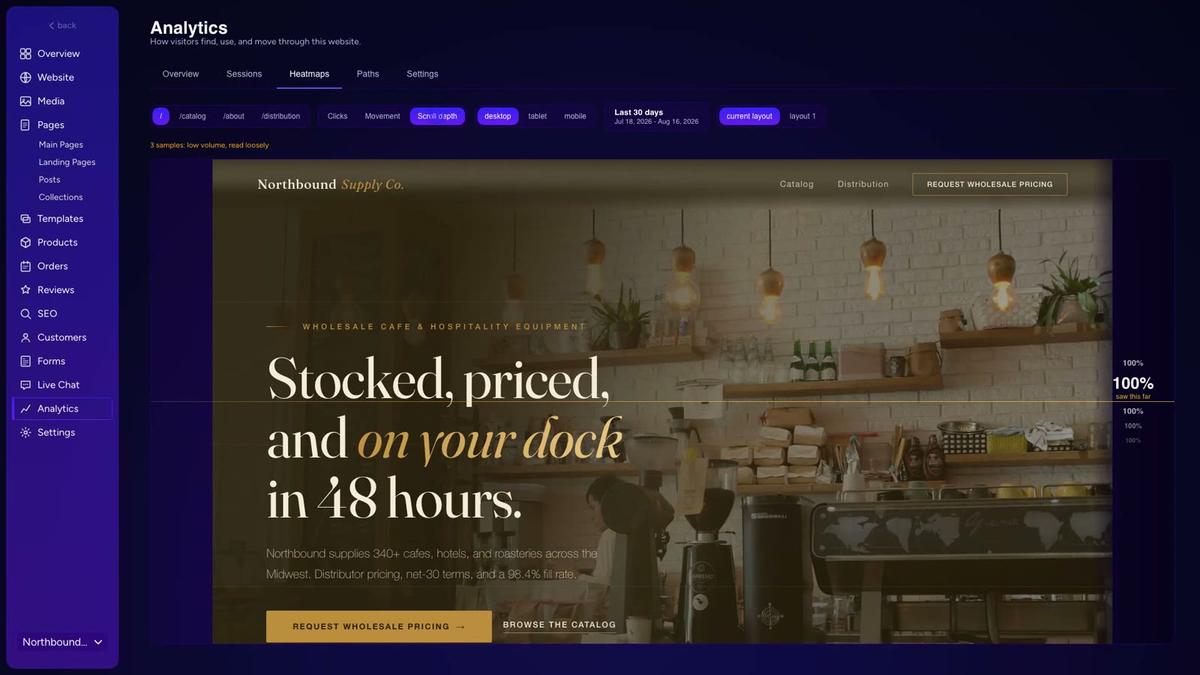
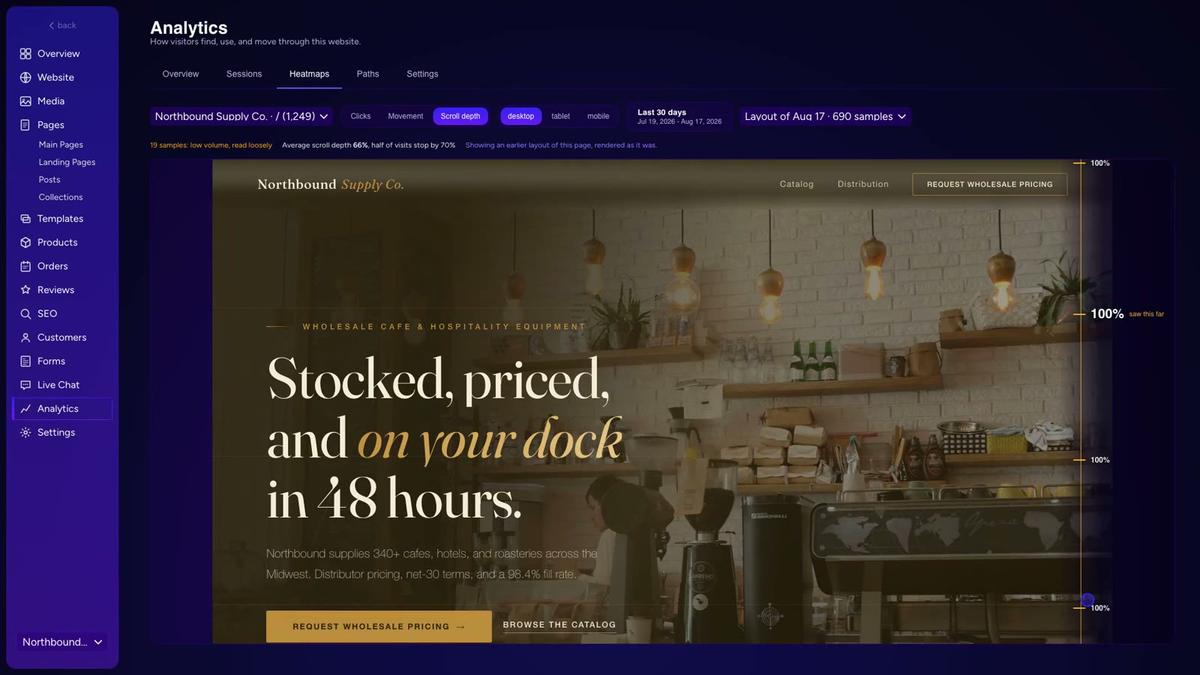
Good measurement is a count of real calls and forms by source.
Page views alone do not pay your crews or your website bill.
A call tracking number is a unique phone line that logs where each lead came from.
Ask your provider to track 5 numbers every month.
- Source tracking. Calls from organic search, maps, paid ads and bots, kept apart.
- Map grid scans. Your Map Pack rank across your whole service area.
- AI search visits. Visits from ChatGPT, Gemini and Perplexity as one channel.
- Paid lead checks. Local Services Ads leads kept apart from organic calls.
- Plain reports. Monthly summaries in plain English, no jargon.
AI tools like ChatGPT and Perplexity grew fast in 2024 and 2025.
That makes AI traffic tracking needed in 2026.
Paid ads need the same split. With Local Services Ads, you pay only for leads tied to your services.
Clean tracking proves what channels put trucks in driveways.

What Does a Contractor Website Cost?
Website pricing is a mix of site size, page count and ongoing work.
A 5-page starter site costs far less than 10 services across 15 towns.
Compare what each quote includes. Do not chase the lowest monthly fee.
Ask providers to explain 4 cost factors.
- Build scope. How many service pages and city pages launch on day one?
- SEO plans. Is search work billed separately, by towns and pages?
- Hosting and edits. Does the plan cover security, speed checks and text edits?
- Contract terms. Is it a multi-year lock-in, or can you cancel anytime?
Measure cost against booked work, not sticker price.
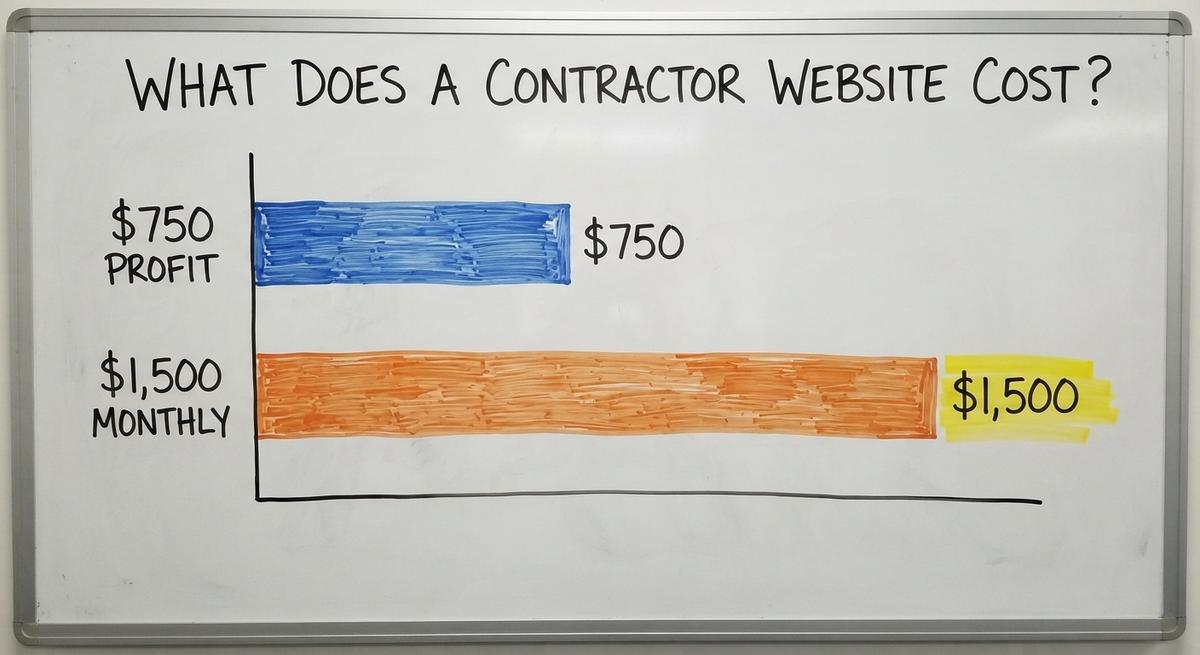
Just 2 extra jobs a month at $750 profit each brings $1,500 a month.
A site that pays for itself is an asset, not an expense.
What About Licensing Pages?
A licensing page is a short page that lists your state license and insurance.
Some states have strict rules on how a contractor shows them.
Services like Contractor Reporting Services help Florida contractors with licensing and renewals.
Ask your design company to add the license page once your paperwork is current.
Get a second opinion on your current setup
Already paying for marketing? Get a free second opinion on what works and what wastes money.
Red Flags and Common Mistakes to Avoid
Agency red flags and owner mistakes are the 2 biggest budget leaks.
Bad contracts and weak pages waste months of peak season.
A lock-in contract is a long agreement that traps you with one agency.
Watch for 4 warning signs from any contractor website design company.
- Ranking guarantees. A promise of a top Google spot or set leads is a guess.
- Recycled templates. Layouts copied from unrelated trades miss urgent homeowner needs.
- Hidden analytics. Blocked access to your call data hides poor results.
- Lock-in terms. Long agreements or held domains strip away your use.
Contractors also hurt their own results with 4 common site mistakes.
- Stock photos. Generic models lower trust compared with real crew shots.
- Buried phone numbers. A number hidden in a menu sends mobile users to rivals.
- Combined service lists. Every trade on one page blocks local rankings.
- Stale pages. A site left alone after launch signals to Google that you closed.
Avoid these traps, and the site keeps working as a lead tool.
What Proof Should You Look for in a Provider?
Real proof is results you can check yourself.
Any design company can claim great work, so ask for hard numbers.
- Traffic gains. Ask for before-and-after organic traffic on real client sites, with dates.
- Third-party ratings. Check independent review profiles, not only testimonials on their own site.
- Trade experience. Ask how many contractor sites they have built in your trade.
Ask to see live client sites in trades like yours.
Real proof replaces sales talk with facts you can check before signing.
A Simple Checklist for Choosing a Contractor Website Design Company
A clear checklist keeps the focus on booked jobs and control.
Run every candidate through these 7 checks before you sign.
- Each core trade service gets a dedicated, helpful page.
- Every town you serve gets a unique page with local notes.
- A clickable phone link stays visible on mobile screens.
- They test mobile speed and keep pages fast after launch.
- Your domain stays under your own legal business name.
- Monthly reports cover search, grid checks and AI visits.
- They make no ranking guarantees and show real proof.
Keep the list handy on every sales call.
A contractor website design company that passes all 7 sets your trade up for steady calls.
Next Steps for Your Contractor Website
Your next step is to pick a contractor website design company that builds for phone calls first.
Strong service pages, real city pages and clear call tracking turn the site into your best salesperson.
Do not settle for vague promises or slow templates.
Start with 2 or 3 candidates. Run the checklist. Compare their live work side by side on your phone.
Give each one the same brief: your trades, your towns and your best job photos. The company that asks the sharpest questions back is the one to hire.
Start with 2 or 3 candidates, run the checklist, and compare their live work side by side.
For more reading, see contractor website design, contractor website development, the best general contractor website roundup and websites for contractors.
Frequently asked questions
What pages should a contractor website have?
A contractor website needs a homepage and one page per core service. Add a page for each town. Add an about page with crew photos and a contact page.
How is a contractor website different from a regular business website?
A contractor website puts phone calls and map visibility first. It has tap-to-call buttons, town details and real job photos. Hurried homeowners can book fast.
Do I need town pages for each area I serve?
Yes. Town pages on your contractor website show search engines where your crews work. Each needs real local notes, not copied text.
Is website design the same as SEO?
No. Design builds your layout, buttons and pages. SEO helps homeowners find those pages. A contractor website needs both.
How do I know if my website brings in calls?
Track calls and forms by source: search, map, ads and AI tools. Monthly grid scans show where your contractor company ranks.
Start with a free homepage rebuild
Book a short call. Your new homepage is free to see and yours to keep.
New website: $50 a month, built and hosted, cancel anytime
Ready when you are
Ready for the phone to ring more?
Book a short call. We rebuild your homepage first, and you decide after you have seen it.