



Websites for Contractor
Websites for contractor teams are tools that turn searches into booked jobs. A contractor website exists to win calls, not to look pretty. Proof matters: BrightLocal finds 47% of buyers skip companies with under 20 reviews.
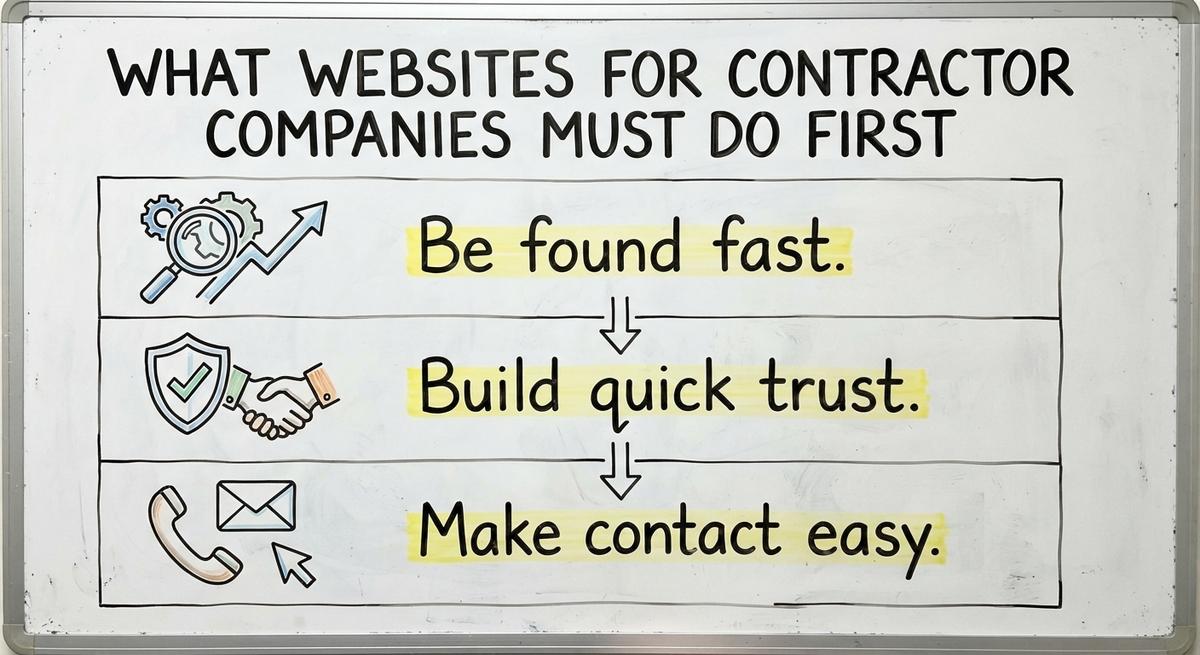
Every strong contractor website does 3 jobs. First, buyers must find your pages. Second, real proof must build trust fast. Third, visitors need a quick way to call or book.
Book a callWhat Websites for Contractor Companies Must Do First
A contractor website is a call and job machine. Pretty art means nothing when the phone stays quiet.
Your site must rank locally, prove quality work, and make contact simple. These 3 rules apply with any agency or builder.
- Be found fast: Search engines need clear trade and city words to show your pages.
- Build quick trust: Real project photos and reviews show buyers you are safe.
- Make contact easy: Big phone buttons and short forms help hurried callers.
Every dollar you spend on contractor websites should support those 3 outcomes.
See your new homepage before you pay anything
Your homepage, rebuilt free. You see it before you pay anything.
Past SEO campaigns grew organic traffic 26x in 14 months.
New website: $50 a month, built and hosted, cancel anytime
Book a callHow Do Homeowners Use a Contractor Website?
Homeowners run 3 quick checks on a phone. A leaking roof or dead furnace leaves no time for slow pages.
Most visitors scan your site in seconds.
- Service area check: Buyers confirm you work in their city.
- Job match check: Visitors look for their exact repair in plain words.
- Contact speed check: Callers tap the first phone number or quote button.
Fast answers turn panic into booked work.
Why Contractors Need Their Own Website
Your own website is the one asset a contractor fully controls. Social pages and directories are rented space. A general contractor website is owned space.
Your Google listing links to your domain. A weak site drags down your map results and costs calls.
Local results rely on relevance, distance, and popularity, per Google Business Profile Help. Strong pages on your domain give Google proof of your trades and cities.

The Pages Every Contractor Website Should Have
Contractor websites are strongest when each page targets 1 topic. A tight core set covers home, services, towns, about, reviews, and contact.
One clear job per page keeps visitors focused. Separate pages let a roofing website builder site or HVAC site grow without clutter. The best contractor websites all follow this layout.
What Goes on the Homepage?
A contractor homepage is a front door. It shows what you do and where you work.
Put your trade and main city on the opening screen. Place your phone number and a quote button near the top.
Add short review proof below. Link to your core services.
Find out where you show up on the map
A free map check for your company. See which towns find you and which call a competitor.
Book a callWhy Do Service Pages Need Their Own URLs?
Each major service is worth a separate page. Ten trades on one page hurt your chance to rank.
Roof repair, roof replacement, AC repair, and exterior painting need separate URLs. A strong roofing contractor website or painting contractor website follows this rule.
- State the problem: Name the leak, noise, or breakdown the homeowner sees.
- Explain the fix: Describe how your crew inspects and repairs the issue.
- Show next steps: Tell the buyer what happens after they call.
- Add real proof: Include 2 or 3 job photos and a clear call button.
How Do Local Town Pages Work?
Town pages are local landing pages for homeowners who search their city name. Each one needs real local details, not copied text.
"Doorway abuse is when sites or pages are created to rank for specific, similar search queries," Google's spam policies explain.
Mention real neighborhoods, common home styles, and projects in that area. A central Ohio roofing contractor runs pages for all 17 towns it serves.
What Makes a Good Contact and Quote Page?
A contractor contact page is a short path to a booked estimate. Keep the quote form to 4 fields: name, phone, ZIP code, and job type.
Add click-to-call buttons. Tell visitors what happens after they submit.
What Trust Signals Work on a Contractor Website?
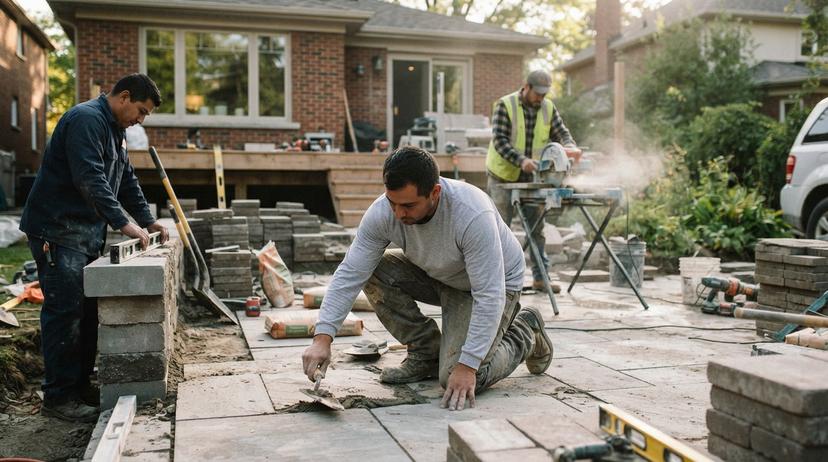
Real job photos are the fastest trust signal. Stock photos of smiling models make a contractor site look fake.
Large builders lead with project proof too. Webcor describes a student housing project that will add "over 2,100 student beds" by Fall 2027. Swinerton calls itself "a national construction company," dating to 1888.
How Should You Show Reviews?
Homeowners read reviews closely before picking a contractor. "97% of consumers still lean on reviews to guide their purchase decisions," reports BrightLocal's Local Consumer Review Survey.
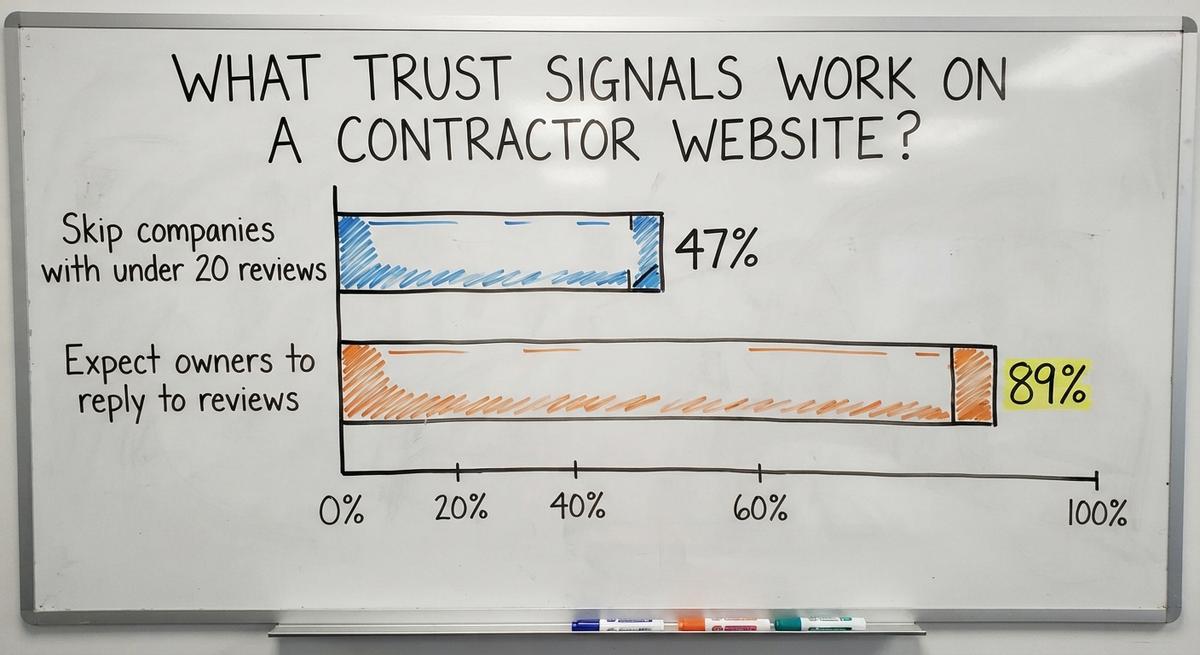
BrightLocal also found 47% of buyers skip companies with under 20 reviews. And 89% expect owners to reply.
"Reviews and other user contributions to Google Maps must reflect a genuine experience," says Google's review policy.
Post reviews with first names and towns. Show only licenses or insurance you hold and can prove. The guide on how to get more Google reviews covers the ask.
Why Do Speed and Mobile Design Matter?
Slow mobile pages are a silent leak for any contractor. Mobile screens need big tap targets, clean fonts, and no blocking pop-ups.
Open your own site on your phone today. Test every button with one hand. Good contractor web design passes this test.

How Websites for Contractor Teams Rank in Local Search
Local visibility mixes clear pages and map signals. Search engines read your words to match your trade with nearby buyers.
Strong SEO for contractors skips hype and sticks to plain facts. Clean structure helps regular results and map listings work together.
What Drives Regular Search Results?
Regular results are mostly about page titles, headings, and body text. Clear trade and city wording helps Google match your site to buyer questions.
"People-first content means content that's created primarily for people... " notes Google Search Central.
Avoid anyone who promises guaranteed rankings. Honest local SEO for contractors wins by answering homeowner questions better.
Results you can check
Past SEO campaigns grew organic traffic 26x in 14 months, and 15x on another. Top Rated Plus on Upwork with 99% job success.
Work for hundreds of small businesses and large clients like New Balance. Before The Software Society, our founders’ agency worked with Planned Parenthood.
Book a callHow Does Google Decide Local Results?
Three factors decide local map listings: relevance, distance, and popularity. Relevance is how well a contractor's site and profile match the search.
The searcher's location sets distance. You cannot change it.
Popularity grows with real reviews, local links, and mentions. Focus on relevance and popularity to win more map calls.
How Do You Match Your Site and Google Business Profile?
A contractor's website and Google listing are a matched pair. Align your name, phone, services, and coverage area everywhere.
Link your profile to your homepage or main location page. If it never appears, read why a business is not showing up on Google.
What to Track After Your Contractor Website Goes Live
Traffic alone is a vanity number. It never pays a contractor's crew.
Calls and forms are the numbers to track, by source.
- Search: Calls from free Google clicks.
- Map: Taps from your Google listing.
- Ads: Leads from paid campaigns.
- Bots: Spam form fills, removed weekly.
For ads, "Pay only for leads related to your business and the services you offer," says Google Local Services Ads Help.
Clean tracking shows the pages and channels that fill your schedule.
What Is a Google Maps Grid Scan?
A grid scan is a check of your Map Pack rank across town. Your rank changes block by block with the searcher's location.
The scan drops pins across your territory and records each spot. A central Ohio roofing contractor runs one monthly to track real movement.
Do Visits From AI Tools Matter?
AI tool visits are a growing lead source. Homeowners now ask AI tools to recommend local contractors.
Track AI visits as their own channel. Lumping them into other traffic hides a rising source.
Clear, factual pages are easy for AI tools to quote. An electrical contractor website follows the same rule.
Who Should Build Websites for Contractor Businesses?
Contractors have 4 main ways to build a site: DIY, templates, freelancers, or agencies. Match your choice to how many trades and towns you cover.
| Option | Best Fit | Main Limit |
|---|---|---|
| Do it yourself | New 1-truck startups. | Takes hours from job sites. |
| Website builder | Simple 1-town sites. | Weak multi-town structure. |
| Freelancer | Custom small builds. | One person delays updates. |
| Design company | Growing multi-town trades. | Higher cost than templates. |
Pick the option that fits your growth plan. The website builder for contractors guide compares tools. A contractor website builder suits the first two rows. A contractor website design company suits the last.
What Should You Ask Any Website Provider?
Five questions help a contractor vet any web team. Ask them on the first call.
- Who does the work: Ask if you speak with the person building your pages.
- Design preview: Ask to see a homepage layout before you pay.
- Update speed: Ask how fast photos or service details can change.
- Full ownership: Confirm you keep your domain and content.
- Lead reporting: Ask if reports track calls, forms, and map positions.
Walk away from any web agency promising guaranteed spots or fixed leads. Contractor SEO services should be judged the same way.
Get a second opinion on your current setup
Already paying for marketing? Get a free second opinion on what works and what wastes money.
Book a callWhat Warning Signs and Mistakes Should You Avoid?
Bad contractor web deals share 6 costly flaws with messy DIY sites. Watch for these red flags.
- Locked contracts: Never sign deals that block access to your site or domain.
- Copied town text: Swapped city names create thin pages that fail to rank.
- Traffic-only reports: Click reports hide the truth when calls are missing.
- Hidden phone numbers: Making buyers hunt for contact info sends jobs to rivals.
- One-page trade lists: Every service on one page kills local reach.
- Outdated proof: Old photos and broken forms leave you guessing.
How Much Does a Contractor Website Cost?
Cost is a function of page count, town count, and ongoing SEO work. Separate the one-time build from monthly SEO plans when comparing quotes.
- Page volume: Adding 15 town pages costs more than a 5-page site.
- Custom tracking: Call tracking, bot filters, and grid scans add monthly value.
- Ongoing updates: New pages and edits keep the site growing after launch.
Ask every provider to list build fees and monthly items separately. Contractor website development quotes should too. Good contractor website design quotes do this by default.

A Simple 30-Day Plan and Next Steps
A 30-day plan is a weekly checklist. Start in May 2026 without waiting on an overhaul.
- Week 1 list: Write down every service you sell and every town you serve.
- Week 2 homepage: Put your trade, city, phone, and quote button up front.
- Week 3 tracking: Set up call tracking, form tags, and spam filters.
- Week 4 pages: Map out pages for your top services and towns.
Clear pages, real proof, easy contact, and honest tracking turn websites for contractor teams into steady lead engines. Review your homepage against this checklist today.

Frequently asked questions
How many pages does a contractor website need?
Most growing contractors need 10 to 25 pages. Include a homepage, contact page, and about page. Add one page per core service and one for each main town you serve.
Do contractors need a page for every town?
Contractors need separate pages for every town where they actively want booked jobs. Each town page must feature unique local project notes and neighborhood details rather than duplicated text.
How do contractor websites get calls from Google?
Contractor sites get calls by matching specific service and town searches. They also rank in the Map Pack. Click-to-call buttons sit at the top of fast mobile pages.
Should I build my own contractor website?
Building your own site works for brand-new solo operators with tight budgets. Growing crews with several services and towns get better results from a dedicated contractor web team.
What should I track on my contractor website?
Track phone calls and quote forms by source: organic search, maps, paid ads, and bot spam. A contractor should also watch monthly Map Pack grid scans and visits from AI search tools.
What is a Map Pack grid scan?
A Map Pack grid scan measures your Google Maps ranking at dozens of points in your service area. It shows how a contractor's position shifts from neighborhood to neighborhood.
Can AI tools send visitors to a contractor site?
Yes. Homeowners now ask AI assistants for local contractor picks. Clear, factual service pages with direct answers get cited and earn referral clicks from those tools.
Start with a free homepage rebuild
Book a short call. Your new homepage is free to see and yours to keep.
New website: $50 a month, built and hosted, cancel anytime
Book a callRelated guides
More on the same work.
- Website General Contractor
- Contractor Website Development
- Contractor Website Design Company
- Best Contractor Websites
- Painting Contractor Website Design
- Electrical Contractor Website
- Paint Contractor Website
- Contractor Website Builder
- General Contractor Website
- Contractor Bidding Website
- Roofing Contractor Website
- Contractor Website Design
- Roofing Contractor Website Design
- Website for Electrical Contractor
- Best General Contractor Website
- Website Builder Contractor
- Painting Contractor Website
- Concrete Contractor SEO
- General Contractor SEO
- Roofer Contractor Marketing
- How to Get More Jobs as a Contractor
- Roofing Contractor Leads
- Free Leads for Contractors
- Facebook Ads for Contractors