

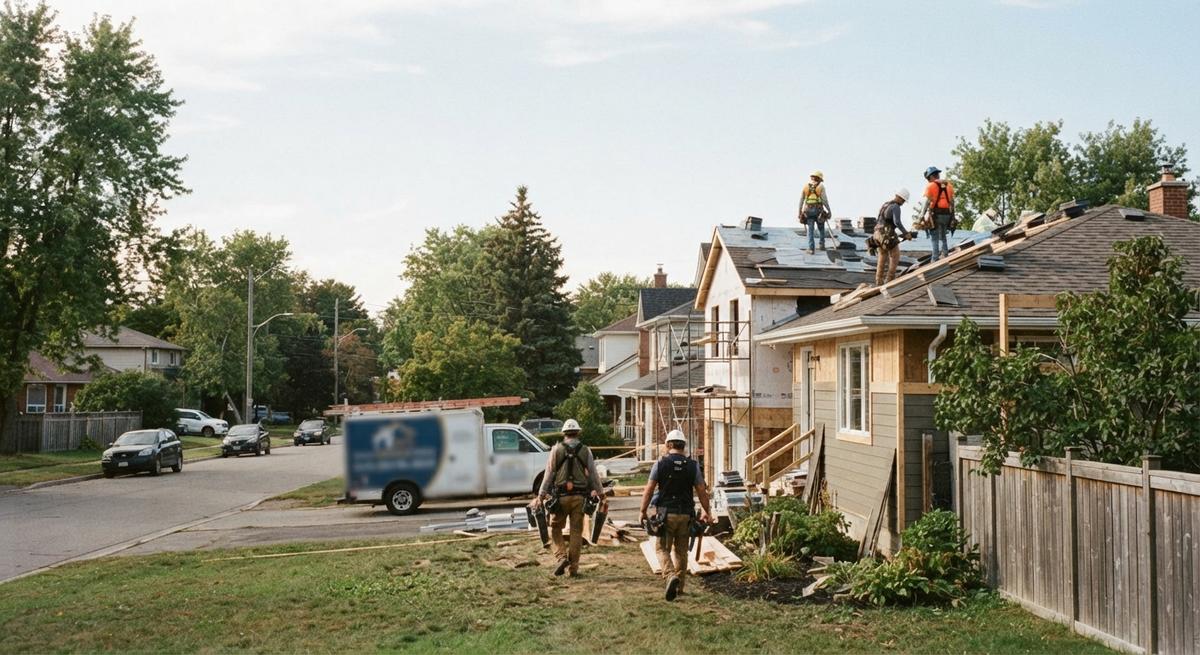
Local SEO for Contractors
Local SEO for contractors is the work that helps your shop show up when nearby homeowners search for your trade. Your firm can appear in two spots: the map box and the web results.
Every section speaks to busy owners, not marketers.
Book a callWhy Does Local SEO for Contractors Drive Phone Calls?
Phone calls are the main goal of local SEO for contractors. Homeowners search Google fast when a pipe bursts or a roof leaks. They need quick help, so they call one of the first shops on screen.
Searches almost always name a trade and a town. Showing up in your work area brings real calls. Your business makes money when a caller books an estimate.
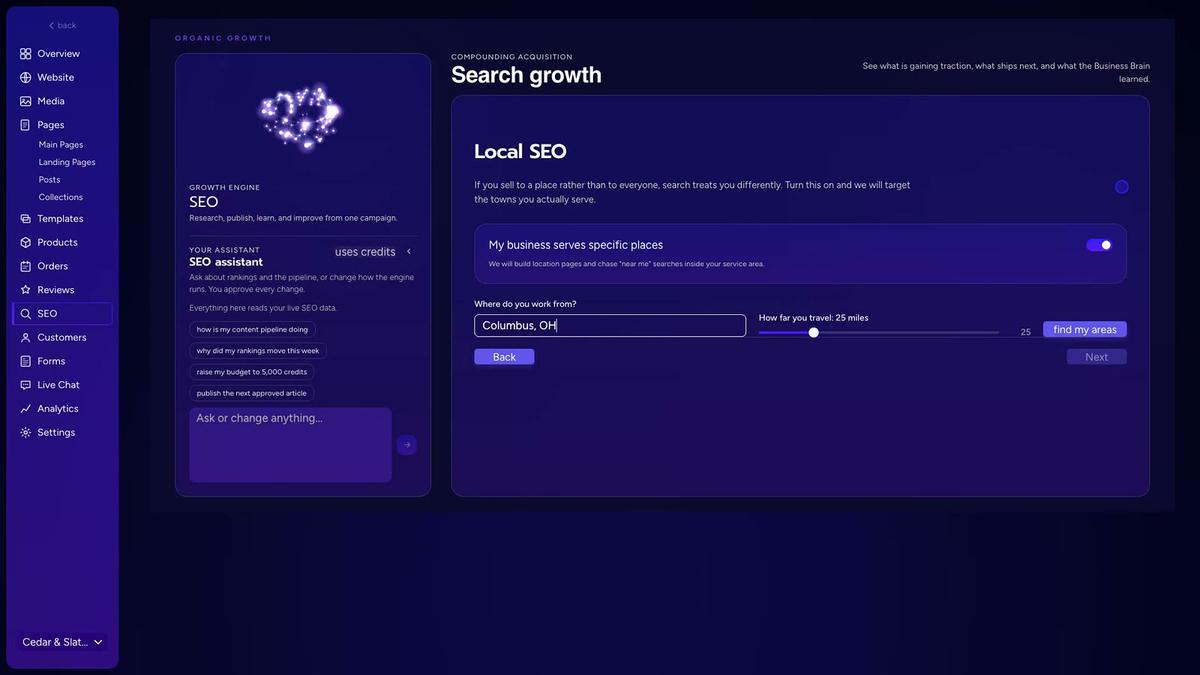
See your new homepage before you pay anything
Your homepage, rebuilt free. You see it before you pay anything.
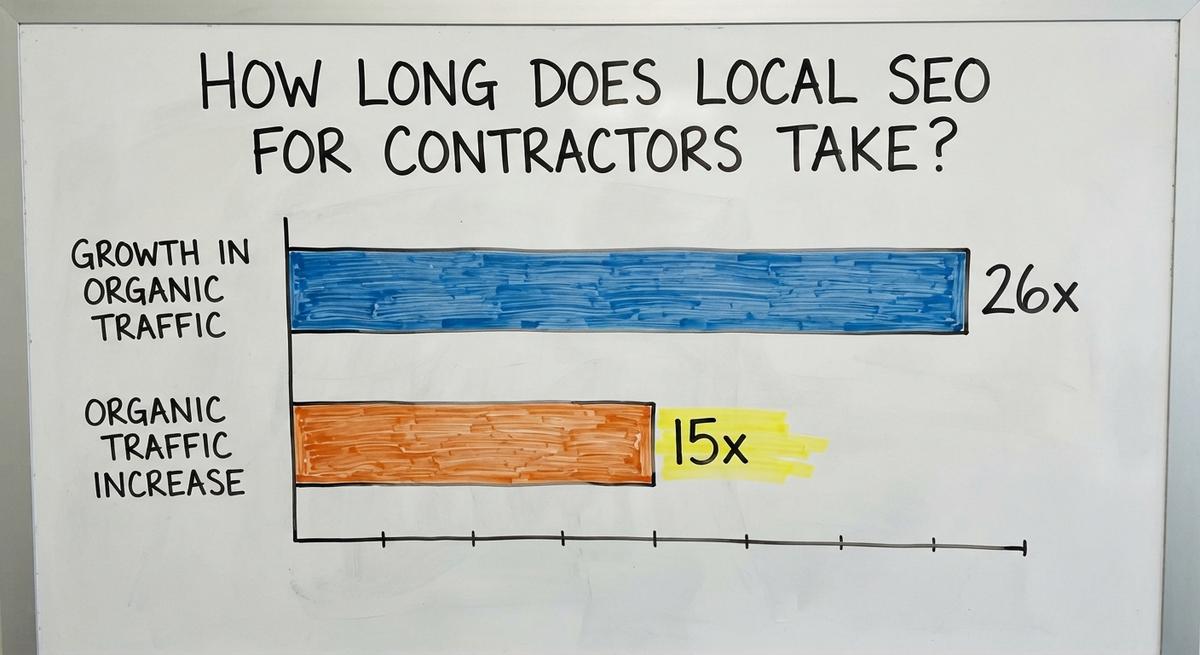
Past SEO campaigns grew organic traffic 26x in 14 months.
Book a callWhat Types of Local Searches Bring Calls?
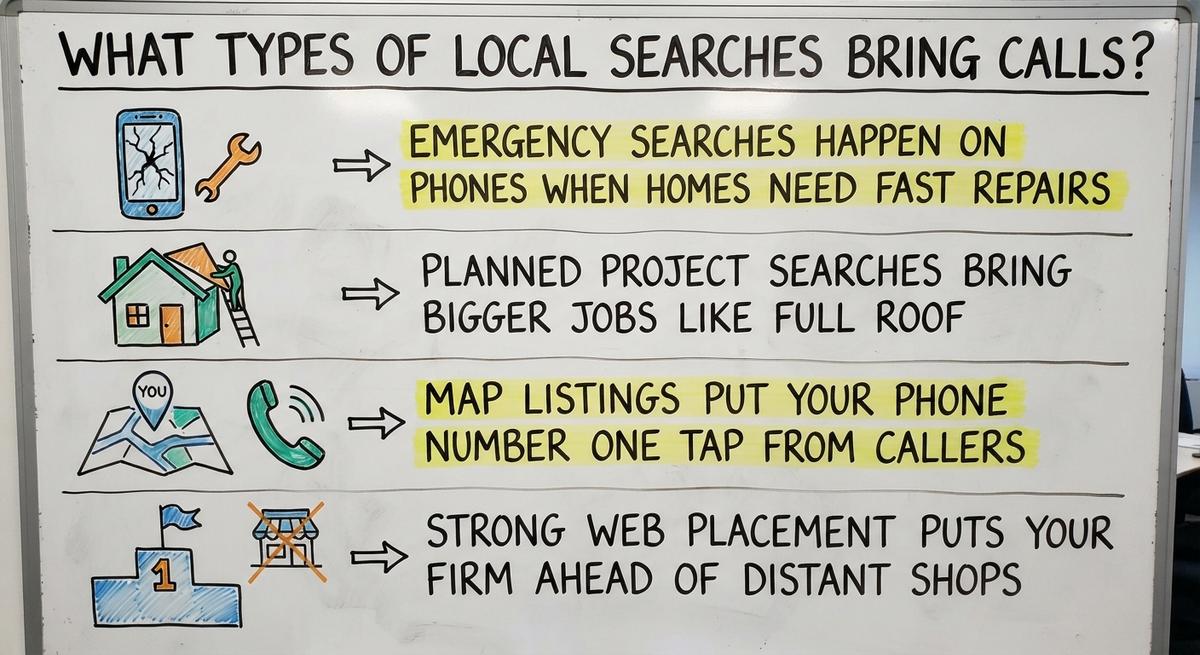
Two main search types bring steady calls to local trades. Each one needs a different page.
- Emergency searches happen on phones when homes need fast repairs.
- Planned project searches bring bigger jobs like full roof replacements.
- Map listings put your phone number one tap from callers.
- Strong web placement puts your firm ahead of distant shops.
Winning local calls starts with knowing how Google picks top shops.
How Does Google Rank Local Contractors?
Three core signals decide how Google ranks local contractors. Google Business Profile Help lists them as relevance, distance, and popularity. Those three signals decide if a homeowner sees your shop or a rival.
Local SEO for roofers, HVAC firms, and plumbers all runs on these signals. You cannot move a caller's phone. You can improve how well your shop fits their job.
- Relevance measures how well your profile and site match the search.
- Distance measures how far your shop sits from the caller.
- Popularity measures how well known and trusted your name is online.
Each signal connects to pages and profiles you can build.
Relevance: Match What Homeowners Search For
Relevance is how well your profile and site match the words a homeowner types. Say someone searches for water heater repair. If your site just says plumbing, Google must guess.
Build clear service pages for each job you want to book. Use plain words homeowners type, not terms from a parts catalog. Plain language helps local people and search engines grasp your work fast.
- Write separate pages for roof repair, storm damage, and gutter work.
- Name heating and cooling jobs clearly, like AC repair or heat pumps.
- List plumbing tasks such as drain cleaning, sewer lines, and sump pumps.
Clear service pages are the base of local SEO.
Distance: Show Every Town You Serve
Distance is how far your shop sits from the person searching. Google measures that gap on every local search. You cannot change your address, as Google's ranking help makes clear. A great website will not move your office twenty miles closer.
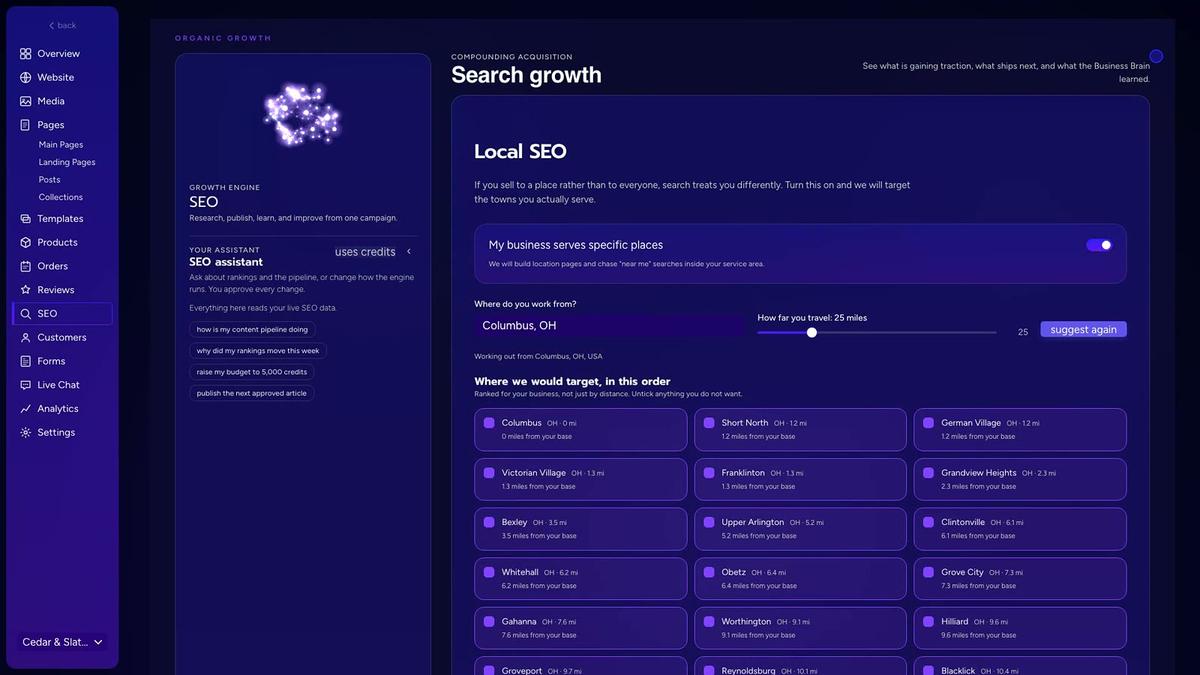
You can still show every town you cover with real town pages. An honest town page makes your work area clear to families ten or fifteen miles away. Homeowners want proof your trucks reach their block.
- List the towns and counties your crews cover each week.
- Add photos from real jobs in those nearby towns.
- Note local building rules or weather issues that affect homes there.
In local SEO, honest town pages tell Google where your crews work.
Popularity: Prove People Know Your Business
Popularity is how well known your company is across Google, review sites, and directories. Google checks your review count, your replies, and how many trusted sites name your shop. In local SEO, steady feedback proves homeowners trust your crew.
Ask happy clients for a Google review right after each job. These tips on getting more roofing reviews work for any local trade.
Simple Habits That Strengthen Your Reputation
Reputation habits are small steps that keep your local details clean and trusted. Keep your name, address, and phone identical across the web. That consistency shapes how trusted your business looks.
- Send a direct review link by text when a job wraps up.
- Write calm replies to five-star praise and tough complaints alike.
- Check online directories twice a year to fix wrong phone numbers.
Steady reviews and clean details prove your local shop is active.
What Is a Google Business Profile and the Map Pack?
A Google Business Profile is the free listing that powers your info on Google Maps. The Map Pack is the box of three map results near the top of local searches. That box grabs a homeowner's eye first.
How Does the Map Pack Drive Fast Phone Calls?
Map Pack calls are fast because your phone number sits one tap away on mobile. Your spot inside that box shifts with where the caller stands. A homeowner on the north side sees a different top three than someone five miles south.
- Map results appear above regular site links on most local searches.
- Mobile searchers tap a call button without opening your website.
- Grid scans track your map spot across dozens of local points.
Map work is the fastest part of local SEO.
How Do You Set Up Your Map Listing?
Map setup starts with one primary category for your main trade. Add extra categories. List every specific service you offer. Missing services cost you local SEO visibility.
Upload real photos of your crew and finished work every month. Homeowners want to see marked trucks and clean uniforms. Check your hours and main number so callers never hit a dead line.
Find out where you show up on the map
A free map check for your company. See which towns find you and which call a competitor.
Book a callStep-by-Step Map Listing Setup Checklist
Four simple steps make a local listing complete and ready for calls.
- Pick one primary category like Roofing Contractor or HVAC Contractor.
- Fill out the full service menu with plain job names.
- Add 10 or more real photos showing your team at work.
- Confirm your hours, work area, and phone match your website.
A complete listing gives local homeowners the confidence to tap and call.
Do You Need a Website for Local SEO for Contractors?
Yes. A website is vital for local SEO for contractors because it proves what you do. A map listing holds only short notes and basic categories. Your site gives Google and homeowners the deep details.
What Makes a Contractor Website Convert Callers?
Speed and clarity turn visitors into calls. Your site must load fast on phones. It needs a tap-to-call number at the top. Ask any provider to show sample pages before you pay.
- Fast mobile pages stop impatient callers from hitting the back button.
- Clear headlines tell local visitors your trade and town in three seconds.
- Tap-to-call buttons turn mobile visitors into instant phone leads.
Local SEO brings the visit, and the website books the estimate. See how this works in roofing website design and in a focused roofing landing page.
Service Pages and Town Pages That Win Local Searches
Contractor local SEO relies on a page for every core service and town. Putting all your trades and cities onto one page forces Google to guess. Separate pages let each topic rank for its own searches.
Good structure works in every trade, from roofing SEO to HVAC SEO and plumbing. Each page targets one clear job or one clear town. Callers reach out faster when they land on the right page.
- Dedicated pages match searches like metal roof repair or drain cleaning.
- Focused layouts guide homeowners straight to your phone number or form.
- Clean site structure helps search engines index your whole work area.
Splitting services and towns builds a strong base for local growth.
Service Pages: One Page for Each Job
A service page is a dedicated page for one specific job. Never lump roof repair, new roofs, and siding onto one crowded page. Give each major job its own home so Google sees your specialty.
Explain the job steps, common issues, and when to call. Add real project photos and answers to local questions. Never copy the same text across service pages. Google's people-first guidance rewards original pages.
What Should You Include on Every Service Page?
Service page content is helpful detail written for homeowners, not search bots. Google's guide to helpful content makes the same point about writing for people first.
- Describe the signs that tell a homeowner they need this repair.
- Walk through your inspection and install steps in plain words.
- Show 2 or 3 real photos from past local jobs of that service.
Helpful service pages carry most local SEO results.
Town Pages: One Page for Each Area You Serve
A town page is a dedicated page showing your work in one city. It helps homeowners and search engines confirm your trucks work there. Families prefer a contractor who knows their neighborhood.
Add local details, recent jobs, and nearby neighborhoods you truly serve. Never build thin pages that just swap the city name. Real details make every town page worth reading.
How Do You Make Town Pages Helpful and Safe?
Safe town pages are local guides that avoid spam and thin copy. Google's spam policies are strict about copied pages.
- Name local neighborhoods, highways, or landmarks near homes you serve.
- Mention common home styles or local weather issues in that town.
- Share real project notes from work your crew finished nearby.
Real local details keep your town pages helpful and safe from penalties.
What a Full Page Set Looks Like in Practice
A full page set maps every core service and town. Picture a regional roofer serving 17 towns. That roofer needs 17 town pages, plus a page for each main service. Each one speaks to homeowners in one local community.
Results you can check
Past SEO campaigns grew organic traffic 26x in 14 months, and 15x on another. Top Rated Plus on Upwork with 99% job success.
Work for brands like New Balance, Purina and Aramark, and SEO for Planned Parenthood.
Book a callHow Your Service Area Sets Your SEO Scope
SEO scope is the page count set by your towns and trades. Strong local SEO for roofing companies and other trades takes steady building. That is why roofing SEO services depend on your exact footprint.
- A small plumber serving 3 towns needs a focused page set.
- A regional roofer covering 17 towns needs a much larger footprint.
- Matching page count to your real territory keeps your budget focused.
Your service area and trade list set the size of your local build.
Reviews and Business Details Across the Web
Reviews and clean listings are trust signals for Google and local homeowners. Reviews boost your popularity. They prove your crew shows up on time. Homeowners comparing two contractors usually pick the shop with recent reviews.
How Do You Ask for and Reply to Reviews?
Review requests are simple texts sent right after a job. Reply to every review calmly. Never buy or fake five-star ratings.
Reviews matter more than most owners think. According to BrightLocal's Local Consumer Review Survey, "97% of consumers still lean on reviews to guide their purchase decisions."
Every request must follow the rules. According to Google's review policy, "Reviews and other user contributions to Google Maps must reflect a genuine experience."
- Ask customers while the finished job is still fresh in mind.
- Keep your reply short, polite, and focused on thanking the client.
- Never argue online when a tough review comes in.
Genuine reviews and steady replies build local SEO trust.
Keep Your Name, Address, and Phone Identical
Consistent business details mean matching names, addresses, and phone numbers across the web. Old numbers or misspelled names make Google less sure about your shop. Clean listings keep your map profile strong.
Contractors without walk-in offices can hide their street address in Google Business Profile. You still show your service towns. Your home address stays private. Audit your top directories once a year to remove duplicate listings.
- Match your exact legal or doing-business-as name on every directory.
- Remove old tracking numbers or dead shop lines from older sites.
- Hide your street address in map settings if clients never visit.
Clean, matching details keep your local SEO signals clear.
What Local SEO Mistakes Do Contractors Make?
Local SEO mistakes are simple errors that block calls from nearby homeowners. Cramming every service and town onto one page is the top error. That shortcut leaves Google guessing.
An on-page SEO checklist helps catch errors that block phone calls before you buy ads. Fixing bad categories and slow pages gives your budget a better return. Most owners can spot these issues in five minutes.
Five Common Local SEO Errors to Fix First
Five common mistakes hold back most contractor websites and map profiles. Fixing them puts you ahead of many local competitors.
- Putting all services and all towns onto one crowded homepage.
- Picking the wrong primary category or skipping services on your listing.
- Publishing thin town pages that only swap out the city name.
- Running a slow site with a phone number hidden in the footer.
- Failing to track which marketing channel made the phone ring.
Fixing these five clears the path for steady local calls.
How Do You Track Local SEO for Contractors?
Tracking local SEO for contractors starts with counting real calls and web forms. A number one rank means nothing if the phone stays silent. Knowing which channel made the phone ring shows what pays off.
| Tracking Channel | What It Measures |
|---|---|
| Google Search | Calls and forms from organic website pages. |
| Google Maps | Calls and direction taps from your Map Pack listing. |
| Paid Ads | Leads from paid search campaigns. |
| Bot Traffic | Spam calls and automated form fills, filtered out. |
Splitting leads into clear channels removes guesswork.
Track Calls and Forms by Source
Source tracking sorts every call and form by where it started. Filtering out bots matters so spam never inflates your monthly reports. Clean numbers show how many real local homeowners reached out.
Knowing your true lead sources helps you place your monthly budget.
Get a second opinion on your current setup
Already paying for marketing? Get a free second opinion on what works and what wastes money.
Book a callHow Source Tracking Guides Your Monthly Budget
Budget tracking compares organic calls against paid ad costs each month. Paid ads work on a different model. Google Local Services Ads Help says you "Pay only for leads related to your business and the services you offer."
Tracking every channel side by side keeps your local marketing honest. This look at Google Ads for roofing companies shows the paid side in one trade.
- Tag every phone call and web form with its exact source.
- Remove spam robocalls and bot forms from monthly lead totals.
- Compare organic calls against paid ad costs to guide your budget.
Accurate source tracking shows which channels bring real jobs.
Track Your Map Pack Position on a Grid
A Google Maps grid scan checks your map spot at many points across town. Checking rank from your office only shows your own block. A grid scan reveals strong and weak towns across your whole territory.
How Monthly Grid Scans Guide Your Local Strategy
Monthly grid scans are territory checks that guide where to build next. A monthly Google Maps grid scan spots local coverage drops early. Positions shift from week to week. No one can guarantee them.
- Grid scans test search results every mile or two across town.
- Green pins show strong map spots, while red pins show weak areas.
- Monthly scans track town progress without one misleading average.
Grid scans give an honest view of local SEO on the map.
Use what a scan shows to plan new pages. Google's spam policies still apply: each new town page needs real local detail.
Track Visits from AI Tools as Their Own Channel
AI visits are a new 2026 search channel from tools like ChatGPT, Gemini, and Perplexity. Homeowners now ask AI tools to recommend local roofers, HVAC pros, and plumbers. Counting AI tool visits separately keeps them from hiding in general traffic.
Clear service pages and town pages help AI tools read what you do. Plain facts let AI systems cite your shop correctly. Tracking this channel early prepares your company for how homeowners search next.
- Separate traffic from ChatGPT, Gemini, and Perplexity in your reports.
- Write plain, factual answers on service pages so AI tools can read them.
- Watch how AI referrals grow alongside your standard Google traffic.
Tracking AI visits completes your view of every local SEO channel.

How Long Does Local SEO for Contractors Take?
Local SEO timelines are measured in months, and no agency controls Google's pace. Anyone promising top spots in thirty days is not telling the truth. Search engines need time to crawl new pages and weigh fresh reviews.
Results vary by market size, competition, and where your website starts today. This breakdown of how long roofing SEO takes gives a realistic picture for one trade. Steady page building beats risky shortcuts.
- New service and town pages need weeks or months to gain traction.
- Competitive metro areas take longer to crack than smaller rural towns.
- Steady review requests and fresh job photos speed up local trust.
Realistic timelines keep your focus on long-term growth.
Should You Do Contractor Local SEO Yourself or Hire Help?
You can start contractor local SEO yourself by claiming your listing and asking for reviews. Hire help when busy schedules leave no time for pages and tracking. Handing off technical work keeps you focused on crews and pricing.
What to Look for When Hiring an SEO Partner
Direct access matters most: the person you talk to should do the work. Ask how fast simple updates go live. Minutes is good. Weeks is a warning sign. Check public ratings and ask for local proof with dates.
Compare a roofing SEO company against lists of the best roofing SEO companies. Direct answers matter more than polish. A roofing marketing agency should pass the same tests.
- Handle quick wins yourself by adding crew photos and texting review links.
- Hire help when you need dozens of custom service and town pages.
- Pick a partner that shows real source tracking, not vague reports.
Doing what you can and delegating heavy website work saves time.
What Does Local SEO Cost and How Monthly Plans Work?
Local SEO is usually a monthly plan priced by the towns, services, and pages you need. One flat package rarely fits every trade and service area. A plumber covering two counties needs less than a roofer serving 17 towns.
Scope drives every plan, from service pages to monthly map tracking. Ask any provider for sample work before spending a dime. Search also fits into a wider digital marketing plan for roofers and other local trades.
- Your service count and town count set the size of your plan.
- Ongoing work covers new pages, map updates, and monthly grid scans.
- Sample pages let you judge a provider's work quality with zero risk.
Matching your plan to your real service area keeps your local budget focused on calls.
Frequently asked questions
How to do SEO for local business?
Claim and complete your Google Business Profile with accurate hours, categories, and real crew photos. Build a fast website with separate service pages and town pages. Keep your name and phone number identical across directories. Ask satisfied local customers for genuine Google reviews after each job.
How much should I charge for local SEO?
Monthly local SEO pricing depends on scope: the number of towns, services, and pages needed each month. Freelancers, agencies, self-run website builders, and done-for-you services charge different rates. The rate follows how much writing, tracking, and technical work they manage.
What is the Map Pack and how do I show up in it?
The Map Pack is the box of three Google Maps listings near the top of local search results. Pick the right primary category and list all services. Add real job photos, earn steady reviews, and link a fast website.
How many service and town pages do I need?
You need one service page for each major job you want to book. You also need one town page for each local community your crews truly serve. A roofer covering 17 towns needs 17 tailored town pages, not one crowded page.
How do reviews affect local search?
Reviews support popularity, one of Google's three main local ranking signals alongside relevance and distance. BrightLocal's survey says 97% of consumers lean on reviews to guide decisions. Ask happy customers for genuine feedback and reply politely.
What is a Google Maps grid scan?
A Google Maps grid scan checks your Map Pack position from dozens of points across your service area. It replaces one misleading average. It shows the local towns where your listing ranks strong and the neighborhoods that need more work.
Can AI tools send visits to my site, and how do I track them?
Yes. Homeowners ask AI tools like ChatGPT, Gemini, and Perplexity for local contractor help. Track those visits as their own reporting channel. Write clear, factual service and town pages so AI systems can read and cite your business.
Start with a free homepage rebuild
Book a short call. Your new homepage is free to see and yours to keep.
Book a callRelated guides
More on the same work.
Guides
- Local SEO Optimization Services
- Local SEO for Roofing Companies
- Local SEO Expert
- On Page SEO Check List
- Best Roofing SEO Companies
- Roofing SEO
- Roofing SEO Company
- Roofing SEO Services
- Dental SEO Companies
- HVAC SEO
- Pest Control SEO Company
- Electrician SEO Company
- SEO Expert for Hire
- Llm SEO Services
- Affordable SEO Company in USA
- Plumbing SEO Services
- Hiring an SEO Expert
- SEO Expert Near Me
- Web Design and SEO Services
- Squarespace SEO Optimisation
- SEO Package for Small Business