

3pl Companies
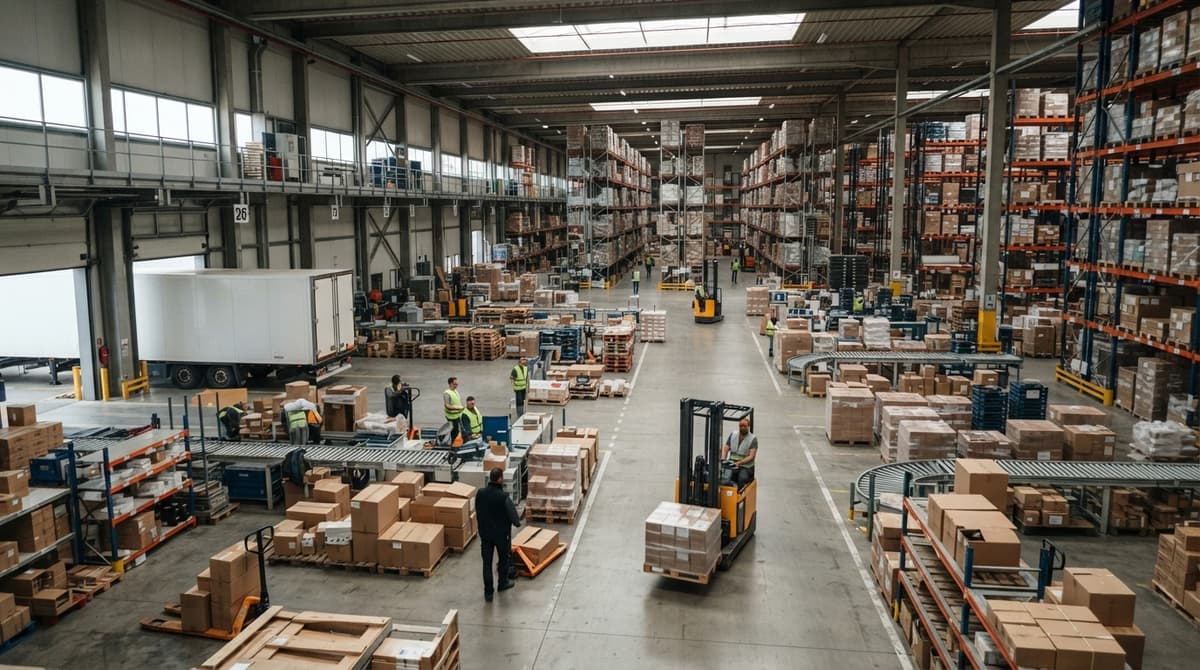
3PL companies, or third-party logistics providers, store goods for other businesses and handle picking, packing, and shipping orders on their behalf. If you run one, this article is for you. It covers how 3PL operations work, where the systems break down, and how to fix that without buying software built for a company ten times your size.
Published 23 August 2026. Reviewed and updated 15 September 2026.
Reviewed August 2026. Each figure comes from the assumptions stated beside it, so you can substitute your own and the arithmetic still holds.
Reviewed and updated 15 September 2026.
Book a callWhat Is a 3PL Company?
A 3PL, short for third-party logistics, is a business that handles storage and shipping for other companies. The client ships their products to the 3PL warehouse.
The 3PL stores those goods, picks and packs orders when sales come in, and ships them to the end customer.
The client never touches the box. They focus on selling. The 3PL handles the physical work.
In-house fulfillment means a brand runs its own warehouse with its own staff. A 3PL takes that job off the client's plate entirely.
For small brands, that trade is worth it. They get warehouse space and trained staff without the overhead.
Would you rather have it built around your operation?
The first look is free. If you would rather not compare products, describe how your operation already works and we build the system around it.
No build cost. You see it running on your own process first, and the monthly subscription starts only once it is live.
Book a callWhat Services Do 3PL Companies Offer?
3PL companies offer a core set of services that most clients need, plus extras that vary by provider.
Core services:
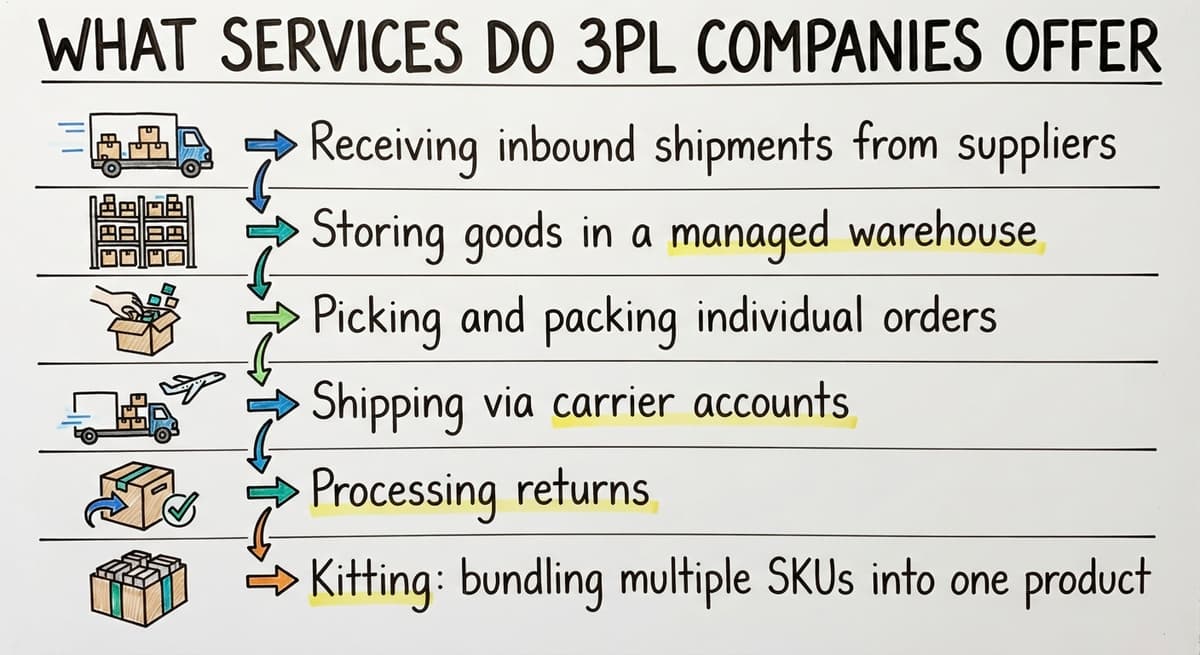
- Receiving inbound shipments from suppliers
- Storing goods in a managed warehouse
- Picking and packing individual orders
- Shipping via carrier accounts
- Processing returns
Value-added services:
- Kitting: bundling multiple SKUs into one product
- Labeling and repackaging
- Cross-docking: moving goods directly from inbound to outbound without storage
- Custom packaging and inserts
A small 3PL might focus on e-commerce pick and pack. A larger one might run cross-docking for wholesale clients. The mix depends on who the 3PL serves.
Inventory counting matters here for a legal reason, not just an operational one.
The IRS states directly in IRS Publication 538: "To figure taxable income, you must value your inventory at the beginning and end of each tax year." That applies to your clients. Accurate counts in your warehouse protect them at tax time.
How Do 3PL Companies Differ from Freight Brokers and Couriers?
3PL companies, freight brokers, and couriers get mixed up often. Here is the plain difference.
| Provider | Holds Inventory | Arranges Transport | Picks and Packs |
|---|---|---|---|
| 3PL | Yes | Sometimes | Yes |
| Freight Broker | No | Yes | No |
| Courier | No | Yes | No |
A freight broker finds a truck for your shipment. They never touch the goods. A courier picks up and delivers a package.
A 3PL physically holds your client's stock in a warehouse and manages it day to day.
If a business needs someone to store their goods and fulfill orders, they need a 3PL. If they just need a truck, they need a broker. Knowing the difference saves everyone time.
Who Uses 3PL Companies
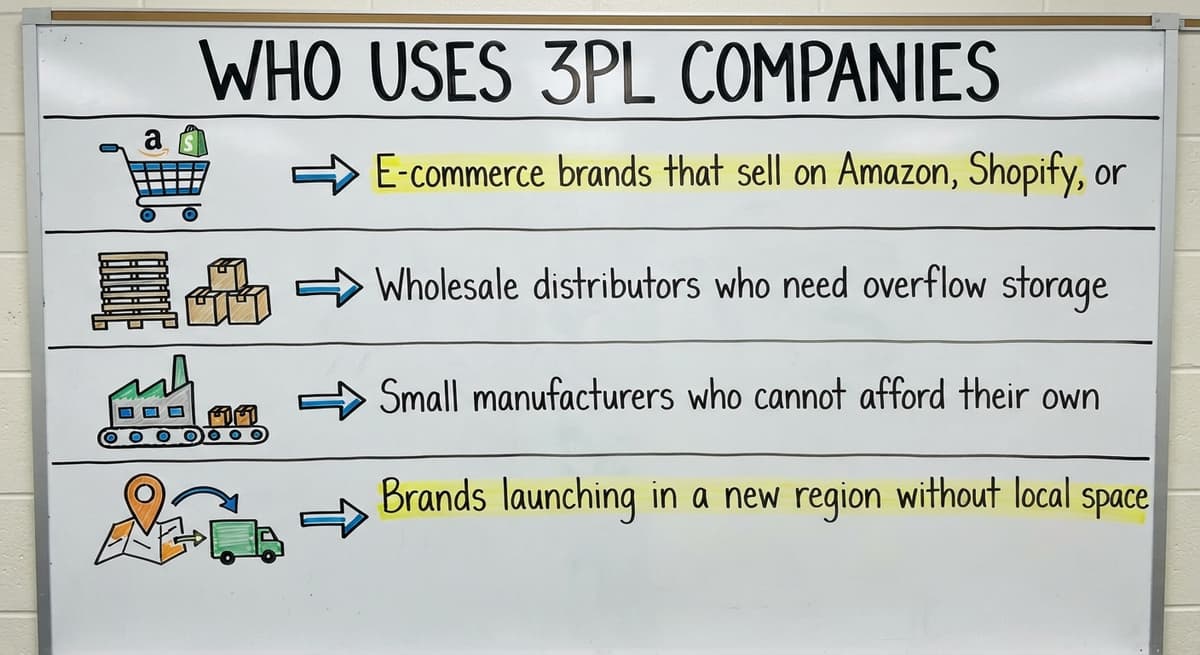
The most common 3PL clients are:
- E-commerce brands that sell on Amazon, Shopify, or their own site
- Wholesale distributors who need overflow storage
- Small manufacturers who cannot afford their own warehouse staff
- Brands launching in a new region without local space
The common thread is lean teams. A 5-person brand cannot hire a warehouse manager, a shipping clerk, and a returns handler.
A 3PL gives them all 3 for a monthly fee. That math works until the brand grows large enough to justify its own space.
Small and mid-size businesses make up most of the 3PL market. They outsource fulfillment because it is cheaper and faster than building the capability themselves.
Not sure this is the right shape for your operation?
The call is free. Describe how you receive, pick and count today. We map it on a call and show you what the system would look like built around that, before you spend anything.
Book a callHow Do 3PL Companies Manage Inventory?
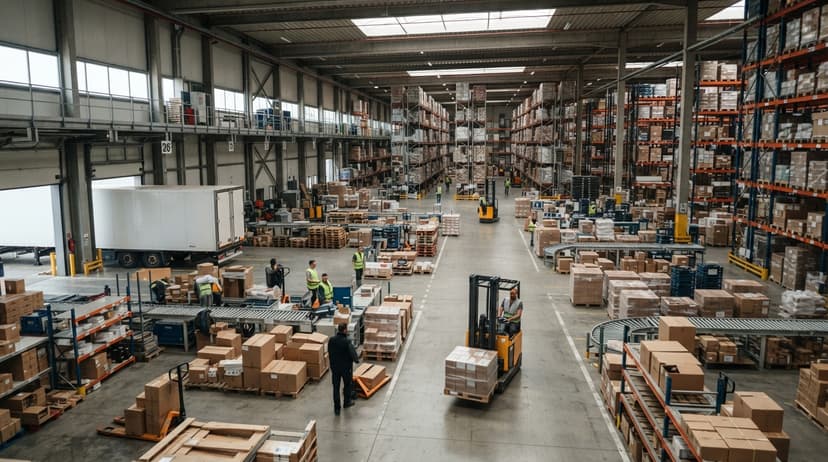
Inventory management inside a 3PL warehouse follows a clear cycle.
- Receiving: Goods arrive from the client's supplier. Staff count and check them against the purchase order.
- Put-away: Items go to assigned bin locations in the warehouse.
- Cycle counting: Staff count sections of the warehouse on a rolling basis rather than doing one big annual count.
- Stock adjustments: If counts do not match the system, staff correct the record and flag the discrepancy.
Accuracy matters more in a 3PL than in a single-brand warehouse. Your clients cannot walk the floor and check their own stock. They trust your numbers. One wrong count can cause a stockout for their best-selling product.
Software keeps those counts reliable. Without it, staff rely on spreadsheets and memory. Both fail as volume grows.

The Role of a Warehouse Management System in a 3PL
A warehouse management system, or WMS, is software that tracks every item in the warehouse from the moment it arrives to the moment it ships.
A WMS replaces paper logs, printed pick sheets, and email threads. It tells staff where to find a product, confirms the pick, and updates the inventory count in real time.
For a 3PL, a WMS is the operational backbone. Without it, running multiple clients in one warehouse is a manual nightmare. Stock gets mixed. Billing gets missed. Orders go out late.
A good 3PL Warehouse Management System overview page will show you what the core modules look like in practice.
The key point is that a WMS is not optional for a growing 3PL. It is the system that makes everything else work.

Why Do 3PL Companies Need Purpose-Built Software?
QuickBooks is excellent accounting software. It is not warehouse software.
QuickBooks tracks money. It does not track bin locations, pick sequences, or carrier labels. It cannot tell a picker where to find SKU-4471 in aisle 7. It does not know when a client's stock drops below their reorder point.
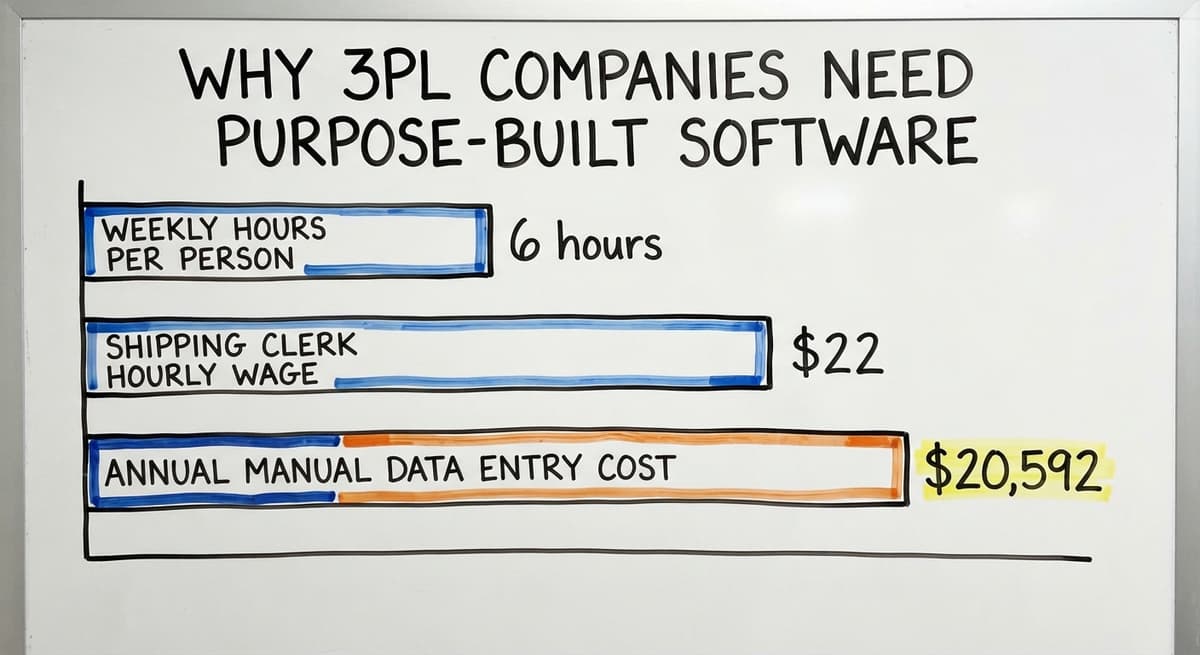
Spreadsheets fill the gap for a while. Then volume grows. 3 people spending 6 hours a week each on manual data entry, at the average wage for a shipping clerk of around $22 per hour, costs about $20,592 a year in labor alone. That is before you count the errors.
Purpose-built software closes that gap. It handles the warehouse workflow and sends the financial data to QuickBooks. You keep your accounting system. You add the operational layer it was never designed to provide.
Custom warehouse software for small operations is the right fit here, because off-the-shelf tools assume a workflow that may not match how your warehouse actually runs.

Common Software Problems 3PL Companies Face
If you run a 3PL on a mix of spreadsheets and QuickBooks, you probably recognize these problems.
- Duplicate data entry: Staff type the same order into 3 different places.
- Stock discrepancies: The spreadsheet says 200 units. The shelf has 183.
- Slow order processing: Someone has to manually check, print, and hand off each pick list.
- Billing errors: A special handling charge gets missed because no one logged it.
- Client complaints: A customer emails asking where their order is, and no one can answer quickly.
Each of these is a symptom of the same root cause. The system was not built for what you are doing.
A WMS is designed to solve each of these problems at the process level, not just patch them one at a time.

How Does Order Fulfillment Work Inside a 3PL?
The Order Lifecycle
Every order moves through the same steps inside a 3PL fulfillment center.
- Order arrives from the client's sales channel (Shopify, Amazon, EDI, etc.)
- WMS assigns the order to a picker and generates a pick list
- Picker pulls items from bin locations confirmed by the system
- Packer boxes the order and prints the shipping label
- Carrier picks up the package
- WMS marks the order as shipped and notifies the client
A WMS automates steps 2, 3, and 6. That cuts errors and speeds up the whole cycle. The picker does not have to guess. The client does not have to ask.
Why Does Real-Time Status Matter?
Clients want to know where their orders stand at any moment. A WMS that updates in real time means clients can check their own dashboard instead of calling your office. That saves your staff time and makes your clients feel in control.
Client Visibility and Reporting in 3PL Operations
A 3PL client cannot see their stock in person. They rely entirely on what you show them. If your reporting is slow or unclear, they lose trust fast.
A client portal gives each client a live view of:
- Current stock levels by SKU
- Open and shipped orders
- Returns processed
- Billing activity
Poor visibility is one of the top reasons clients leave a 3PL. Good visibility is a reason they stay and refer others. A client portal is not a luxury. It is a retention tool.
Fulfillment center operations software should include client-facing reporting as a standard feature, not an add-on.
Is the comparison easier when one option is built for you?
Yes. Off-the-shelf means fitting your process to the software, and custom is the other way round. The first look costs nothing.
Book a call
Billing and Invoicing Challenges for 3PL Companies
3PL billing is more complex than most service businesses. A single client invoice might include:
- Monthly storage fees by pallet or bin
- Per-order pick fees
- Per-item pack fees
- Special handling charges
- Inbound receiving fees
- Return processing fees
When you track all of this manually, things get missed. A missed line item is lost revenue. A wrong line item triggers a dispute. Both cost you time.
Software should capture every billable event as it happens. When a picker scans an item, the system logs a pick fee.
When a return comes in, the system logs a return fee. At month end, the invoice builds itself.
That billing data should then flow cleanly into QuickBooks. QuickBooks integration for distributors and warehouses is a solved problem. You do not need to re-enter anything.
How Does 3PL Software Connect to QuickBooks?
Most small 3PL companies already use QuickBooks for accounting. That is not a problem. You do not need to replace it.
The right operational software sits between your warehouse floor and QuickBooks. It handles picking, packing, inventory, and billing. Then it pushes the financial data to QuickBooks in a clean format.
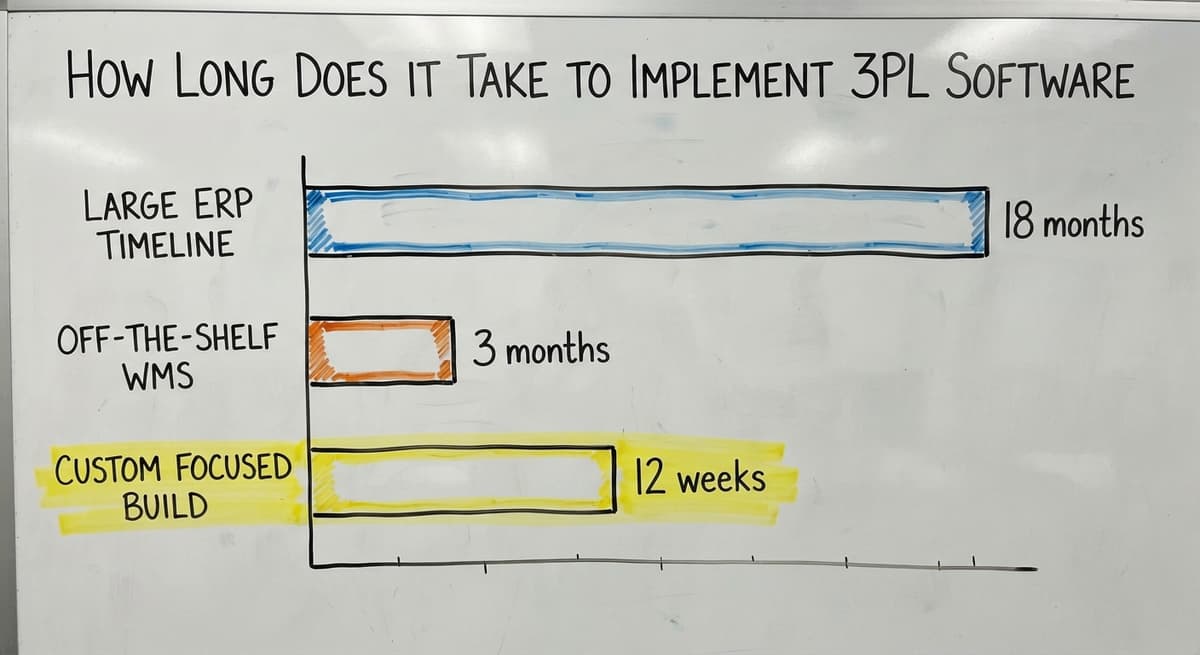
This avoids a full ERP migration. ERP systems built for large companies can take 12 to 18 months to implement and cost more than most small 3PLs make in a year.
A focused WMS with a QuickBooks connection can go live in weeks.
The goal is to add the capability QuickBooks was never designed to provide, without touching the accounting system your team already knows.
Signs a 3PL Company Has Outgrown Its Current System
Some signs are obvious. Others creep up slowly.
Clear warning signs:
- Stock errors happen more than once a month
- Billing disputes are a regular conversation with clients
- Onboarding a new client takes more than 2 weeks
- Staff use memory or sticky notes instead of the system
- You turned down a new client because you were not sure you could handle the volume
Growth stalls when operations cannot scale. A 3PL that cannot onboard clients quickly or bill accurately will lose them just as fast. These signs are the trigger point for investing in better software.

What Should You Look for in Software for 3PL Companies?
Key Features
Not all WMS products target multi-client operations. Look for:
- Multi-client inventory with clear separation between clients
- Automated billing that captures fees as they happen
- Order tracking from receipt to shipment
- Client portal or reporting dashboard
- Carrier integration for label printing
- QuickBooks integration
Questions to Ask Before You Buy
- Does it handle multi-client inventory without manual workarounds?
- Can it be set up to match our billing rules exactly?
- Who implements it and supports it after go-live?
- What is the total cost, including setup and training?
- Can you give us references from 3PL companies our size?
Avoid systems built for warehouses with 200 staff. They carry features you will never use and complexity you do not need. Wholesale distribution software aimed at large distributors falls into this trap.

Custom Software vs Off-the-Shelf WMS for 3PL Companies
Off-the-shelf WMS products are fast to buy and slow to fit. They were built for a generic warehouse. Your operation is not generic.
If your billing rules are unusual, your client mix is specific, or your workflow does not match the software's assumptions, you will spend months adapting your process to fit the tool. That is the wrong direction.
Custom warehouse software is built around how your operation already works. The process does not change. The software matches it.
Custom is not always the right answer. If your operation is straightforward and an off-the-shelf tool fits well, use it.
But for small 3PLs with specific client needs or unusual billing structures, custom software costs less in the long run than forcing a poor fit.
How Long Does It Take to Implement 3PL Software?
Timelines vary by approach.
| Approach | Typical Timeline | Disruption Risk |
|---|---|---|
| Large ERP system | 12 to 18 months | High |
| Off-the-shelf WMS | 1 to 3 months | Medium |
| Custom focused build | 6 to 12 weeks | Low to medium |
Phased rollouts reduce risk. Start with receiving and inventory. Add order fulfillment next. Add billing last. Each phase goes live before the next one starts, so daily operations keep running.
A local implementation partner speeds this up. They can visit the warehouse, see how things actually work, and build the system around what they observe rather than what you describe over a video call.
What does it look like running on your own process?
The first thing you see is it running on your own process, at no build cost. The subscription starts once it is live and doing the job, not before.
Book a callHow Do 3PL Companies Onboard New Clients with the Right Software?
Client onboarding inside a 3PL involves setting up a lot of details fast.
- Create the client profile in the system
- Load their SKU list with weights, dimensions, and storage locations
- Set billing rules for their specific fee structure
- Connect their sales channel so orders flow in automatically
- Run a test shipment before going live
Without software, this takes days of manual setup. With the right system, it takes hours. Faster onboarding means faster revenue from new clients. It also means a better first impression.
Clients who have a smooth start are more likely to stay. They are also more likely to refer other brands. Onboarding is a sales tool as much as an operational one.
Scaling a 3PL Company Without Adding Headcount
The biggest cost in a 3PL is labor. Every new client adds volume. Volume without automation means more staff.
Automation changes that math. Software handles:
- Data entry for inbound and outbound orders
- Billing calculation at month end
- Status updates to clients
- Inventory adjustments after each pick
A team of 4 people running on a good WMS can handle the volume that would otherwise need a team of 7.
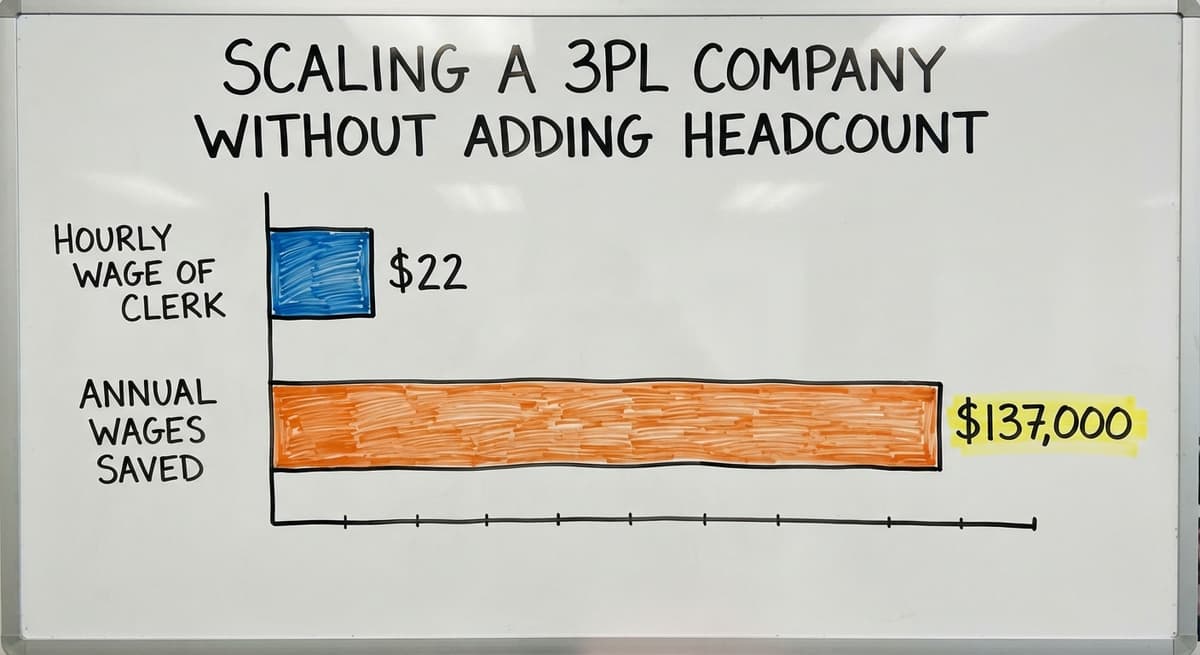
The Bureau of Labor Statistics reports that warehouse and shipping clerks earn around $22 per hour on average. Avoiding 3 extra hires at full time saves roughly $137,000 a year in wages before benefits.
That is the competitive advantage for a small 3PL. You do not need to be big. You need to be efficient.
Compliance and Accuracy Requirements for 3PL Companies
Clients and carriers expect accurate records. Some clients will ask for audit trails as part of their own compliance needs.
Software creates a documented history of every transaction. Every receipt, every pick, every shipment, every adjustment is logged with a timestamp and a user ID.
If a dispute comes up, you can pull the record in seconds.
Without software, disputes become a conversation about whose spreadsheet is right. With software, the record speaks for itself. That protects your business and your client relationship.
The NIST Manufacturing Extension Partnership offers vendor-neutral guidance on supply chain process and accuracy standards that apply directly to 3PL operations.
How Do Small 3PL Companies Compete with Larger Providers?
Large 3PLs have scale. Small 3PLs have something else: flexibility, speed, and personal service.
A small 3PL can change a client's billing structure in a day. A large provider might take weeks.
A small 3PL's owner answers the phone. At a large provider, the client talks to a ticketing system.
The right software levels the playing field on the operational side. A client portal that shows real-time stock levels looks the same whether it comes from a 10-person 3PL or a 500-person one. Automated billing that never misses a fee looks the same too.
Small 3PLs that invest in the right systems look and operate like much larger providers. That closes the gap where it matters most, which is in the client's experience.
Working with a Local Software Partner for Your 3PL
Software built from a video call is never as good as software built from a warehouse visit.
A local partner can walk your floor, watch how your staff pick orders, see where the paper piles up, and understand your operation in a way that a remote team cannot. That leads to better-fitting software.
Local partners also understand regional carrier relationships and client expectations. A 3PL in the Midwest serves different clients with different needs than one on the coasts.
Columbus, Ohio, for example, sits at the center of a dense logistics corridor. 3PLs in that region serve manufacturers, wholesale distributors, and e-commerce brands across the Midwest.
A software partner with local roots in that market understands those relationships and builds for them.
Next Steps for 3PL Companies Ready to Improve Their Operations
If any section of this article described your operation, the next step is simple. Audit what you are doing manually right now.
- Where does data get entered more than once?
- Where do billing disputes come from?
- How long does it take to onboard a new client?
- What would break first if your volume doubled?
Those answers tell you where to start. You do not need to replace everything at once. You need to fix the part that is costing you the most.
The Software Society works with small and mid-size operations to build systems that fit the way you already work.
We do not sell a product and walk away. We implement, we support, and we stay involved.
If you want to talk through what a custom system could look like for your 3PL, start with a conversation.
No pressure, no pitch deck. Just a direct look at your operation and an honest answer about what would help.
Frequently asked questions
Frequently asked questions
What does a 3PL company do?
A 3PL company stores goods for other businesses and handles picking, packing, and shipping orders on their behalf.
When a customer places an order with a brand, the 3PL pulls the item from the shelf, boxes it, and ships it. The brand never touches the product. The 3PL manages the warehouse, the staff, and the carriers.
What are 3PL logistics companies?
3PL logistics companies are businesses that provide outsourced warehousing and fulfillment services. A client ships their inventory to the 3PL's warehouse.
The 3PL stores it, fulfills orders, and ships to end customers. They are different from freight brokers, who arrange transport but never hold goods, and from couriers, who only deliver packages.
Who are the top 10 3PL companies?
There is no single ranked list that applies to every business. The right 3PL depends on what you sell, how many orders you ship, and where your customers are.
Large providers include DHL Supply Chain, XPO Logistics, Ryder, and Fulfillment by Amazon. For smaller brands, regional 3PLs offer better service and more flexible billing. The best fit is the one whose services, location, and software match your actual needs.
Which 3PL company is the cheapest in the USA?
There is no single cheapest 3PL. Pricing depends on your order volume, product size and weight, storage needs, and the services you require.
A provider that looks cheap on storage fees may charge more for picks or special handling. Always compare total cost across a realistic monthly order volume, not just the rate card headline.
Can a 3PL use QuickBooks and still have proper warehouse software?
Yes. QuickBooks handles accounting well but was not built for warehouse operations. The right approach is to run a WMS for picking, packing, inventory, and billing, then connect it to QuickBooks so financial data flows across automatically.
You keep the accounting system your team knows and add the operational layer it was never designed to provide.
What are the signs that a 3PL has outgrown its current system?
Common signs include stock errors happening more than once a month, regular billing disputes with clients, onboarding a new client taking more than 2 weeks, staff using memory or sticky notes instead of a system, and turning down new clients because you are not confident you can handle the volume.
Any one of these is a signal. All of them together mean it is time to invest in better software.
How does a warehouse management system help a 3PL?
A WMS tracks every item in the warehouse from the moment it arrives to the moment it ships. It tells pickers where to find products, confirms each pick, updates inventory counts in real time, and logs every billable event for invoicing. It replaces paper logs, spreadsheets, and email threads with a single system that all staff and clients can rely on.
How long does it take to implement software for a 3PL company?
A large ERP system can take 12 to 18 months. An off-the-shelf WMS takes 1 to 3 months. A custom focused build, done with a local partner who can visit the warehouse, goes live in 6 to 12 weeks.
Phased rollouts reduce disruption. Starting with receiving and inventory, then adding order fulfillment and billing in stages, keeps daily operations running throughout.
What is the difference between 3PL and 4PL?
A 3PL stores, picks, packs, and ships your goods from its own warehouse. A 4PL manages your 3PLs, carriers, and the rest of the chain on your behalf, and usually owns no warehouse.
Most businesses under 5,000 orders a week use a 3PL and manage it themselves.
How do I choose the best 3PL provider?
Match on 4 things: location near your customers, experience with your product type, a rate card you can model against your order profile, and a client portal that shows live stock.
Then send a test batch of 50 orders before signing a term.
How much does a 3PL cost?
Storage at $10 to $40 per pallet a month, receiving at $5 to $15 per pallet, pick and pack at $2 to $4 per order plus $0.25 to $0.75 per extra item, and postage at the 3PL's negotiated rate.
A 1,000-order month with 50 pallets stored runs $4,000 to $8,000 before postage.
Which 3PL companies are best for ecommerce?
The ones with a direct connection to your store platform, 2-day ground coverage to most of your customers from their warehouse network, and returns handling in the rate card.
Size matters less than fit: a regional 3PL near your customers beats a national one.
Start with a free first look
A 30 minute call, your operation mapped, and a clear picture of what we would build. No obligation and nothing to install.
Book a callRelated guides
The rest of this guide, for the parts of the job this page does not cover.