


Dealer vs Distributor
Dealer vs distributor: a distributor sells in bulk to dealers and businesses, a dealer sells to end users. See the pricing, margin, and record differences.
Book a callDealer vs Distributor: The Short Answer
A distributor buys in bulk from a manufacturer and sells to dealers, retailers, and other businesses. A dealer buys from a distributor or a maker and sells to the end user. The terms overlap in some trades, so the contract decides the role. (Reviewed November 2026.)
Read the deal terms before you trust the label. A firm called a dealer can act like a distributor, and the reverse is just as common.
We build it for your operation, and the first look is free
If you would rather not compare products, describe how your operation already works and we build the system around it.
No build cost. You see it running on your own process first, and the monthly subscription starts only once it is live.
Book a callWhat Is a Distributor and What Is a Dealer?
The two roles sit at different points in the supply chain. The supply chain is the path a product takes from factory to buyer.
What Is a Distributor?
A distributor sits between the maker and the seller. Distributors buy large loads, hold stock in a warehouse, and ship smaller lots. Many hold a contract or a sales territory from the maker. Most sell to other businesses, not the public. Business distributors also carry the freight and the stock risk. The IRS treats stock counts as a legal duty, and IRS Publication 538 states, "To figure taxable income, you must value your inventory at the beginning and end of each tax year."
So a distributor sells to dealers, retailers, and other businesses, and it must know what sits on its shelves.
What Is a Dealer?
A dealer is a business that sells to the final customer, often with local advice, service, or installation. Dealers buy smaller amounts, often on a regular schedule. An authorized dealer is one a brand has approved to sell and support its products. Plain examples include an equipment dealer, a parts dealer, and a supply shop.
The dealer is the face the customer meets, and the customer expects help after the sale.

Key Differences Between a Dealer and a Distributor
The difference between a dealer and a distributor shows up in five places. The table lists each one in a single line.
| Point | Distributor | Dealer |
|---|---|---|
| Buys from | The manufacturer | A distributor or the manufacturer |
| Sells to | Dealers, retailers, businesses | The end user |
| Order size | Large | Small to mid-size |
| Stock held | Deep, in a warehouse | Shallow, on the floor or shelf |
| Margin | Thinner, earned on volume | Higher, earned per sale |
Distributors move more freight and carry more stock. Dealers earn more on each sale, so the dealer usually makes more profit per sale. The distributor makes it up in volume.
Not sure this is the right shape for your operation
Describe how the work runs today. We map it on a call and show you what it would look like built around that, before you spend anything.
Book a callHow Wholesale Pricing Differs
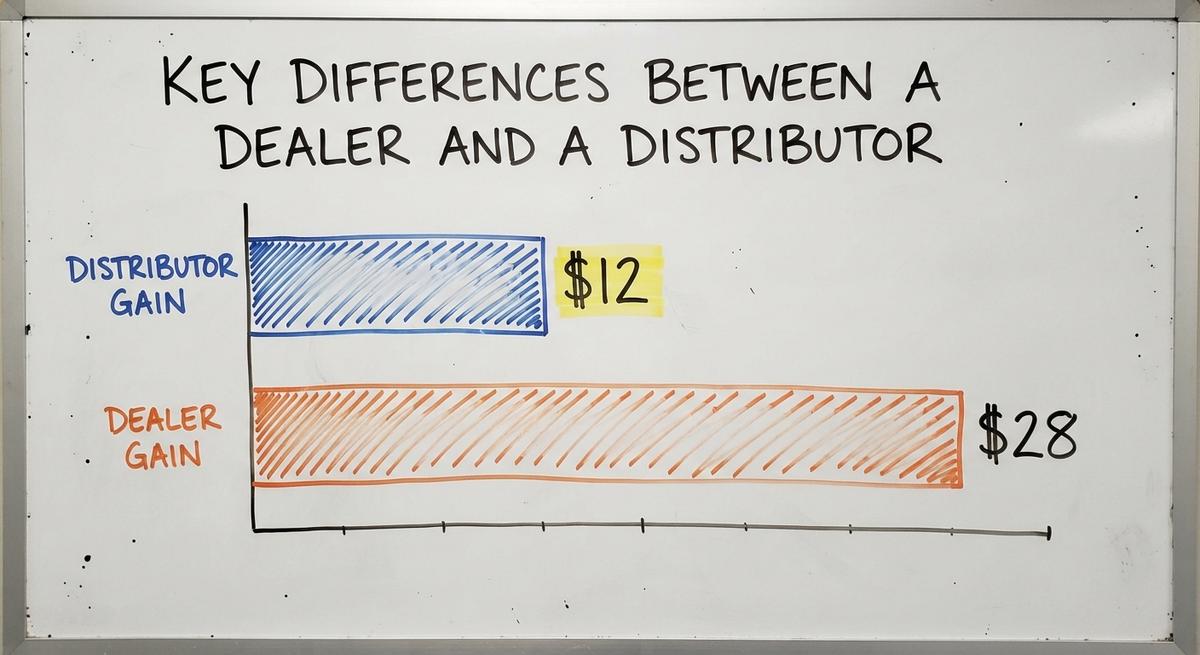
Distributors get the lowest price tier from the maker. Dealers pay a price with room in it for the distributor's cut. Here is an example with assumed numbers. A maker sells a part for $60. The distributor sells it to a dealer for $72, a $12 gain or about 17% of that sale. The dealer sells it for $100, a $28 gain or 28%.
Wholesale pricing also brings volume breaks, rebates, and price lists set for each customer. Many firms keep these rules in spreadsheets. That is where the errors start.
Can a Business Be Both a Dealer and a Distributor?
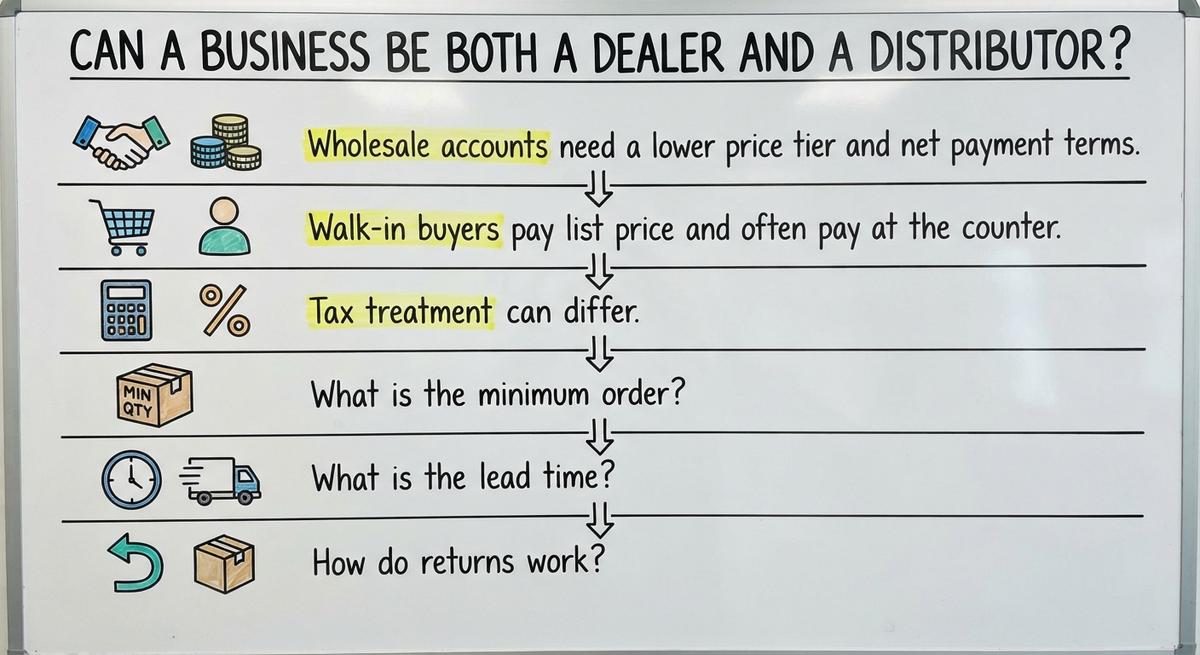
Yes, one company can be both a dealer and a distributor. Many sell wholesale to dealers and also sell direct to end users. The common mix is wholesale accounts plus a walk-in counter or direct sales.
Each customer type needs its own setup:
- Wholesale accounts need a lower price tier and net payment terms.
- Walk-in buyers pay list price and often pay at the counter.
- Tax treatment can differ, since resale buyers may hold exemption certificates.
Clear customer types keep orders and reports clean.
Which One Should You Work With?
Buyers who need one item or local help go to a dealer. Resellers who need volume and steady supply go to a distributor. Ask each seller five questions:
- What is the minimum order?
- What is the lead time?
- How do returns work?
- Which territory do you cover?
- What support do you give after the sale?
The answers tell you quickly which role the seller plays for you.

Why the Difference Matters for Your Records
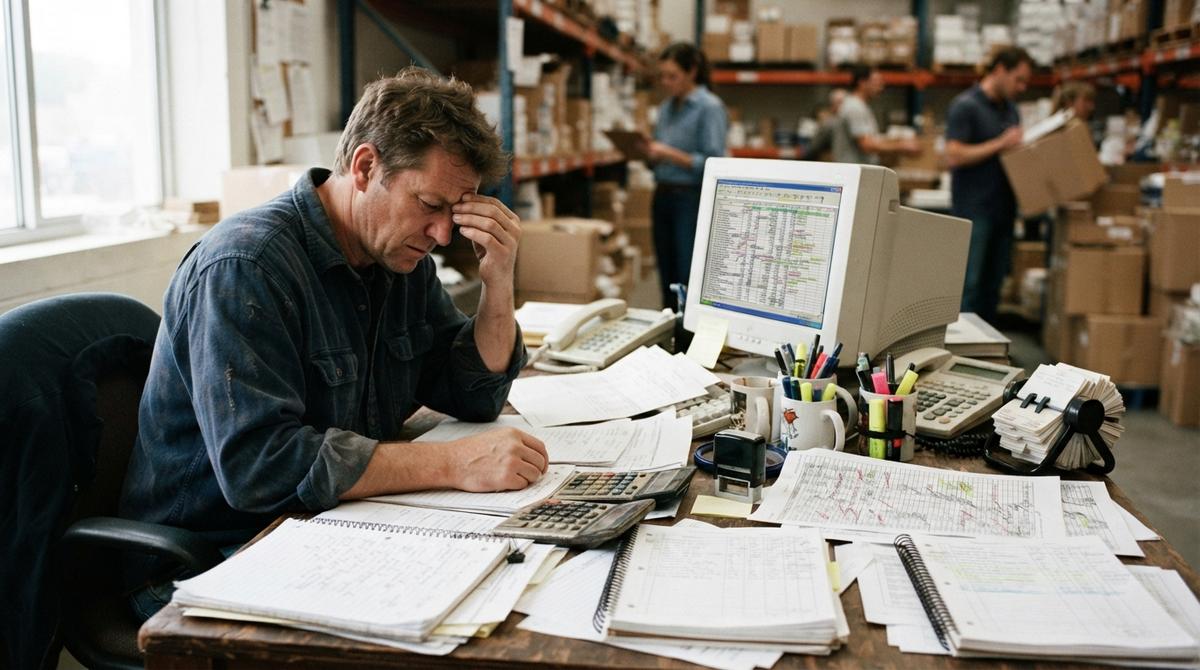
The cost adds up. Assume 2 people spend 5 hours a week fixing price and order errors at $22 an hour. That is 520 hours and $11,440 a year. The Census Bureau tracks wholesale inventories and sales for the whole sector, and NIST offers supply chain guidance for small firms.
Each customer type needs its own price list, terms, credit limit, and tax setup. Small distributors often track this in accounting software plus Excel, paper sheets, and email. Gaps cause wrong prices, missed rebates, and confusing orders.
The Software Society builds custom systems around how an operation already works. We keep your accounting software where it helps and replace only the manual parts. If your price lists live in spreadsheets, talk to us about a custom workflow.
Is a Wholesaler the Same as a Distributor?
A wholesaler and a distributor are often the same thing in daily use. Both buy in bulk and resell to other businesses. The dealer vs wholesaler gap is the same as the dealer vs distributor gap: the wholesaler sells to businesses, the dealer sells to the end user.
The wholesale vs distributor line is mostly about the maker tie. A distributor usually holds a contract and a territory. A wholesaler may buy from many makers with no deal in place.
Check the contract, not the name on the door.
Frequently asked questions
What is the difference between an authorized dealer and a distributor?
An authorized dealer sells a brand's products to end users with the brand's approval. A distributor buys in bulk and sells to dealers and other businesses. The dealer serves the customer. The distributor serves the dealer.
Who does a distributor sell to?
A distributor sells to dealers, retailers, and other businesses. Most do not sell to the public. Some also run a counter for walk-in buyers.
Does a dealer or a distributor make more profit?
A dealer earns more per sale, since its margin is higher. A distributor earns less per sale but sells far more units. Total profit depends on volume and cost.
Can a company be both a dealer and a distributor?
Yes. Many firms sell wholesale to dealers and also sell direct to end users. Each customer type needs its own prices, terms, and tax setup.
Is a wholesaler the same as a distributor?
Often similar. Both sell in bulk to businesses. A distributor usually has a closer tie to the manufacturer, such as a contract or a territory.
Do dealers buy directly from manufacturers?
Sometimes. Large dealers with a strong contract can buy direct. Most smaller dealers buy from a distributor.
How should a business track different customer types and prices?
Give each type its own price list, terms, credit limit, and tax setting. Keep them in one system, not in scattered spreadsheets and email.
Start with a free first look
A 30 minute call, your operation mapped, and a clear picture of what we would build. No obligation and nothing to install.
Book a callRelated guides
More on the same work.
Guides
- Business Distributors
- Distributor Examples
- Company Distributor
- Distribution Management Software
- Cloud-based Purchase Order System
- Distribution Inventory Management