

What is the Distributor
What is the distributor? A distributor buys from makers and sells to businesses. Learn the job, the types, the margin, and how small teams run it.
Book a callWhat Is the Distributor?
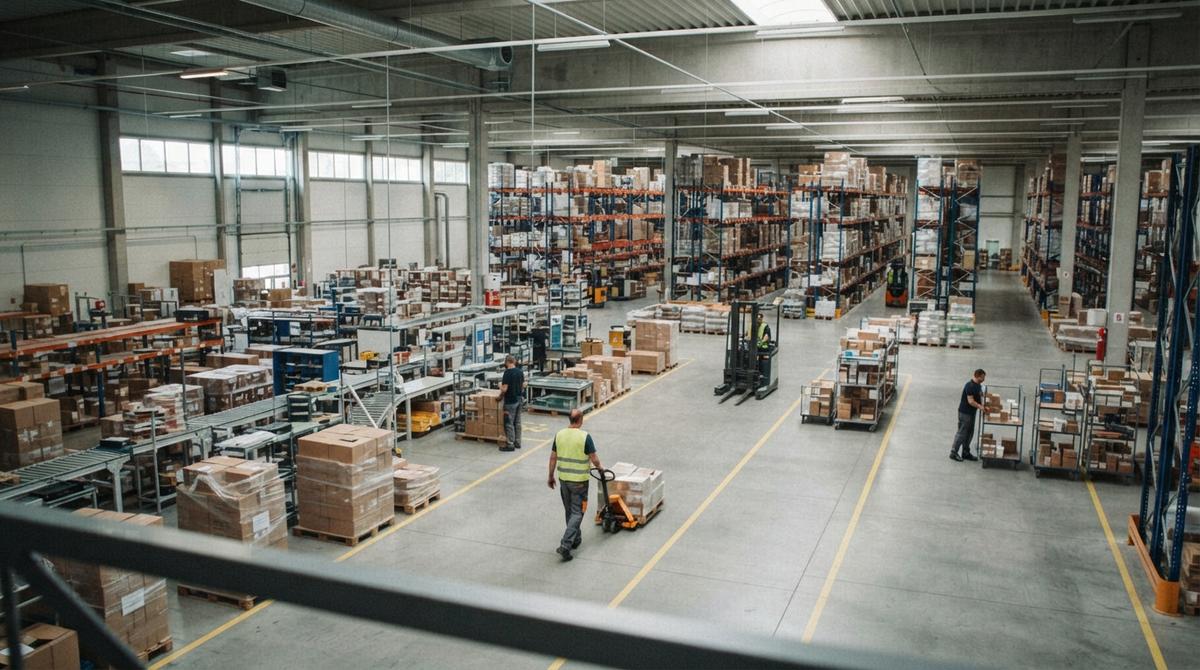
A distributor is a business that buys products from makers and sells them to retailers, contractors, or other businesses. That is the distributor definition in one line. The distributor is the middle link between the maker and the buyer. The maker builds the goods. The buyer needs them close by and on time. The distributor holds the stock, takes the order, and ships it.
We build it for your operation, and the first look is free
If you would rather not compare products, describe how your operation already works and we build the system around it.
Reviewed November 2026.
No build cost. You see it running on your own process first, and the monthly subscription starts only once it is live.
Book a callWhat Does a Distributor Do Day to Day?
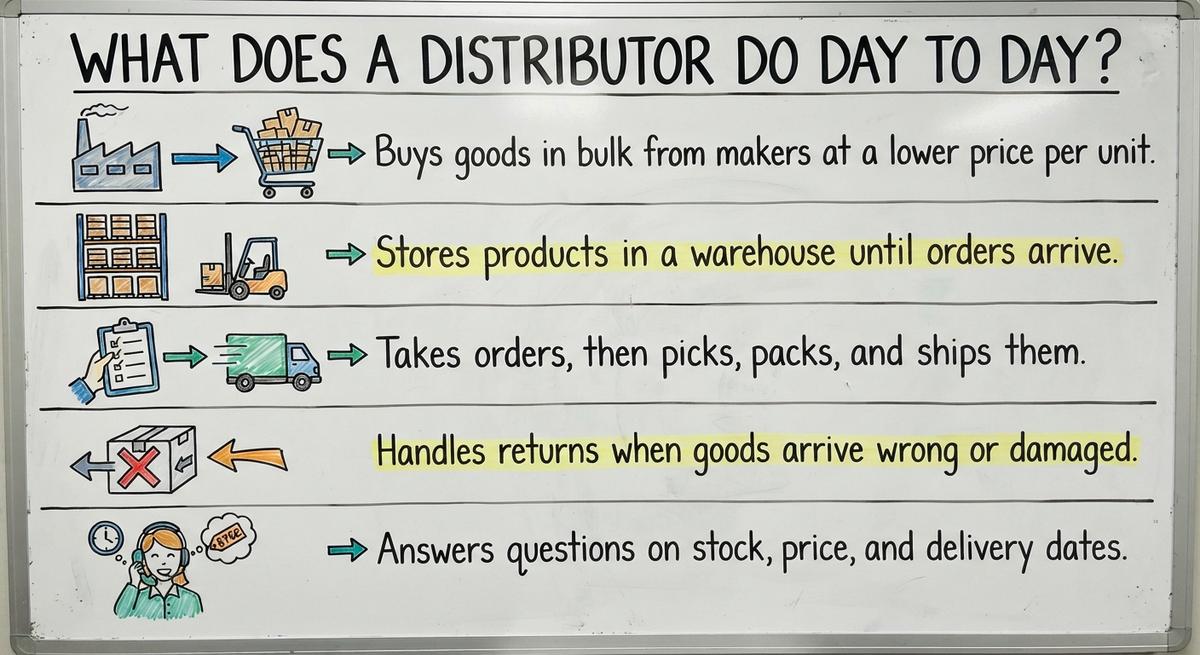
A distributor does 5 core jobs each day. Wholesale distribution runs on these steps:
- Buys goods in bulk from makers at a lower price per unit.
- Stores products in a warehouse until orders arrive.
- Takes orders, then picks, packs, and ships them. Readers who ask what is picking and packing in a warehouse will find it is just pulling items and boxing them.
- Handles returns when goods arrive wrong or damaged.
- Answers questions on stock, price, and delivery dates.
Take a plumbing parts distributor. A local contractor calls at 7 a.m. for 40 pipe elbows. The crew picks them by noon and the truck leaves by 1 p.m.
Counting stock is also the law. IRS Publication 538 says, "To figure taxable income, you must value your inventory at the beginning and end of each tax year." A distributor with bad counts has bad tax numbers too.
Why Do Manufacturers Use Distributors?
Manufacturers use distributors because selling to thousands of small buyers one order at a time costs too much. A distributor reaches more customers than one maker can. The distributor also takes on storage and delivery. Risk and shipping cost get spread out. A maker ships 1 full truck to 1 distributor. The distributor splits it into hundreds of small orders. The maker sells more and spends less on each sale.

Distributor vs. Wholesaler: What Is the Difference?
The two words often name the same thing. In the distributor vs wholesaler debate, the gap is small and loose. Many distributors keep a closer, ongoing tie to a maker. That tie can come with set territories or fixed product lines. A wholesaler tends to buy and resell a wider mix of goods from many sources. Real businesses do both. A firm may carry 1 exclusive line and 300 open-market items. Customers care about stock and speed, not the label, so the work matters more than the name on the door.
Not sure this is the right shape for your operation
Describe how the work runs today. We map it on a call and show you what it would look like built around that, before you spend anything.
Book a call
Types of Distributors
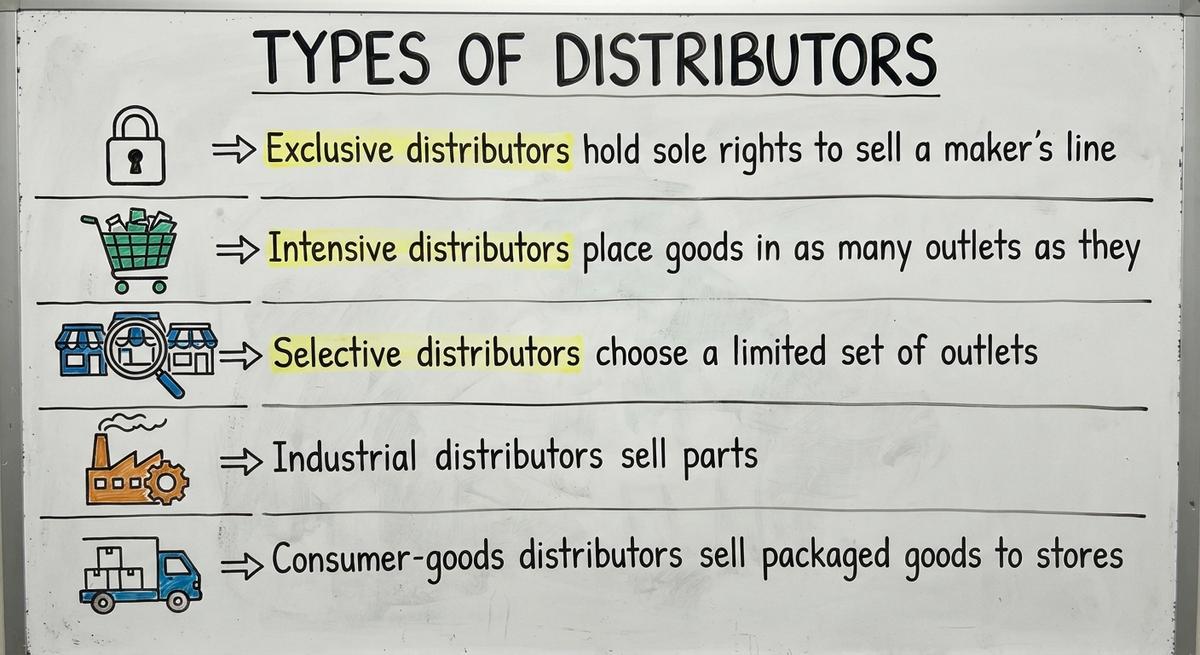
There are 5 common types of distributors, and each one sells to businesses in its own way:
- Exclusive distributors hold sole rights to sell a maker's line in one area.
- Intensive distributors place goods in as many outlets as they can reach.
- Selective distributors choose a limited set of outlets that fit the brand.
- Industrial distributors sell parts, tools, and supplies to factories and contractors.
- Consumer-goods distributors sell packaged goods to stores, cafes, and restaurants.
The first 3 describe how wide the reach is. The last 2 describe what is sold. One firm can fit 1 from each group.
Where the Distributor Fits in the Supply Chain
The supply chain distributor sits in the second step of 4. Goods move in this order:

- The manufacturer makes the product.
- The distributor buys it and stores it.
- A retailer or business buyer orders from the distributor.
- The end user buys and uses it.
Remove step 2 and the maker must ship to every buyer. A maker with 500 buyers sends 500 shipments instead of 1 truck. Cost rises and delivery slows. The NIST Manufacturing Extension Partnership offers vendor-neutral guidance on supply chain process.
How Do Distributors Make Money?
Distributors make money by buying at a lower price and selling at a higher one. The gap is called margin. Margin pays for the warehouse, staff, trucks, and overhead. The US Census Bureau tracks wholesale sales and stock each month. Small slips cut deep. A 2% pricing error on $1,000,000 in sales costs $20,000. A wrong stock count does the same damage in lost orders. Tight control of price and stock protects margin.
What Tools Do Distributors Use to Run the Work?
Many small distributors run on an accounting package. The overflow lives in Excel sheets, Access databases, printed pick sheets, and email.
Where the Gaps Show Up
Three gaps repeat. Stock counts do not match the shelf. Staff retype orders by hand. Key facts sit in one person's head. Say 3 people spend 6 hours a week on retyping at $22 an hour. That is 3 x 6 x 52 x $22, or $20,592 a year.
What Custom Software Changes
Custom software is built around how your team already works. A big ERP (a large all-in-one business system) is not required. Owners ask what are the benefits of warehouse management system software. The short answer is fewer retyped orders and counts that match. The tool can connect to your accounting software, so the books stay where they are useful. Only the manual parts get replaced. The Software Society builds custom workflows this way.
Is Being a Distributor a Good Business Model?
Being a distributor is a good business model for owners who can handle thin margins and stock risk. The upsides are clear:
- Repeat customers reorder on a steady cycle.
- The supply chain needs the role.
- Growth comes from adding product lines and buyers.
The downsides are just as real:
- Margins are thin.
- Unsold stock ties up cash.
- Daily coordination takes heavy effort.
Good systems keep a distributor organized as volume grows. If your team has outgrown sheets and email, talk to The Software Society about a workflow built for your warehouse.
Frequently asked questions
What is an example of a distributor?
A plumbing parts distributor is a clear example. It buys pipe and fittings from makers by the pallet. It stores them and sells small orders to local contractors.
How does a distributor make money?
A distributor buys goods at a lower price and sells them at a higher one. The gap, called margin, pays for the warehouse, staff, trucks, and overhead. What is left is profit.
What is the job of a distributor?
The job of a distributor is to move goods from makers to buyers. It buys in bulk, stores stock, ships orders, and handles returns and questions.
Who does a distributor buy from?
A distributor buys from manufacturers. Some also buy from importers or other distributors when a maker does not sell direct.
What is the difference between a distributor and a wholesaler?
The terms overlap. A distributor often has a closer, ongoing tie to a maker, sometimes with set territories. A wholesaler often resells a wider mix of goods. Many firms do both.
What are the types of distributors?
Common types are exclusive, intensive, and selective distributors. Industrial and consumer-goods distributors describe what is sold to business buyers.
What tools do small distributors use to run their operations?
Many use an accounting package plus spreadsheets, databases, paper, and email. Custom software can replace the manual steps and leave the accounting package in place.
Start with a free first look
A 30 minute call, your operation mapped, and a clear picture of what we would build. No obligation and nothing to install.
Book a callRelated guides
More on the same work.
Guides
- Business Distributors
- Distributor Examples
- Company Distributor
- Distribution Management Software
- Cloud-based Purchase Order System
- Distribution Inventory Management