

Distributor Examples
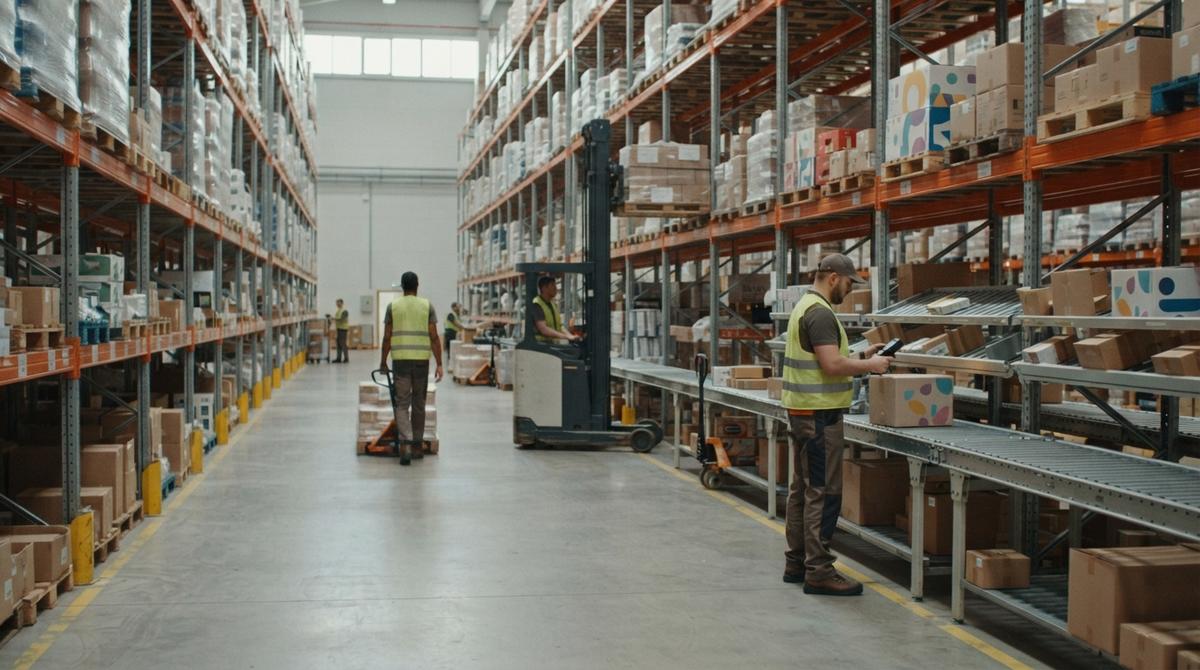
A distributor is a business that buys goods in bulk from makers and sells them to other businesses. It sits between the maker and the buyer. We reviewed it in 2025 for owners of small distribution businesses.
Book a callDistributor Examples: What Each Type Sells and Where Work Gets Hard
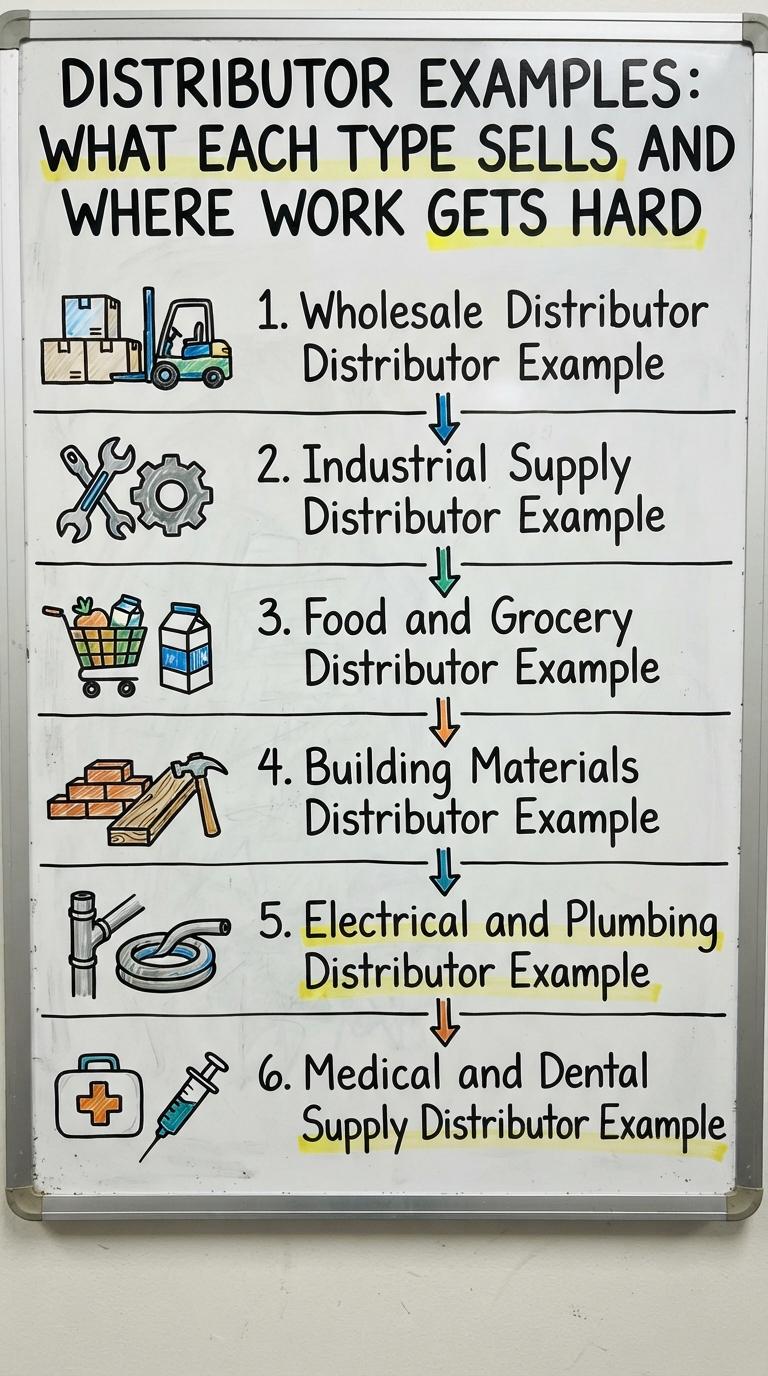
Nine types of distributors cover most of the field. Each one buys in volume and sells in smaller lots. The list below is short enough to quote alone.
- Industrial supply: fasteners, safety gear, and tools for factories and shops.
- Food: fresh and dry goods for restaurants, cafes, and stores.
- Building materials: lumber, roofing, and drywall for contractors.
- Electrical and plumbing: wire, pipe, and fittings for trade crews.
- Medical and dental: gloves and instruments for clinics.
- Auto parts: parts for repair shops and dealers.
- Beverage: beer, soda, and water for bars and stores.
- Office and janitorial: paper, soap, and cleaning supplies.
- Pet and farm supply: feed and care goods for stores and farms.
Every type moves goods from a maker to a buyer, and only the details change.
Wholesale Distributor Example
A wholesale distributor buys from many makers and sells to retailers. Picture a regional gift and home goods wholesaler that sells to local shops. Each maker sends its own price list. Each shop has its own deal. The staff juggle dozens of lists and special rates. One wrong price on an invoice costs money or trust. The pain here is customer-specific pricing spread across many lists.
Industrial Supply Distributor Example
An industrial distributor sells fasteners, safety gear, tools, and parts to factories and shops. The catalog holds thousands of SKUs, which are unique item codes. Buyers reorder the same items again and again. Quotes and reorders often live on paper or in a staff member's inbox. A buyer who waits a day for a quote calls the next supplier. The pain is quotes and reorders tracked by hand.
Food and Grocery Distributor Example
A food distributor supplies restaurants, cafes, and stores with fresh and dry goods. Lot numbers, expiration dates, and daily delivery routes all matter. A case of dairy has a clock on it. Rush orders come in after the truck plan is set. Stock that sits too long spoils and becomes a loss. The pain is spoiled stock and last-minute orders.
We build it for your operation, and the first look is free
If you would rather not compare products, describe how your operation already works and we build the system around it.
No build cost. You see it running on your own process first, and the monthly subscription starts only once it is live.
Book a callBuilding Materials Distributor Example
A building materials distributor sells lumber, roofing, drywall, and hardware to contractors. The goods are heavy. Many buyers use will-call, which means they pick up the order at the yard. Orders tie to a job, not a person. Prices shift often. One job may ship in 3 loads on 3 days. The pain is fast-changing prices and split deliveries.
Electrical and Plumbing Distributor Example
An electrical and plumbing distributor sells wire, fixtures, pipe, and fittings to trade contractors. Sales happen at the counter and by delivery to job sites. A crew may grab parts at 6 a.m. and ask for a drop at noon. Special orders and returns eat staff time. A part ordered for one job often sits unclaimed. The pain is special orders and returns.
Medical and Dental Supply Distributor Example
A medical and dental supply distributor sells gloves, instruments, and supplies to clinics and offices. Staff track lots closely. A recall means finding every buyer of a bad batch fast. Paper trails make that hard. The owner must show where a product went and when. The pain is proving where each product went.
Auto Parts Distributor Example
An auto parts distributor sells parts to repair shops and dealers. Shops expect fast fill, often the same day. Part numbers replace each other over the years, so one part may have 4 valid numbers. Staff must find the right fit. Core returns, which are old parts sent back for credit, add more tracking. The pain is finding the right part and handling cores.
Beverage Distributor Example
A beverage distributor sells beer, soda, water, and juice to bars, stores, and venues. Drivers run set routes. Kegs, crates, and bottles carry deposits and come back. Sales happen on the truck and in the office. Lost kegs and missed deposits drain cash. The pain is tracking returnable items and route sales.
Other Distributor Examples Worth Knowing
Other examples of distributors share the same shape as the types above.
- Office and janitorial supply works like industrial supply, with many SKUs and repeat orders.
- Pet and farm supply looks like food, with feed that ages on the shelf.
- Packaging matches building materials, with bulky goods and job-based orders.
- Specialty goods match wholesale, with many makers and custom prices.
Pick the nearest match, and its pains will probably be yours too.
How Distributors Make Money
Distributors buy in volume and sell in smaller lots at a markup. Margin comes from fast stock turns, sound pricing, and low waste. Many add value with delivery, credit terms, and sorting. Inventory also has a legal side. IRS Publication 538 says, "To figure taxable income, you must value your inventory at the beginning and end of each tax year." Good inventory management is a duty, not a choice.
Not sure this is the right shape for your operation
Describe how the work runs today. We map it on a call and show you what it would look like built around that, before you spend anything.
Book a callDistributor vs. Wholesaler vs. Retailer
The distributor vs wholesaler question has a simple answer. A distributor often has ties to makers and may hold exclusive rights to sell a line. A wholesaler buys and resells in bulk. A retailer sells to the public. In daily use the words overlap, and many firms answer to all three names. The key test is who the buyer is: other businesses means distributor or wholesaler.
Is a Distributor the Same as a Manufacturer?
No. A manufacturer makes goods, and a distributor moves and sells them. Distributors add reach, storage, and service. Many small firms do a bit of both, such as kitting, which means bundling items into one set, or light assembly. The line is who makes the core product.

What Most Distributors Have in Common
Every distribution business runs the same five jobs: inventory, orders, purchasing, delivery, and customer pricing. Most small teams run these on QuickBooks with Excel sheets, Access files, printed pages, and email around it. The jobs match from one type to the next. Only the details differ, such as lot dates for food or will-call for lumber.
Where Day-to-Day Work Gets Hard
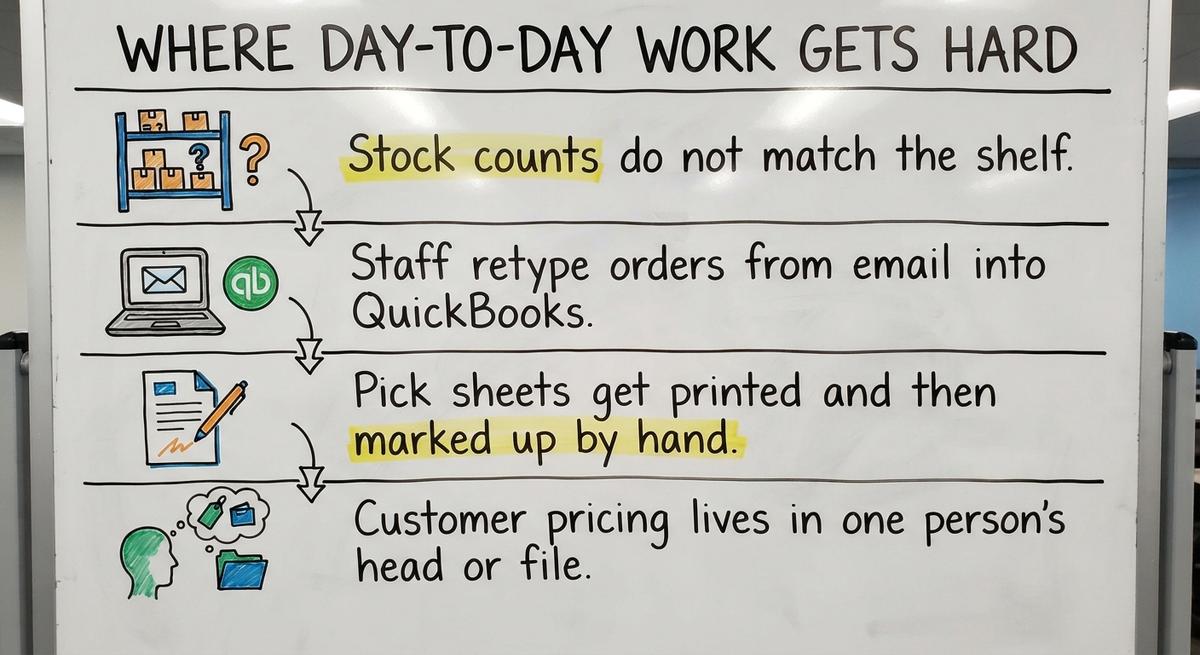
Small distributors face the same four problems, whatever they sell. Each one is concrete and costly.
- Stock counts do not match the shelf, so staff hunt for items the system says are there.
- Staff retype orders from email into QuickBooks, and typos slip in.
- Pick sheets get printed and then marked up by hand, so the record drifts from the truth.
- Customer pricing lives in one person's head or file, and that person cannot be out sick.
Take an example. 2 people spend 5 hours a week retyping orders at $22 an hour. That is $11,440 a year, spent on copying.
The comparison is easier when one option is built for you
Off-the-shelf means fitting your process to the software. We do it the other way round, and the first look costs nothing.
Book a call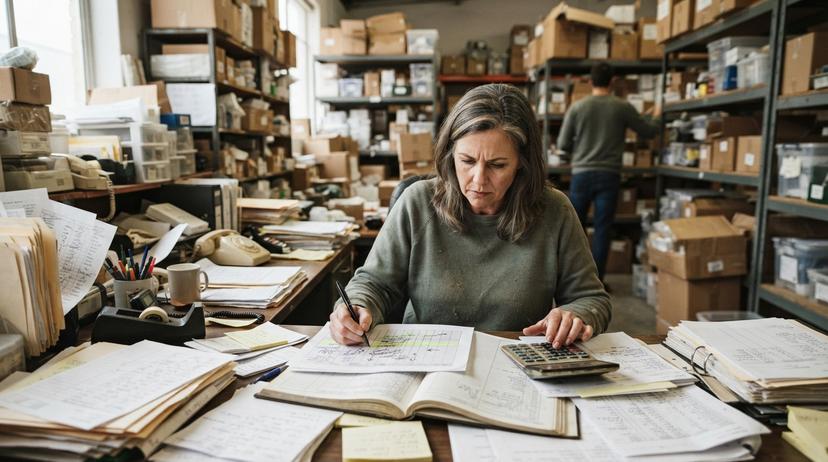
What Software Fits Each Type of Distributor?
Match the software to the pain, not to the label on the business. A food distributor needs lot and date tracking. A building materials distributor needs will-call and split-load handling. An industrial distributor needs fast quotes and easy reorders. A beverage firm needs deposit and keg tracking. List your top pains first. Then ask whether a tool solves those exact steps.
Do Small Distributors Need a Big ERP?
No. An ERP is a large system that runs a whole company. Small and mid-size distributors with 5 to 100 staff often fear a long, costly rollout. Another path exists. Custom software can be built around how the team already works. Keep QuickBooks for what it does well, such as the books. Replace only the manual parts, like order entry and pick sheets. For more ideas, see the NIST supply chain guidance and the Census Bureau wholesale data.

How to Spot Which Example Looks Like Your Business
Four questions place your business among the examples. Answer them in order.
- What do you sell?
- Who buys it?
- How do orders arrive: phone, email, counter, or route?
- How do goods leave: truck, pickup, or ship?
Pick the closest match and list its top 3 pains. Bring that list to any software partner. A clear list makes a short, useful talk.
Are There Distributors Near Columbus, Ohio?
Yes. Columbus sits in a region with active distribution work. The Software Society is local to Columbus and works with small operations. We name no local firms here. Regional distributors face the same jobs listed above, from stock counts to pricing.
Next Steps for Your Distribution Business
There are many types of distributors, but the core jobs are the same. Tell us how your operation runs today: where orders arrive, where they get retyped, and where counts drift. We can talk about replacing manual steps while you keep QuickBooks. Start with a simple description, and we will work from there.
Frequently asked questions
What is the difference between a distributor and a wholesaler?
A distributor often has direct ties to makers and may hold exclusive rights to a line. A wholesaler buys in bulk and resells. In daily use the two words overlap.
Do distributors sell to the public?
Most sell to businesses, not the public. Some run a counter that serves walk-in buyers, but their main customers are shops, crews, and firms.
What is the difference between a distributor and a manufacturer?
A manufacturer makes the goods. A distributor stores, moves, and sells them. Some small firms do light assembly or kitting as well.
What is the most common type of distributor?
The wholesale distributor is the broadest type. It buys from many makers and sells to retailers. Food, industrial, and building materials distributors are also common.
Can a small distributor run on QuickBooks alone?
For a while, yes. As orders, stock, and customer prices grow, QuickBooks alone gets strained. Many teams add tools for the manual steps and keep QuickBooks for the books.
How do distributors make money?
They buy in volume and sell in smaller lots at a markup. Margin depends on stock turns, pricing, and low waste. Delivery and credit terms add value.
Start with a free first look
A 30 minute call, your operation mapped, and a clear picture of what we would build. No obligation and nothing to install.
Book a callRelated guides
More on the same work.
Guides
- Business Distributors
- Company Distributor
- Warehouse Management System Examples
- Examples of Warehouse Management System
- Make to Stock Examples
- Example of Inventory
- Inventory Control Example
- Distribution Management Software
- Cloud-based Purchase Order System
- Distribution Inventory Management