Two search habits drive urgent plumbing leads. Homeowners grab a cell phone and type a service name plus their town.
They scan the top results quickly. Most callers pick the first plumber who looks ready.
Write your pages using the exact words local people type. Clear words help you get plumbing leads from urgent searches.
Search Results vs. the Map Pack
The Map Pack is a 3-pack box. Regular search results link to pages on your plumbing website.
The Map Pack sits above regular links with a tap-to-call button. Homeowners use both sections before picking a company.
A leaky faucet sends someone to read a repair page first. A burst pipe pushes that person to tap the map call button.
You need a solid website and a complete map profile. Both tools work together to win plumbing leads.
Compare how both placements work for your shop:
Regular listings send visitors to read your plumbing service pages.
Map listings show your star rating and hours right away.
Websites give detailed answers that build trust before a call.
Building both assets brings plumbing leads no matter how customers search.
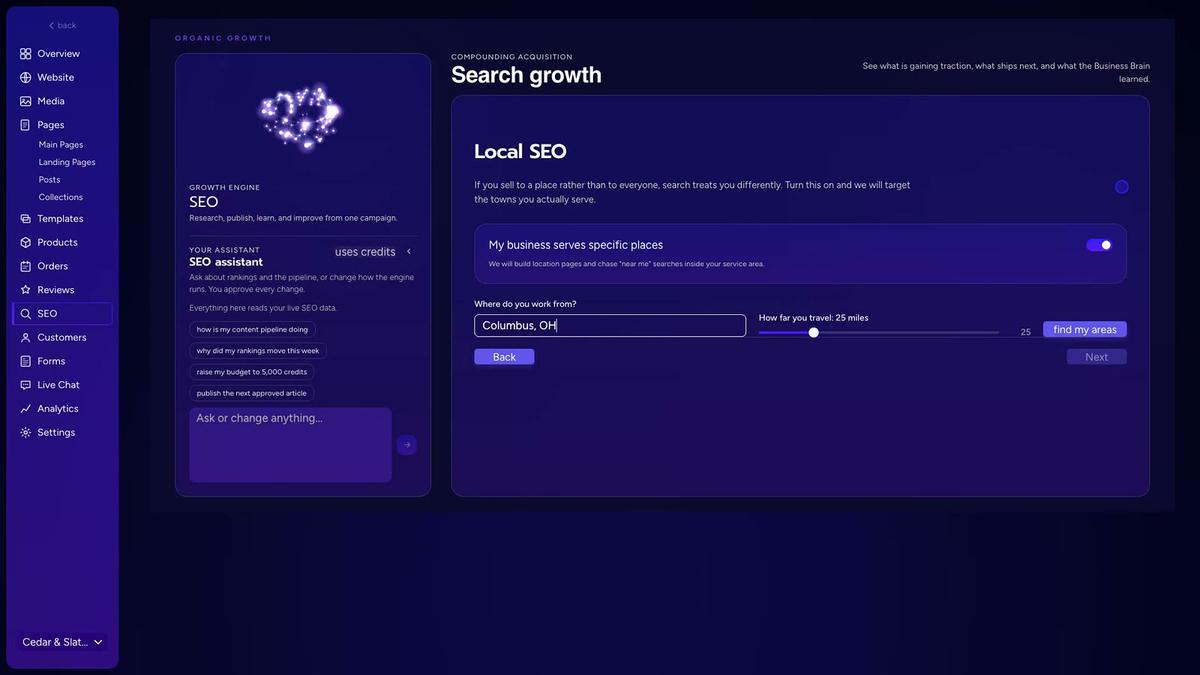
Local SEO begins with where the business works from and how far it travels.
How Google Ranks Plumbers on the Map
Three factors drive local map rankings. Google Business Profile Help states, "Local results are mainly based on relevance, distance, and popularity."
Relevance is a match between a search and your profile. Distance is how far your shop sits from the searcher.
Popularity is how well known your plumbing company is online. Reviews and local links build that popularity over time.
You cannot move your shop closer to every caller. Focus on relevance and popularity to win more plumbing leads.
Work on the factors you control:
Pick exact plumbing categories so Google matches urgent local searches.
Add real job photos and full service lists to your profile.
Earn steady customer reviews to grow popularity across nearby towns.
Strong relevance and popularity bring plumbing leads farther from your shop.
Set Up Your Google Business Profile for Plumbers
A map profile is a free listing. This listing feeds the Google Map Pack for local plumbing searches.
Accurate details help Google match your trucks to urgent calls. Start by claiming your listing and building a review habit.
Complete profiles turn local map views into steady plumbing leads.
Claim and Complete Your Profile Details
Step 1 is claiming your map listing. An unfinished profile loses plumbing leads to shops with clear hours.
Choose Plumber as your main category. Add secondary categories like Water Heater Installation or Drainage Service for extra work.
List your exact service area and local phone number. Keep your business name, address, and phone identical across every site.
Complete these 4 profile steps right away:
Upload real photos of your trucks and finished pipe work.
Write a plain summary listing the core plumbing jobs you handle.
Set accurate weekend hours so callers know when you answer.
Check your address and phone on directories for exact matches.
Clean profile details build trust and bring more plumbing leads.
Ask for Customer Reviews the Right Way
Customer reviews are key for local trust. Reviews directly boost your popularity on Google Maps.
BrightLocal's Local Consumer Review Survey states, "97% of consumers still lean on reviews to guide their purchase decisions." That survey notes 47% of people skip shops with under 20 reviews.
It also shows 89% of consumers expect owner replies. Ask happy customers for a review right after a job finishes.
Send a quick text message with your direct review link. Never pay for reviews or write fake ones.
Google's review policy states, "Reviews and other user contributions to Google Maps must reflect a genuine experience." Honest reviews protect your profile and earn plumbing leads.
4 Weekly Review Habits to Follow
Four weekly habits build steady plumbing reviews. Follow these steps every week to keep your map profile active.
Text a direct link within 1 hour of finishing a repair.
Thank happy customers by name when replying to 5-star reviews.
Answer bad reviews calmly and offer to fix issues offline.
Train every technician to mention the review text before leaving.
Steady, honest reviews turn map views into ringing plumbing leads.
BrightLocal's Local Consumer Review Survey states, " 97% of consumers still lean on reviews to guide their purchase decisions." That survey notes 47% of people skip shops with under 20 reviews; That survey notes 47% of people skip shops with under 20 reviews; It also shows 89% of consumers expect owner replies.
Build a Plumbing Website That Turns Visitors Into Calls
One goal drives every plumbing website. Your site must turn nervous visitors into phone calls.
Slow pages and hidden numbers push homeowners straight back to Google. Make your site fast on cell phones and honest about your work.
A fast website helps you get plumbing leads around the clock.
Essential Elements on Every Plumbing Homepage
Four basics belong on every plumbing homepage. Show your phone number at the very top of the screen.
Cell phone visitors must tap that number to call you easily. List the plumbing jobs you handle in plain words near the top.
Add a short contact form asking for a name, number, and issue. Pages must load fast on weak cell signals in basements.
Only state facts about your business that you can prove. Check your homepage for these 4 basics:
Place a tap-to-call button at the top of every screen.
Keep your contact form down to 3 or 4 fields.
Shrink large photo files so pages open under 3 seconds.
Remove unproven claims about awards, licenses, or arrival times.
A fast homepage keeps panicked homeowners from calling another plumber.
What to Put on a Plumbing Page So People Call
Show real photos of your own crew and finished repairs. Answer the 2 questions every caller asks before dialing.
Four parts make a plumbing page convert. Open every service page with the customer's problem and your fix.
Explain what the repair involves and what to do until a truck arrives. End every page with a clear call button and phone number.
Real photos beat stock pictures every single time. Include these 4 parts on every plumbing page:
Describe the leak, clog, or broken part in plain words.
Tell homeowners how to shut off the main water valve.
Show 2 or 3 clear photos from local plumbing jobs.
Finish with a bold phone number and a short quote form.
Helpful pages calm stressed homeowners and earn more plumbing leads.
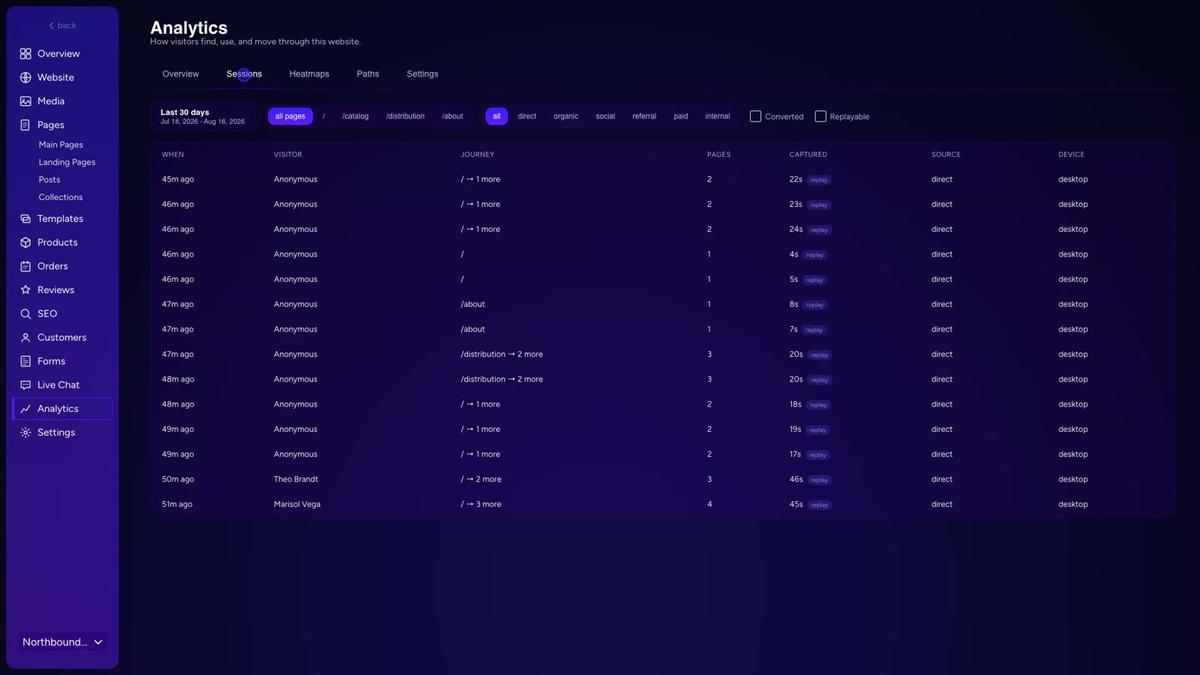
Each visit is listed with its pages and length, so slow or abandoned paths stand out.
Find out where you show up on the map
A free map check for your plumbing company. See which towns find you and which call a competitor.
Do I Need Separate Plumbing Service Pages and Town Pages?
Separate pages are best for specific searches. One long page rarely ranks well for specific plumbing jobs.
Build dedicated pages for your best services and top towns. Specific pages match what local homeowners type into Google.
Targeted pages help you get plumbing leads for high-value work.
Give Each Plumbing Service Its Own Page
One page should cover 1 plumbing service. Create separate pages for water heaters, drain cleaning, sewer lines, and repiping.
A focused page matches searches for tankless water heater repair best. Explain the repair steps and how to call your office.
Write for people first, not robots. Google Search Central explains, "People-first content means content that's created primarily for people, and not to manipulate search engine rankings."
Plan your first 4 service pages around high-demand work:
Water heater pages capture urgent calls for no hot water.
Drain cleaning pages bring calls for backed-up kitchen sinks.
Sump pump pages reach homeowners worried about wet basements.
Repiping pages attract owners of older homes with low pressure.
Focused service pages match exact searches and bring better plumbing leads.
Build Real Town Pages for Your Service Area
A town page is a local page. Build 1 unique page for each city where your trucks work.
Homeowners type town names when looking for nearby plumbers. Each town page needs real local details, not copied text.
A roofing and exteriors company in central Ohio built pages for 17 towns to win local leads. Copying identical pages just to rank breaks Google rules.
Google's spam policies state, "Doorway abuse is when sites or pages are created to rank for specific, similar search queries." Unique local pages earn lasting plumbing leads safely.
4 Details That Make Each Town Page Useful
Four details make every town page useful. Add real local proof so homeowners trust your plumbing crew.
Mention local housing ages or common pipe types in that town.
Show real photos from plumbing repairs your crew finished nearby.
List the neighborhoods and ZIP codes your trucks reach daily.
Start with the 3 towns where you want work most.
Unique local details prove you serve that town and bring plumbing leads.
Link Service Pages and Town Pages Together
Add combined service-plus-town pages once your main pages are live. Grow your plumbing site steadily over several months.
Three linking habits connect your website pages. Connecting service pages and town pages helps Google find every page.
Add links from each town page to your main service pages. Link back from your service pages to the towns you cover.
Every page must help a real customer make a smart choice. Follow this 3-step linking habit:
Link from your drain cleaning page to 5 town pages.
Link from each town page back to 4 service pages.
Add combined pages only for top jobs in key towns.
Smart internal links guide visitors straight to your plumbing leads form.
Check Your Map Pack Position on a Grid
A grid scan is a map check. It checks your Map Pack rank across many local points.
Your rank changes from 1 street to the next. You can sit at spot 1 near your shop and vanish 4 miles away.
The central Ohio roofing company runs a monthly Google Maps grid scan across its service area. Green pins show high ranks, and red pins show weak spots.
Use red zones to pick which plumbing town pages to build next. Review your grid scan monthly for 3 clear signals:
Spot which towns drop past position 3 on the map.
Track if new reviews push your green pins outward.
Focus next month's plumbing pages on weak towns with good jobs.
Grid data removes guesswork from getting plumbing leads on Google Maps.
Paid Ads vs. Organic Plumbing Leads
Two main paths bring online plumbing leads. Paid ads bring calls fast for a price.
Organic pages build lasting traffic without a per-click fee. Smart plumbing owners track paid clicks separately from free organic calls.
Combining ads, referrals, and AI visibility protects your schedule all year.
Do Paid Ads Help You Get Plumbing Leads?
Paid ads are a fast lead source. Search ads can bring plumbing calls within days of launching.
You pay Google every time someone clicks your ad or calls. Local Services Ads work differently from regular search ads.
Google Local Services Ads Help states, "Pay only for leads related to your business and the services you offer." Spending $50 a day on search ads for 30 days costs $1,500 a month.
Those ad calls stop the moment you pause that budget. Organic pages and your map profile keep bringing plumbing leads for free.
Many owners run ads while waiting for organic rankings to grow.
How to Balance Paid and Free Channels
Three rules balance paid and free channels. Use both methods together to keep your plumbing trucks busy.
Send paid ad clicks to a fast page with 1 button.
Track ad calls on their own dedicated phone number.
Keep building organic pages to lower your future lead cost.
Paid ads fill gaps today while organic pages cut plumbing lead costs tomorrow.
Where Else Do Good Plumbing Leads Come From?
Four offline channels bring steady plumbing leads. Past customers, local partners, and online directories still send great calls.
Never drop offline channels while building your Google presence. Happy homeowners tell neighbors when a crew cleans up and explains the bill.
Real estate agents and property managers need reliable plumbers every week. Owners in other trades see this when learning how to get roofing leads or roofing reviews.
Online directories also help local homeowners find your shop. MyZipPlumbers states, "Here at MyZipPlumbers, we provide the best plumbing directory on the Internet so customers can find local plumbers in their ZIP code easily, and plumbing contractors can advertise their plumbing business to gain exposure and traffic."
Keep these 4 steady channels active:
Leave magnet cards near the main water shutoff valve.
Check in quarterly with 5 local property managers for rentals.
Fix old phone numbers on Yelp, Angi, and local directories.
Send seasonal reminders to past customers before freezing weather hits.
Strong local relationships keep plumbing leads flowing even when ad costs rise.
Results you can check
Past SEO campaigns grew organic traffic 26x in 14 months, and 15x on another. Top Rated Plus on Upwork with 99% job success.
Work for hundreds of small businesses and large clients like New Balance and Planned Parenthood.
Three steps prepare your site for AI. Homeowners now ask AI tools for plumbing advice and contractor names.
Some users click the website links inside AI answers. Track AI tool visits as their own channel inside your data.
Clear service pages, exact business details, and reviews build AI trust. Writing plain answers to pipe problems feeds search and AI at once.
Prepare your plumbing site for AI visitors with 3 steps:
Answer common homeowner questions at the top of each page.
Keep your town names, services, and phone easy to read.
Separate AI referral traffic from Google clicks in your reports.
Watching AI visits early helps you get plumbing leads from a growing source.
Spending $50 a day on search ads for 30 days costs $1,500 a month.
Call Tracking and Numbers That Matter
Call tracking is a measurement system. It logs which marketing channel sent each plumbing phone call.
Without tracking, owners guess which pages or ads pay off. Tracking tools and CRM software are growing fast across businesses.
Oracle notes, "The CRM market size was valued at $41.93 billion in 2019 and is projected to reach $96.39 billion by 2027, growing at a CAGR of 11.1% from 2020 to 2027." Measuring booked jobs beats counting raw website visits.
How to Track Where Your Plumbing Leads Come From
Four steps set up clean call tracking. Assign a unique tracking number to your website, map profile, and ads.
Modern call tracking swaps the site number based on visitor source. This setup separates Google search calls, Map Pack calls, ad calls, and spam.
Form submissions should also record search, map, ad, or AI sources. Ask every new caller how they found your plumbing company.
Set up clean tracking with these 4 steps:
Place 1 tracking number on your Google Business Profile.
Use dynamic website numbers to split search, ad, and AI.
Filter out robocalls and sales pitches from real plumbing leads.
Log every contact form with its matching traffic source.
Clear call logs show which dollars bring real plumbing leads.
Which Numbers Matter Most for Plumbing Growth
Focus on the numbers tied straight to booked plumbing revenue. One booked water heater job at $1,800 adds $5,400 from 3 jobs.
Four monthly numbers guide plumbing growth. Website visits alone do not pay technicians or fuel your trucks.
Booked jobs per source show which channel deserves more budget. Review these 4 numbers at the end of every month:
Total real calls and forms split by search, map, and ads.
Monthly Map Pack grid positions across your target plumbing towns.
Visits arriving from AI tools as their own separate channel.
Booked jobs and total dollars earned from each lead source.
Tracking revenue by channel turns plumbing leads into a clear investment.
One booked water heater job at $1,800 adds $5,400 from 3 jobs.
How Long Local SEO for Plumbers Takes
Local SEO is a multi-month process. Steady work over months brings lasting plumbing leads, not overnight magic.
Your timeline depends on town size, competition, and website health. Website fixes happen fast, while search rankings move slower.
Consistent monthly work builds steady plumbing leads over time.
Realistic Timelines and Past Traffic Results
Three stages shape your local SEO timeline. Fixing a phone button or map hours takes 1 afternoon.
Earning top spots across 10 towns takes months of pages and reviews. Past SEO campaigns grew organic traffic 26x in 14 months and 15x on another campaign.
Those past numbers are real results, not a promise for your town. Review your progress monthly to spot gains in plumbing leads.
Expect your timeline to follow 3 clear stages:
Month 1 fixes tracking, profile details, and slow homepage issues.
Months 2 through 4 add service pages, town pages, and reviews.
Months 5 and beyond expand Map Pack reach and booked calls.
Patience and monthly checks build lasting plumbing leads over quick tricks.
Visits, sessions and top pages in one view show whether the site is turning traffic into calls.
Get a second opinion on your current setup
Already paying for plumbing marketing? Get a free second opinion on what works and what wastes money.
Five common mistakes cost plumbers calls. Small website errors quietly leak dozens of plumbing leads every month.
Most owners never notice these leaks without proper call tracking. One giant page for every service confuses Google and visitors.
Hidden phone numbers and slow mobile pages send callers back to Google. Fix these 5 common mistakes right away:
Cramming all plumbing services and towns onto 1 messy page.
Hiding your phone number inside a menu on cell phones.
Leaving old stock photos and slow files on your homepage.
Skipping call tracking so nobody knows which ads bring leads.
Listing fake awards or arrival times you cannot prove.
Clearing basic errors lifts plumbing leads before building a single new page.
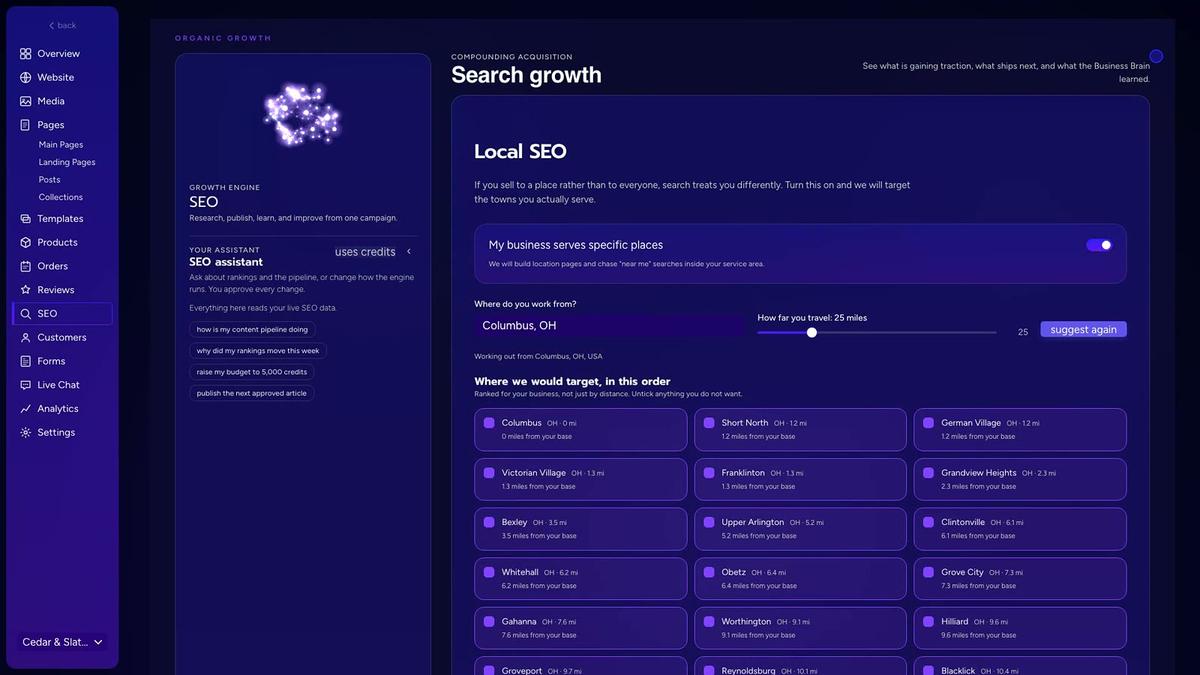
Nearby towns ranked by fit, each with a reason, before any page is written for them.
Should You Do It Yourself or Hire Plumbing SEO Services?
Two paths build your plumbing marketing. Doing SEO yourself costs your own evenings.
Hiring plumbing SEO services costs monthly budget. Both paths work when you follow clear steps and track real calls.
Ask tough questions before hiring help, or start a 4-week plan.
Questions to Ask Before Hiring Help
Honest providers welcome clear questions. Never hire anyone who promises a number 1 Google spot.
Never trust a guarantee for a set number of plumbing leads. Always keep ownership of your Google Business Profile and domain name.
Demand real proof and call tracking before signing long contracts. Clear expectations protect your plumbing business from bad agencies.
4 Questions to Ask Any Marketing Provider
Four questions protect your marketing budget. Ask these questions to any plumbing marketing provider you consider:
Who does the work: Ask if the person you talk to builds your pages.
Can I see calls by source: Ask if reports split search, map, ads, AI, and spam.
Can I see work before paying: Ask to see a sample homepage before paying money.
How fast are changes: Ask how quickly they update a phone number or town page.
Clear answers keep you in control of your plumbing leads.
A Simple 4-Week Plan to Start This Month
Four weekly steps launch your plan. You can improve your plumbing lead flow this week with 1 focused step.
Small weekly habits beat giant plans that never get started. Check your numbers monthly after week 4 to see which towns respond.
Follow this 4-week checklist to launch your plan:
Week 1: Claim your Google Business Profile and upload real truck photos.
Week 2: Set up call tracking numbers split by search, map, and ads.
Week 3: Put a tap-to-call button up and publish 4 service pages.
Week 4: Publish 3 unique town pages and text happy customers for reviews.
One steady month builds a system that generates plumbing leads for years.
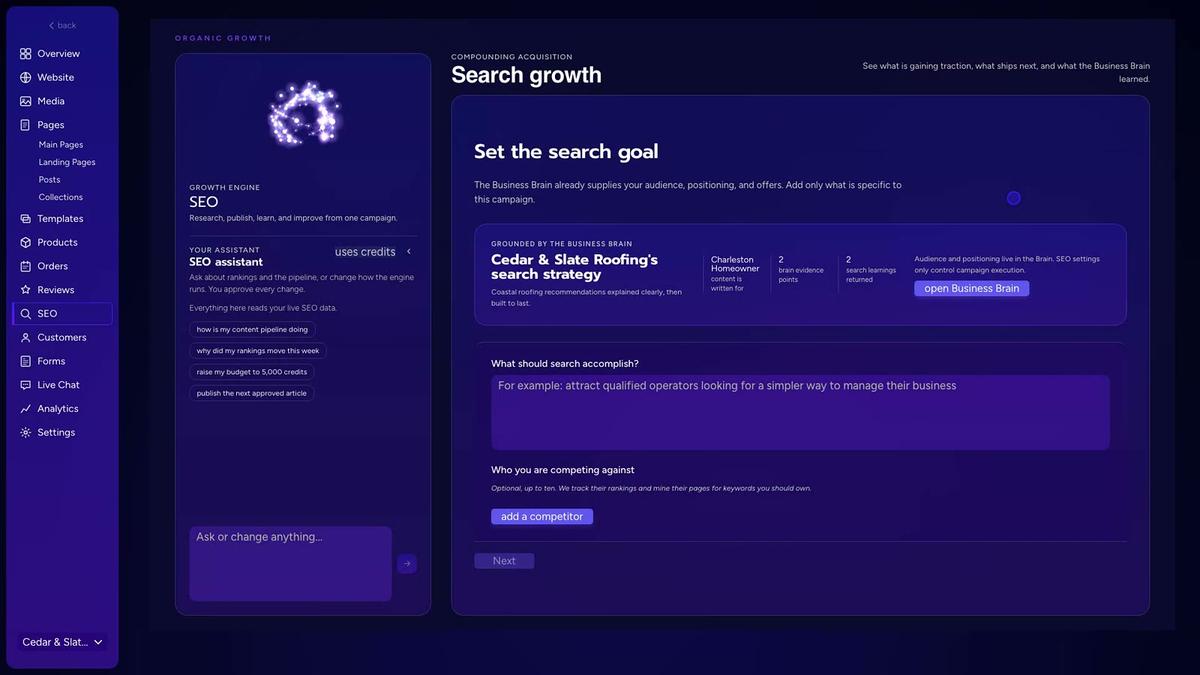
An SEO plan starts from one plain goal: who should find the business, and for what search.
Frequently Asked Questions About Plumbing Leads
Five common questions come up often. Homeowners and plumbing owners both ask how local search works.
Clear answers help you get plumbing leads without wasting time.
How do plumbers get leads online?
Asking happy customers for reviews boosts your visibility across nearby towns. Combining all 3 channels brings steady plumbing leads every month.
Three online channels bring plumbers leads. Google search pages, the Map Pack, and paid ads drive most calls.
A fast website captures homeowners reading about water heaters or drain repairs. Your Google Business Profile captures urgent callers right from the map.
Is the Map Pack or regular search better for plumbers?
Both placements are important for plumbers. Urgent callers with burst pipes tap the Map Pack phone button first.
Homeowners planning a repipe or water heater swap read regular search pages. You need both to capture every kind of plumbing customer.
Building a complete map profile and strong service pages wins the most plumbing leads.
How many town pages does a plumbing company need?
Three towns are a smart start. Build 1 unique page for each city where your trucks work daily.
Start with the 3 towns that bring your best plumbing jobs. Expand slowly to nearby cities as you gather real local job photos.
Quality local details matter far more than rushing 20 thin town pages.
How do I know a lead came from Google?
Call tracking is the surest proof. Assign 1 unique phone number to your Google Business Profile.
Use dynamic numbers on your website to split search calls from ad calls. Log every contact form with its matching traffic source.
Asking new callers how they found your plumbing shop adds a helpful backup.
Are visits from AI tools worth tracking for plumbers?
AI visits are worth tracking early. Homeowners now ask AI tools for plumbing advice and local names.
Clear service pages and honest reviews help AI tools recommend your company. Separating AI visits in your reports shows how fast this channel grows.
Early tracking helps you spot free plumbing leads from new search habits.
Frequently asked questions
How do plumbers get leads online?
Plumbers win online inquiries through Google search pages, Map Pack listings, paid ads, and AI answers. A fast mobile site with clear service pages and steady customer reviews converts those searches into phone calls.
Is the Map Pack or regular search better for plumbers?
Both placements matter because homeowners use them differently. Urgent burst-pipe callers tap the Map Pack phone button right away, while planned repair shoppers read regular website links first.
Do I need a website if I have a Google profile?
Yes, a website gives homeowners service details and trust signals that a short map listing cannot hold. Google also reads your website pages to confirm which plumbing jobs and towns you cover.
How many town pages does a plumbing company need?
Build 1 unique page for each city where your trucks regularly work. Start with your top 3 profitable towns first, then expand steadily using real local photos and neighborhood details.
How do I know a lead came from Google?
Use separate phone numbers on your map listing, organic website, and paid ads. Dynamic tracking logs each call and contact form by channel so you never guess what works.
Are visits from AI tools worth tracking for plumbers?
Yes, homeowners increasingly ask AI assistants for local repair advice and contractor links. Logging those clicks as their own channel shows early growth before competitors notice.
What should I ask before hiring someone for plumbing SEO?
Ask who builds the pages, how fast edits happen, and whether reports separate real calls from spam bots. Walk away from anyone promising guaranteed rankings or set call counts.
Start with a free homepage rebuild
Book a short call. Your new plumbing homepage is free to see and yours to keep.