

How to Get More Customers in a Restaurant
Winning restaurant customers is a local search job. Hungry diners pick a spot in 1 minute on their phone. Owners earn those tables by fixing Google listings, building fast sites, and bringing regulars back. As of April 2026, 3 simple moves drive most new covers. Show accurate hours, put real text menus online, and ask happy guests for reviews. Good food fills plates, yet clear search details fill seats. Every owner can start these fixes this week to get more customers in a restaurant.
Book a callHow to Get More Customers in a Restaurant: The Short Answer
Local search is the fastest lever.
Diners type food searches when they feel hungry right now. Your restaurant wins their business when people find you fast and trust your kitchen. Restaurant operators everywhere are investing to attract more guests, and the owners who show up clearly online get the first look.
Three main levers drive steady covers every week.
- Complete Google listings display your hours, food photos, and star ratings right inside the local map results diners see first.
- Fast restaurant websites turn mobile visitors into booked dinner tables and direct online takeout orders without extra phone calls.
- Simple repeat guest plans bring past diners back on slow weeknights without extra ad spend or deep discounts on your menu.
Focus on these 3 levers this week for getting more customers in a restaurant.
See your new homepage before you pay anything
Your restaurant homepage, rebuilt free. You see it before you pay anything.
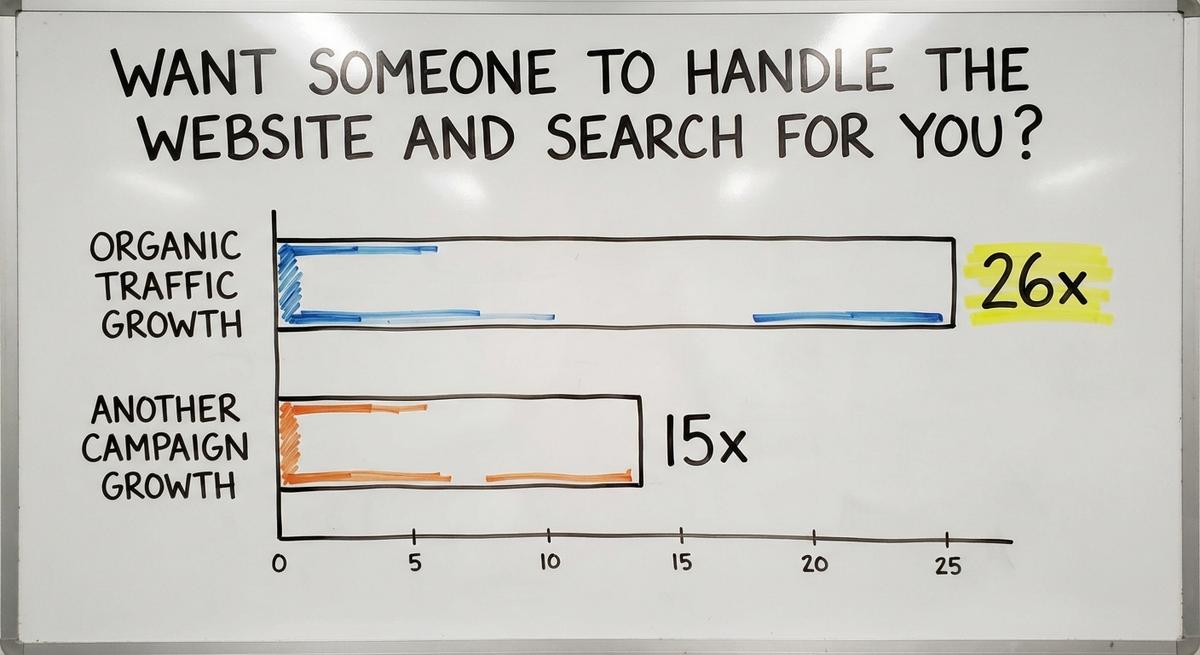
Past SEO campaigns grew organic traffic 26x in 14 months.
Book a callWhere Do Hungry People Look Before Picking a Restaurant?
Phones drive 60-second dining choices.
Most diners check Google, Google Maps, and AI tools on a cell phone before eating out. Hungry people scan food photos, check closing times, read menus, and skim recent reviews. If your restaurant is missing from top map results, another kitchen gets that table. Clear profile details let Google match your dining room to nearby hungry searchers.
Accurate online listings put your front door right in front of ready customers.
What Happens When Diners Cannot Find You
Missing listings cost $12,480 every year.
A restaurant missing just 4 tables a week at a $60 average check loses $240 weekly. Over 52 weeks, that revenue gap equals $12,480 in lost sales. Empty chairs still cost you rent, power, and kitchen prep wages every single night. "Local results are mainly based on relevance, distance, and popularity," says Google Business Profile Help.
Fixing your online trail captures hungry customers before they drive to a competitor.
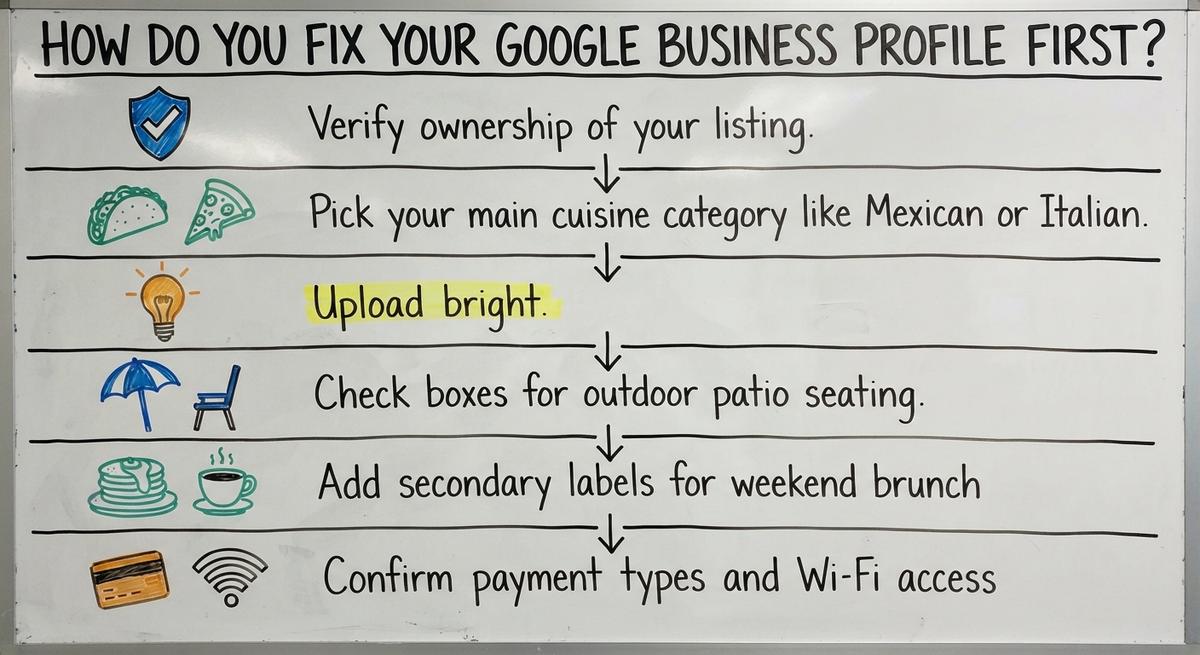
How Do You Fix Your Google Business Profile First?
Google Business Profile is your anchor listing.
Claim your listing and confirm your exact business name, street address, phone number, and hours. A Google Business Profile is a free listing that controls how your restaurant appears on Google Maps. The same setup steps apply in every local trade, as this Google Business Profile guide for roofers shows field by field.
Set up your profile with these steps.
- Verify ownership of your listing so only authorized team members can edit your hours, menu link, and store details.
- Pick your main cuisine category, like Mexican or Italian restaurant, then add any relevant secondary types your kitchen truly serves.
- Upload bright pictures of top dishes, the seating area, and the front entrance so new guests know what to expect.
Complete profiles earn far more map clicks and phone calls than half-empty listings.
Keep Your Hours and Holiday Hours Correct
Accurate store hours are non-negotiable.
Wrong hours send hungry guests to a locked door and earn you a 1-star review. Correct hours on the Google Business Profile matter most. Update special hours 2 weeks before Thanksgiving 2026 and New Year's Eve 2026. Block out times for private buyouts or staff training nights as well. Opening and closing times must match across your restaurant website, Google, Yelp, and Facebook.
Matching store hours build instant trust with diners planning a drive across town.
Pick the Right Food Categories and Attributes
Specific cuisine tags are vital signals.
Categories tell Google what kind of food your kitchen cooks every day. Choose a tight main label like Pizza Restaurant rather than a broad label like Restaurant.
Fill out these attributes in your dashboard.
- Check the boxes for outdoor patio seating, wheelchair access, baby high chairs, and free guest parking wherever they apply.
- Add secondary labels for weekend brunch, group catering, late-night dining, or fast counter takeout if your restaurant offers them.
- Confirm accepted payment types and Wi-Fi access so guests are not surprised when they arrive.
Accurate food tags match your kitchen to diners searching for exact features.
Get More Good Reviews the Easy Way
Guest reviews are digital word-of-mouth.
Ask happy diners for feedback right at the table or on the printed check. One tap on a short link takes a guest 20 seconds. Reviews have shaped restaurant choices for years. By 2009, Yelp had "60,000 reviews" in Seattle alone. Those covered 70 percent of the city's restaurants, per Harvard Business School. Keep every request honest. Reviews "must reflect a genuine experience," says Google's review policy.
Honest guest feedback builds lasting trust and keeps your listing safe from penalties. More asking ideas from a busy service trade are in how to get more roofing reviews.
Reply to Every Review, Good or Bad
Owner replies are public hospitality proof.
New customers read your responses just as closely as they read guest star ratings. Thank happy guests by name and mention the specific dish they enjoyed. Stay calm on bad reviews, apologize for the miss, and share a direct line. In BrightLocal's Local Consumer Review Survey, "97% of consumers still lean on reviews" to decide.
Thoughtful owner replies prove you care about hospitality before a guest walks in.
Train Your Floor Staff to Ask for Feedback
Table check-ins take just 20 seconds.
Servers hold the best moment to request feedback when clearing clean dinner plates. Teach your restaurant staff to smile and ask if every dish tasted great.
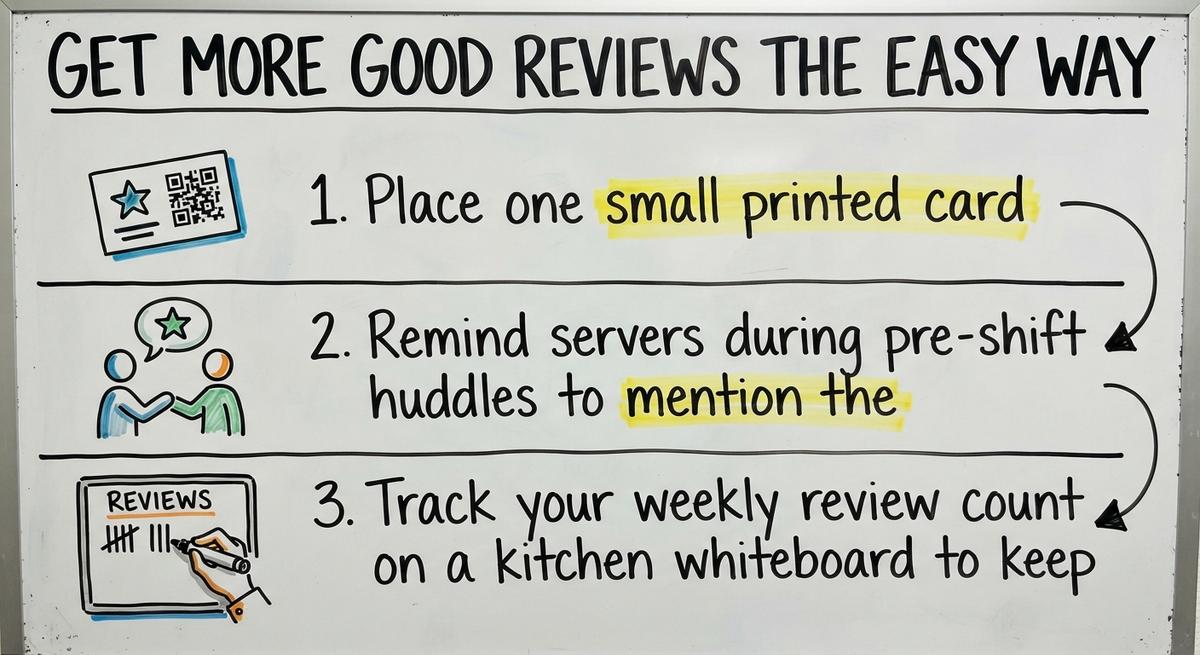
Make this habit easy for your floor team.
- Place one small printed card with a review QR code inside every check presenter that goes out to a table.
- Remind servers during pre-shift huddles to mention the feedback card to every happy dining table they serve that night.
- Track your weekly review count on a kitchen whiteboard to keep the whole staff excited and competing in a friendly way.
Steady weekly requests build a deep wall of 5-star proof over time.
Find out where you show up on the map
A free map check for your restaurant company. See which towns find you and which call a competitor.
Book a callPut Your Menu on Your Website as Real Text
An online menu is plain text.
Put your full food list on your web pages instead of uploading a PDF file. Phones struggle to load heavy PDFs over weak cell signals. Google also struggles to read dish names locked inside flat menu photos. An online menu is a fast web page listing your dishes, ingredients, and prices in clean text. Our on page SEO checklist covers the headings and text every menu page needs.
Real text menus load fast and help hungry people get more diners in a restaurant seat sooner.
Structure Dish Descriptions for Hungry Readers
Short dish notes are order drivers.
Clear descriptions help restaurant customers pick plates faster and spend more per table. Avoid fancy kitchen words that confuse everyday eaters.
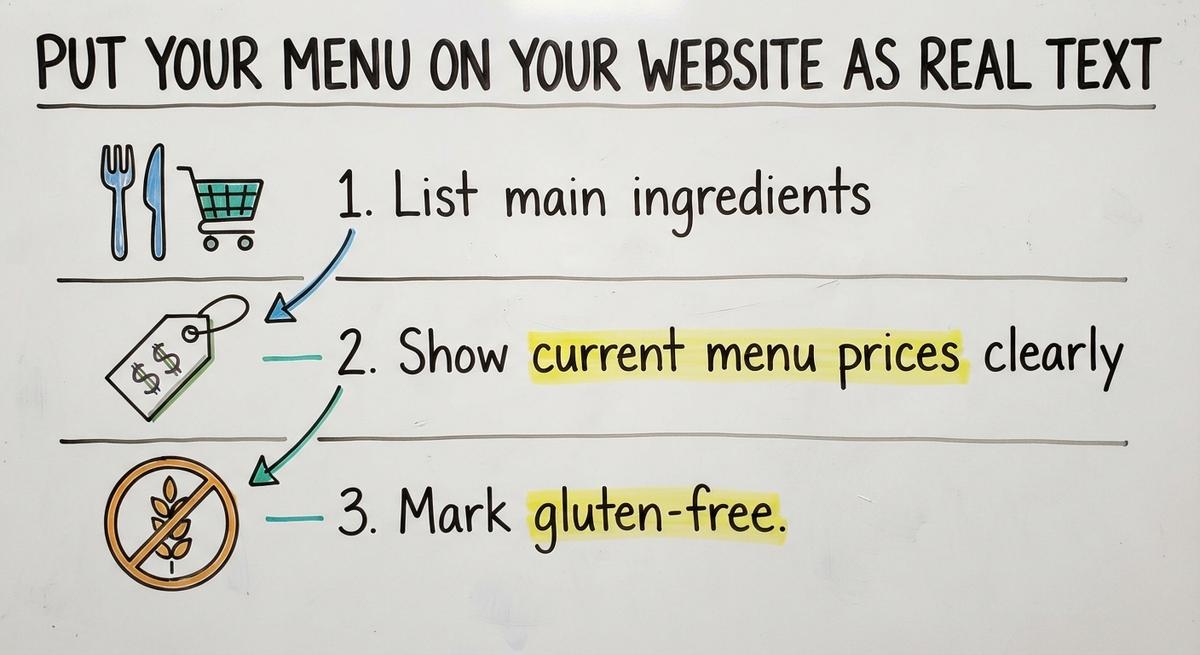
Use these rules for every dish.
- List the main ingredients, cooking style, and portion size in 1 or 2 crisp lines under each dish name.
- Show current menu prices clearly so guests feel comfortable ordering appetizers, desserts, and craft drinks with their meal.
- Mark gluten-free, vegan, and kid-friendly plates right next to each item so families can scan the page quickly.
Readable menu copy turns quick website skims into full dinner orders.
Keep Seasonal Specials Updated in Minutes
Fresh menu pages are trust builders.
Outdated prices and missing dishes ruin a guest's night before they sit down. When a diner drives 20 minutes for a seasonal pasta that left last month, trust drops fast. Update your text page the same morning you change your printed paper menus. Remove sold-out specials and add fresh seasonal items right away. Food costs move often. The Bureau of Labor Statistics tracks them in its monthly consumer price report. An easy menu page keeps your prices current.
Current menu pages save your hosts from awkward explanations at the front stand.
Make Your Website Do the Work on a Phone
Mobile sites are 5-second decision tools.
Over half of hungry searchers open your site on a small screen from a sidewalk or car. A mobile restaurant website is a fast site built for thumbs rather than mouse clicks. A simple website builder with phone-first templates gets you most of the way. Good roofing website design follows the same phone-first rules, because every local customer behaves the same way on a small screen.
Keep the mobile homepage simple.
- Place large call, directions, menu, and booking buttons on the first screen guests see when the page loads.
- Space every clickable link apart so guests with big thumbs never tap the wrong spot while walking down the street.
- Display your full location and daily hours in plain readable text near the top of every single page.
Fast mobile pages answer every basic dining question in under 5 seconds.
Put Parking and Entrance Details in Plain Sight
Parking notes are stress reducers.
Confusing parking stops busy families from trying a new neighborhood restaurant. Write 2 clear lines on the main page explaining where guests should park. Tell drivers if street spots are free after 6 PM or if you validate garage tickets. Mention which street holds your main front door if your building sits on a corner lot.
Clear parking notes remove stress before the guest even leaves home.
Speed Up Your Pages for Cell Networks
Fast mobile pages are revenue keepers.
Slow websites lose hungry customers before the first food photo appears. Large camera files take forever to load on 2 bars of cell service outside a strip mall. Compress every food photo before uploading it to your web pages. Cut heavy pop-up windows that block the small phone screen.
Fast page loads keep impatient diners from hitting back and picking your neighbor.
How Can Diners Book a Table or Order Online Fast?
Online ordering is direct digital revenue.
Place one bright button for reservations, takeout, or catering above the fold on every page. Online ordering is a direct web tool that lets guests buy food without calling your host stand. Link your ordering page right from your main navigation bar so guests never hunt. Fewer taps on a phone directly create more paid orders. For the basics of selling online, see how to make a website to sell things.
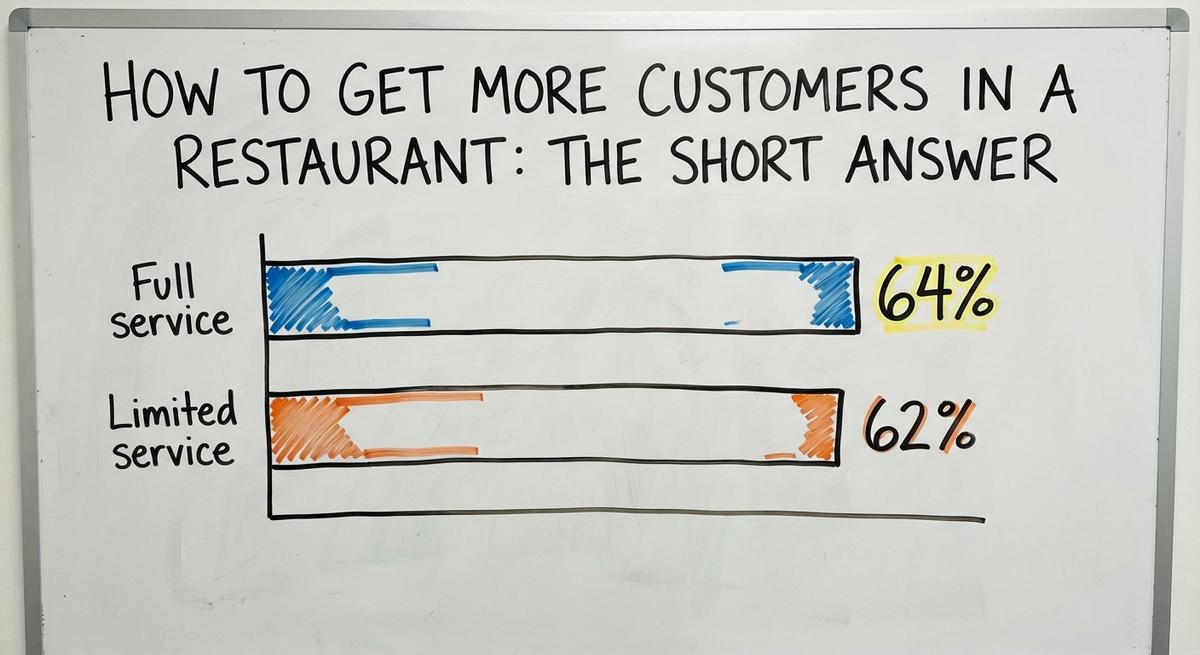
Operators are betting on growth tools. Full service and limited service operators gave similar answers (64% and 62%) in an Escoffier report. That shows "all restaurants are putting a premium on new opportunities to grow their brand and attract customers," it says.
Simple checkout paths help you win more customers in a restaurant without adding phone staff.
Keep Takeout Orders Direct From Your Site
Direct takeout links are margin savers.
Third-party delivery apps take a steep cut from every ticket. Guide neighborhood regulars to order takeout straight through your own restaurant web pages instead. Put a small flyer inside every delivery bag offering a direct link for next time. Direct orders keep full profits inside your kitchen and build your own customer list.
Direct takeout links protect your margins while keeping your kitchen line busy.
Results you can check
Past SEO campaigns grew organic traffic 26x in 14 months, and 15x on another. Top Rated Plus on Upwork with 99% job success.
Work for brands like New Balance, Purina and Aramark, and SEO for Planned Parenthood.
Book a callShow Up for 'Near Me' and Cuisine Searches
Local SEO is neighborhood search matching.
Local SEO for restaurants is the work of matching your pages to neighborhood food searches. Diners type phrases like best tacos near me or Sunday brunch in Austin when hungry. According to the NRA, location-based marketing "targets potential customers based on their proximity to the restaurant." Give each big service its own page like catering or weekend brunch. The same map pack rules drive local SEO for roofing companies and every other neighborhood business.
Focused local pages help search engines send the right hungry crowd straight to your door.
Build Helpful Pages Without Spamming Town Names
Helpful local pages are ranking assets.
Write web pages for human guests rather than trying to trick a search engine. Google wants content "created primarily for people," per Google Search Central. Never paste the same restaurant page 10 times with new town names. Google's spam policies treat that as "doorway abuse" and penalize it.
Helpful local pages earn steady search rankings without risking your site.
Highlight Signature Dishes With Real Local Context
Landmark notes are nearby traffic magnets.
Tie your food to the streets and spots your neighbors know well. Mention it when you sit 2 blocks from the civic theater or across from the Saturday farmers market. Pre-show diners often search for quick dinner spots near those exact landmarks. Name your top 3 signature dishes in headings and body copy on your homepage.
Local landmark notes connect your kitchen to hungry crowds already walking nearby.
Be Found in AI Search Answers
AI search is the new concierge.
AI tools like ChatGPT, Gemini, and Perplexity pull facts from your site, your listing, and your reviews. Customers now ask AI assistants for quiet date spots, kid-friendly patios, or gluten-free pasta nearby. Short, clear facts on your pages get quoted inside those AI answers. Keep your name, location, and contact line identical across every site online.
Clean factual pages help AI tools recommend you with confidence.
Write Clear Facts That Answer Engines Quote
Plain dining facts are AI fuel.
Answer engines look for direct statements they can lift without guessing. Group your basic restaurant house rules into one simple details section on the front page.
Put these facts on your main page.
- State your outdoor patio rules, dog policy, dress code, and high-chair count in short, plain lines on the homepage.
- List your corkage fee, gluten-free fryer setup, and private room capacity in clear short sentences that tools can quote.
- Test your own visibility by asking ChatGPT where to find your cuisine in your town, then fix any wrong facts.
Plain restaurant facts make it easy for AI search to pick your tables.
Use Photos That Make People Hungry
Real food photos are instant hooks.
Natural window light and real plates beat fake stock photos every single time. Diners spot fake food pictures in 1 second and lose trust in your kitchen. Shoot fresh photos of your real portions whenever your restaurant menu shifts for the season. Include warm shots of your cooks plating food and servers smiling in the room.
Real kitchen photos show guests the exact vibe waiting for them tonight.
Show the Dining Room and Front Door Clearly
Three room photos ease visitor nerves.
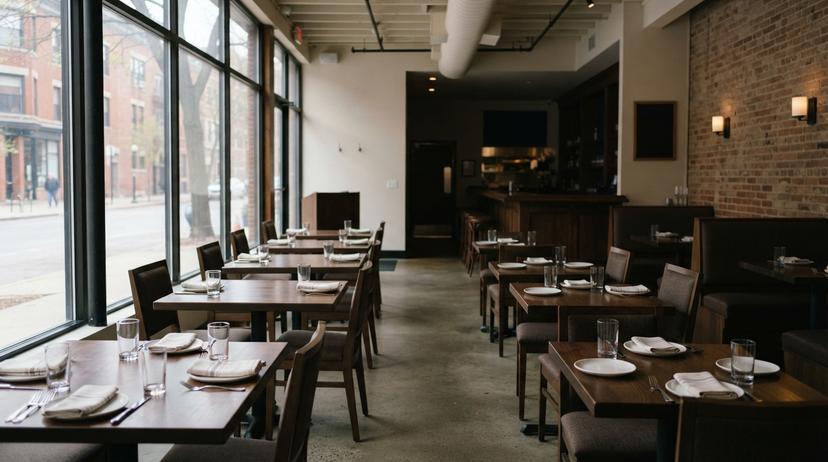
First-time customers like to know what a room looks like before walking inside. Post 2 wide photos showing booth spacing, table lighting, and bar seating. Add 1 clear daylight shot of your building sign from the street. Guests feel relaxed when they recognize your storefront right from the driver's seat.
Honest room photos turn nervous first-timers into comfortable regulars.
Use a Clear Outdoor Sign
A readable sign is a 24-hour greeter.
Drivers decide in seconds whether to pull in. A sign is "your most dedicated employee," says On Display Signs, a sign maker. Light it after dark. Keep the restaurant name large and the cuisine clear. Match the sign to the photo on your map profile so customers know they found the right door.
A clear sign turns passing traffic into walk-in tables.
Get a second opinion on your current setup
Already paying for restaurant marketing? Get a free second opinion on what works and what wastes money.
Book a call
Bring Guests Back Again
Email clubs are guest lists you own.
Repeat guests cost far less to seat than brand-new diners, so they are the cheapest way to get more customers through the door. An email and text club is a simple guest list you own for sharing news directly. Offer a small perk like a free appetizer on their next visit to earn sign-ups. Send 1 short note each month with new seasonal dishes, wine dinners, or holiday hours.
Regular reminders bring more customers into a restaurant on busy weekends and quiet weekdays alike.
Run a Simple Birthday or Regulars Club
Birthday perks are group-dining triggers.
Birthday rewards bring whole groups of paying customers to your floor. Send an automated birthday note offering 1 free dessert when the guest brings friends. A birthday diner rarely eats alone, so 1 free cake often sells 4 full entrees. Loyalty apps can run points for you. BonusQR describes a module that "allows customers to earn points based on their purchases," with the value of each point set by the restaurant.
Simple guest perks turn one-time visitors into loyal neighborhood regulars.
Fill Slow Nights With a Reason to Come
Weeknight themes are 4-week habits.
Weeknight specials, trivia, live acoustic music, and kids-eat-free nights fill Tuesday and Wednesday chairs with more customers. Pick 1 slow night and test 1 clear offer for 4 weeks straight. Give each weekly event its own short page on your site and a weekly post on Google. Consistent weeknight themes train locals to build a habit around your dining room.
Focused weeknight events turn quiet kitchen hours into steady profit.
Promote Tuesday and Wednesday Offers Early
Monday promos are midweek seat fillers.
Diners plan their weeknight outings before the workday ends on Monday. Share your restaurant's Tuesday taco deal or Wednesday wine special on Monday morning. Post the offer in a homepage banner and in profile updates. Remind weekend guests about your weeknight deals with a small table card.
Early weekly promos give busy families a clear reason to skip cooking.
How Do You Grow Catering and Private Events?
Restaurant catering is bulk group service.
Offices, schools, and families book high-ticket orders when they find a clear catering page. Restaurant catering is a bulk food service that feeds large groups away from your main dining room. A catering page works like a focused landing page: one offer, one form, one phone number.
A catering page needs three things to attract more customers to a restaurant.
- Build a simple group menu showing exact tray sizes, like pans for 15 or 30 people, with a clear price on each.
- Display true shots of hot buffet setups, boxed office lunches, and banquet tables from events you have actually served.
- Add one short request form asking only for the event date, the headcount, and a phone number for a quick callback.
Clear catering details turn local office managers into repeat high-dollar buyers.
Make Group Pricing and Lead Times Obvious
Clear catering terms are fast closers.
Office planners work on tight clocks and hate waiting 2 days for a price quote. State your minimum headcount, 48-hour notice rule, and delivery fees right on the page. Show per-person price ranges so planners know your restaurant fits their budget at once. Add a direct phone number for urgent same-week platters.
Upfront catering terms win group orders while slower competitors trade voicemails.
Work With Your Neighborhood
Community ties are free traffic engines.
Local partnerships with nearby offices, schools, and gyms drive steady foot traffic and search mentions. Sponsor a youth sports banner or donate gift cards to a neighborhood school auction. Ask community groups and local bloggers to link to your site when listing local dining spots. Those mentions help SEO as much as foot traffic. Real local mentions tell Google your kitchen is a trusted anchor on the block.
Community ties bring nearby workers and families straight to your host stand.
Trade Flyers and Menus With Nearby Shops
Block swaps are 1-mile referral loops.
Nearby workers ask their coworkers where to eat lunch every single day, which makes them easy customers to win. Walk over and introduce yourself to managers at hair salons, dental clinics, and car dealerships within 1 mile. Leave a neat stack of lunch menus with a small discount code for their staff. Offer to display their business cards or event flyers near your front register in return.
Friendly block swaps build word-of-mouth referrals that cost almost nothing.
Common Mistakes That Keep Diners Away
Broken web links are silent leaks.
Old menus, wrong hours, and slow mobile pages quietly push hungry customers to rivals. Many restaurant owners spend thousands on fresh ingredients while leaving broken links on their front page.
Watch for these common blockers.
- Uploading blurry menu photos or giant PDFs that freeze completely on a guest's phone screen in the parking lot.
- Leaving outdated holiday hours live on Google for months after a busy season ends and regular hours return.
- Ignoring guest reviews for half a year without posting a single calm owner reply to happy or unhappy diners.
Fixing these basic leaks brings back diners you were already earning.
Check Your Own Listing Like a First-Time Guest
Monthly checks are 5-minute audits.
Test your online front door once a month from your own cell phone. Run the same on page SEO checklist on the menu page while you are there. Search your restaurant name on Google and tap the call, directions, and menu buttons. Make sure every link opens fast and shows current dish prices. Read your newest 5 reviews to spot any small service snags early.
Monthly self-checks catch broken links before they cost you a busy weekend.
Want Someone to Handle the Website and Search for You?
A good partner is worth it when your time is short.
Restaurant owners belong in the kitchen and on the dining floor rather than fighting web pages at midnight. Look for a team that handles the website, landing pages, and local SEO together, so a menu edit takes minutes instead of days.
Before you hire anyone, ask to see a working homepage built around your menu. Ask who makes your menu changes, how fast they go live, and what you own if you leave. Clear answers to those questions will bring you more customers than any sales pitch.
Frequently asked questions
How can I get more customers in my restaurant quickly?
Claim and update your Google Business Profile first, because map listings drive fast local visits. Add 10 bright food photos, double-check closing times, and put a working menu link on your profile. Ask every happy table for a Google review over the next seven days to lift your map rank.
How do people find restaurants online?
Most hungry diners search Google, Google Maps, or AI assistants on their cell phones while already nearby. They look at food photos, star ratings, closing times, and menus in under 1 minute before picking a spot to eat or order takeout.
What should be on a restaurant website?
A restaurant website needs top buttons for calling, directions, reservations, and online ordering. It also needs a fast text menu with prices, the location with parking notes, current hours, and real photos of your food and dining room.
How do I get more Google reviews for my restaurant?
Ask happy guests right when they finish a great meal and slip a QR code into the check folder. Keep the process to 1 tap, never pay for reviews, and answer each guest review within a few days.
Why is my restaurant not showing up on Google?
Incomplete listings, wrong categories, and weak websites keep restaurants out of the map pack. Check that your main category matches your exact cuisine, and verify your address and phone number match across every online directory. Add neighborhood names and signature dishes in plain text on your homepage.
Is a PDF menu bad for my site?
PDF menus hurt mobile visitors and search rankings because phones load them slowly and search engines struggle to read them. Guests hate pinching and zooming on tiny PDF text while sitting in a car. Replace PDFs with a clean text web page showing dishes, dietary tags, and current prices.
How do I show up in AI search answers as a restaurant?
AI tools pull answers from your website, your Google listing, and your guest reviews. Write plain, factual sentences covering your hours, dietary options, patio seating, and signature dishes, and keep your address and phone number identical everywhere online.
How do I get more catering orders and fill slow nights?
Build a dedicated catering page with group tray sizes, per-person prices, and a short request form for local offices. To fill slow weeknights, pick 1 quiet night, test 1 clear special or event, and post it online and on your Google profile by Monday.
Start with a free homepage rebuild
Book a short call. Your new restaurant homepage is free to see and yours to keep.
Book a call