HVAC contractor marketing that win more jobs.

HVAC contractor marketing is the work of getting local homeowners to find and call your heating and cooling company. It turns online searches into phone calls and booked jobs.

Our contractor SEO services begin with a new website and 100 pages on Google in your first month, then keep your Google Business Profile and reviews in shape all year.

See your new homepage free before you pay. Cancel anytime.

For contractors

26x

organic traffic growth over 14 months

15x

growth on a second SEO campaign

99%

job success score across Upwork projects

Trusted by local service businesses across the country and by New Balance. Before The Software Society, our founders' agency worked with Planned Parenthood.

New BalancePlanned Parenthood

What you get

Four things. One full estimate calendar.

Everything a contracting business needs to show up on Google and turn searches into estimate requests.

01

A new website, built for you

Fast on a phone, your best projects up front, and an estimate button people see right away.

02

100 pages in your first month

A page for every service you offer in every town you work, each written around what homeowners there search.

03

Climb the map

Your Google Maps position checked across your whole service area, so the work goes where you are losing estimate requests.

04

See what it brings in

Calls, estimate requests and form fills, each matched to the search that sent them, so you know what it earns.

Pricing

One price. Everything included.

Everything included

$397a month

  • Website design, hosting and edits
  • Job pages and local area pages, written for your market
  • Google Business Profile upkeep
  • Map rank scans across your service area
  • Call and lead tracking
  • A plain-English report each month
  • Month to month, no contract

Free checklist

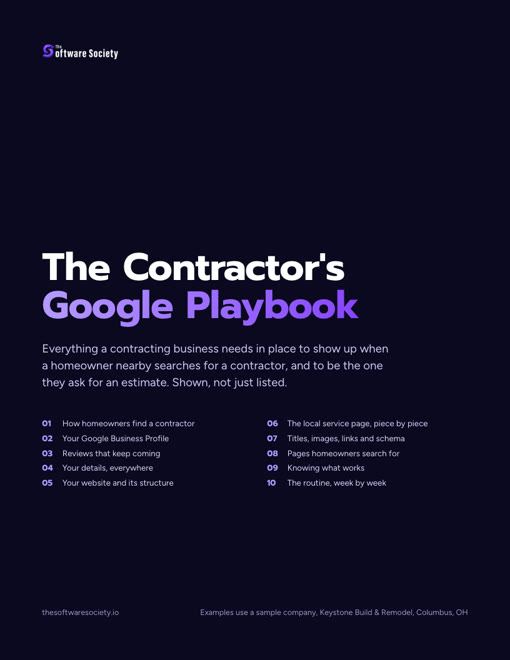
The contractor's Google playbook

Every part of showing up on Google for a contracting business, shown page by page: your profile, reviews, listings, website and the pages homeowners search for.

  • Your Google Business Profile set up field by field, with "General contractor" as the primary category
  • The service and the town in the address, title, headline, first sentence and photo names of every page
  • The same name, address and phone on every listing, checked line by line
  • A review request sent at every final walkthrough, with reply scripts

Send me the full checklist

We will email you the checklist and the occasional tip. Unsubscribe anytime. PDF

A clear plan connects your website, Google search, Google Maps, paid ads, and reviews.

What Is HVAC Contractor Marketing?

HVAC contractor marketing is a lead system, not a brand stunt. Smart local marketing links 6 core parts for heating and cooling shops:

  • A fast website: Homeowners tap your phone number fast. They can also send a short form in under 10 seconds to request service.
  • Search pages: Single service pages and town pages match what local buyers type. Each page targets 1 specific job or city.
  • Google Maps: An accurate listing puts your shop in front of nearby callers. Local homeowners see your hours and tap to call.
  • Customer reviews: Recent ratings prove your crew shows up and fixes the unit. High star counts help buyers pick your trucks first.
  • Paid ads: Targeted campaigns capture urgent calls as search rankings grow. Ads put your phone number at the very top of the page.
  • Call tracking: Dedicated numbers separate real booked jobs from spam and bot clicks. You see which channel pays for itself every month.

Likes and clicks do not pay technicians. Booked jobs on the dispatch board are the only goal. Our HVAC SEO guide covers the search side in depth.

A crew mid-task: hvac contractor marketing

Why Is HVAC Contractor Marketing Different From Other Businesses?

A broken furnace in January 2026 or a dead condenser in July 2026 creates an urgent local search. Homeowners buy HVAC work at the exact moment a unit fails.

Service area matters far more than national brand awareness. A caller in a hot attic wants the closest crew that answers.

Demand also swings sharply across 4 seasons. Build pages during slow spring and fall months. Your site is then ready before summer and winter peaks.

Google ranks local shops on relevance, distance, and popularity. Steady work in the off season wins urgent calls once the rush starts. The same rhythm shapes HVAC contractor leads from every channel.

See your new homepage before you pay anything

Your HVAC homepage, rebuilt free. You see it before you pay anything.

Past SEO campaigns grew organic traffic 26x in 14 months.

New website plus 100 SEO pages in the first month: $397 a month, cancel anytime

The problem before the work starts: hvac contractor marketing

Where Do Homeowners Find an HVAC Contractor?

Homeowners find an HVAC contractor through 5 main paths. They use Google search, Google Maps, paid ads, referrals, and AI tools.

Each path sends a homeowner to your phone line or contact form. Each one also costs a different amount per booked job.

Track every channel on its own. Only then can you see which source brings $350 tune-ups and which brings $8,500 system replacements. Start with the free ones. Add paid reach where the numbers support it.

Google Search Results

Organic search results are free listings below the paid ads and the map.

Homeowners type phrases like AC repair in Columbus or furnace installation near me. Dedicated HVAC pages match those exact searches.

Follow 3 core habits to win organic clicks.

  • Target 1 service per page: Write a focused page for AC repair instead of mixing 5 jobs together. Search engines reward clear topic focus on every URL.
  • Add real local proof: Show photos of your trucks and techs working in local neighborhoods. Homeowners trust real photos over generic stock images.
  • Keep page speed high: Compress large photos so mobile pages load in under 3 seconds. Fast pages keep impatient callers on your site.

Organic rankings take 4 to 9 months to build. Once a page ranks, each call costs $0 per click. See SEO for HVAC contractors for the full playbook.

The Google Maps Map Pack

The Map Pack is a box of 3 local listings near the top of Google results.

Many homeowners tap the call button straight from the map. They never visit your website at all.

Your HVAC rank also changes with where the caller stands. A map grid check can reveal weak neighborhoods just 5 miles from your shop.

Keep your listing active with fresh photos, posts, and replies. That steady activity helps your shop hold a top 3 spot. If your listing is missing entirely, read why a business is not showing up on Google.

Paid Ads and Local Services Ads

Paid ads buy immediate visibility at the top of search results.

Search ads charge $15 to $45 per click in competitive metros. Local Services Ads bill only for leads tied to your business and listed services.

Set 3 rules before launching paid HVAC campaigns.

  • Set a clear monthly cap: Start with $1,500 to $2,000 per month so you gather real call data. Track every dollar against completed invoices on your board.
  • Send clicks to matching pages: Link AC repair ads straight to your AC repair page. Never dump paid clicks onto a generic home page.
  • Answer every ring fast: Have a trained person pick up within 3 rings during business hours. Every missed ad call wastes the click you paid for.

Ads stop the minute your budget pauses. Social campaigns follow other rules, covered in Facebook ads for contractors. Pair them with Google Ads for contractors best practices and long-term local SEO for contractors.

AI Tools Like ChatGPT and Perplexity

AI tools are a new referral channel for homeowners comparing heating and cooling companies.

Some buyers ask ChatGPT, Gemini, or Perplexity for 3 trusted HVAC companies in their ZIP code. Analytics software can isolate those visits as their own traffic source.

AI referrals remain a small slice next to search and the map. Treat them as a bonus channel to watch over time. Clear service pages with plain answers give these tools accurate facts to repeat. A page that names your services, towns, and hours in plain text is easy for any tool to read.

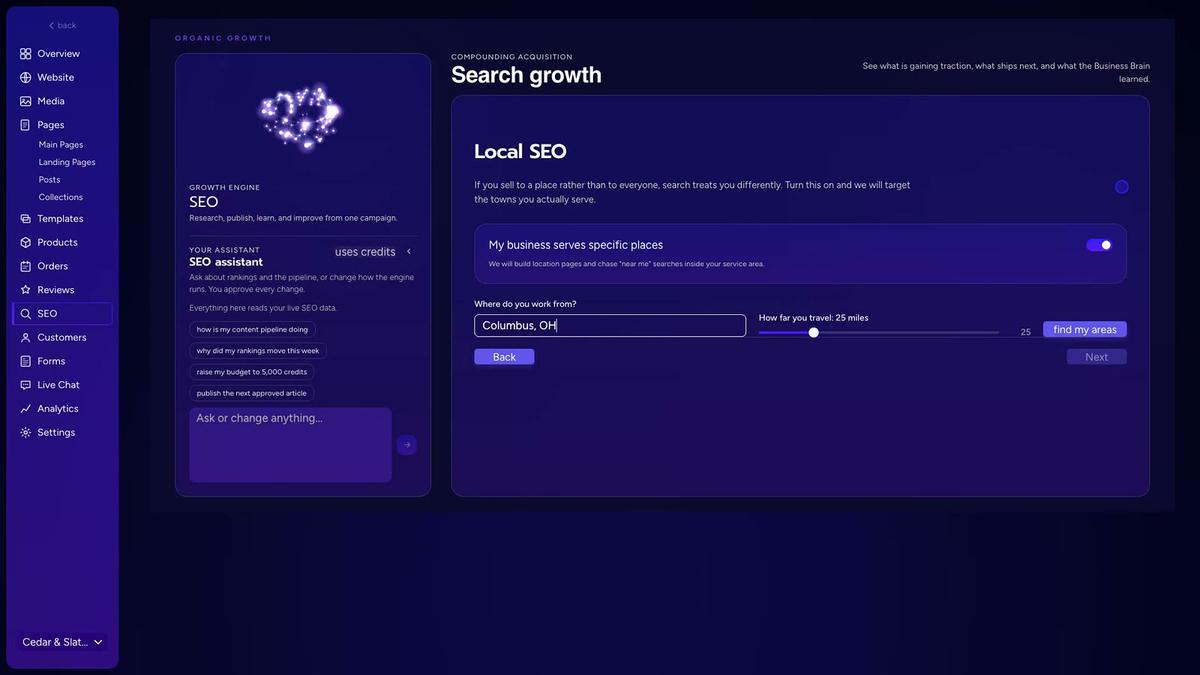
Local SEO setup with a home city and a travel radius
Local SEO begins with where the business works from and how far it travels.

How Does Google Decide Which Local Businesses to Show?

Google ranks local HVAC companies on 3 specific factors. Google Business Profile Help lists them for every local search:

  • Relevance: Your profile categories, service list, and website pages match what the homeowner typed. Clear service names help Google connect your shop to the search.
  • Distance: Your shop address or service area sits close to the searcher's location. Callers 2 miles away see different results than callers 12 miles away.
  • Popularity: Your business has strong review counts, local mentions, and an active online presence. Consistent 5-star feedback signals that local homeowners trust your crew.

No one can guarantee a number 1 spot. Google weighs all 3 signals on every search. You control relevance and popularity, so put your contractor marketing effort there.

Why Is Your Website the Hub of HVAC Contractor Marketing?

Your website is the hub. Every contractor marketing channel sends buyers to your site or phone.

A slow or confusing mobile page wastes $2,000 a month in ad spend and months of search work. Here is the math.

Suppose 200 mobile visitors land on your HVAC site each month. A clunky menu makes 10% leave, so you lose 20 potential calls. At a 50% booking rate and a $400 average ticket, that friction costs $4,000 a month.

Place your phone number in the top corner. Turn on tap to call for cell phones. Keep quote forms to 4 simple fields so homeowners finish them fast. Good contractor website design starts with those three fixes, as do most websites for contractors.

Why Is Your Website the Hub of HVAC Contractor Marketing?, in figures
A slow or confusing mobile page wastes $2,000 a month in ad spend and months of search work; At a 50% booking rate and a $400 average ticket, that mobile friction costs $4,000 in monthly revenue.

Find out where you show up on the map

A free map check for your HVAC company. See which towns find you and which call a competitor.

Do You Need Separate Service Pages for Each Job?

A service page is a dedicated web page for 1 heating or cooling job.

One crowded page covering 12 jobs in 300 words fails to rank. Every HVAC contractor needs separate pages for AC repair, furnace repair, heat pump installation, duct cleaning, and commercial maintenance.

Build each service page in 4 steps.

  1. Name the exact service: Put the job and primary area in the page title and opening line. Clear titles tell both Google and homeowners what you fix.
  2. List common warning signs: Help homeowners match symptoms like warm air, loud banging, or short cycling. Clear symptom lists build confidence before they pick up the phone.
  3. Explain the visit: Tell the reader what happens when a truck pulls into the driveway. Honest step-by-step details lower buyer stress right away.
  4. Add a clear call step: Put your phone number and a short form right below the explanation. Make booking the next step easy on any phone screen.

Focused pages convert better. Each one answers 1 urgent question clearly.

Close detail from the work: hvac contractor marketing

How Do Town Pages Help Local SEO for HVAC?

A town page is a local landing page for a city outside your shop address.

Homeowners type phrases like hvac marketing near me or furnace repair in Westerville. Each town in your service radius deserves its own page.

Never copy the same 400 words and swap only the city name. Google's spam policies warn against doorway pages built to rank for near-identical local queries.

Real local detail protects your site. A roofing and exteriors company in central Ohio runs separate pages for all 17 towns it serves.

Write about local neighborhoods, typical home ages, and nearby landmarks. Real context earns rankings in every town you cover. Local SEO services for HVAC contractors follow the same rule.

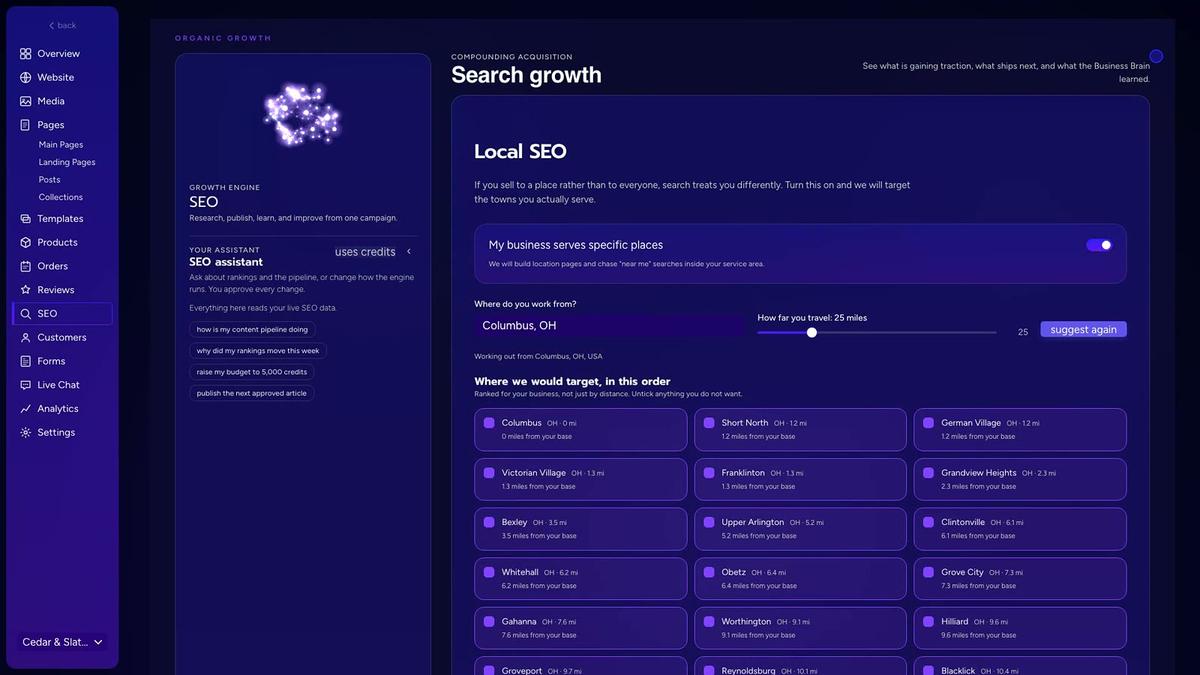
Grid of nearby towns ranked for local SEO targeting
Nearby towns ranked by fit, each with a reason, before any page is written for them.

How Important Is Google Business Profile for an HVAC Contractor?

A Business Profile is a free listing that drives your whole Maps presence and many direct calls.

Complete listings win trust before anyone clicks through. Audit these 5 details every quarter.

  1. Name, address, and phone: Keep your business details identical across your website and every local directory. Mismatched numbers confuse search engines and hurt local trust.
  2. Primary category: Select HVAC contractor as your main category, then add heating and air conditioning repair. Accurate categories help Google match your shop to urgent searches.
  3. Service list: Add all 10 to 15 core jobs you want, from mini-split installs to ductwork. Detailed lists expand the searches your listing can match.
  4. Operating hours: Update holiday hours and seasonal schedules so callers never hit a closed message. Accurate hours protect your call conversion rate during peak weather.
  5. Real job photos: Upload 5 new photos each month of wrapped trucks, clean installs, and uniformed crews. Real photos prove your company is active and local.

An accurate listing makes your company easy to trust in 5 seconds.

The whole job site: hvac contractor marketing

How Do Reviews Build Trust and Popularity?

Customer reviews drive trust and local popularity at the same time.

Nearly every homeowner reads reviews before calling an HVAC contractor. BrightLocal research shows that 47% of consumers skip businesses with fewer than 20 reviews. And 89% expect owners to reply.

Ask every happy customer for a review right after the invoice is paid. Send a direct text link as soon as the repair is done.

Never offer discounts or gift cards for ratings. Google's review rules need a genuine customer experience behind every review.

Reply calmly to every review, good or bad. Future buyers read your tone before they dial.

How Do Reviews Build Trust and Popularity?, in figures
BrightLocal research shows that 47% of consumers skip businesses with fewer than 20 reviews, and 89% expect owners to reply.
Walking the job with the homeowner: hvac contractor marketing

Seasonal Planning for Heating and Cooling Work

Seasonal HVAC contractor marketing starts 90 days before peak weather hits your area.

Pages published in March 2026 have time to index and climb before July 2026 heat waves. Slow spring and autumn weeks suit $89 tune-ups and maintenance memberships.

SeasonMain Marketing FocusPages to Update First
Early springAC tune-up offersTune-up and maintenance plan pages
Late springCoil cleaning and AC checksAC repair and town pages
SummerEmergency no-cooling callsEmergency AC repair page
Early fallFurnace safety checksFurnace tune-up page
Late fallHeat pump replacementsHeat pump and financing pages
WinterEmergency no-heat callsFurnace and boiler repair pages

Plan pages and ad budgets 1 quarter ahead. That keeps trucks busy all 12 months. More contractor marketing ideas fit the slow weeks well.

Results you can check

Past SEO campaigns grew organic traffic 26x in 14 months, and 15x on another. Top Rated Plus on Upwork with 99% job success.

Work for hundreds of small businesses and large clients like New Balance. Before The Software Society, our founders’ agency worked with Planned Parenthood.

What Changes Between Emergency Searches and Planned Projects?

A homeowner with a dead furnace at 10 PM checks 2 things. One is your phone number. The other is your service area.

Someone shopping for a $9,000 heat pump reads HVAC marketing pages for 5 to 14 days. Emergency searches demand instant phone access. Planned replacements need detailed proof and financing answers.

Compare the math on 20 monthly leads. Twenty $350 emergency repairs bring $7,000. Five closed $9,000 replacements bring $45,000.

Only advertise 24/7 dispatch if a real person answers overnight. Match each page's layout to what that buyer needs most. Emergency pages lead with the number. Replacement pages lead with proof, options, and financing.

What Changes Between Emergency Searches and Planned Projects?, in figures
Someone shopping for a $9,000 heat pump replacement reads HVAC marketing guides for 5 to 14 days; Twenty $350 emergency repairs bring $7,000, while 5 closed $9,000 replacements bring $45,000.
The equipment used for hvac contractor marketing

What Should You Track in HVAC Contractor Marketing?

Call tracking turns HVAC contractor marketing guesswork into clear profit numbers.

Without separate numbers, you cannot tell if a $1,500 ad budget beat your organic pages. Measure 4 numbers monthly.

  • Calls and forms by source: Assign distinct tracking numbers to organic search, the map, paid ads, and directories. Source tracking proves which marketing dollars bring real jobs.
  • Map Pack grid rank: Check where your listing sits across 25 to 49 points in your territory. Grid scans show the exact neighborhoods where visibility drops.
  • AI referral visits: Separate clicks from ChatGPT, Gemini, and Perplexity inside your website analytics. Watching AI traffic early prepares your shop for new search habits.
  • Booked job rate: Match every tracked lead to a real invoice in your dispatch software. Invoices separate $89 tune-up leads from $8,500 system installs.

Our contractor marketing tips go deeper on reports.

What Is a Map Pack Grid Scan?

A Map Pack grid scan is a visual map of your Google Maps rank at dozens of exact spots.

Stand at your shop and your HVAC listing can sit at number 1. Drive 8 miles east and it drops to number 9.

Run a grid scan once a month on the same date. Weak zones then stand out clearly. Expanding town pages and local reviews pushes green top-3 pins outward across your territory. Compare each scan to the last one, not to a single good day.

Vanity Numbers to Ignore

Website traffic and social likes are not revenue. They do not pay payroll or buy refrigerant.

Raw lead totals also lie when robocalls and bot form fills go uncounted. Label every spam call and solicitor in your marketing call log. Your conversion rate then stays honest.

A steady 40 real homeowner calls beat 4,000 empty impressions every month. Judge each channel by booked jobs and revenue, then by cost per booked job. Bought exclusive contractor leads face the same test. Anything else is a sideshow.

How Long Does HVAC Marketing Take to Show Results?

Contractor marketing through local SEO builds over 3 to 12 months. Paid ads generate calls within 7 days.

Search engines reward helpful HVAC pages built for homeowners, not quick tricks. Google Search Central stresses people-first content for real buyers.

Use 3 timeline benchmarks for your yearly budget.

  • Days 1 to 30: Launch your fast website, clean up your Business Profile, and turn on call tracking. Paid ads can start bringing $350 repair calls right away.
  • Months 2 to 6: Publish dedicated service pages and town pages across your core ZIP codes. Collect steady 5-star reviews every week to climb the Map Pack.
  • Months 6 to 14: Strong campaigns compound as pages gain authority. Past SEO campaigns grew organic traffic 26x in 14 months on 1 account and 15x on another.

Honest providers never promise exact timelines or lead counts.

How Long Does HVAC Marketing Take to Show Results?, in figures
Local SEO is a long term strategy that builds over 3 to 12 months, while paid ads generate calls within 7 days; Past SEO campaigns grew organic traffic 26x in 14 months on 1 account and 15x on another.

Common HVAC Contractor Marketing Mistakes

Most wasted HVAC contractor marketing budgets come from 5 preventable mistakes. Even a busy contractor with 6 trucks loses calls when the basics break.

  • One crowded services page: Cramming 10 services onto 1 page stops Google from ranking any single job well. Split every core repair and install onto its own URL.
  • Slow mobile layouts: Pages taking over 4 seconds to load lose homeowners before the phone number appears. Test your site speed on a real cell phone every quarter.
  • Zero call tracking: Running ads without source tracking hides which $1,000 spent actually booked a truck. Always tie tracking numbers to real dispatch invoices.
  • Outdated Google listings: Paid clicks to a listing with wrong hours burn cash fast. Verify hours before every holiday weekend and season change.
  • Buying ranking guarantees: Paying anyone who promises a number 1 spot breaks common sense and search guidelines. Focus on helpful pages and reviews.

Fixing these 5 gaps recovers calls without extra ad spend.

The finished result: hvac contractor marketing

Get a second opinion on your current setup

Already paying for HVAC marketing? Get a free second opinion on what works and what wastes money.

Overhead view of hvac contractor marketing in progress

What Should You Ask Before Hiring an HVAC Marketing Provider?

Ask 5 direct questions before signing with any contractor marketing agency. Good partners answer plainly, without jargon or long lock-in clauses.

Get every answer in writing. Compare at least 2 or 3 providers side by side. A provider who dodges a simple question will dodge a hard one later. The best SEO for HVAC contractors guide adds more checks.

Five Questions for Any HVAC Marketing Provider

The list below is for your first call. Owners searching for HVAC marketing near me or a contractor SEO company can use it too.

  1. Who does the actual work: Confirm if you speak directly with the person building your pages or a junior sales rep. Direct access keeps your local details accurate.
  2. How are calls reported: Ask to see a sample report showing calls and booked jobs by search, map, and ads. Clear reporting keeps every dollar accountable.
  3. Who owns the assets: Verify that your company owns its domain name, website content, and Business Profile. Never let an outside vendor hold your accounts hostage.
  4. What do you guarantee: Walk away if anyone promises a number 1 ranking or a fixed number of leads. Honest pros guarantee clear work and transparent numbers.
  5. Can I see similar work: Review real service pages and town pages built for home service trades like roofing contractors. Proven trade examples show real experience.

Clear vendor questions protect your marketing budget.

A Simple HVAC Contractor Marketing Checklist

Use this 7-point checklist to audit your HVAC contractor marketing in 15 minutes. Start with your website and pages.

  • Mobile speed check: Confirm your website loads in under 3 seconds with a tap-to-call button at the top. Fast mobile pages stop callers from bouncing back to Google.
  • Dedicated service pages: Verify that AC repair, furnace repair, and installations each have a focused page. Clear page topics help homeowners find the exact fix fast.
  • Unique town pages: Ensure every key city you serve has a page with real local details. Original local writing protects your site from thin doorway penalties.

Listing, Review, and Tracking Checks

Next are the parts that live outside your website.

  • Listing accuracy: Match your business name, phone, categories, and hours to your website. Consistent details build instant trust on Google Maps.
  • Steady review habit: Send a direct review link to every satisfied homeowner right after service. Consistent weekly ratings push your listing higher in local results.
  • Source call tracking: Separate calls from organic search, the map, paid ads, and AI tools. Clean source data shows your true cost per booked job.
  • Monthly grid scan: Track Map Pack positions across your service area to spot weak neighborhoods. Monthly scans guide where to build your next local page.

These 7 basics give any HVAC company a measurable system for steady growth. Pair them with steady contractor lead generation habits.

A crew mid-task: hvac contractor marketing

Frequently Asked Questions

Should an HVAC company run ads and SEO together?

Paid ads and SEO are strongest together for a growing HVAC company.

Paid ads bring calls within 7 days at $15 to $45 per click. Organic pages build free traffic over 3 to 12 months. Each future organic call then costs $0 per click. Use ads to cover the gap while your pages climb.

When does HVAC SEO start bringing calls?

HVAC SEO takes 3 to 12 months to build steady call volume.

New pages need time to index and earn local trust. Consistent monthly HVAC marketing work compounds. Expect early signs first: more listing views, then more calls from nearby ZIP codes. Booked replacements tend to follow last.

How can I see which source brings each call?

A dedicated tracking number is the simplest way to see each source behind your booked HVAC jobs.

Give search, Maps, ads, and AI referrals separate numbers. Match each call to a $350 repair or $8,500 replacement invoice. Review the totals once a month. Cut any channel that books no jobs after 90 days.

What sets the budget for HVAC contractor marketing?

Market competition and channel mix set the HVAC contractor marketing budget.

Competitive cities push clicks to $15 to $45 each. That can mean $1,500 to $2,000 in monthly ad spend for an HVAC contractor. Organic pages take upfront labor, then bring $0 per click calls for years.

Does each service and town need its own page?

Separate pages are needed for a local HVAC company.

Homeowners search for exact jobs in their own town. Give each page unique local details so you never trigger doorway filters. Start with your 3 most profitable services. Then add pages for the towns where you already have jobs.

How much do HVAC calls come from Google Maps?

Google Maps is a top call driver for every local HVAC shop.

Many homeowners tap call straight from the 3-pack. They never click a website. Relevance, distance, and popularity decide who appears. Keep your hours, categories, and photos current. Reply to every review so the listing stays active.

What Do Google Guidelines and Review Studies Say?

Official guidelines and buyer surveys are clear on why steady contractor marketing beats shortcuts.

Google Business Profile Help sets the core rule: "Local results are mainly based on relevance, distance, and popularity." The same page adds: "Providing complete and accurate business information makes it easier for Google to match your profile to relevant searches."

Google Local Services Ads Help explains billing: "Pay only for leads related to your business and the services you offer."

Page Rules and Review Studies

Two more rules cover your pages. A survey shows why reviews are worth the effort.

Google's spam policies warn about thin city pages: "Doorway abuse is when sites or pages are created to rank for specific, similar search queries."

Google Search Central defines the standard: "People-first content means content that's created primarily for people..."

BrightLocal's Local Consumer Review Survey found: "97% of consumers still lean on reviews to guide their purchase decisions."

Google's review policy forbids fake praise: "Reviews and other user contributions to Google Maps must reflect a genuine experience."

Follow these rules and earn real reviews. Your HVAC marketing then holds up for years. Audit your website, listing, and call tracking today to see where your next calls are hiding.

Frequently asked questions

What is HVAC contractor marketing?

HVAC contractor marketing connects your website, Google Business Profile, reviews, and ads to capture local heating and cooling searches. The goal is generating tracked phone calls and booked service jobs rather than empty website clicks. A good plan names the calls you want, the towns you serve, and how each lead gets counted.

Are paid ads or SEO better for an HVAC company?

Both channels serve different timelines for a growing HVAC shop. Paid ads deliver urgent calls within days. Local SEO builds lasting organic rankings that bring free clicks over several months without paying per lead. Many shops run ads first, then shift budget to pages as rankings climb.

How long does HVAC SEO take to show results?

Local SEO shows measurable movement in 3 to 6 months for most HVAC contractors, depending on your city size and competition. Paid search campaigns bring calls much faster, within the first week of launching in many markets. Watch listing views and calls each month. Steady growth in both is the early sign it is working.

How do I know which marketing source brings in calls?

Use call tracking software that assigns a unique phone number to Google search, Google Maps, paid ads, and your website. Matching those numbers to completed invoices shows the true return on each HVAC marketing channel. Review the totals each month. Cut channels that book no jobs after 90 days.

What drives the cost of HVAC contractor marketing?

HVAC marketing costs depend on your metro population, competition level, number of towns targeted, and ad budget. Building 15 town pages in a small market needs far less work than competing across a major city. Ask any provider to list what is included, so you can compare quotes line by line.

Do I need a separate page for each service and town?

Yes, separate pages help search engines match specific homeowner searches like heat pump repair in a nearby suburb. An HVAC contractor should write unique local details on every town page instead of duplicating identical copy. Start with your 3 most profitable services, then add towns where you already have jobs.

How important is Google Maps for an HVAC contractor?

Google Maps is one of the first things homeowners tap during a heating or cooling breakdown. Keeping your HVAC listing categories, hours, photos, and recent customer reviews updated directly supports your local visibility. Reply to every review and post new job photos so the listing stays active.

Start with a free homepage rebuild

Book a short call. Your new HVAC homepage is free to see and yours to keep.

New website plus 100 SEO pages in the first month: $397 a month, cancel anytime

Ready when you are

Ready for the phone to ring more?

Book a short call. We rebuild your homepage first, and you decide after you have seen it.