



Contractor Marketing Tips
Contractor marketing tips are simple steps that bring more local jobs from Google. Roofers, remodelers, and HVAC crews can use these 13 steps to win work.
This April 2026 guide covers your Google profile and site pages. It also covers reviews and call logs.
Every step builds your reach. None of them promises a fixed spot. Each tip is free or low cost. Most take an afternoon. Work through them in order and track calls. By the end, you will know where your next job comes from.
Book a callContractor Marketing Tips That Bring Calls From Google
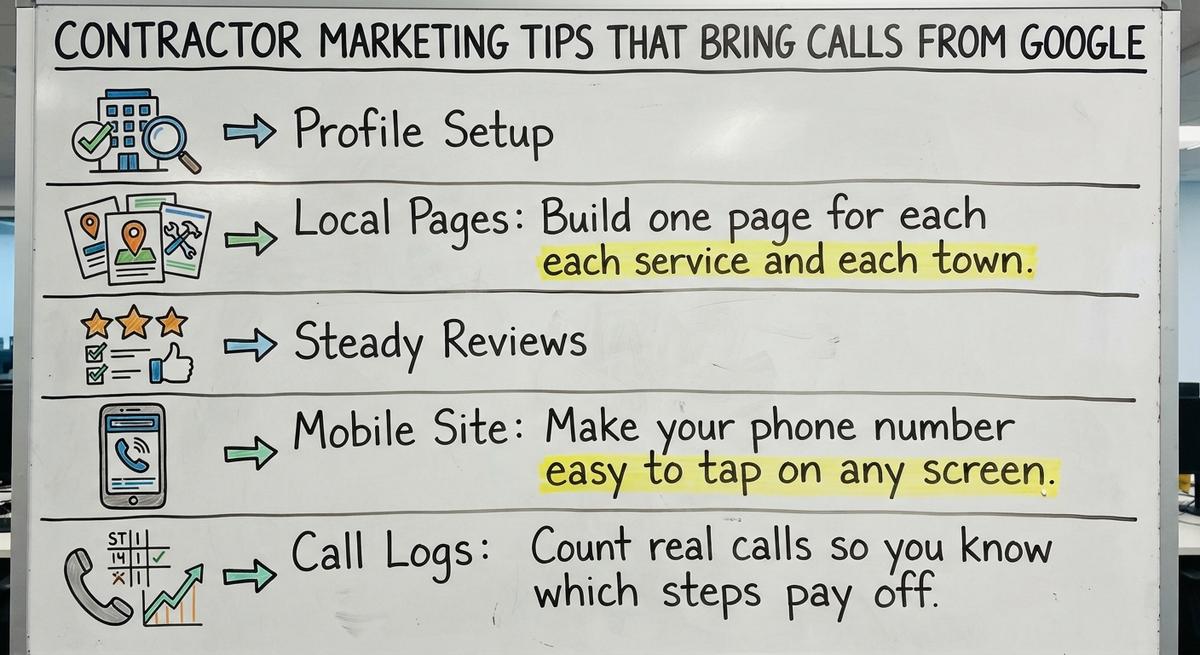
Good contractor marketing tips focus on five things. Each one makes the phone ring. Every trade shop needs all five in place.
- Profile Setup: Claim your Google Business Profile and list your main trade as the top category.
- Local Pages: Build one page for each service you sell and each town you serve.
- Steady Reviews: Ask every happy customer for a quick rating right after the job ends.
- Mobile Site: Make your phone number easy to tap on any phone screen, on every page.
- Call Logs: Count real calls each month to see the steps that pay off.
Start at tip one. Finish each step before the next. No marketing tip can guarantee a top spot or a set job count.
Still, these five contractor marketing tips raise your odds of getting booked. For more ways to fill the calendar, see our list of contractor marketing ideas and our tips to get more jobs as a contractor.
See your new homepage before you pay anything
Your homepage, rebuilt free. You see it before you pay anything.
Past SEO campaigns grew organic traffic 26x in 14 months.
New website plus 100 SEO pages in the first month: $397 a month, cancel anytime
Book a callHow Customers Find a Contractor on Google
Google Search is the first stop for most homeowners with a roof leak. Buyers with a dead furnace search on a phone too.
The Map Pack is a box at the top of Google. It shows three local shops. Regular organic links sit right below it.
Most contractor marketing aims to win one of those two spots. Google Business Profile Help lists relevance, distance, and popularity as the drivers of local results.
Buyers pick a shop with three quick checks.
- Top Map Box: Homeowners tap one of the first three shops they see on the local map.
- Review Stars: Callers check star ratings and read the most recent comments from local neighbors.
- Fast Website: Visitors look for a clear phone number and real proof of past work.
Winning both search areas puts your number in front of ready buyers. Not showing up at all? Start with why a business is not showing up on Google.

Google Business Profile Contractor Marketing Tips
Your Google Business Profile is the free listing behind Google Maps. A full profile gives search engines clear facts. It tells them your trade.
Homeowners check your hours, service area, and photos. Then they decide to call. Good contractor marketing starts with every detail on this free listing.
Accurate details prevent missed calls. They also prevent wasted truck rolls. Accurate profile marketing helps you earn jobs before a buyer visits your site.
How Do You Claim and Finish a Google Business Profile?
Profile check is a quick check by video, phone, or postcard. Once you pass, fill out every field.
Good contractor marketing relies on complete facts. Follow these four steps to finish your listing.
- Business Name: Use your exact legal name with no extra city words or keywords added.
- Phone and Hours: List your main local number and set accurate hours for each day.
- Website Link: Point the profile button to your homepage or to your main local page.
- Service Area: Add the counties or towns your trucks visit each week, and nothing more.
Post only true facts. Skip any award or license you cannot prove on request.
Follow the Google Business Profile Help rules. Verified business facts build fast trust with callers. Roofers can find more detail in our Business Profile guide for roofers.
Tip 2: Pick the Right Categories and Services
Categories are the labels that tell Google your main trade. Pick one main label. Match it to your top moneymaker.
Roofing contractor, HVAC contractor, and electrician are strong main labels. Add 2 or 3 extra labels. Use them only for weekly work.
Follow these three steps to set up your trade labels.
- Primary Trade: Choose the one label that matches the work bringing your highest job revenue.
- Extra Trades: Add second labels only for services your crew performs every single week.
- Plain Services: Type out each repair in plain words, like panel upgrades or shingle replacement.
Review the list each time you add or drop a trade. These category tips connect your profile to ready buyers.
What Google Says About Local Ranking
"Local results are mainly based on relevance, distance, and popularity," says Google Business Profile Help.
Google uses those three signals to rank shops in Maps. Strong contractor marketing targets the ones you control.
Here is what each signal means for your shop.
- Relevance: Your labels, services, and site text all match the exact job the buyer searched.
- Distance: Your verified address or service area sits close to where the caller stands.
- Popularity: Your shop looks well known through steady reviews, links, and mentions around the web.
Focus weekly work on relevance and popularity. You cannot move your shop closer to every caller.
These three ranking signals keep your effort aimed at real results. Our guide to local SEO for contractors covers each one in depth. You can also compare local SEO services for contractors.

Service and Town Pages for Local SEO for Contractors
Local SEO for contractors is a plan built on clear site pages. One homepage cannot rank for every job and city.
Search engines need exact pages for exact searches. Good contractor marketing gives each trade and town its own page.
Visitors also stay longer on a page that fits their problem. Dedicated contractor pages give Google and homeowners clear answers fast.
Tip 3: Build a Page for Each Service You Sell
Service pages are web pages built for one job type. Roof repair, furnace repair, and gutter installs each need a page.
One Services page with a short list is too thin. Even the biggest builders split their work. Turner Construction lists healthcare, education, sports, and retail as separate segments. "People-first content means content that's created primarily for people," says Google Search Central.
Include these four parts on every contractor service page.
- Job Summary: Explain what the repair or install is in plain, simple words a homeowner knows.
- Right Fit: Describe the homeowners who need this fix and the warning signs to watch for.
- Visit Steps: Share what happens at the estimate and during the repair visit at their home.
- Real Photos: Add clear pictures from your own job sites to prove the work is yours.
Tell visitors how to call or ask for an estimate. One contractor page per service gives search engines and buyers exact facts. See how contractor website design lays these pages out.
Tip 4: Build a Page for Each Town You Serve
Town pages are local landing pages for the cities you serve. Each one helps your site match searches with a town name.
Buyers often search "HVAC near me" or "roofer nearby." A central Ohio roofing company runs its own page for all 17 towns it serves.
That setup covers every town its crews visit. Good contractor marketing only targets towns inside your real driving range.
Keep these three rules in mind.
- Real Range: List only the cities where your trucks drive on a regular weekly basis.
- Core Trades: Name the top repairs and installs you handle inside that specific local town.
- Local Proof: Add short notes and photos from real jobs your crew finished in that city.
Only list towns where your team works every week.
How to Avoid Copy-and-Paste Town Pages
Duplicate town text is a spam risk. It hurts search rank. Swapping only the city name creates weak pages.
Smart contractor marketing uses real local facts. Google's spam policies warn against "doorway abuse" on pages built to catch near-identical searches.
Write useful local details on every town page with these four steps.
- Local Details: Name real neighborhoods, common home ages, or the local weather issues seen there.
- Job Photos: Upload pictures and short project notes from jobs your crew did in that town.
- Internal Links: Link each town page directly to the exact services you offer in that area.
- Honest Pacing: Wait to publish a town page until you have true local facts to share.
Google Search Central rules keep your site safe. Real local proof is the top town page tip. It turns a plain town page into a call driver. Our contractor SEO guide explains how these pages fit together.
Find out where you show up on the map
A free map check for your company. See which towns find you and which call a competitor.
Book a callTip 5: Link Your Pages to Each Other
Internal links point from one of your pages to another. They show Google how services and towns fit together.
Link each service page to the towns where you offer it. Link each town page back to its top 3 services. Keep every anchor plain, like "roof repair in Dublin."
This small habit helps visitors too. A homeowner on one page finds the next answer in 1 tap.

Google Reviews in Contractor Marketing
Google reviews are public ratings. They build trust with local buyers. Search engines also use review counts as a ranking signal.
Steady reviews help roofing, HVAC, and remodeling shops stand out. Busy shops ask after every finished job.
Quiet shops wait and hope. Steady review marketing separates busy contractors from slow ones.
How Do Contractors Get More Google Reviews?
A review text link is the fastest way to get feedback. Text every happy buyer right after the work ends.
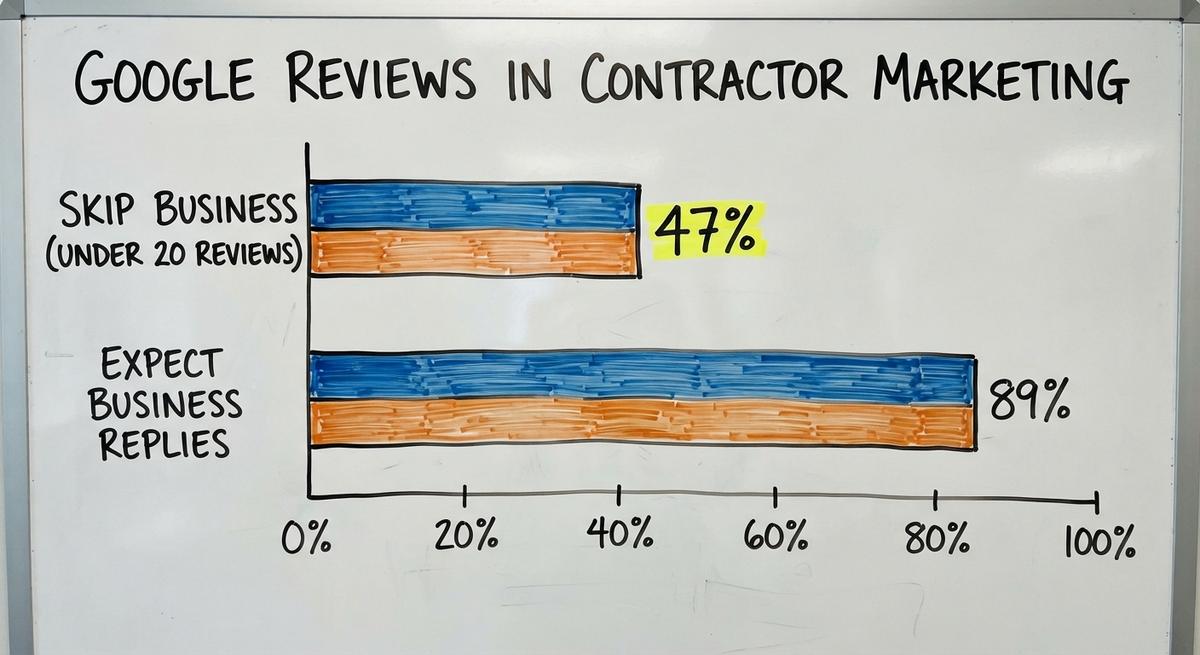
"97% of consumers still lean on reviews to guide their purchase decisions," reports BrightLocal's Local Consumer Review Survey. The same survey found 47% of shoppers skip a business with fewer than 20 reviews.
Follow these three rules for every contractor review ask.
- Timing Tips: Send the link right after the homeowner walks through and checks the finished work.
- One Tap: Link straight to your Google review box so buyers never hunt for it.
- Honest Rules: Never buy fake reviews, and never trade discounts or gift cards for stars.
"Reviews and other user contributions to Google Maps must reflect a genuine experience," says Google's review policy. One-tap review tips earn honest ratings all year. More tactics sit in our guide on how to get more Google reviews.
Tip 6: Answer Every Review
Replying to reviews is a simple habit. It shows you care. BrightLocal's survey adds that "Consumers now expect higher star ratings and fresh reviews." So keep both coming. BrightLocal's survey found that 89% of consumers expect business replies.
Good contractor marketing treats each reply as a public sales pitch. Future buyers read how you handle praise and problems.
Use these three steps to answer feedback.
- Happy Reviews: Thank the homeowner by first name and mention the specific job you finished.
- Bad Reviews: State the plain facts calmly and offer to fix the issue offline, by phone.
- Short Replies: Keep each response to 2 or 3 clear, polite sentences that sound human.
Follow Google's review policy on every reply. Thoughtful replies build fast trust with people reading your profile.


Website Contractor Marketing Tips That Turn Visits Into Calls
A contractor website turns visits into calls. Slow pages waste the traffic you earned. So do hidden forms.
Homeowners in a rush leave messy sites. Clean contractor marketing makes calling your office the easiest step.
Every button should lead to an estimate. Clear contractor site design turns mobile visitors into booked jobs in seconds.
Results you can check
Past SEO campaigns grew organic traffic 26x in 14 months, and 15x on another. Top Rated Plus on Upwork with 99% job success.
Work for hundreds of small businesses and large clients like New Balance. Before The Software Society, our founders’ agency worked with Planned Parenthood.
Book a callTip 7: Make Your Website Easy to Use on a Phone
Mobile speed is a must in a home emergency. Most buyers look up urgent repairs on a phone.
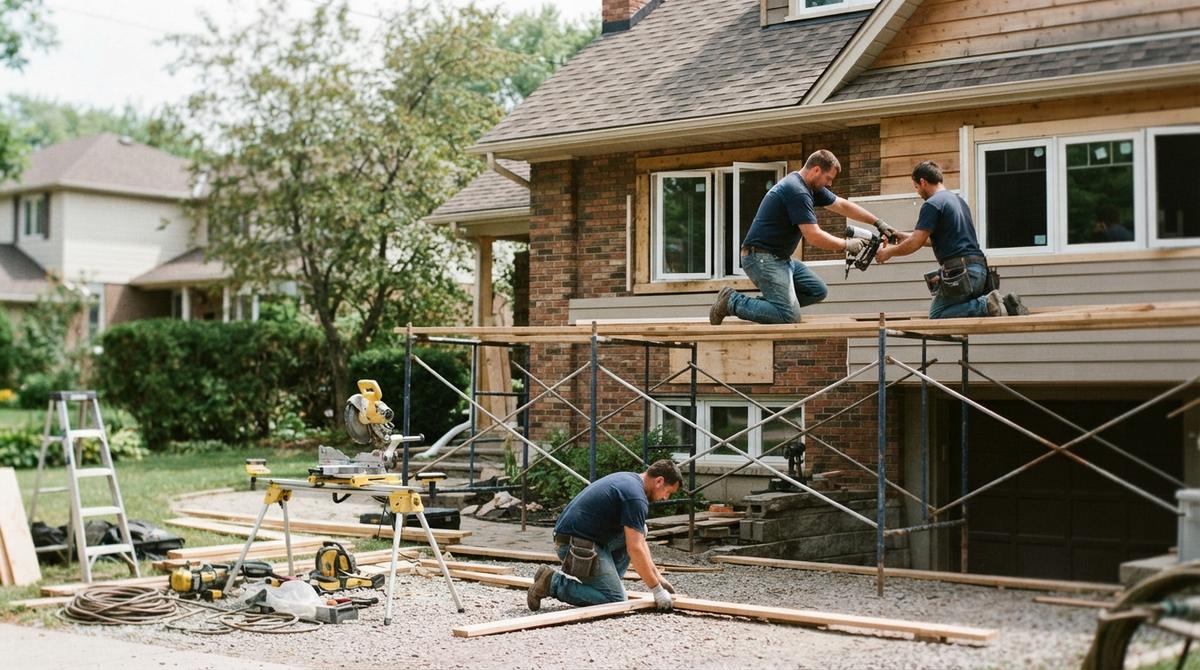
A mobile site fits small screens. No one should pinch or zoom. Strong contractor marketing puts your number at thumb level.
Check your mobile site against these four standards.
- Button Tips: Place a large tap-to-call button at the very top of every single page.
- Clear Type: Use dark, easy-to-read text and short paragraphs on a clean, light background.
- Small Files: Shrink every job photo so your pages load fast, even on weak cell data.
- Testing Tips: Open your site on your own phone today and tap every button once.
Fast mobile contractor pages keep callers from backing out to a rival. For trade examples, see our roofing website design guide.
Tip 8: Put the Phone Number and a Form Where People Look
Callers want your number in under three seconds. Put a clickable number in the site header on every page.
Also place it near the top of each service and town page. Good contractor marketing removes friction from the form.
Keep your contact form short, with three fields.
- Customer Name: Ask for a first and last name so your office can greet them right.
- Phone Number: Ask for a direct cell number so your team can call or text back.
- Form Tips: Add one short box where they describe the leak, outage, or breakdown.
Tell visitors what happens next. Do not promise an exact callback minute. Fewer form fields lift the number of finished requests.
Tip 9: Show Real Proof on Your Site
Real job proof shows your crew works clean. Homeowners want signs of honest work. Only then do they let strangers inside.
Never show a license number, insurance badge, or award you cannot prove. False claims create legal risk, not trust.
Add these three proof items across your contractor marketing pages.
- Job Photos: Show before and after pictures from real homes in your own service area.
- Buyer Quotes: Share real customer comments on your service pages and on your town pages.
- Process Notes: Explain your cleanup steps and your warranty terms in plain, simple words.
Place proof on every page. Do not hide it in one gallery. Real contractor job proof gives nervous buyers the nerve to dial.
Tip 10: Keep Your Information the Same Everywhere
Contact consistency means your business details stay identical. Name, address, and phone must match across every directory.
Old numbers confuse search engines. Past addresses do too. Dead lines send ready buyers to another shop.
Good contractor marketing keeps listings clean all year. Check these three areas every three months.
- Major Sites: Fix old records on Yelp, Angi, and the Better Business Bureau right away.
- Service Setup: Use a service-area setup on Google if buyers never visit your shop in person.
- Quarterly Tips: Review your main listings every 3 months to catch odd edits by strangers.
Clean business data protects your Map Pack visibility in every season.
Tracking Calls, Maps, and AI Visits
Lead tracking counts the pages that bring jobs. Good SEO for contractors means counting what fills your schedule.
Guessing wastes budget. Smart contractor marketing measures real calls and form fills every month.
Numbers tell you where to spend next. They also show what to cut. Simple marketing tracking shows where every lead starts.
How Do You Track Where Contractor Calls Come From?
Call tracking gives each source its own phone number. Pair those numbers with a simple lead log.
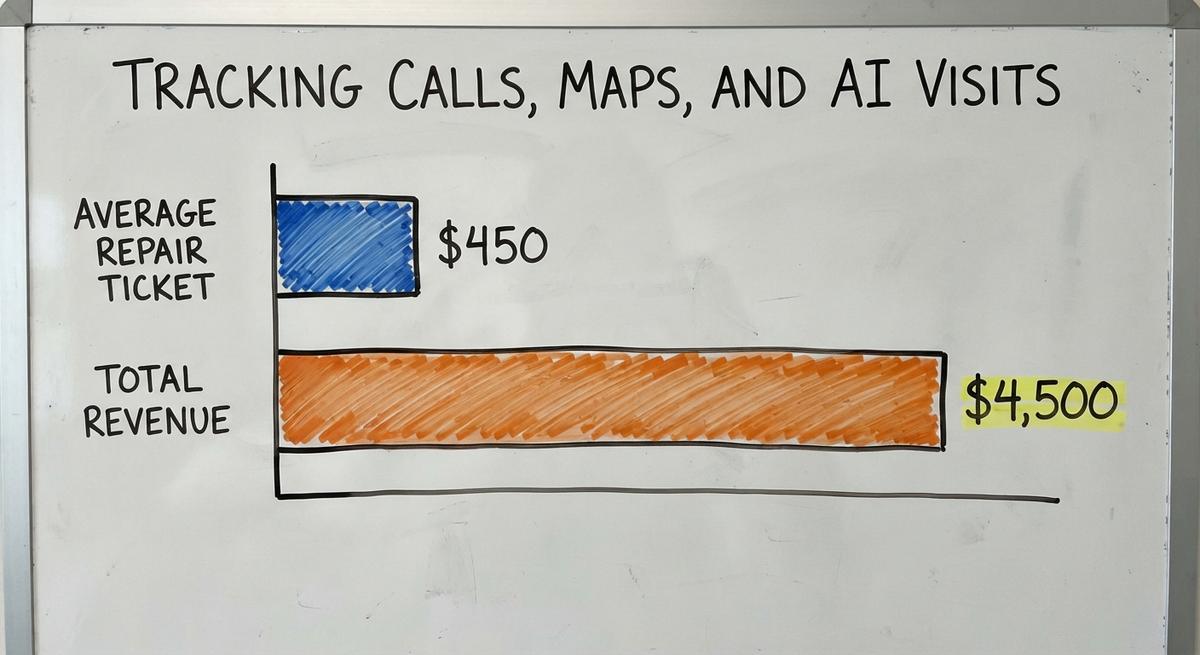
First, separate real customer calls from robocalls and sales pitches. Say you get 30 real calls a month. You book 10 jobs.
At a $450 average repair ticket, 10 jobs equal $4,500 in revenue. Good contractor marketing logs every call across three sources.
- Search Calls: Track the phone calls that come straight from your organic website pages.
- Map Calls: Count the clicks and calls that come from your Google Business Profile.
- Ad Calls: Log paid ad calls on their own so you know your true cost per job.
Counting leads by source shows the channels that pay for themselves. Our page on contractor lead generation goes deeper on lead math.
Tip 12: Check Your Map Position Across Your Service Area
A grid scan is a tool that checks your Map Pack spot. It measures rank at dozens of points in your range.
Map results change from block to block. They depend on where the caller stands. Checking from your office desk gives a false picture.
Run a grid scan on a set monthly schedule. Compare each month to the one before, like January 2026 against February 2026.
That central Ohio roofing company tracks all 17 towns this way. Positions move up and down from week to week.
Monthly grid scans track real map progress across your whole market.
Tip 13: Watch Visits From AI Tools
AI tools are new answer engines. Homeowners now ask them for local pros. Some want a roofer. Others want an electrician or HVAC tech.
Track AI visits to your site as their own channel. Clear, factual pages are easy for software to read.
Good contractor marketing keeps hopes realistic as of March 2026. AI traffic is still small in most local trades.
Follow these three steps to stay ready for AI search.
- Factual Pages: Write clear service and town details that answer tools can quote word for word.
- Channel Log: Track AI visits apart from regular Google search traffic in your monthly report.
- Steady Plan: Watch this new channel early, and keep your core search work going strong.
Clean factual pages help search engines and AI tools understand your shop. Learn more about LLM SEO for answer engines.

Get a second opinion on your current setup
Already paying for marketing? Get a free second opinion on what works and what wastes money.
Book a callPaid Ads, Offline Flyers, and Common Mistakes
Paid marketing buys calls fast. Owners often ask how ads and flyers fit beside organic work.
Knowing where each channel belongs stops early overspending. Smart contractor marketing funds trackable sources first.
Build your base pages first. Buy clicks or print flyers after. Smart marketing budgets protect your cash flow in every season.
Paying for Google Ads vs. Organic Search
Local Services Ads are paid listings above the map. Google Ads and LSAs bring calls in days.
Still, those calls stop the day you pause the budget. Google Local Services Ads Help tells advertisers they "Pay only for leads related to your business" and not for clicks.
Compare paid ads and organic contractor marketing side by side.
| Feature | Google Ads and LSA | Organic Search and Map Pack |
|---|---|---|
| Speed to first calls | Days after approval. | Months of steady work. |
| Cost per lead | Ongoing ad spend. | Built into site and SEO work. |
| What happens if you pause | Calls stop at once. | Pages keep working for you. |
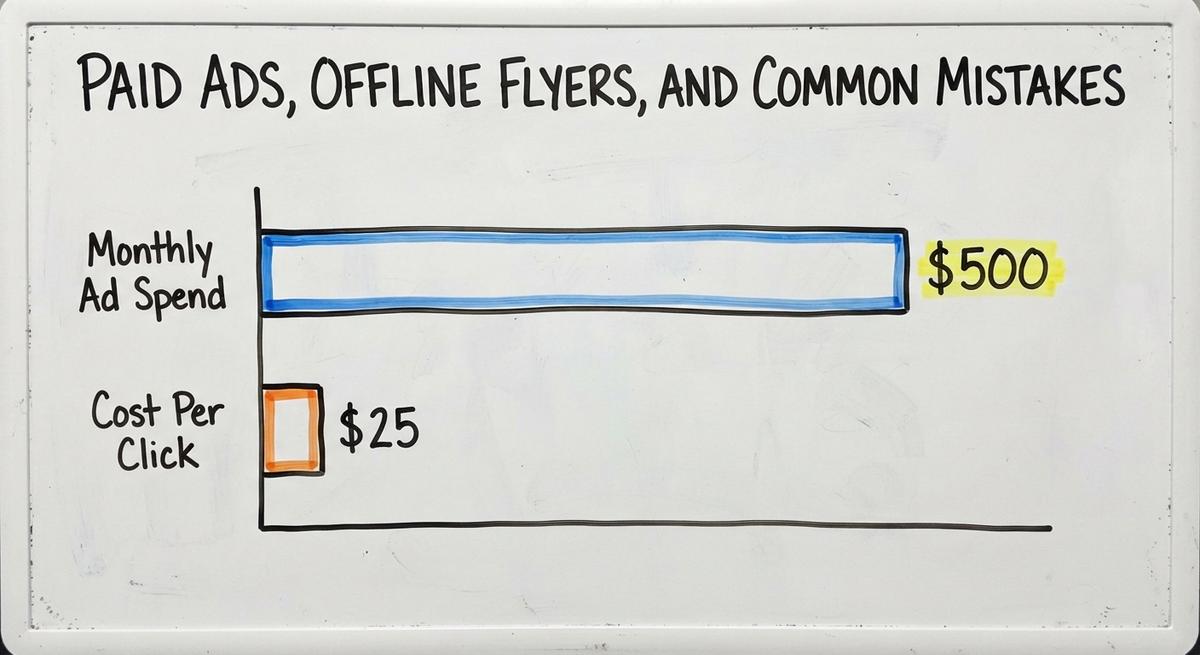
Test ads with a monthly cap you can afford. Try $500 a month at $25 per click. That buys 20 clicks.
Paid and organic together work best with separate call tracking. Our guide to Google Ads for contractors covers setup.
What About Facebook, Flyers, and Yard Signs?
Door hangers and yard signs are offline ads. They build local notice. Social posts keep your name in front of neighbors.
Offline ads are hard to measure. So put a unique phone number on every batch of flyers or signs.
You can also print a special web address on cards. Finish your Google profile and core pages first. Then buy print ads.
Most owners see better returns from search first. Trackable offline numbers prove if yard signs bring booked work. Our Facebook ads for contractors guide covers social spend.
Should Contractors Use Email Marketing?
Email marketing is a cheap way to reach past customers. "On average, email drives an ROI of $36 for every dollar spent," reports Litmus.
Send a short note each season. Remind past buyers about tune-ups, gutter checks, or touch-up paint. Ask for a referral every time.
Keep each email to one offer and one phone number. Past buyers already trust you. Strangers do not.
Mistakes That Waste Contractor Marketing Money
Five common traps drain cash from trade shops every year. Roofing, HVAC, and remodeling owners lose thousands on bad deals.
Watch out for these five traps before you sign any contractor marketing deal.
- Guaranteed Rankings: Never pay any firm that promises you a top spot or a fixed lead count.
- Duplicate Pages: Avoid copy-and-paste town pages that break Google's spam policies on doorway abuse.
- Blind Spending: Never run ads or mailers without a way to track the real calls.
- Stale Websites: A site left alone for years slowly loses calls, trust, and local rank.
- Locked Contracts: Stay away from long deals you cannot cancel when the results fall short.
Avoiding these traps saves cash for better tools. Spotting bad promises early protects your shop's cash flow.
How Do You Judge a Contractor Marketing Provider?
A good marketing partner shares clear data. Judge a provider by who builds your work. Then ask who owns your accounts.
Ask direct questions before you pay any contractor marketing agency. Use this four-point checklist.
- Actual Worker: Ask who builds your pages and if you can speak with that person directly.
- Clear Reporting: Check that monthly reports show calls, forms, grid scans, and AI visits by source.
- Full Ownership: Confirm in writing that you keep your domain, your site, and your Google profile.
- Work Preview: Ask to see real design or page work for your shop before you pay anything.
Strong marketing plans rely on data you can check yourself. Clear ownership of your marketing keeps your business safe under any provider. Our full contractor marketing guide covers the bigger picture.
A Simple 30-Day Plan to Start Contractor Marketing
Four weekly blocks give you a clear 30-day start. Contractor marketing works best one small step at a time.
Fixing it all in one weekend leaves tasks half done. Follow this four-week schedule.
- Week 1: Claim your Google Business Profile, check your labels, and fix mismatched directory listings.
- Week 2: Set up call tracking numbers and test every contact form on your own phone.
- Week 3: Send a one-tap review link to the homeowner after every finished job.
- Week 4: Outline your service and town pages for the highest-profit work you sell.
Check your call logs and grid scan at the end of every month. Steady monthly contractor marketing keeps your trucks busy. For trade plans, see HVAC contractor marketing, roofer contractor marketing, and paint contractor marketing.
Key Takeaways
- Profile first: Claim and finish your Google Business Profile before you spend a dollar on ads.
- Page per job: Give each service and each real town its own page with local facts and photos.
- Reviews every job: Text a one-tap link after each job. BrightLocal found 97% of consumers lean on reviews.
- Phone-first site: Put a tap-to-call button at the top of every page and keep forms short.
- Count everything: Track calls by source, scan your map rank monthly, and log AI visits too.
Frequently asked questions
How long does contractor marketing take to work?
Contractor marketing timelines vary by market and your current site. Profile updates can spark calls within weeks. Service and town pages build steady momentum over several months.
How much should a contractor spend on marketing?
Set a marketing budget that fits your average job value and growth goals. Start small, track it by call source, and then grow the channels that bring profitable jobs.
What is the best free marketing for contractors?
The best free contractor marketing is a claimed Google Business Profile plus steady reviews. Both cost zero dollars. Together they strengthen your map presence and earn trust from local buyers.
Do I need a website if I have a Google profile?
Yes. A contractor website supports your Google profile and shows buyers real job proof. It also holds a page for every service and city you serve.
Start with a free homepage rebuild
Book a short call. Your new homepage is free to see and yours to keep.
New website plus 100 SEO pages in the first month: $397 a month, cancel anytime
Book a callRelated guides
More on the same work.
- Roofer Contractor Marketing
- Contractor Marketing
- Digital Marketing for Roofing Contractors
- Contractor SEO Marketing
- Independent Marketing Contractor
- Home Contractor Marketing
- Contractor Marketing Agency
- Paint Contractor Marketing
- Concrete Contractor Marketing Agency
- Contractor Marketing Ideas
- HVAC Contractor Marketing
- Contractor Kings Marketing
- Contractor Independence Marketing
- Concrete Contractor SEO
- General Contractor SEO
- How to Get More Jobs as a Contractor
- Website General Contractor
- Contractor Website Development
- Roofing Contractor Leads
- Free Leads for Contractors
- Facebook Ads for Contractors
- Contractor SEO Company
- SEO for Contractors
- Local SEO Services for HVAC Contractors