


HVAC Contractor Leads
HVAC contractor leads are people who need heating or cooling work.
They call, text or fill out a form when a unit breaks or a system gets old. Your phone rings, and the race to book the job starts.
Many owners still buy shared lists or guess what works. A better plan tracks every call, form, text and chat back to its source. Clear numbers help you book more real jobs in 2026.
Book a call
What Are HVAC Contractor Leads?
An HVAC contractor lead is any person who contacts your heating and cooling shop about a repair, tune-up or replacement.
That contact arrives as a phone call, web form, text or online chat. A booked job is a confirmed visit on your dispatch board.
A lead is not a booked job yet. The homeowner is still checking prices or calling other local shops.
Owners who want steady work must separate real job requests from spam and wrong numbers. Knowing what counts as a real inquiry fills your schedule.
Where Do HVAC Contractor Leads Come From?
HVAC leads come from 6 main channels: organic search, the map, paid ads, referrals, lead sites and AI tools.
Each channel carries a different price, startup speed and close rate. Google says local results rely on relevance, distance and popularity. Those 3 words shape the first 2 channels.
Paid ads and lead vendors bring fast calls for a fee. Search pages and referrals take longer to build. They cost less per call over time.
Knowing these 6 channels helps you put your budget where it brings the best return. Our contractor leads guide compares them across trades.
How Do You Get HVAC Contractor Leads From Google Search?
You get leads from Google search with 1 dedicated page for each heating or cooling service and town you cover.
Someone with a leaking unit searches for a specific fix near home. Service pages and town pages answer those local searches directly.
Organic traffic keeps arriving month after month. You do not pay per click. Building search authority takes patience.
No marketer can promise a specific rank or call count. Clear local pages give Google a strong reason to show your shop. Our guide to SEO for HVAC contractors covers the page plan.
See your new homepage before you pay anything
Your HVAC homepage, rebuilt free. You see it before you pay anything.
Past SEO campaigns grew organic traffic 26x in 14 months.
New website plus 100 SEO pages in the first month: $397 a month, cancel anytime
Book a callHow Does the Map Pack Bring Urgent Heating and Cooling Calls?
The map pack is a box of 3 local business listings at the top of Google. It sits above the regular website links and gets the first HVAC calls.
Urgent calls start here. A furnace quits in January. A condenser fails in July. Distance plays a big role in who appears.
Your rank shifts with where the caller stands. A shop across town can appear fifth for someone 2 miles away.
Accurate business details and steady reviews keep your listing visible in more neighborhoods. See local SEO services for HVAC contractors for the map work in detail.
How Do Paid Ads Bring HVAC Leads?
Paid search ads are the fast channel. They bring calls within days.
The calls stop the moment you pause the budget. Clicks alone never equal booked work. Some ad types charge per click. Others, like Google's Local Services Ads, charge per lead.
Suppose you pay $60 per lead and buy 20 leads for $1,200. If 5 book a $350 repair, you bring in $1,750. Track that math every month. See Google Ads for contractors for setup.
How Do Referrals and AI Tools Bring Leads?
Referrals are the cheapest HVAC leads you will get. Maintenance plan members convert well. More no-cost sources are in free leads for contractors.
Those prospects still check your website and reviews before they dial. A weak site can lose a warm referral.
Social ads are another option for planned work like replacements; see Facebook ads for contractors.
Some homeowners now ask AI tools for local help and click to your site. Track AI visits on their own. You will see how this channel grows through 2026 and into 2027.
Bought HVAC Contractor Leads vs. Leads You Earn
A bought lead is a contact you buy from a directory. An earned lead is a direct inquiry from your own site or map listing.
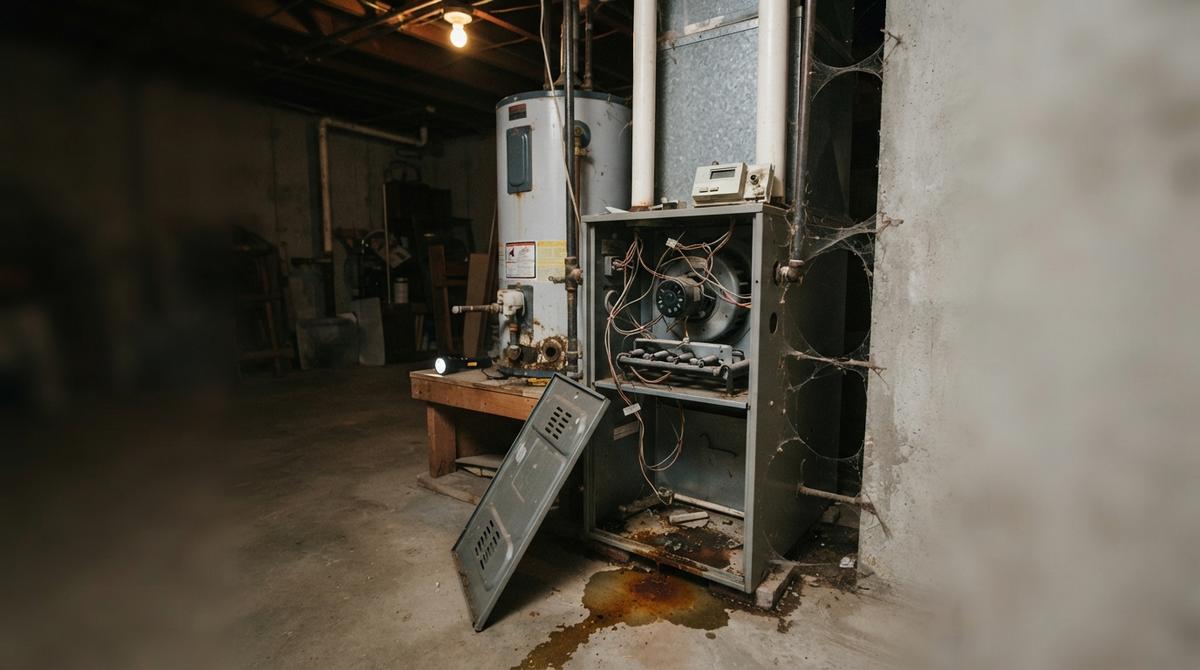
Buying leads for HVAC contractors can mean paying for names sold to 3 or 4 rival shops. That starts a price race before you say hello.
The math depends on your ticket size. A shop with a $2,000 average ticket can afford a higher cost per lead than one selling $150 tune-ups.
| Feature | Bought Leads | Earned Leads |
|---|---|---|
| Exclusivity | Shared with local shops | Reaches only your shop |
| Cost model | Fee per call or form | Fixed spend on pages |
| Ownership | Vendor keeps the traffic | You own the website |
| Price pressure | High competition on calls | Higher trust before dialing |
Earning your own traffic takes longer at first. Every dollar builds an asset your company keeps. Read more on exclusive contractor leads and the best app for contractor leads.
How Much Do HVAC Leads Cost?
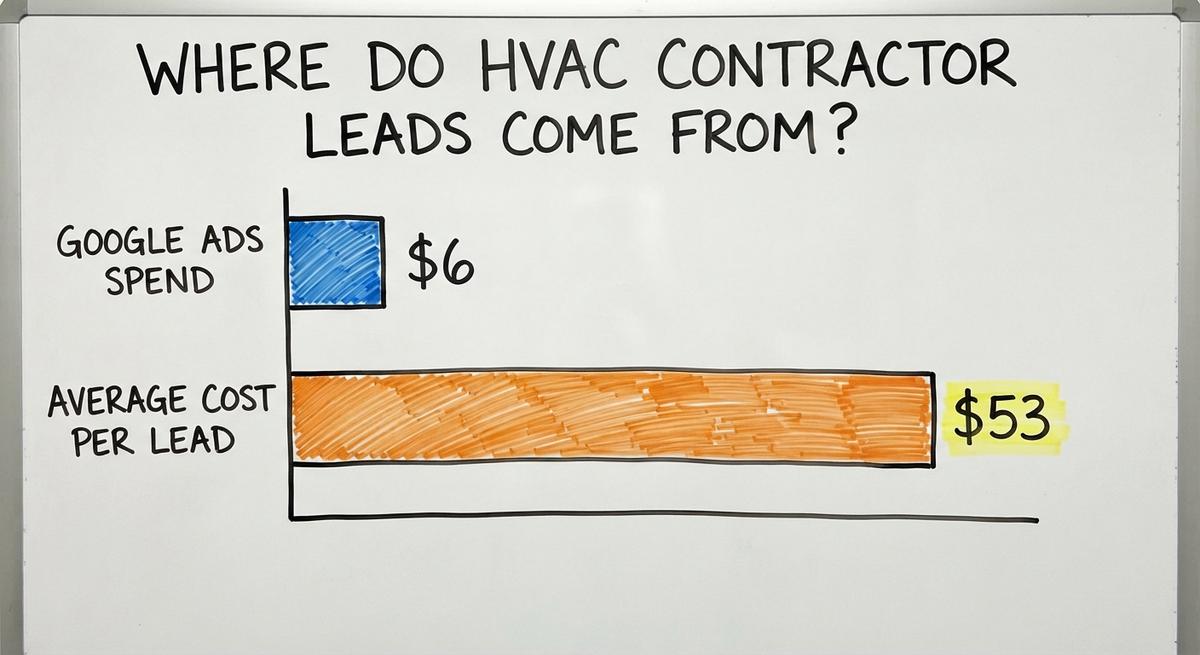
HVAC lead prices are set by city, season and channel. A shared lead from a directory can cost $20 to $80. An exclusive call costs more.
Your own website has no per-lead fee. The cost is the pages, the photos and the time. Divide that cost by booked jobs each month.
A lead at $40 that never books costs more than a $100 lead that becomes a $9,000 system. Judge price by booked revenue, not by the lead alone.
What Makes an HVAC Lead Good?
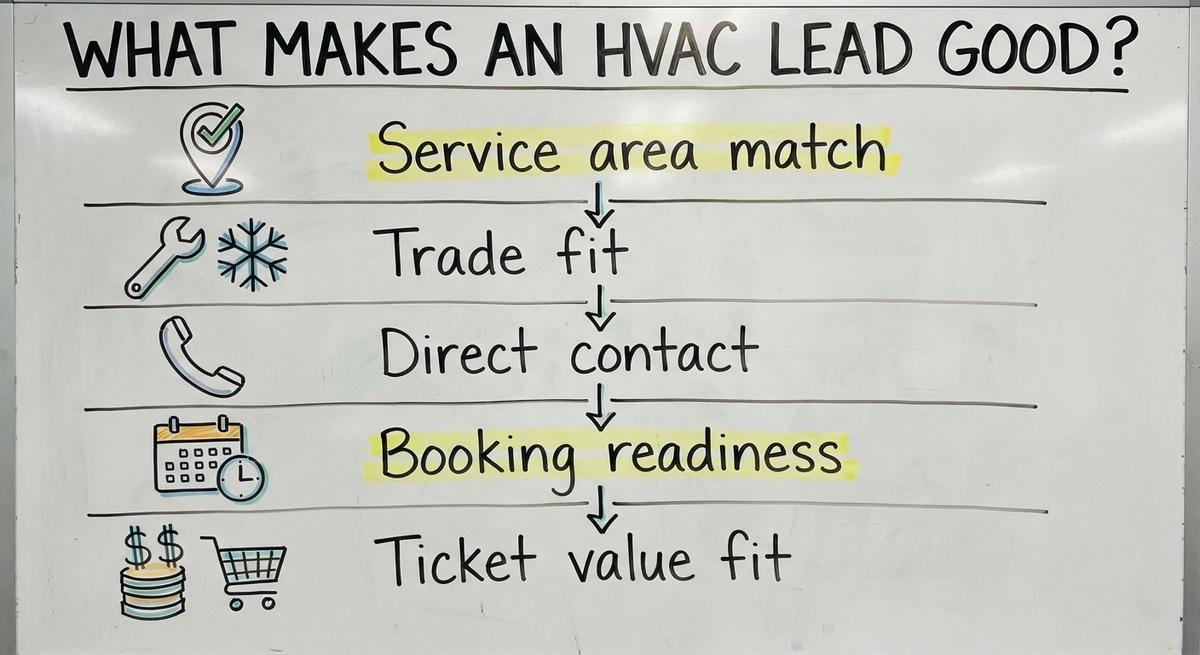
A good HVAC lead is a homeowner inside your service area who needs work you do and wants to book soon.
Not every ring deserves technician time or marketing credit. Check every source against 5 clear standards.
- Service area match: The home sits inside the towns and ZIP codes your trucks cover every day.
- Trade fit: The caller needs heating, cooling or air quality work your crew actually handles.
- Direct contact: The homeowner chose your shop and did not send one form to 5 companies.
- Booking readiness: The customer wants a repair or an estimate soon and is not just browsing.
- Ticket value fit: The job matches your target ticket size, such as a $2,000 replacement.
Score calls against these 5 traits. You will see what channels deserve more budget.
Find out where you show up on the map
A free map check for your HVAC company. See which towns find you and which call a competitor.
Book a callWhy Do Homeowners Call One HVAC Company and Not Another?
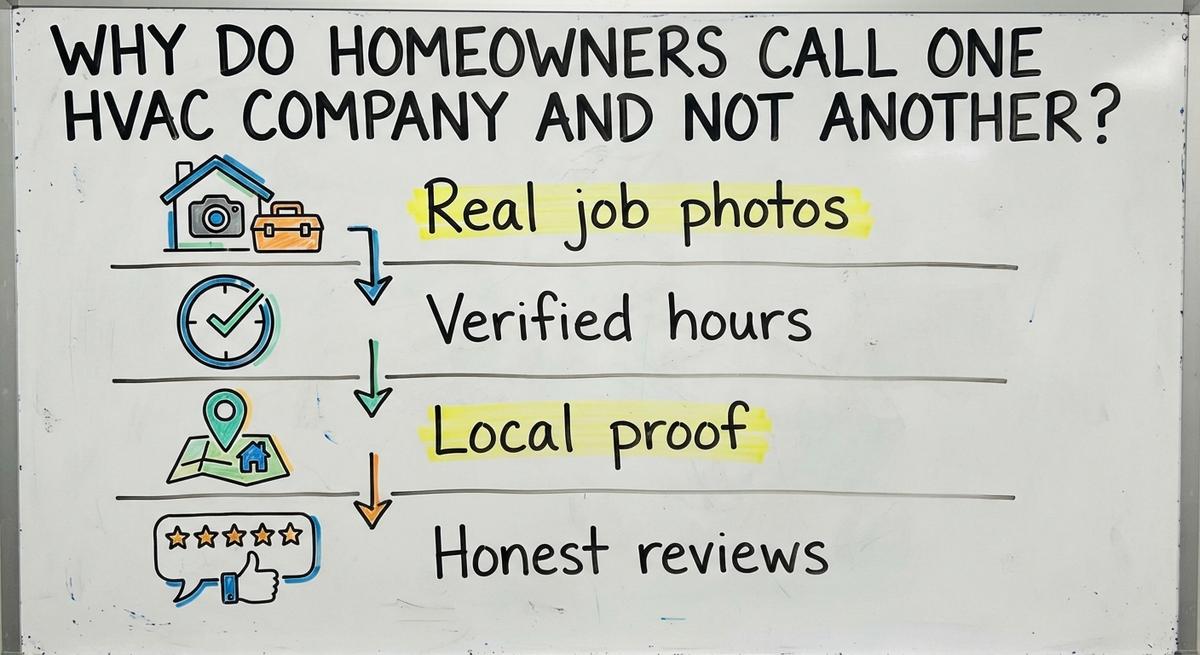
Homeowners check 3 things before dialing an HVAC company: your map listing, your recent reviews and your website.
In that quick check, a clear phone number and plain local details build trust. Pages that name the exact town and issue tell visitors they found the right shop.
Publish claims about 24/7 service or licenses only if they are true today. Use these 4 trust builders on every page.
- Real job photos: Show your actual technicians and trucks, not generic stock images.
- Proven hours: List only the exact hours your office answers the phone.
- Local proof: Name the neighborhoods and housing types your crew visits each week.
- Honest reviews: Ask happy customers for feedback right after a finished repair.
Honest details and real local photos give families the confidence to call. See how to get more Google reviews for the ask.
How Does Your Website Turn Visits Into HVAC Contractor Leads?
Your homepage has 5 seconds to say what you fix, where you work and how to reach you.
A homeowner on a phone who must pinch and zoom to find a number taps back. Then they call the next listing.
Fast pages and short forms remove friction for stressed callers. Give each service its own page. Visitors stop hunting through cluttered menus.
A clean layout turns casual visits into measurable HVAC calls. Our guide to contractor website design shows the layout.
What Service Pages Bring in Heating and Cooling Calls?
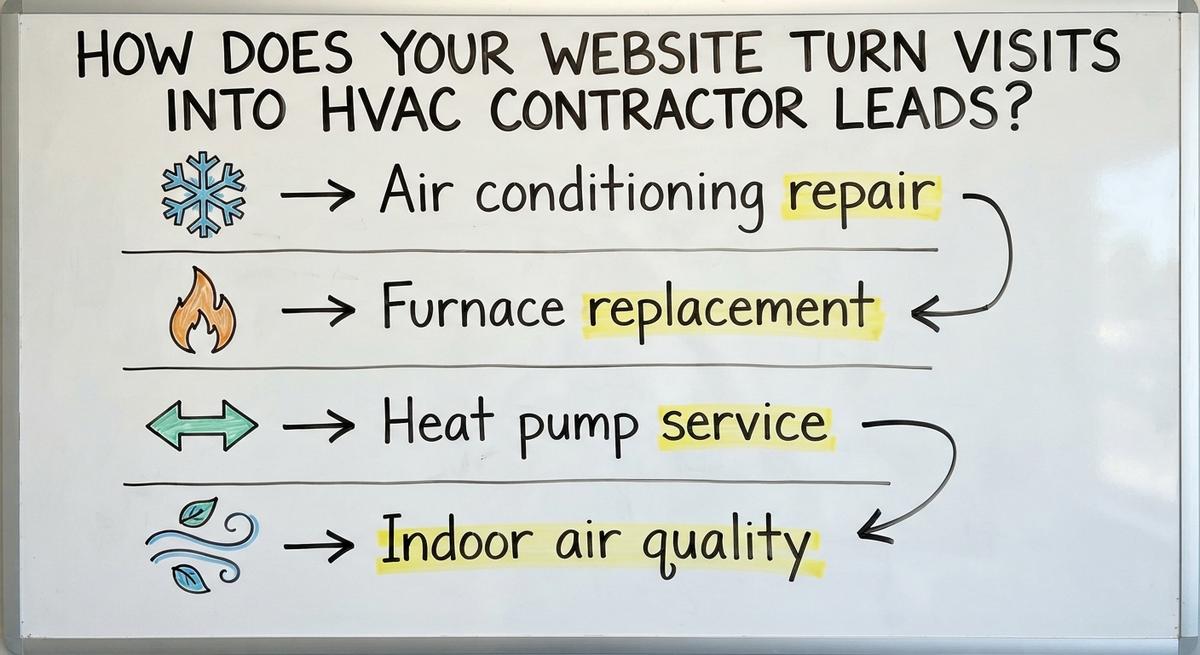
Dedicated HVAC service pages give each core job its own space online. Start with 4 main categories.
One general page for every trade forces Google and homeowners to guess what you do. Build separate pages for these services.
- Air conditioning repair: Explain common summer breakdowns and what your diagnostic visit includes.
- Furnace replacement: Cover winter heating failures, safety checks and full system installs.
- Heat pump service: Detail year-round heating and cooling tune-ups for local homes.
- Indoor air quality: Describe duct cleaning, filter upgrades and humidity control options.
Specific service pages attract visitors who already know what needs fixing. A good contractor website builder makes these pages quick to add.
How Do Town Pages Bring in Local Calls?
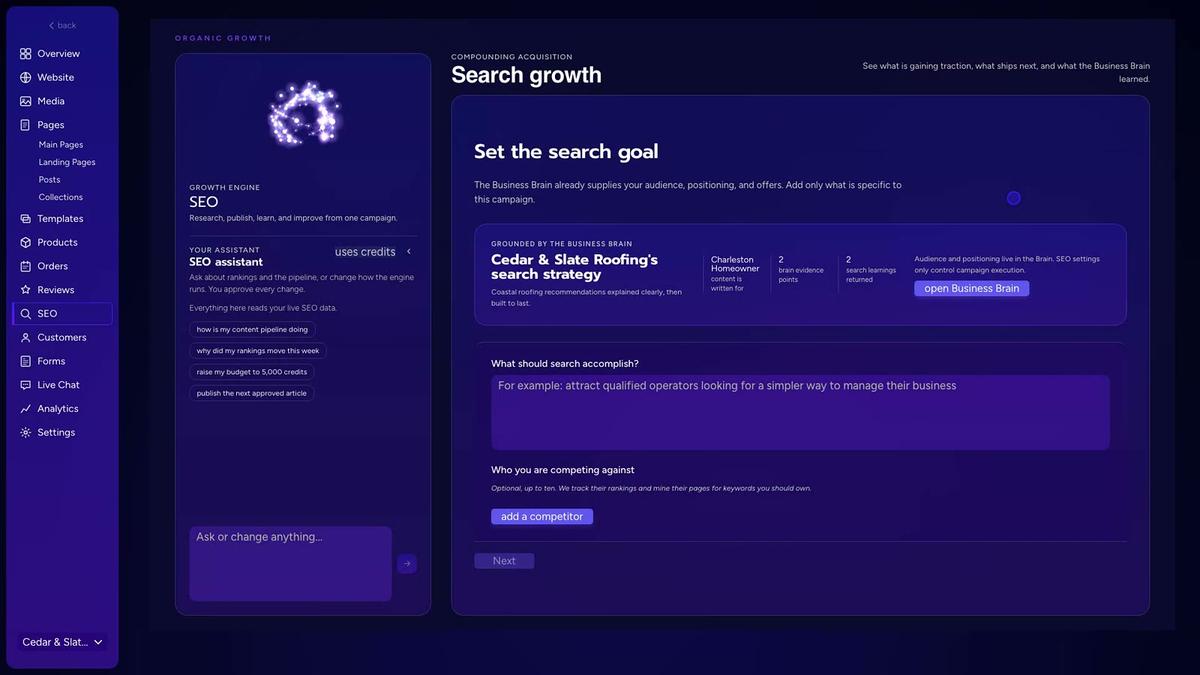
A town page is a local web page about 1 city or neighborhood you serve.
Picture an HVAC shop serving a dozen towns. Each town gets its own page. That is how local SEO for contractors works in practice.
Avoid copying one paragraph and swapping only the city name across 20 pages. Mention local housing styles, weather strain and landmarks along your routes.
Competition varies by state. ServiceTitan reports that "Florida leads HVAC employment with 37,370 workers", citing BLS data. Florida is "followed by California (35,630) and Texas (31,910)".
Local detail helps your shop stand out in a crowded market. Genuine local proof helps readers and search tools trust your coverage.
Results you can check
Past SEO campaigns grew organic traffic 26x in 14 months, and 15x on another. Top Rated Plus on Upwork with 99% job success.
Work for hundreds of small businesses and large clients like New Balance. Before The Software Society, our founders’ agency worked with Planned Parenthood.
Book a call
How Does Your Google Business Profile Drive HVAC Leads?
Your Google Business Profile is a storefront on the map. It shows 4 key facts about your HVAC shop: name, phone, hours and service area.
Every detail in the listing must match your website word for word. Google's Business Profile Help lists what to fill in. Upload real job photos each week. Ask customers for honest reviews after visits.
Google Business Profile Help states, "Local results are mainly based on relevance, distance, and popularity."
List only services and hours that are true for your shop today. Consistent map details give Google clear signals about where you work and who you help. The local ranking guide explains each factor.
How Do Seasons Change Your HVAC Lead Flow?
Seasons are the biggest swing in lead flow. They shift HVAC contractor leads toward cooling calls in July and furnace repairs in January.
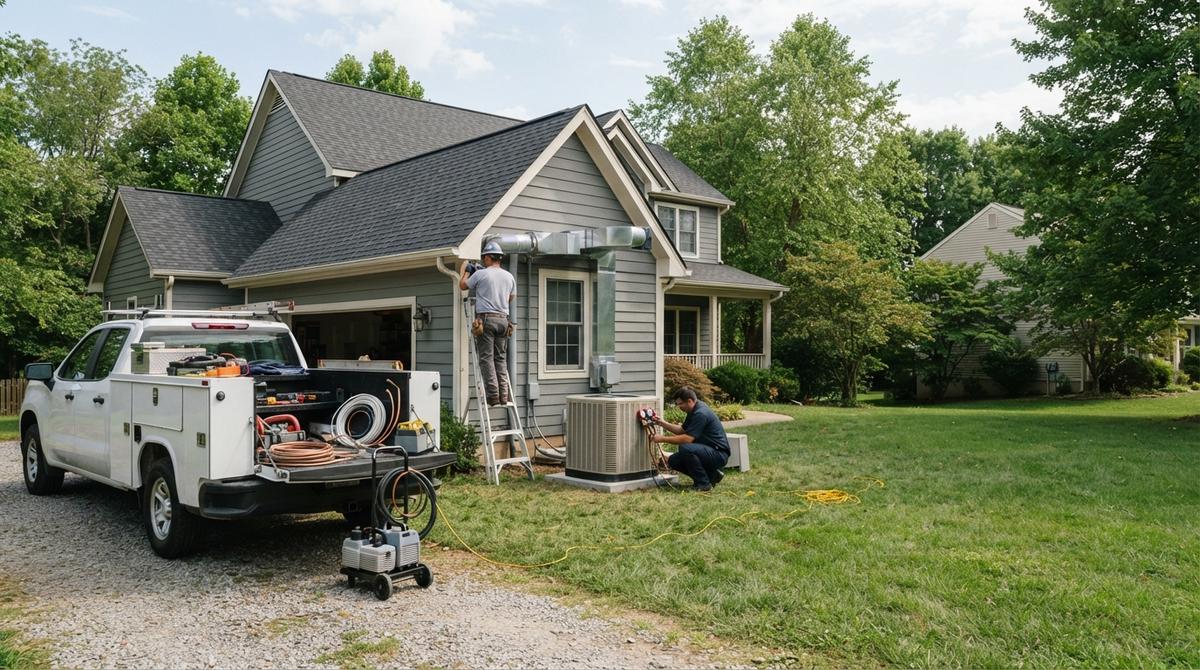
Wait for summer heat to publish an air conditioning page, and you miss the first wave of searches. Build core service and town pages weeks before peak weather.
Use slow spring and fall months to push tune-ups, filter checks and full replacements. Plan your pages around the calendar, and trucks stay busy year-round.
What Should You Publish Before Each Season?
Publish 4 to 6 weeks ahead of the weather. Each season has its own HVAC pages. For 2027, start the spring pages in March.
- Late spring: AC tune-up offers, cooling repair pages and a summer maintenance plan.
- Late summer: Furnace safety checks and fall tune-up booking pages.
- Late fall: No-heat repair pages and emergency contact details.
- Late winter: Replacement guides for homeowners planning a new system before summer.
Seasonal pages catch searches right as homeowners switch systems on.
How Can You Track Where Your HVAC Contractor Leads Come From?
Source tracking is the only honest report card. Tracking every call and form by its true source tells you what marketing pays for itself.
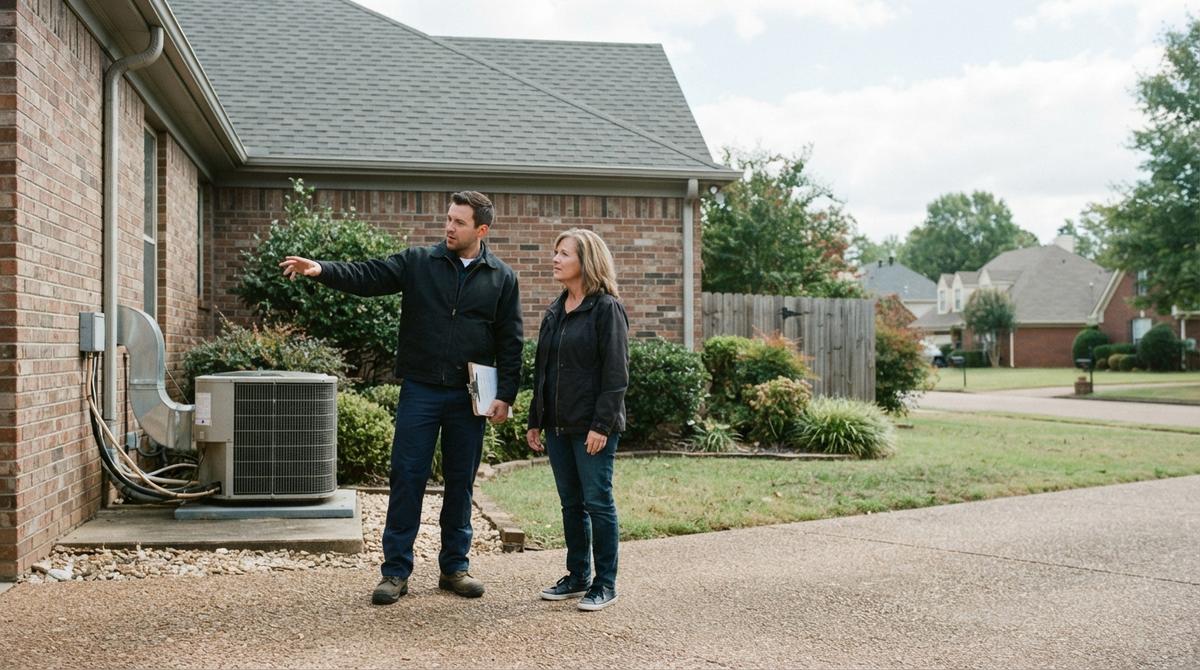
Many shops track every truck part but never track web leads. Lead tracking stops wasted ad spend the same way parts tracking stops wasted supply runs.
- Separate your channels: Log organic search, map clicks, paid ads and referrals in their own buckets.
- Filter out junk: Remove spam forms, sales pitches and bot chats from your lead totals.
- Watch AI traffic: Tag visits from AI assistants to count the real buyers they send.
- Track cost per lead: Compare what each channel costs per booked job, not just per lead.
- Review monthly trends: Compare booked jobs against channel costs every 30 days to guide budgets.
Clean numbers replace guesswork with facts about what grows revenue. Our contractor lead generation guide has a tracking sheet layout.
How Do You Check Your Map Position on a Grid?
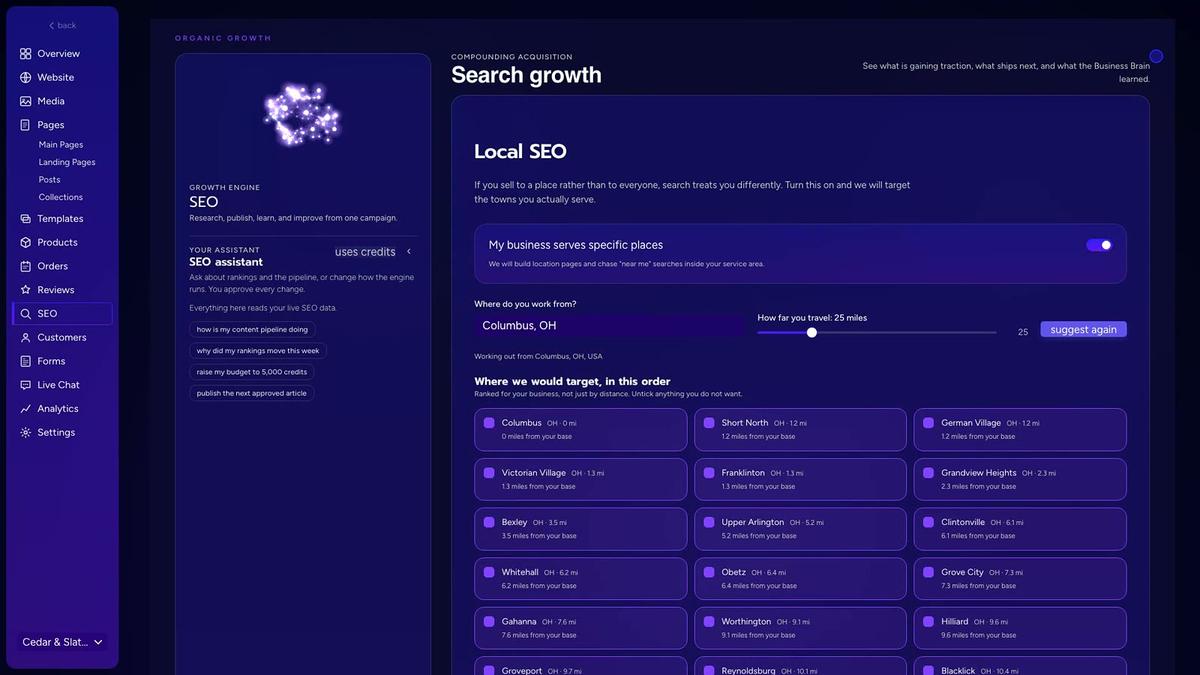
A map grid scan is a tool that maps your HVAC rank across dozens of small points in your territory.
Local visibility changes from one street to the next. A rank check from one office computer gives a false picture.
Run a grid scan once a month. The map shows the towns where you sit in the top 3 and the neighborhoods with gaps.
Seeing coverage on a map turns local visibility into a measurable target.
What Mistakes Cost HVAC Contractors Leads?
Small website and office habits are costly. They cost HVAC shops thousands in missed jobs every season.
One crowded page for every service and city leaves Google unsure where to rank you. Avoid these 5 common mistakes.
- Slow callbacks: Letting calls roll to voicemail hands ready buyers to the next shop.
- Missing tracking: Skipping source logs keeps owners paying for clicks, not jobs.
- Crowded pages: Stuffing 20 towns onto one page weakens your local relevance.
- Slow site updates: Waiting weeks for simple edits holds back offers when weather shifts.
- Shared lead reliance: Paying for shared contacts keeps you stuck in low-margin price wars.
Fix these 5 habits. You protect the leads you already earn every week.
Get a second opinion on your current setup
Already paying for HVAC marketing? Get a free second opinion on what works and what wastes money.
Book a call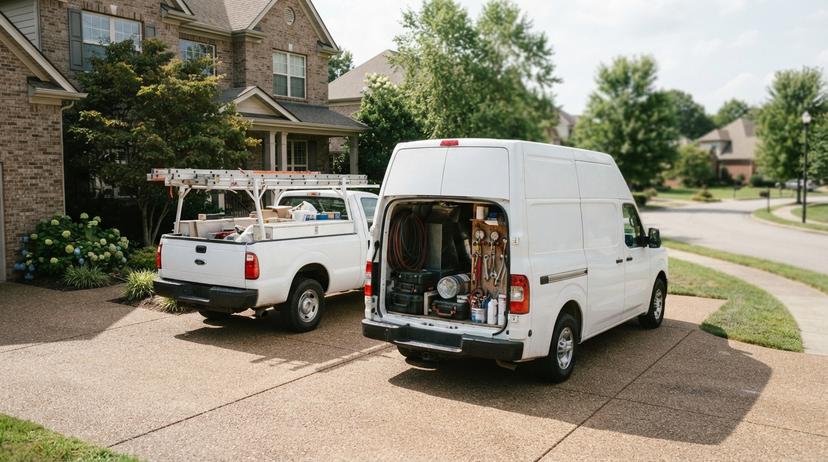
How Fast Should You Follow Up on a Lead?
Speed decides who wins the HVAC job when an air conditioner quits on a 90-degree afternoon.
Stressed families call or message 2 or 3 shops in a row. Set a strict office rule: every call, text and form gets a fast reply.
Even a quick confirmation text tells the homeowner a real person saw the request. Fast, polite follow-up books visits without spending an extra dollar on ads.
How Long Does It Take to Get More HVAC Contractor Leads?
Paid ads bring calls within days. Organic search builds over 6 to 14 months.
Paid ads work like a faucet. The flow stops when you stop paying for clicks. Search work builds a lasting base. Google's ranking factors reward that steady work over time.
Combine short-term ads with steady page growth. The ads bridge the gap as organic visibility climbs. Our HVAC contractor marketing guide shows how to split the budget.
What Should You Ask a Provider Before Buying HVAC Contractor Leads?
Ask 5 direct questions before you sign any marketing deal or test a local HVAC marketing near me provider.
Clear answers protect your budget, your phone numbers and your search presence.
- Asset ownership: Do I own my website, service pages and call data if we stop working together?
- Lead exclusivity: Do incoming calls go only to my shop, or do local rivals get them too?
- Source reporting: How do you separate organic search, map calls, ads and AI visits in reports?
- Direct contact: Who builds the pages and edits the listings, and can I speak with that person?
- Cancellation terms: What happens to my phone numbers and domain name if I decide to pause?
Any honest partner answers these 5 questions in plain language before asking for a dollar. Compare providers in best SEO for HVAC contractors and contractor SEO services.
What Is a Simple Plan to Get More HVAC Contractor Leads?
Getting more HVAC leads comes down to 5 steps in order.
A set order stops you from buying ads for a website that leaks visitors. Work through these steps one at a time.
- Set up source tracking: Connect call tracking and form logs so every channel stays separate.
- Fix your homepage: Put a clear headline, your service area and a clickable phone number at the top.
- Build dedicated pages: Publish service pages for core jobs first, then unique town pages.
- Clean your map profile: Match hours, phone number, categories and job photos to your website.
- Review monthly data: Check your grid scan and booked job totals every 30 days.
Follow the 5 steps, and your website becomes a steady source of booked work.
What Are the Next Steps for Your HVAC Business?
Stop buying shared lists. Invest in fast service pages, real town coverage and a clean map listing. Pick 1 step from the plan above today. More quick wins are in these contractor marketing ideas and in how to get more jobs as a contractor.
A steady pipeline of HVAC contractor leads starts with treating every call and form as a trackable asset.
Check that call tracking separates real buyers from spam. Look at how your shop appears across the towns you serve. Steady improvements compound and put more trucks on the road. For wider reading, see HVAC SEO and the ServiceTitan HVAC statistics roundup.
Frequently asked questions
What are HVAC contractor leads?
An HVAC lead is any homeowner or property manager who contacts your shop about heating or cooling work. It comes by phone, form, text or chat. It becomes a booked job only after you schedule the visit.
Are bought HVAC leads worth the money?
Bought HVAC leads are fast volume. Many vendors sell the same inquiry to several rival shops. Calls earned through your own website and map listing cost less per job over time.
How do I track where my HVAC leads come from?
Tracking numbers and form tags are the tools. Give each HVAC lead source its own: organic search, map clicks, paid ads, referrals and AI visits. Remove spam and bot messages so monthly counts stay accurate.
Do AI tools send HVAC leads?
Yes, AI tools are a growing source. More homeowners ask AI assistants for local heating and cooling help and click through to HVAC websites. Clear service pages and accurate town coverage make your shop easier to cite.
How fast should an HVAC shop respond to a new lead?
Within minutes is best. HVAC homeowners with broken units call several contractors back to back. A quick pickup or confirmation text keeps them from calling the next company.
How long does it take to get more HVAC leads from Google?
Paid search ads are the fast option and can bring HVAC calls within days. Organic pages and map visibility build over several months. Local competition and your current website shape how fast you grow.
What should I ask before paying a lead provider?
Ask 5 things before paying for HVAC leads. Do you keep your website and data? Do leads go only to your shop? How are sources reported? Who does the work? What happens if you cancel?
Start with a free homepage rebuild
Book a short call. Your new HVAC homepage is free to see and yours to keep.
New website plus 100 SEO pages in the first month: $397 a month, cancel anytime
Book a callRelated guides
More on the same work.
- Local SEO Services for HVAC Contractors
- SEO for HVAC Contractors
- HVAC Contractor Marketing
- Best SEO for HVAC Contractors
- Roofing Contractor Leads
- Free Leads for Contractors
- Best App for Contractor Leads
- Contractor Leads
- Exclusive Contractor Leads
- Contractor Lead Generation
- Concrete Contractor SEO
- General Contractor SEO
- Roofer Contractor Marketing
- How to Get More Jobs as a Contractor
- Website General Contractor
- Contractor Website Development
- Facebook Ads for Contractors
- Contractor SEO Company
- SEO for Contractors
- Contractor Marketing
- Electrical Contractor SEO
- SEO for Concrete Contractors
- Digital Marketing for Roofing Contractors
- Google Ads for Contractors