


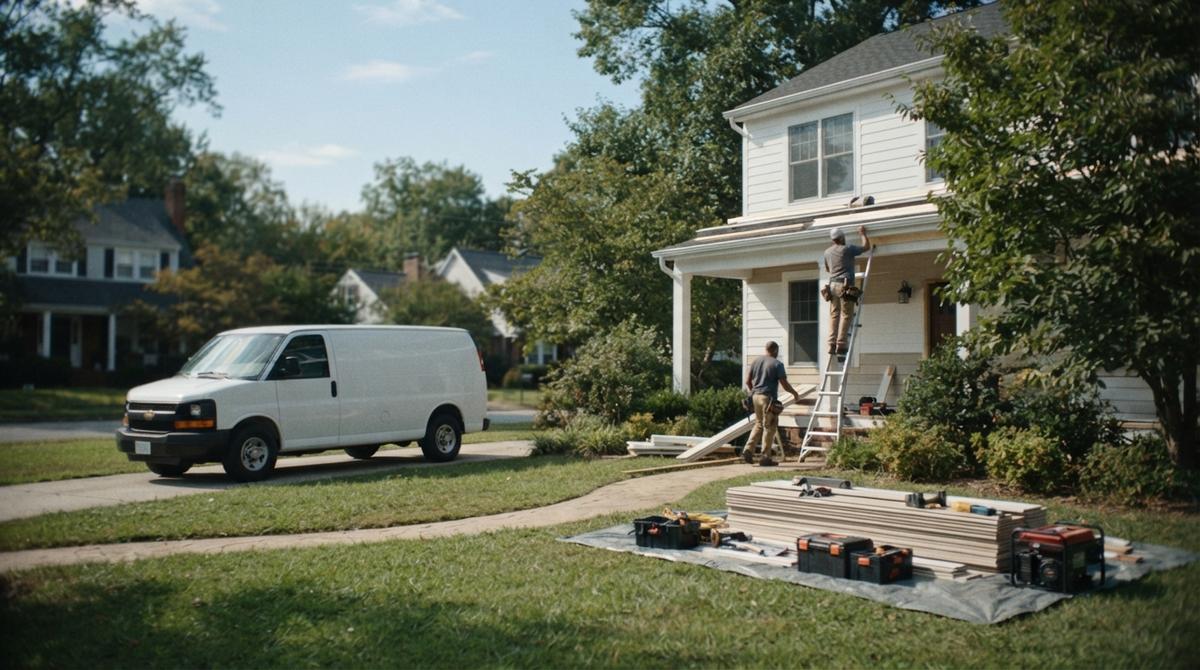
Contractor Lead Generation
Contractor lead generation is the work that brings homeowner calls. They are Google search, the map pack, paid ads, shared marketplaces, and referrals. Roofers, remodelers, and HVAC crews need these calls every week. Some sources you own. Others you rent. The goal is a low cost per booked job. Pay $50 per lead, book 1 in 5, and each job costs $250.
A homeowner spots a roof leak or a dead air conditioner. That person searches online. Then they call a shop for fast help.
Home service owners can use these plain steps every month. You can turn raw calls into steady booked jobs.
Book a callWhat Is Contractor Lead Generation?
A lead is a homeowner who calls or submits a form. Contractor lead generation turns local searches into real customer inquiries.
Homeowners reach out during urgent repairs. A roof leaks. An AC unit quits. A storm tears off siding.
In 2026, most homeowners check Google before they call any trade shop.
Any lead is only a contact. Booked jobs are the paid work on your dispatch calendar.
Counting raw calls alone hides the truth about your spend. Smart owners focus on steps that put trucks in driveways. Our guide to contractor leads covers the lead types in more depth.
See your new homepage before you pay anything
Your homepage, rebuilt free. You see it before you pay anything.
Past SEO campaigns grew organic traffic 26x in 14 months.
New website plus 100 SEO pages in the first month: $397 a month, cancel anytime
Book a callWhy Leads and Booked Jobs Are Not the Same Thing
Most raw leads are just a name and a phone number. Many callers are wrong numbers or price shoppers. Some live outside your area.
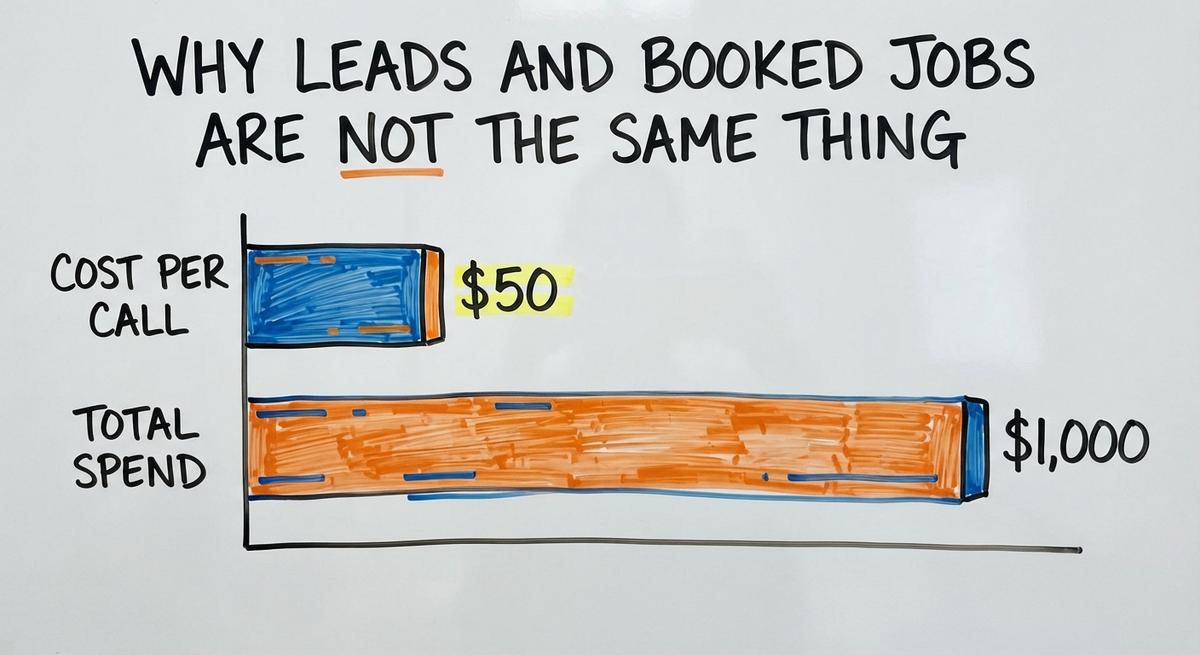
Booked jobs are signed estimates and finished repairs that pay your crew. Suppose 20 calls cost $50 each. That is $1,000 total.
Four of those calls turn into paid work. Each booked job costs your shop $250.
Google Business Profile Help notes that local results rely on relevance, distance, and popularity. Track booked jobs per source. Do not celebrate raw call volume.
What Are the Main Ways Contractors Get Leads?
Five main lead generation channels bring roofing, HVAC, and remodeling calls to shops. Each one has a different cost and level of control.
Good lead generation for contractors relies on these 5 core sources:
- Google Search: Homeowners type a service and a town name into Google. They click your page and call.
- Google Map Pack: Local buyers tap your listing on the map. They dial your office without opening your site.
- Paid Ads: Shops pay per click or per call on Google. Your listing shows at the very top of the page.
- Shared Marketplaces: Third-party sites sell one homeowner inquiry to several rivals. Everyone races to call and quote.
- Past Customers: Happy clients refer their neighbors and friends to your crew. Those buyers already trust your crew.
Knowing how each source behaves helps you build steady calls.
Google Search Leads
Search leads are inquiries from homeowners typing a service and town. This is the slowest lead generation channel to build, and the cheapest to keep. Your pages appear in organic results below the map.
A homeowner needs roof repair in a nearby town. That person clicks your page and dials your office.
Building these pages takes steady effort. Paid ads vanish when you stop paying. Your website pages stay yours.
That lasting value is the core of SEO for contractors.
Google Map Pack Leads
The Map Pack is the box of 3 local listings at the top of Google. Many callers tap a listing and dial right away.
Your Google Business Profile and reviews shape your map rank. BrightLocal's Local Consumer Review Survey found that 97% of consumers still use reviews to guide what they buy. Roofers can see a full profile setup in our Google Business Profile for roofers guide.
That same survey found 47% of shoppers skip shops under 20 reviews. Strong reviews and full profile details turn map views into calls.
Paid Ads Leads
Paid ads are sponsored listings where you pay for clicks or calls. They are the fastest form of lead generation. Calls start within days of launch.
Google Ads charge per click. Local Services Ads charge per lead instead. Google Local Services Ads Help says you pay only for leads tied to your business and services. Social ads are another option, as our Facebook ads for contractors guide explains.
Traffic stops the instant you pause your budget. Sending paid clicks to a slow page wastes money fast. Our guide to Google Ads for contractors covers setup.
Shared Lead Marketplaces
Shared lead marketplaces are sites that sell one request to 3 to 5 shops. You pay a fee for every shared contact. Our review of the best app for contractor leads compares the big ones.
Winning shared leads becomes a race. You compete on dialing speed and the lowest price. A contractor bidding website works the same way.
Shared platforms bring quick volume for new shops. But price shoppers eat estimator time every week. That makes shared lead generation a short-term fix.
Exclusive contractor leads from your own site face less price pressure.
Referrals and Past Customers
Referrals are inquiries from neighbors, friends, or past clients. These leads close fast. Trust exists before the phone rings.
Word of mouth is the oldest lead generation there is. It is also hard to scale on demand. Read free leads for contractors for ways to nudge it along. You cannot force neighbors to talk in a slow week.
Referred homeowners still look you up first. A clean website and strong map profile help you close referrals faster.
Find out where you show up on the map
A free map check for your company. See which towns find you and which call a competitor.
Book a call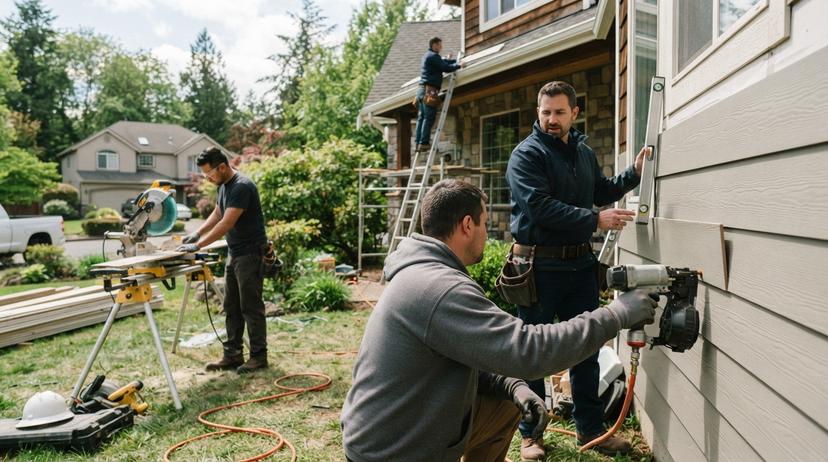
What Is the Difference Between Owned Leads and Rented Leads?
Owned leads come from your own website and map profile. Rented leads stop the day you quit paying a vendor.
Most shops use both types of lead generation to balance their schedule.
| Lead Type | Details |
|---|---|
| Owned Leads | How You Get Calls: Website pages and map profile bring calls. What Happens Later: Assets keep working after setup. |
| Rented Leads | How You Get Calls: Paid ads and shared sites send calls. What Happens Later: Calls stop when payments end. |
Rented sources like pay-per-call ads fill slow weeks fast. Owned assets built through local SEO for contractors lower job costs.
Knowing what you own protects your shop from sudden price hikes.
What Do Contractor Lead Generation Services Offer?
Contractor lead generation services fall into 4 common buckets. Each type fits a different goal and timeline.
Compare these 4 models before you sign:
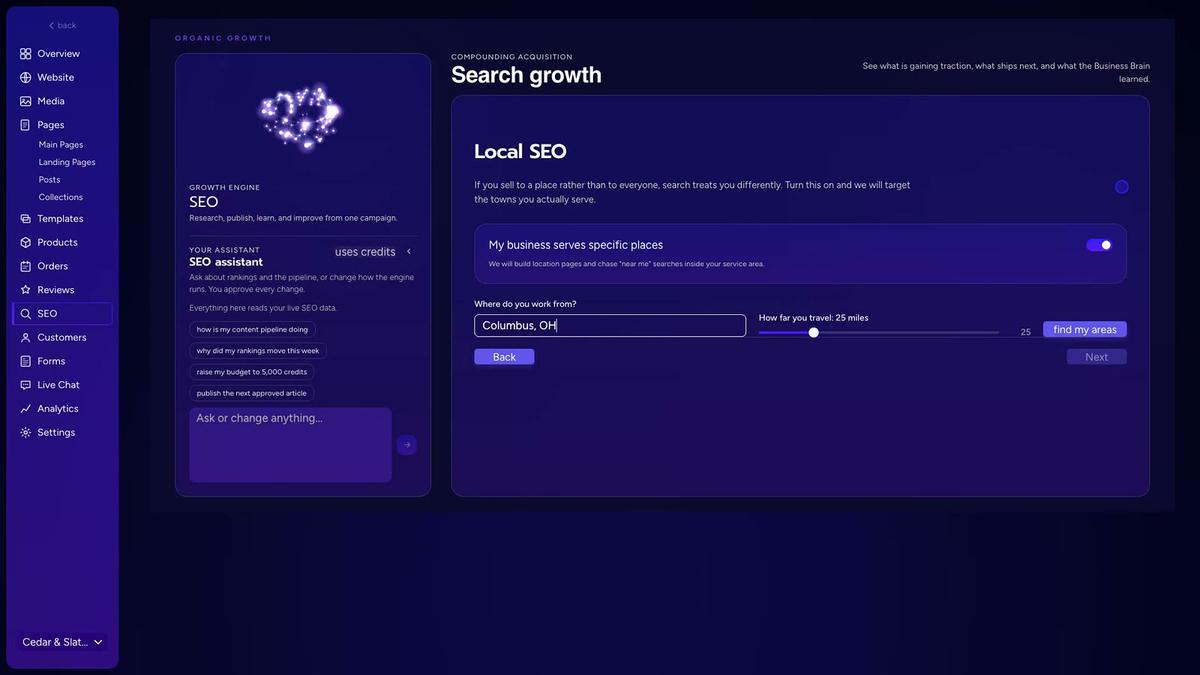
- Local SEO: Providers build service pages, town pages, and map signals. Homeowners then find you in local results.
- Ads Management: Specialists run paid search campaigns and landing pages for you. Your phone rings fast with active buyers.
- Lead Resale: Vendors sell shared or exclusive homeowner contacts. You pay a set price for each inquiry they send.
- Full Packages: Marketing teams bundle web design, SEO, and paid ads together. You pay one monthly plan for all of it.
Match the service model to your budget before you hire anyone. Our contractor marketing guide compares these models. If SEO is your pick, start with contractor SEO services. Want help with all of it? Read our guide to a contractor marketing agency first.
How Does Google Decide What Contractors Show Up Locally?
Google ranks local contractors on 3 core signals. Every local lead generation plan has to work with them. They are relevance, distance, and popularity. Knowing them shows where to focus.
Relevance is how well your website matches the search. Distance is how close your shop sits to the searcher.
Popularity is your reputation through reviews, links, and local mentions. BrightLocal's survey shows 89% of consumers expect owners to reply to reviews.
You cannot move your shop closer to every town. Build relevance and popularity to win more map calls. Google lists all 3 signals in its own help pages.

Why Do Town Pages and Service Pages Matter?
Dedicated service and town pages are proof of what you fix and where. A single page listing 15 towns in a footer is weak lead generation.
Each page speaks to homeowners in one town. Pages must offer real local value, not copied text. Name local neighborhoods. Show jobs you finished there.
Google's spam policies warn, "Doorway abuse is when sites or pages are created to rank for specific, similar search queries." Google Search Central asks for "people-first content" instead.
Real town pages help homeowners and search engines find you. Roofers can see this in our roofing contractor SEO guide. Remodelers can see it in general contractor SEO. Our local SEO services for contractors guide covers every trade.
Why Does Your Website Still Matter for Map Pack Leads?
Your website is the final check after homeowners spot you on Maps. Your map listing links straight to it.
Homeowners tap that link to check services, photos, and towns. Slow pages or broken mobile layouts make callers hit back.
A strong site does not replace your map profile. It closes the deal the profile starts. Both are part of your lead generation. Real job photos and clear service lists make a call more likely.
Place your phone number and trades on the first screen. Our list of the best contractor websites shows good examples. A fast website turns map clicks into phone calls right away. See our contractor website design guide for the details.
How to Judge the Best Lead Generation for Contractors
A 2-truck HVAC shop needs steady local calls it can handle today. A 10-truck roofing company can invest across 15 nearby towns. See HVAC contractor marketing and roofer contractor marketing for trade plans.
The best lead generation for contractors depends on trade, budget, and towns. No single source fits every home service shop. Good lead generation fits the crew you have.
Watch out for anyone who promises a top Google spot. Nobody controls Google or guarantees exact counts of roofing leads.
Match your lead source to your crew's daily capacity. Roofers chasing storm work should read our roofing contractor leads guide.
Results you can check
Past SEO campaigns grew organic traffic 26x in 14 months, and 15x on another. Top Rated Plus on Upwork with 99% job success.
Work for hundreds of small businesses and large clients like New Balance. Before The Software Society, our founders’ agency worked with Planned Parenthood.
Book a callWhat Should You Ask Contractor Lead Generation Companies?
There are 5 direct questions to ask any marketing provider up front. Clear answers on ownership and reporting protect your business.
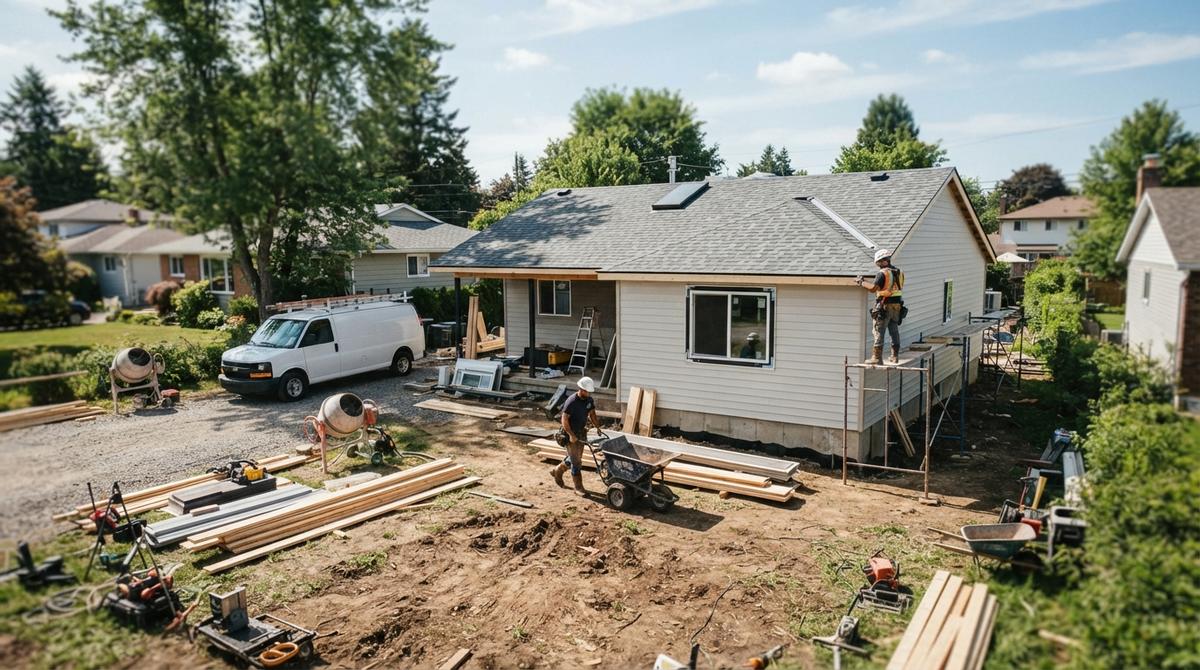
Ask contractor lead generation companies these 5 questions:
- Asset Ownership: Who owns the website, the domain name, and the ad account? Keep your tracking numbers if you leave.
- Direct Contact: Will I talk directly to the person doing the work? Be wary of workers hidden behind a sales rep.
- Lead Reporting: How do you report calls and forms each month? Ask how they tie raw calls to booked jobs.
- Contract Terms: Is there a long contract or an early exit fee? Month-to-month terms keep any lead generation provider honest.
- Monthly Needs: What photos or job details do you need from me each month? Know your duties before you sign.
Any honest lead generation partner answers all 5 clearly. Our contractor SEO company guide has more vetting questions.
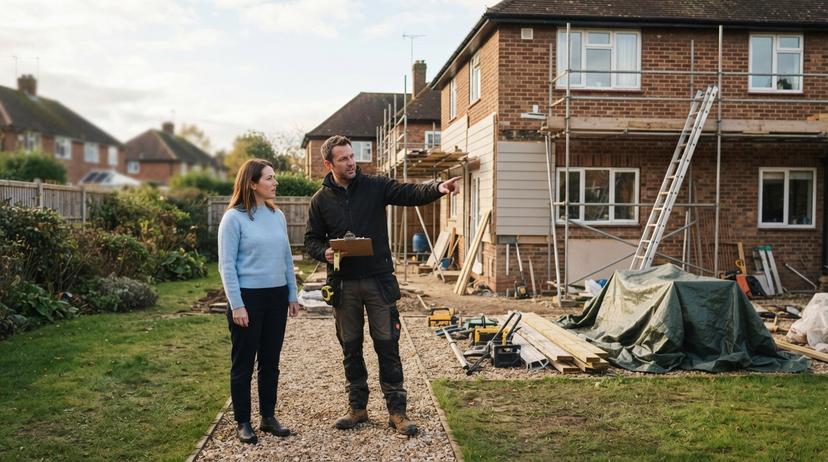
Red Flags When Comparing Lead Services for Contractors
There are 5 warning signs that separate weak lead services for contractors from honest partners. Walk away if you spot them.
Watch for these 5 red flags:
- Guaranteed Rankings: A promised top Google spot is impossible. So is a set count of leads every month.
- Resold Leads: Some vendors charge high rates for exclusive leads. Then they sell the same contacts to rivals.
- Hidden Reports: Refusing to share raw call logs hides poor results. Demand full access to your spend data.
- Locked Contracts: Long deals with hidden exit fees trap your shop. Bad campaigns keep draining cash every month.
- Vague Sources: Dodging questions about where calls come from means low-quality traffic. Honest partners show every source.
Trustworthy lead services show their work every month. Our contractor advertising guide has a checklist for ads too.
How to Tell If Contractor Lead Generation Is Working
Tracking means counting every call and form by its exact source. Guessing what works wastes thousands of dollars.
ClicData reports that "63% of marketers consider lead generation their biggest challenge." Owners feel the same pain.
Set up these 4 tracking habits:
- Source Numbers: Put a unique tracking number on your website and your map profile. Use separate numbers for each ad campaign.
- Form Labels: Label each web form with the channel it came from. Split search, maps, paid ads, and AI tools.
- Job Match: Mark in your dispatch log the calls that booked real work. Tie each paid invoice back to its source.
- Monthly Review: Check your cost per booked job once a month. Ignore daily swings and focus on monthly profit.
Clear tracking shows how to get roofing leads and HVAC calls at a profit.
Checking Your Map Position with a Grid Scan
A grid scan is a map report that checks your Google Maps rank. It tests dozens of points across your whole service area.
Your map rank changes block by block. Checking your own phone from your driveway misleads you.
Google favors your physical location in a search. A homeowner 5 miles away sees a different map list.
A monthly grid scan shows real ranking trends everywhere you work.
Counting Visits from AI Tools
AI tool visits are clicks from ChatGPT, Gemini, or Perplexity. Homeowners ask these assistants to recommend local trade contractors.
This lead generation channel is still small in 2026. Use grows every month.
Tag these visits as their own channel in analytics. Do not let them hide inside general referral traffic.
Watch the trend for 6 months before you make big changes to your plan. Electricians can see AI tips in our electrical contractor SEO guide.
Measuring Cost Per Booked Job
Cost per booked job is your total marketing spend divided by paid jobs. It tells you if a channel makes money.
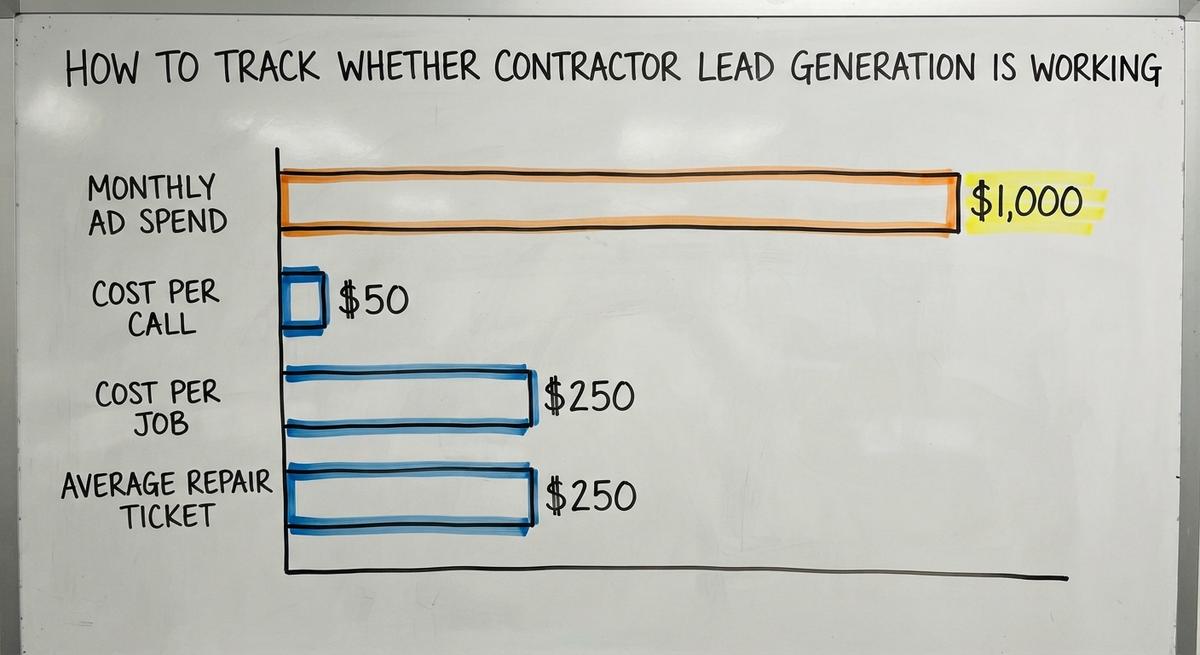
Suppose a shop spends $1,000 on ads in one month. The campaign brings 20 calls and 4 booked jobs.
That equals $50 per call and $250 per job. Compare that $250 against your average ticket.
A $1,200 furnace install leaves healthy profit. A $150 service call can lose money fast.
Tracking job cost keeps lead generation for HVAC contractors profitable all year. Our page on HVAC contractor leads has trade-specific numbers.
Get a second opinion on your current setup
Already paying for marketing? Get a free second opinion on what works and what wastes money.
Book a callHow Long Does Contractor Lead Generation Take?
Paid ads bring calls within days of launch. SEO and map work build over 3 to 12 months. Plan your lead generation around both clocks.
Timelines depend on your starting website and local competition. A small-town roofer with 3 rivals climbs fast.
A roofer in a big metro faces stiffer competition. Expect these 4 milestones:
- Month 1: Verify your Google profile and launch your core service pages. Set up call tracking and fix site speed.
- Months 2 to 3: Gather 20 or more new customer reviews on Google. Paid ads fill any schedule gaps with fast calls.
- Months 4 to 6: Town pages start to rank for local service searches. Organic map calls lower your average job cost.
- Months 6 to 12: Owned pages and strong reviews drive steady inbound calls. You rely less on rented ad platforms.
Use paid ads for short-term gaps. Owned pages build momentum in the meantime. The habits in contractor marketing tips speed this up.
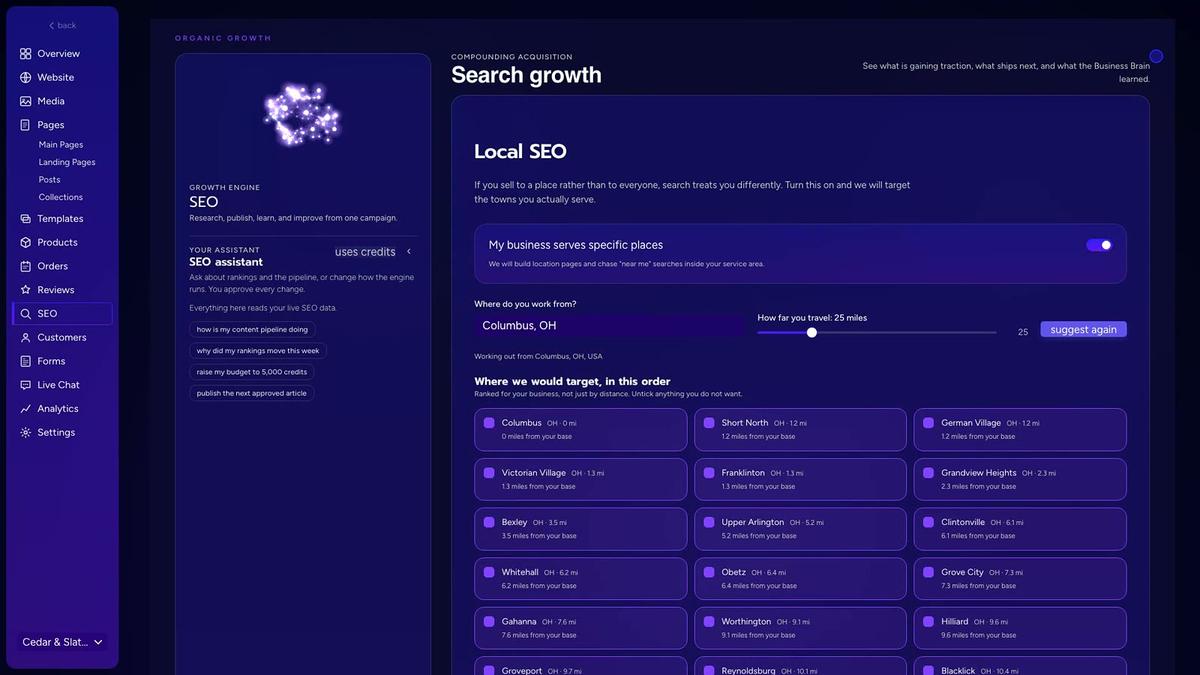
How Can You Make Sure You Handle Every Call?
You handle every call by answering within 3 rings. Call back any missed lead within 15 minutes.
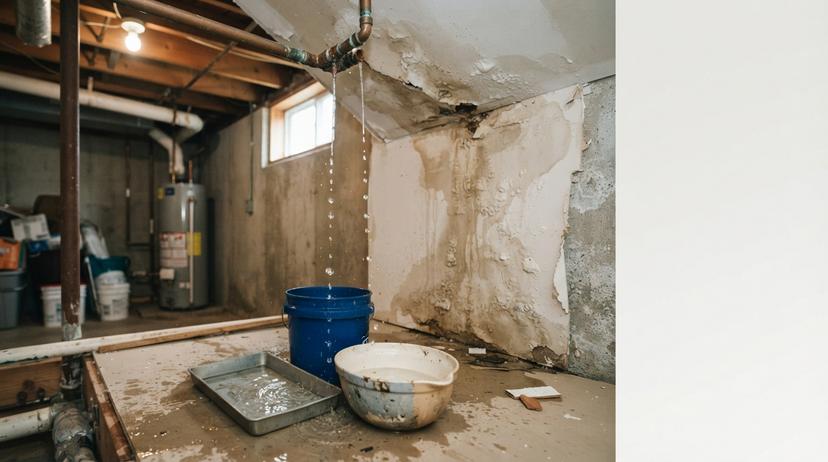
A homeowner with water coming through the ceiling calls the next shop fast. Slow replies waste your whole lead generation budget.
On January 7, 2025, UK Construction Blog shared 10 tips for winning and keeping loyal customers. Fast follow-up turns good prospects into long-term clients.
Follow these 4 call habits:
- Ring Rules: Train office staff to answer every call within 3 rings. Use a live answering service in busy hours.
- Speed Callbacks: Return every missed call and web form within 15 minutes. Fast callbacks beat slower rivals to the job.
- Clear Voicemail: Record a greeting with your company name and hours. Tell callers when your team will call back.
- Review Requests: Ask happy customers for a review right after you finish the work. Fresh jobs earn the best feedback.
According to Google's review policy, "Reviews and other user contributions to Google Maps must reflect a genuine experience." Fast service earns real reviews and saves wasted spend. Our guide on how to get more jobs as a contractor covers more call habits.
A Simple Starting Plan for Contractor Lead Generation
A starting plan is a 5-step checklist that builds owned assets first. Follow these steps in order before you spend big on ads.
- Claim Profile: Verify your map profile and add every service. Fill in your hours, photos, and towns.
- Build Pages: Create one clean page for each core trade service. Add a local page for each town you serve.
- Track Sources: Set up call tracking numbers for search, maps, and ads. Label each web form too.
- Test Ads: Add paid ads only after your tracking works well. Make sure your team answers within 3 rings.
- Review Monthly: Compare booked jobs against spend every 30 days. Shift your budget toward the most profitable channels.
Start with step one this week. Build contractor lead generation you own. For more ideas, see our contractor marketing ideas list.
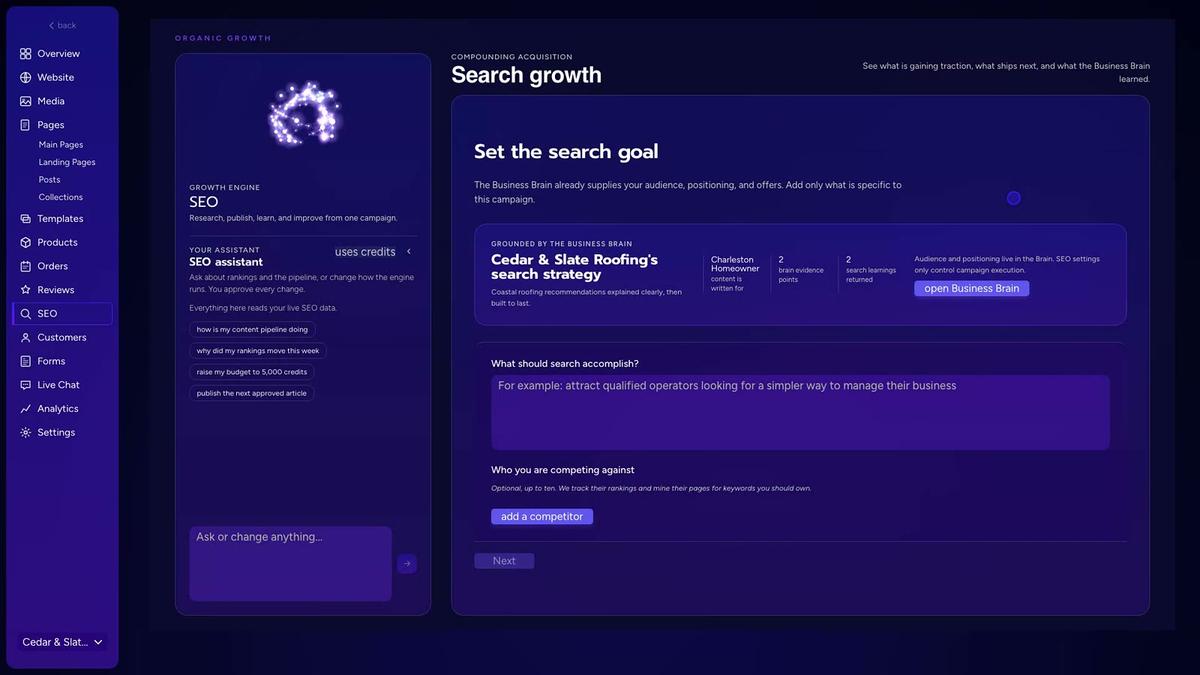
Frequently Asked Questions About Lead Generation for Contractors
How Much Should a Contractor Spend on Lead Generation?
Most contractors invest 5% to 10% of revenue in marketing. Newer shops that grow fast sometimes invest a bit more at first.
Track your cost per booked job every 30 days. Never raise spend on a channel without tracking profit.
Set a budget that matches your crew's open schedule each month. Painters can compare budgets in our paint contractor marketing guide.
Are Exclusive Leads Better Than Shared Leads?
Exclusive leads are calls or forms sent only to your shop. Shared leads go to 3 to 5 rival contractors at once.
Shared leads cost less per contact. But price shoppers cut your close rate and margins.
Exclusive leads close higher and build your local brand.
Do Contractors Need Both SEO and Paid Ads?
SEO builds owned website assets that bring free clicks later. Paid ads buy instant top placement for urgent seasonal calls.
Many shops start with ads to fill the schedule. They build SEO pages at the same time. As pages rank, they trim ad spend.
Using both channels protects your shop in slow months. Our contractor SEO marketing guide shows how the two work together. Balanced marketing keeps trucks moving in every season.
How Do Contractors Get More Google Reviews?
Text a direct review link right after the job. Happy homeowners leave feedback fastest when the work is fresh.
Thank every customer. Reply to all reviews every week. Never offer discounts or gifts for 5-star ratings. Google bans that in its review policy.
Steady, honest reviews push your map listing higher every month. Our guide on how to get more Google reviews has sample texts.
Frequently asked questions
How much should a contractor spend on leads?
Most home service shops set aside 5% to 10% of target revenue for marketing. Start with what you can track monthly, then scale sources that produce booked jobs at a profit.
Are shared lead services worth it for contractors?
Shared lead sites help new shops get fast calls when schedules are empty. Long-term profits drop. You race competitors on speed and price for every single homeowner contact.
Is SEO or paid ads better for contractors?
Paid ads bring calls within days. SEO builds website pages you own over months. Many shops run ads for quick work. They build organic rankings at the same time for lower long-term costs.
How do I track calls and forms by source?
Assign a separate tracking phone number to your website, map profile, and ad campaigns. Tag web form submissions by channel, then match every inquiry to booked jobs in your dispatch log.
Can I do contractor lead generation myself?
Yes, any owner can claim a map profile, ask happy customers for reviews, and write basic service pages. Hiring help makes sense when daily fieldwork leaves no time for updates.
What is the best lead generation for contractors?
The strongest approach combines a complete Google Business Profile with dedicated service and town pages on your own website. Owned assets keep bringing calls without paying per click forever.
How many reviews does a contractor need on Google Maps?
Aim for at least 20 genuine customer reviews to avoid losing nearly half of local shoppers. Keep collecting reviews every week and reply to each one to stay ahead locally.
Start with a free homepage rebuild
Book a short call. Your new homepage is free to see and yours to keep.
New website plus 100 SEO pages in the first month: $397 a month, cancel anytime
Book a callRelated guides
More on the same work.
- Roofing Contractor Leads
- Free Leads for Contractors
- Best App for Contractor Leads
- HVAC Contractor Leads
- Contractor Leads
- Exclusive Contractor Leads
- Concrete Contractor SEO
- General Contractor SEO
- Roofer Contractor Marketing
- How to Get More Jobs as a Contractor
- Website General Contractor
- Contractor Website Development
- Facebook Ads for Contractors
- Contractor SEO Company
- SEO for Contractors
- Contractor Marketing
- Local SEO Services for HVAC Contractors
- Electrical Contractor SEO
- SEO for Concrete Contractors
- Digital Marketing for Roofing Contractors
- Google Ads for Contractors
- Contractor SEO Services
- Contractor SEO Marketing
- Independent Marketing Contractor