


General contractor SEO that win more jobs.
General contractor SEO is the work that puts your business in front of local homeowners on Google.
Our contractor SEO services begin with a new website and 100 pages on Google in your first month, then keep your Google Business Profile and reviews in shape all year.
See your new homepage free before you pay. Cancel anytime.
For contractors
organic traffic growth over 14 months
growth on a second SEO campaign
job success score across Upwork projects
Trusted by local service businesses across the country and by New Balance. Before The Software Society, our founders' agency worked with Planned Parenthood.

What you get
Four things. One full estimate calendar.
Everything a contracting business needs to show up on Google and turn searches into estimate requests.
A new website, built for you
Fast on a phone, your best projects up front, and an estimate button people see right away.
100 pages in your first month
A page for every service you offer in every town you work, each written around what homeowners there search.
Climb the map
Your Google Maps position checked across your whole service area, so the work goes where you are losing estimate requests.
See what it brings in
Calls, estimate requests and form fills, each matched to the search that sent them, so you know what it earns.
Pricing
One price. Everything included.
Everything included
$397a month
- Website design, hosting and edits
- Job pages and local area pages, written for your market
- Google Business Profile upkeep
- Map rank scans across your service area
- Call and lead tracking
- A plain-English report each month
- Month to month, no contract
Free checklist
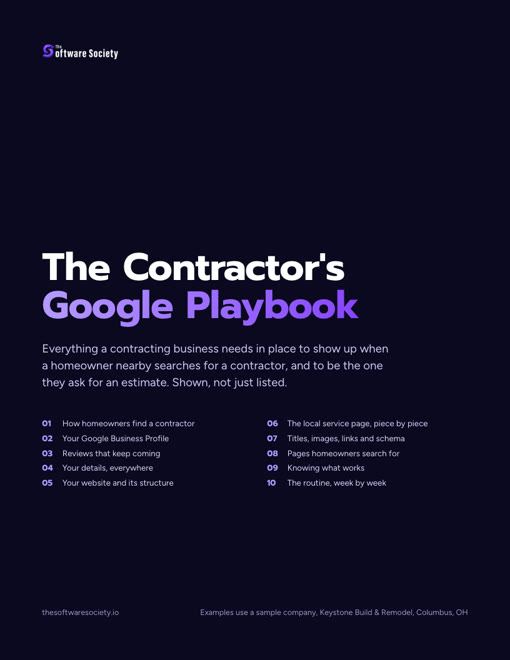
The contractor's Google playbook
Every part of showing up on Google for a contracting business, shown page by page: your profile, reviews, listings, website and the pages homeowners search for.
- Your Google Business Profile set up field by field, with "General contractor" as the primary category
- The service and the town in the address, title, headline, first sentence and photo names of every page
- The same name, address and phone on every listing, checked line by line
- A review request sent at every final walkthrough, with reply scripts
Send me the full checklist
On its way. You can also open it now.
We will email you the checklist and the occasional tip. Unsubscribe anytime. PDF
Good search work turns online searches into calls. Calls turn into booked jobs. You win more remodels, additions, decks and full builds. Slow seasons get shorter.
You set up your listing. You build 2 core page types: service pages and town pages. You track real leads by source. Every task here is simple to check.
What Is General Contractor SEO?
General contractor SEO is the set of tasks that helps builders appear on Google. Homeowners type what they need.
Visibility puts your name where local buyers look. Booked estimates count. Vanity traffic does not.
What Shows Up on the Screen?
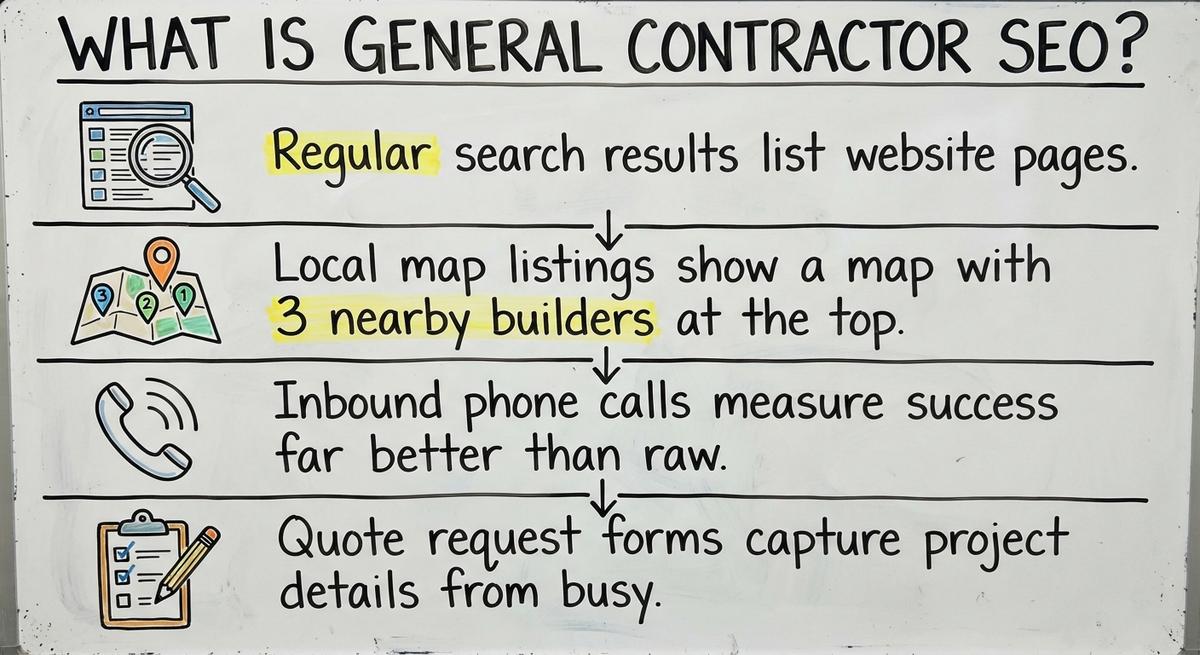
4 parts of a search screen matter most to a contractor.
- Regular search results: website pages that answer a project question.
- Local map listings: a map with 3 nearby builders at the top.
- Inbound phone calls: the best measure of success.
- Quote request forms: project details sent after office hours.
Search links an urgent home repair to your estimate calendar. Clicks mean nothing if the office line stays quiet. Good general contractor SEO counts booked estimates first.
Who Benefits Most From Local Search?
3 trade groups gain most from steady search work. Remodelers are one. Custom builders are another. Exterior crews are the third.
Each one wins big jobs through Google.
Big projects need trust. Homeowners check several builders online before they dial. Referrals fill part of a contractor's schedule. Yet referrals slow down at random times.
Search fills those gaps. Owners who treat search like a job site checklist see clearer results.
Why Do General Contractors Need SEO?
Over 80% of homeowners search online for major home repairs before calling an office. Big budgets make buyers careful. They compare local builders on Google first.
Search reaches people when a roof leaks. It reaches them when a kitchen feels cramped. Winter slowdowns hit many crews hard.
Steady rankings keep estimate requests coming in every season. No contractor can scale referrals on demand. Search is the channel you can grow on purpose.
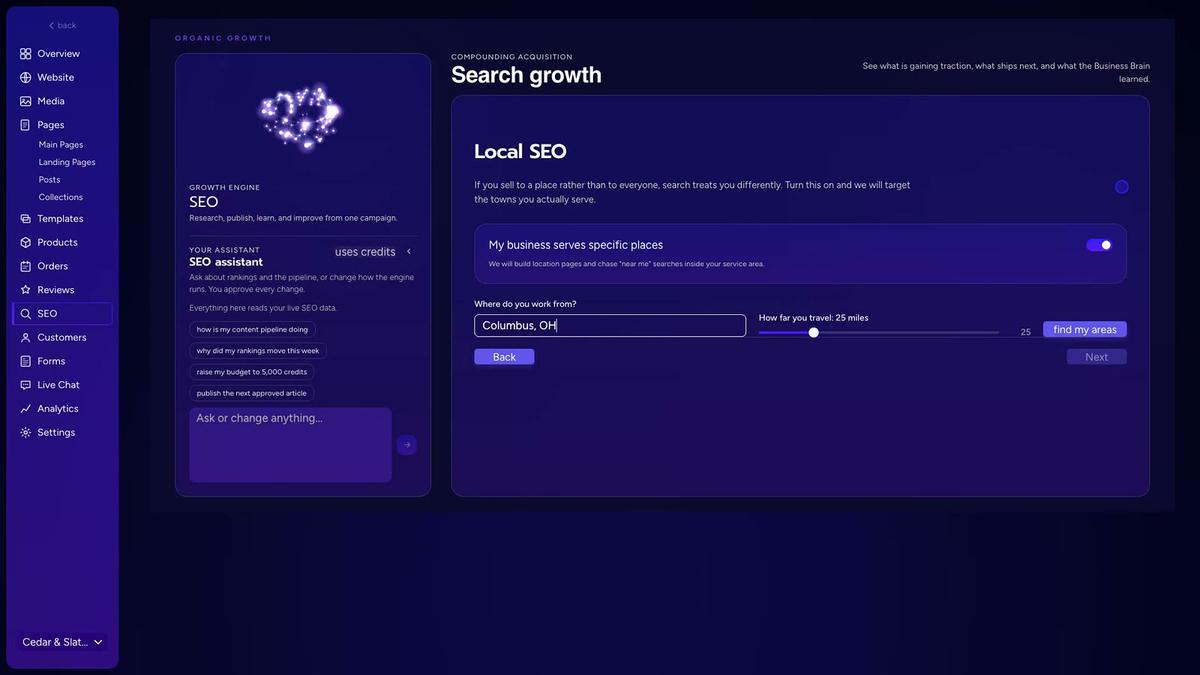
See your new homepage before you pay anything
Your homepage, rebuilt free. You see it before you pay anything.
Past SEO campaigns grew organic traffic 26x in 14 months.
New website plus 100 SEO pages in the first month: $397 a month, cancel anytime
How Does Google Decide Which Contractors to Show?
Google ranks local builders on 3 core signals. Relevance means your pages match the job a person typed.
Distance is how close the searcher is to your shop. Popularity is the proof Google sees in reviews, photos and web mentions.
Every task in local SEO for contractors supports 1 of those signals.
| Signal | What Google checks | What a contractor controls |
|---|---|---|
| Relevance | Do your pages match the job typed? | Service pages and categories |
| Distance | How close is the searcher? | Honest service areas |
| Popularity | What proof exists? | Reviews, photos and listings |
What Does Google Say?
Google's local ranking guide is short on this point. Google says, "Local results are mainly based on relevance, distance, and popularity." Keep all 3 signals strong.
Your contractor business then earns more calls. No paid trick replaces them. A builder with thin pages, a vague service area and few reviews stays out of the top 3.
Relevance: Do Your Pages Match the Search?
Relevance is how well your website matches a homeowner's words. 1 page per main service beats a crowded list.
Separate pages let each trade rank on its own.
Use plain words that real buyers type. Kitchen remodel is a good example. Deck builder and home addition are 2 more.
Skip stiff industry jargon in your headings. Clear labels tie your company to the exact project a caller wants priced.
Distance: Does Google Know Where You Work?
Distance is the gap between a searcher's phone and your listed address. You cannot move your shop across town.
Honest service area pages show Google the towns you cover.
List only the cities and counties your trucks reach. Towns 100 miles away waste time. They confuse local buyers too.
Clear town coverage helps nearby searchers find a general contractor fast.
Popularity: Do Reviews and Photos Prove Trust?
Popularity is the real-world trust your company earns across Google and local directories. Steady reviews prove you do real work. So do consistent business details.
The Local Consumer Review Survey found that "97% of consumers still lean on reviews to guide their purchase decisions."
Ask happy clients for feedback at the final walkthrough. Keep your name, address and phone number identical on every directory.
What Does a Complete Google Business Profile Need?
Your Google Business Profile is a free map listing. It controls how a builder appears on Google Maps.
A complete listing is the fastest start for any contractor. It costs nothing to claim. It often shows before your website does. Many homeowners call straight from it without ever visiting your site.
What Goes in the Profile?
5 fields do most of the work.
- Main category: your core trade, like General Contractor or Remodeler.
- Extra categories: second trades, like Kitchen Remodeler.
- Service list: every job type your crew handles.
- Project photos: finished kitchens, decks and siding, added on a schedule.
- Business description: your trades and towns in plain words.
Check Google's listing help for the rules on hours and phone numbers. Never list fake awards. Never claim what you cannot prove.
How Should You Pick Categories and Service Areas?
Categories are labels that tell Google which searches fit your listing. The wrong main category hides you. It hides you from buyers who want your best work.
Set service areas to match your weekly routes. List the exact towns your crew visits. Keep the radius to a realistic daily drive.
Clean settings give Google a sharp picture of what a contractor sells.
What Keeps Business Details Accurate?
Accurate details are trust signals. They keep callers from bouncing to a rival. State only facts you can back up. Real records protect your account.
Update holiday hours before long weekends. Homeowners need to know when you answer. Upload fresh job photos each month.
That beats posting 20 images once a year. Steady upkeep tells Google your company is open and active.
Find out where you show up on the map
A free map check for your company. See which towns find you and which call a competitor.
Why Build a Page for Each Service?
Service pages are standalone pages for each major job type you sell. Remodeling, additions, decks and roofing each get their own. Separate pages help each trade rank.
A kitchen buyer wants kitchen answers. A deck buyer wants deck answers. 1 mixed page serves neither one well, and Google cannot tell which job it should rank for.
What Parts Does Every Service Page Need?
5 simple parts make a service page work.
- Clear job scope: what the work includes, start to finish.
- Simple process steps: how estimates, permits and builds flow.
- Real lead times: material delays, explained before demolition.
- Finished job photos: proof of clean, lasting work.
- Direct call buttons: 1 tap to reach your office.
How Should Service Pages Link Together?
Your top menu is the map of your trades. Link every service page from it. A homeowner should reach any trade page in 1 click.
Never copy the same paragraphs across pages. Write fresh details for each trade. A solid general contractor website follows this layout from day 1.
What Does Google Mean by People-First Content?
Service pages are sales tools. They help buyers judge your crew. Write for real people first. Do not stuff keywords into awkward spots.
Google Search Central defines the idea plainly. "People-first content means content that's created primarily for people, and not to manipulate search engine rankings."
A contractor page that answers real questions meets that bar.
How Honest Should You Be About Lead Times?
Honest timelines are a sales advantage. Builders who publish them win trust. Skyline Construction, a commercial builder, gives one example.
It notes, "Specialty power distribution systems may require lead times of up to 12-14 weeks." Home projects have their own long-lead items. Name them.
Clear answers on timelines and permits turn careful visitors into booked estimate calls.
How Do Town Pages Help a General Contractor Show Up?
Town pages are local pages that match searches with a city name. Each one needs real local detail. A copied template does not count.
A town page tells a homeowner that you already work on their street. It also tells Google where your jobs happen. Build them after your service pages, 1 town at a time, starting with the towns you know best.
What Local Details Belong on a Town Page?
4 local details make a town page real.
- Neighborhood names: proof you know their side of town.
- Local permit notes: city inspection rules for additions and remodels.
- Housing styles: common repairs for older homes in the area.
- Nearby job photos: proof your crew already works on local streets.
What Does a Real Town Page Plan Look Like?
A roofing and exteriors company in central Ohio is 1 example. It runs dedicated pages for 17 towns. Each page names local neighborhoods.
Each one covers weather wear. Each one shows jobs finished nearby. No 2 pages read alike. The work took time, town by town. It gave every town a page a homeowner there would recognize. A general contractor can follow the same plan with remodels in place of roofs.
What Makes Copied Town Pages Risky?
Copied pages are a spam risk. 20 identical city pages break Google's spam policies.
Google warns, "Doorway abuse is when sites or pages are created to rank for specific, similar search queries."
Genuine local pages give nearby homeowners a real reason to call.

How Do Past Projects Win Trust?
Project pages are short studies of finished work. Each one has real photos and a real location. Before and after photos build instant trust with careful homeowners.
What Belongs on a Project Page?
Each project page needs 4 details.
- City or neighborhood: the job sits near the buyer's street.
- Original home problem: the damage, layout issue or aging material.
- Completed work: the materials, crew steps and final result.
- Internal links: a path back to matching service and town pages.
Real project examples set active builders apart from storm chasers. A small gallery of 6 strong local jobs beats 100 stock photos.
What Should Your About Page Say?
Your About page is a trust page too. State what you have actually done. Novak Construction describes its own path on its team page.
It calls itself "one of Chicago's premier general contractors and construction managers." A claim like that needs years of real work behind it.
Write only what your record supports. The guide to the best general contractor website shows more examples of proof on the page.
Results you can check
Past SEO campaigns grew organic traffic 26x in 14 months, and 15x on another. Top Rated Plus on Upwork with 99% job success.
Work for hundreds of small businesses and large clients like New Balance. Before The Software Society, our founders’ agency worked with Planned Parenthood.
Why Does a Phone-Friendly Website Matter?
Over 60% of local home service searches happen on a mobile phone. A slow mobile site costs you real calls every week.
Google is still the front door for most American buyers. Most of them check local businesses on a phone first.
What Mobile Basics Should You Check?
Check 4 basics on your own phone today.
- Tap-to-call button: at the top of every screen, no scrolling.
- Short quote form: name, phone, town and project type only.
- Fast page speed: photos load fast on normal cell service.
- Easy site updates: typos fixed and pages added in minutes.
A clean mobile setup keeps visitors on your site long enough to call. Good contractor website design starts here.
What Do Homeowners Actually Type?
Free tools are a simple start. AnswerThePublic shows the questions people type around a topic. Try a phrase like kitchen remodel cost.
Turn the common questions into page headings. Then answer each one in plain words. A page built on real questions reads like a helpful estimator. It also gives Google more phrases to match.
How Do Reviews Help General Contractor SEO?
Reviews are public proof that homeowners trust your crew with their homes and money. Ask every happy customer right after the job.
That habit builds steady review growth. The guide on how to get more Google reviews has more scripts.
What Do Google's Review Rules Say?
Follow Google's review policy. It states, "Reviews and other user contributions to Google Maps must reflect a genuine experience." Never buy fake reviews.
Never trade gift cards for ratings.
What Does Review Data Show?
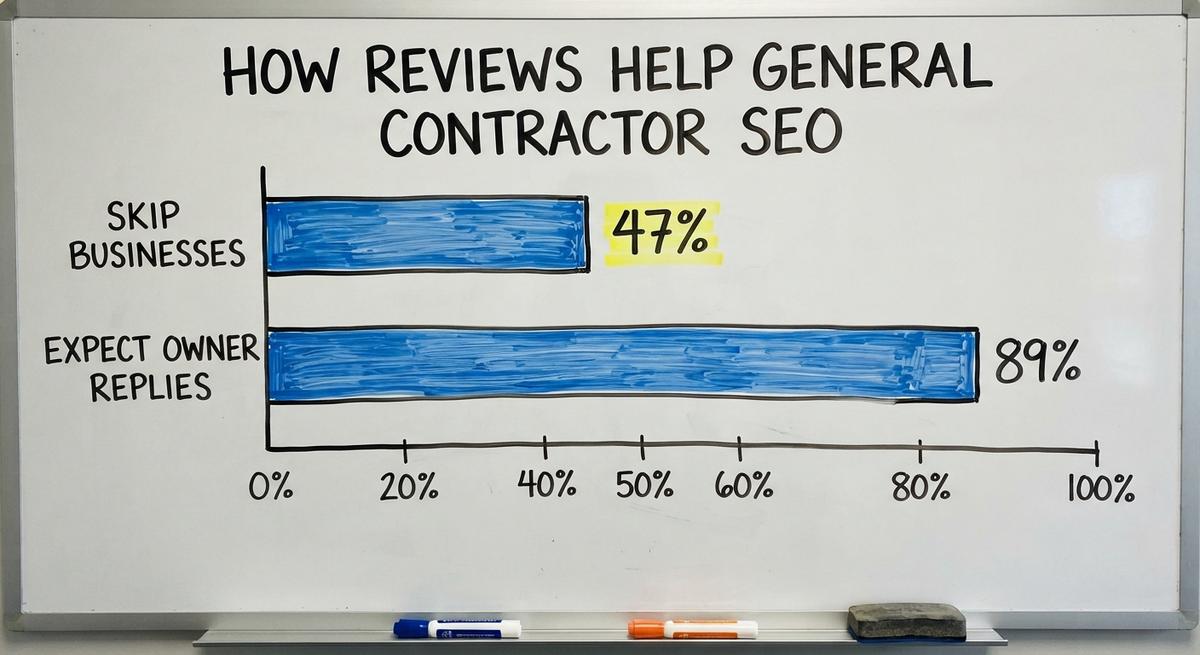
The Local Consumer Review Survey shows 47% of shoppers skip businesses with fewer than 20 reviews.
The same study shows 89% of consumers expect owners to reply. A contractor with few reviews loses calls before the phone rings.
What Is a Simple Review Habit?
A 3-step review habit fits after every job.
- Text the link the same day you finish.
- Suggest a detail, like their bathroom remodel or new deck.
- Reply within 48 hours to thank the homeowner and name the project.
Steady, honest reviews build trust with Google and local buyers alike.
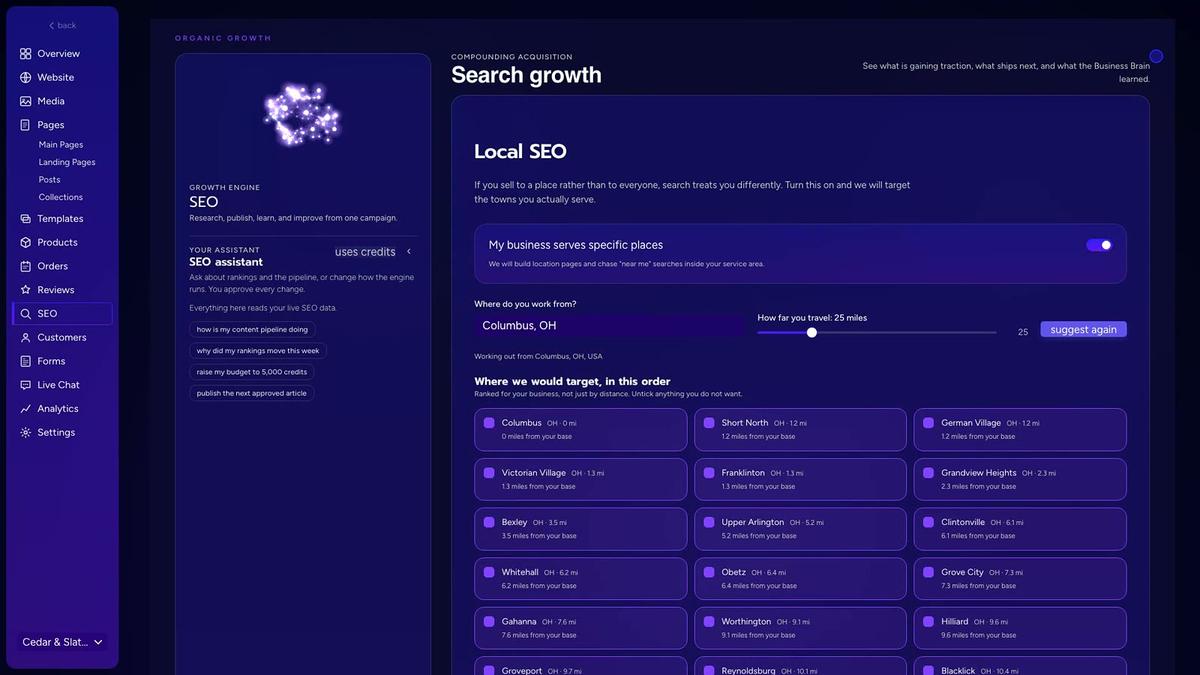
What Is the Map Pack and Why Does It Matter?
The Map Pack is the box with a map and 3 listings near the top. Many callers dial straight from those 3 spots.
Map results shift with where the searcher stands. A homeowner in 1 suburb sees a different top 3 than someone 8 miles away.
A spot in those 3 puts your number where urgent buyers look first.
How Do You See Where You Show Up on the Map?
A grid scan is a report that checks your map rank across dozens of points. A check from your office desk gives a false picture.
Google favors searchers close to a business address.
A monthly grid scan reveals weak spots across nearby neighborhoods. The central Ohio roofer above gets a monthly scan across its 17 towns.
Green pins show where you sit in the top 3. Red pins show where competitors lead. Monthly scans turn guesswork into clear map data.
What Should a Contractor Track to Know SEO Is Working?
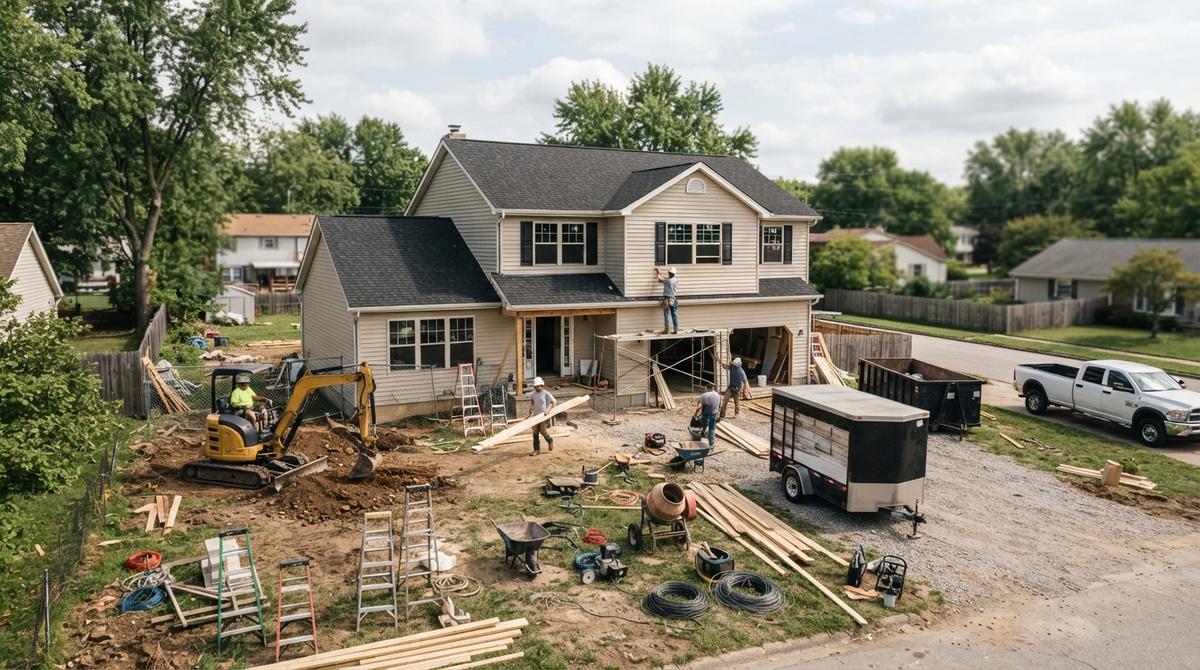
4 lead buckets show if your marketing brings real jobs. Track calls and quote requests by the channel that sent them. Visits alone prove nothing. A month with fewer visits and more booked jobs is a good month. Count the jobs. The full contractor lead generation guide uses the same split.
What Are the 4 Lead Buckets?
Split your monthly leads 4 ways.
- Organic search: callers who clicked your regular pages.
- Map listings: calls and direction taps from your profile.
- Paid ads: leads from Google Ads or Local Services Ads.
- Spam and bots: robocalls and sales pitches, kept apart.
Listen to recorded estimate calls once a week. You will spot missed calls. You will fix front-desk gaps fast.
How Do Paid Leads Fit the Picture?
Paid leads are their own bucket. Google explains the billing in Google Local Services Ads Help.
Google notes, "Pay only for leads related to your business and the services you offer." Clean tracking stops you from crediting SEO for ad calls.
The guide to Google Ads for contractors covers the paid side.
Should AI Visits Be Their Own Channel?
AI tools are new channels homeowners use to find builders. People now ask ChatGPT, Gemini and Perplexity for contractor names in their town.
Track AI visits as a separate line. That shows early shifts in buyer habits.
AI numbers start small in most towns today. The monthly trend matters more than the first week's count.
A separate line helps you spot new lead sources early.
How Long Does General Contractor SEO Take?
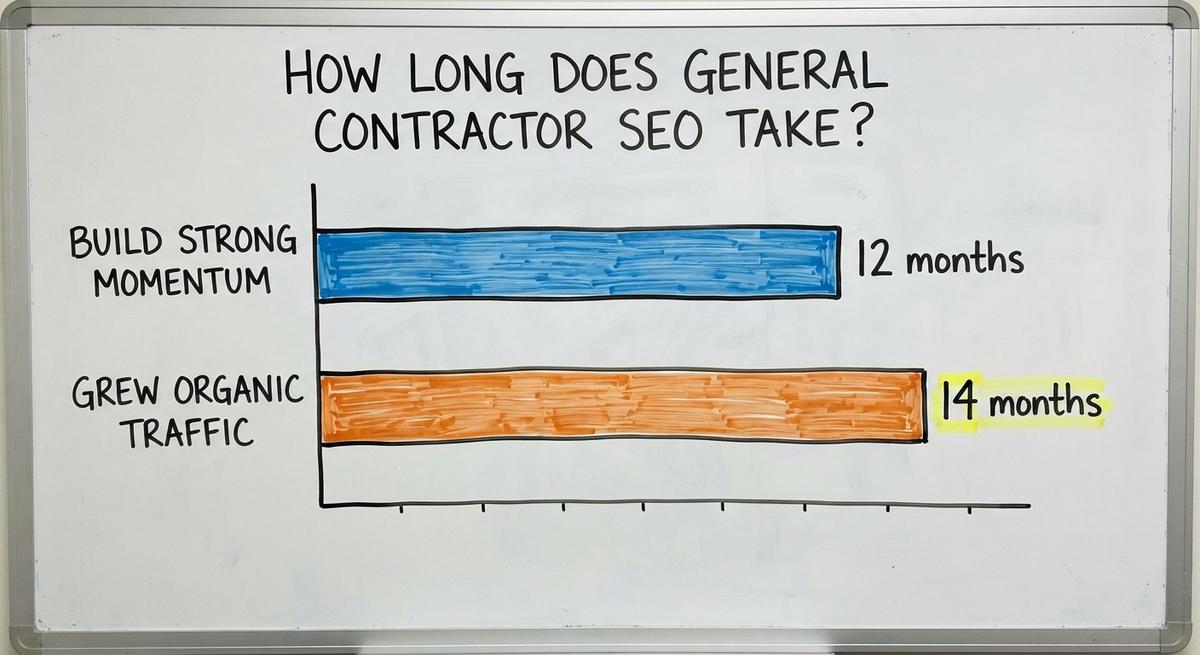
General contractor SEO takes 6 to 12 months to build strong momentum. No honest provider can promise a fixed date.
No one can promise a number 1 spot either.
What Results Are Realistic?
Results depend on 3 things: your starting site, local competition and how fast pages launch. Steady work pays off.
One earlier campaign lifted organic visits 26 times over within 14 months. Another reached 15 times.
The same rules hold for roofers and for roofing SEO in general. The guide on how long roofing SEO takes covers that trade.
Steady monthly work compounds for remodelers and for any roofing SEO company client alike.
Get a second opinion on your current setup
Already paying for marketing? Get a free second opinion on what works and what wastes money.
What General Contractor SEO Mistakes Cost Calls?
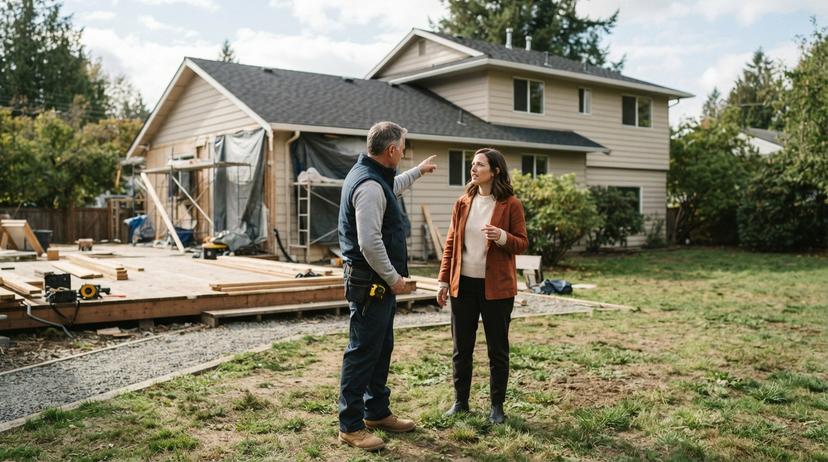
7 common errors cost builders steady calls every month. Fix these gaps. Your site then moves ahead of most local competitors.
| Mistake | What it costs you |
|---|---|
| One crowded page | Remodeling, roofing and decks lumped together, so no trade ranks |
| Copied town pages | City names swapped with no local detail, a spam risk |
| Unclaimed profiles | Wrong hours and old numbers on map listings |
| Zero call tracking | No idea if leads came from maps, search or ads |
| Unsupported claims | Licenses, years or awards you cannot prove |
| Hidden phone numbers | Mobile visitors hunt through the footer |
| Stock project photos | Real builders look like out-of-town brokers |
Clean basics always beat flashy tricks. If you still cannot find your listing, read why a business is not showing up on Google.
Should You Do General Contractor SEO Yourself or Hire Help?
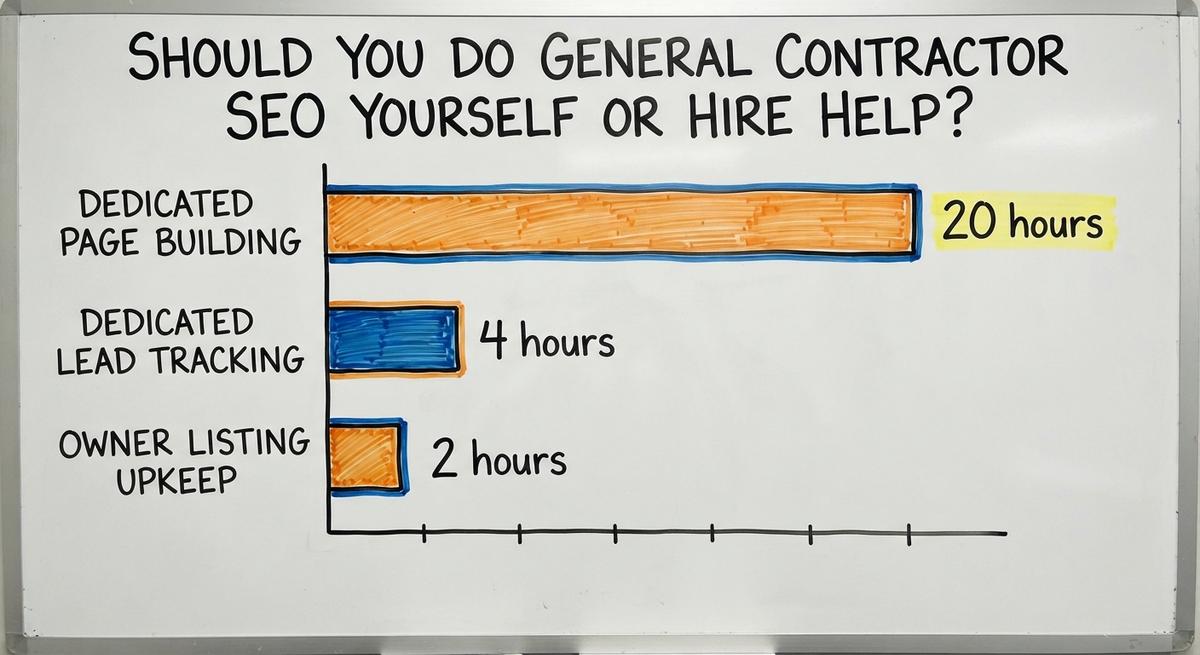
2 paths exist for builders who want stronger local results. An owner can handle listing updates and reviews in 30 minutes a week.
Dozens of service and town pages take time most busy builders lack.
How Many Hours Does Each Task Take?
Here is how the tasks split by hours each month.
| Task | Hours per month | Good fit for |
|---|---|---|
| Listing upkeep | 1 to 2 | The owner |
| Review requests | 1 | The owner |
| Page building | 10 to 20 | A writer or outside help |
| Lead tracking | 2 to 4 | The office or outside help |
What Does SEO Cost?
The SEO Blog by Ahrefs has a clear price range.
It reports, "SEO costs usually range from $250 to $10,000 per month, with most businesses (63%) spending between $500 and $5,000."
Your own evenings are worth writing time when leads are slow. Outside contractor SEO services make sense when job sites keep you busy.
Roofers can compare local SEO for roofing companies and roofing SEO services.
What Should You Ask Any SEO Provider?
6 direct questions protect your budget before you sign. Walk away from anyone who guarantees a number 1 ranking or a set lead count.
- Who does the work: will you talk to the person building pages?
- What gets tracked: are leads split by search, map, ads, AI tools and bots?
- Who owns the assets: do you keep your domain, site and pages?
- How pricing works: how do fees scale by towns, services and pages?
- What proof exists: can you see remodeling or roofing sites with real growth?
- How fast fixes happen: how soon can a number change or a page go live?
Clear answers keep you in control of your business assets. A contractor SEO company worth hiring answers all 6 without stalling.
What Should a Contractor Do in the First Month?
5 steps fill month 1. Do them before any advanced tactics. These tasks set up every month of growth after.
- Claim and complete your map profile with categories, hours and 10 job photos.
- Write down the services you want to sell and the towns you cover.
- Set up tracking to sort every lead by search, map, ads or bots.
- Send review links to your last 10 happy customers.
- Build core service pages first, then add town pages 1 area at a time.
What Comes After Month 1?
Month 3 is your first real checkpoint. Say you start in December 2026. Your 90-day check then lands in March 2027, and your 6-month check in June 2027. Repeat your map grid scan every 30 days.
Let it guide the next page build. The wider guide to contractor SEO marketing covers what comes next. Start with your Google listing today.
Plan your first service page this week.
Frequently asked questions
Why do general contractors need SEO?
Homeowners research a general contractor online before they call about major work. Being visible puts your number in front of local buyers when they need an estimate. It also cuts your reliance on word of mouth.
How does Google decide which contractors to show?
Google ranks local contractors on 3 main factors: relevance, distance and popularity. Your pages must match what buyers type. Your listing must show where you work. Steady reviews must prove real trust.
How do town pages help a contractor show up locally?
Town pages match searches that include a city name, like kitchen remodeler plus a nearby suburb. Real local project details help a contractor avoid spam flags. They also help nearby homeowners trust your crew.
How do reviews affect local results?
Reviews boost a contractor's popularity signal on Google Maps. They shape buyer clicks too. Most homeowners skip companies with few reviews. They expect owners to reply politely to every comment.
What is general contractor SEO?
General contractor SEO is the ongoing work on your website and Google Business Profile that helps local homeowners find you first. It targets buyers who search for remodeling, additions and repairs. The goal is real phone calls.
What pages does a general contractor website need?
A general contractor website needs a clear homepage and 1 page for each major service. It needs a town page for each area you cover. Project pages with before and after photos build strong buyer trust.
Can I do contractor SEO myself?
Yes. A contractor can claim the Google Business Profile, upload project photos and ask for reviews alone. Outside help makes sense when you lack the hours to write local pages and track monthly grid scans.
What should I ask an SEO provider before hiring?
Ask who writes your pages. Ask if you own your website and domain. Ask how they separate real calls from spam bots. Avoid any agency that promises top rankings or fixed monthly lead counts.
Start with a free homepage rebuild
Book a short call. Your new homepage is free to see and yours to keep.
New website plus 100 SEO pages in the first month: $397 a month, cancel anytime
Ready when you are
Ready for the phone to ring more?
Book a short call. We rebuild your homepage first, and you decide after you have seen it.