


Roofing contractor website design that win more jobs.
Roofing contractor website design is the craft of building a fast site that books roof calls. As of April 2026, homeowners check 3 or more companies first. Your site must prove you are local, show real work and make calling easy.
A new website for your trade, built for you and hosted, fast on a phone with tap-to-call right at the top.
See your new homepage free before you pay. Cancel anytime.
For contractors
organic traffic growth over 14 months
growth on a second SEO campaign
job success score across Upwork projects
Trusted by local service businesses across the country and by New Balance. Before The Software Society, our founders' agency worked with Planned Parenthood.

What you get
One website. Built to book jobs.
A fast, clear site that turns the people who find you into calls. Add Google pages whenever you want more of them.
A new website, built for you
Fast on a phone, your best projects up front, and an estimate button people see right away.
Pricing
One price. Everything included.
Everything included
$50a month
- Website design for your trade
- Hosting, security and updates
- Tap-to-call and a quote or booking button up top
- Edit it yourself, or ask the AI assistant
- Month to month, no contract
Free checklist
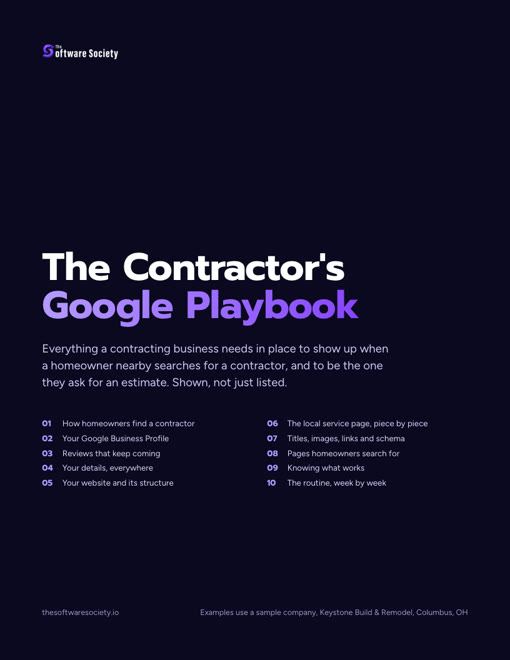
The contractor's Google playbook
Every part of showing up on Google for a contracting business, shown page by page: your profile, reviews, listings, website and the pages homeowners search for.
- Your Google Business Profile set up field by field, with "General contractor" as the primary category
- The service and the town in the address, title, headline, first sentence and photo names of every page
- The same name, address and phone on every listing, checked line by line
- A review request sent at every final walkthrough, with reply scripts
Send me the full checklist
On its way. You can also open it now.
We will email you the checklist and the occasional tip. Unsubscribe anytime. PDF
What Does Roofing Contractor Website Design Really Mean?
Roofing contractor website design is a lead system built for phone calls. Speed and clear pages drive it. A pretty digital brochure is not the goal.
Many owners hire small business website design services that focus on colors and fonts. Strong roofing website design focuses on how stressed buyers reach your office.
Every layout choice has 1 job. It moves a visitor toward a call or a quote request. Good structure turns web traffic into scheduled roof inspections.
See your new homepage before you pay anything
Your roofing homepage, rebuilt free. You see it before you pay anything.
Past SEO campaigns grew organic traffic 26x in 14 months.
New website: $50 a month, built and hosted, cancel anytime
Why Does a Roofer Website Work Differently?
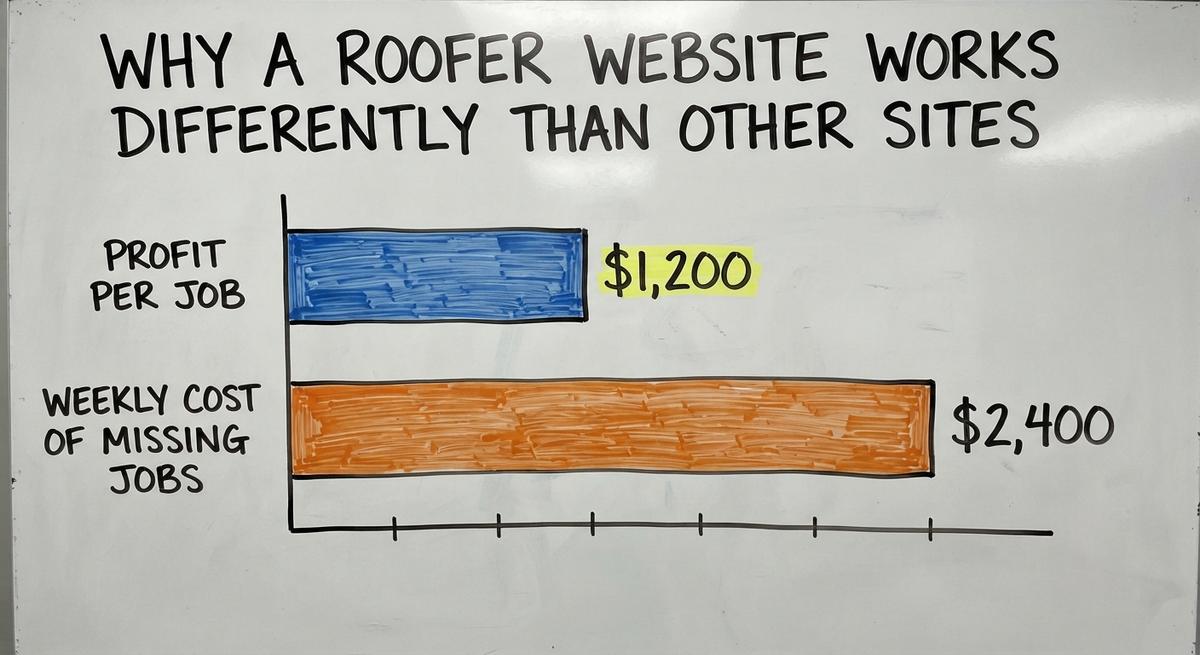
A roofer website sells a rare, costly buy. Homeowners replace a roof only every 15 to 25 years. Missing just 2 jobs a week at $1,200 profit costs $2,400 weekly.
Buyers with active leaks search on cell phones while water drips inside. Other home trades get urgent calls too. Few face the same stakes on one visit.
Stressed buyers want fast proof and clear service lists. The wider guide to roofer contractor marketing shows where the site fits. A roofing site wins when it removes friction for hurried homeowners. The full guide to a roofing contractor website covers the business case.
What Does a Roofing Website Need to Get Calls?
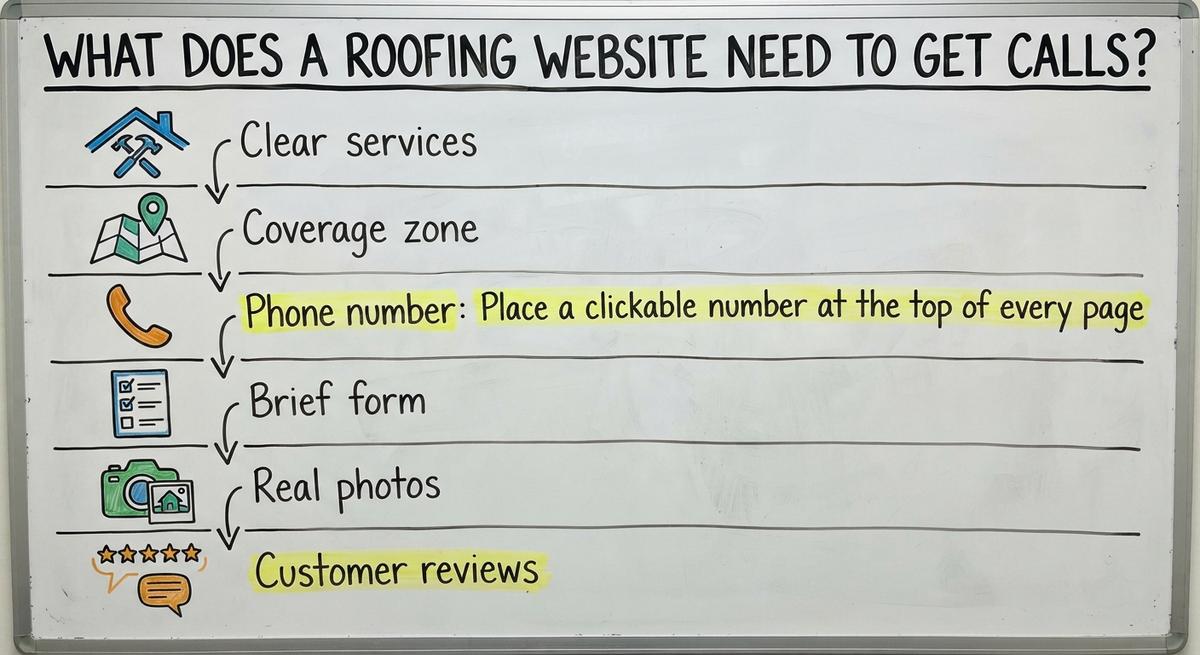
6 core parts help a roofing website turn visitors into booked calls. Each part builds trust in your crew.
- Clear services: list roof repair, replacement and storm work. Put them up front.
- Coverage zone: name your main city. Add the nearby towns.
- Phone number: make it clickable. Put it in every header.
- Brief form: keep it quick. An address and a note are enough.
- Real photos: show roofs your crew built. Skip stock pictures.
- Customer reviews: show recent local feedback. It proves solid work.
Together, these 6 pieces give a homeowner every reason to call you first.
What Makes a Roofing Homepage Convert Visitors?
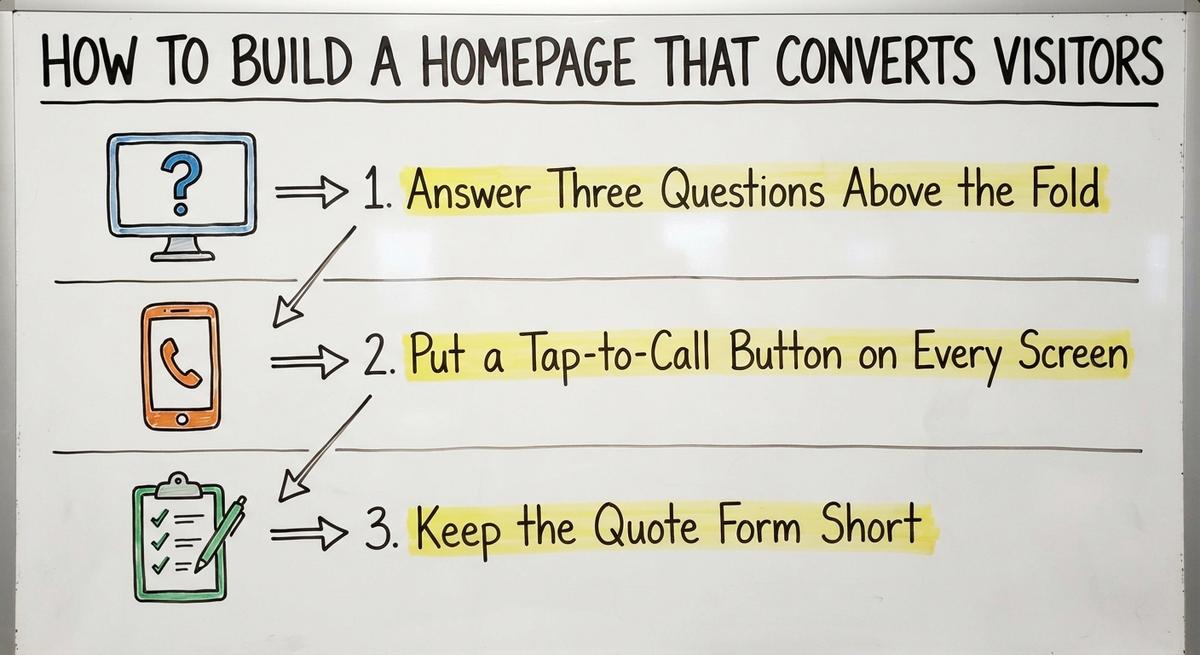
A roofing homepage is a storefront. It answers 3 questions in 5 seconds. Visitors leave fast when the opening view hides your trade.
Show your main trade, your city and your number right away. Clear choices keep local buyers on the page. A dedicated roofing landing page follows the same rules for ad traffic.
What 3 Questions Belong Above the Fold?
Above the fold is the part of a roofing website buyers see before they scroll.
Name the trade. Name the towns. Show how to call. Skip vague slogans like quality work or family values.
Replace stock models with a clean shot of a real local roof. Clear answers on screen 1 keep hurried homeowners reading.
Why Put a Tap-to-Call Button on Every Screen?
A sticky call button is a phone bar that stays on small screens. Visitors tap it to dial your office from any roofing page.
Put your number in plain text in the desktop header too. Test it on an actual handset before going live.
1 working button captures urgent leak calls before buyers back out.
How Short Should the Quote Form Be?
A short quote form on a roofing website has 4 basic fields. Ask only for a name, phone number, town and brief note.
Extra boxes make more visitors quit halfway. Send form alerts to a checked inbox or a cell phone text.
Test the form monthly so leads never land in spam folders. Tested forms turn evening browsers into morning inspection calls.
Which Roofing Website Pages Cover Services and Towns?
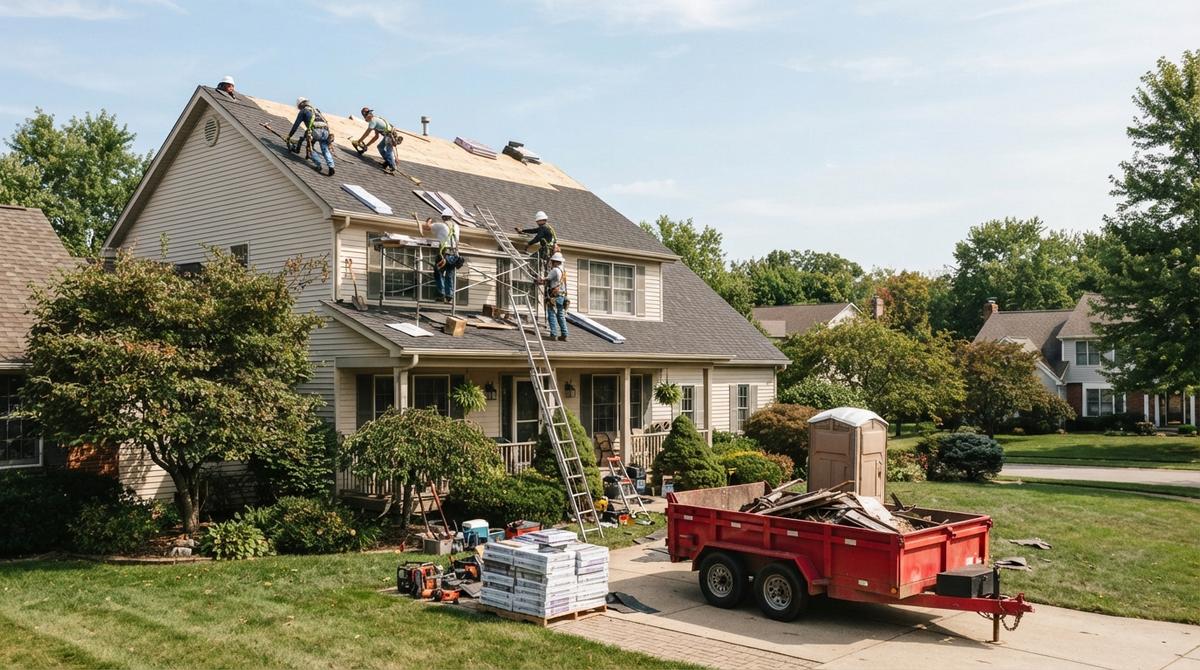
Roofing website pages are separate web addresses for each service and city. 1 giant page for everything confuses homeowners and search tools alike.
Every repair type and every nearby town deserves its own clear spot. Structured pages help local searchers reach the right team member.
Why Give Each Roofing Service Its Own Page?
Roofing service pages are dedicated pages built for each core trade. Build 1 each for roof repair, replacement, storm damage, gutters and siding.
1 focused page matches 1 specific search need. A homeowner typing metal roof repair wants metal panel details. Ten unrelated trades on the same screen lose that buyer.
Explain materials, trouble signs and inspection steps in plain words. Focused pages help buyers find the exact fix they need.
Find out where you show up on the map
A free map check for your roofing company. See which towns find you and which call a competitor.
What Makes a Roofer's Town Page Unique?
Local pages for roofers cover each city you serve on the website. Each one needs real local details, not copied text.
Google warns against copied pages in its spam rules. Google's spam policies are blunt. "Doorway abuse is when sites or pages are created to rank for specific, similar search queries".
Include 3 real details on each one.
- Local neighborhoods: name real subdivisions. List the districts your crew visits.
- Housing styles: describe common roof pitches. Note typical home ages.
- Service links: point to your core repair pages. Link replacement too.
Unique city pages win local searches without breaking search rules.
How Do Service and Town Pages Work for 17 Towns?
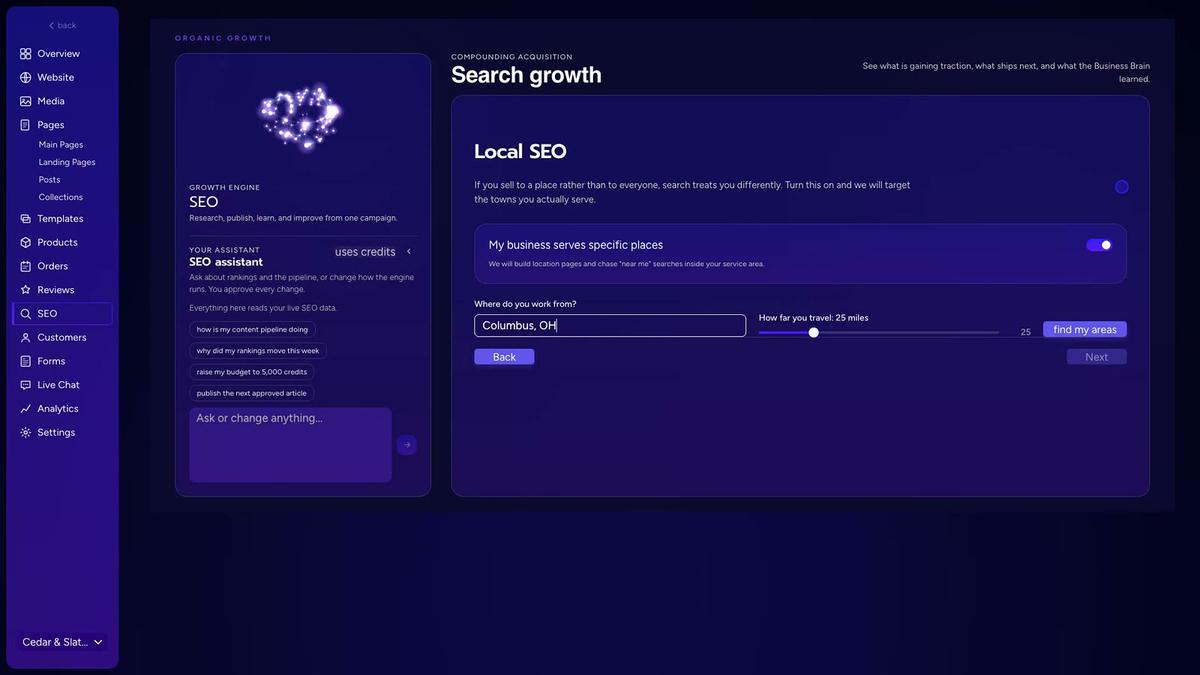
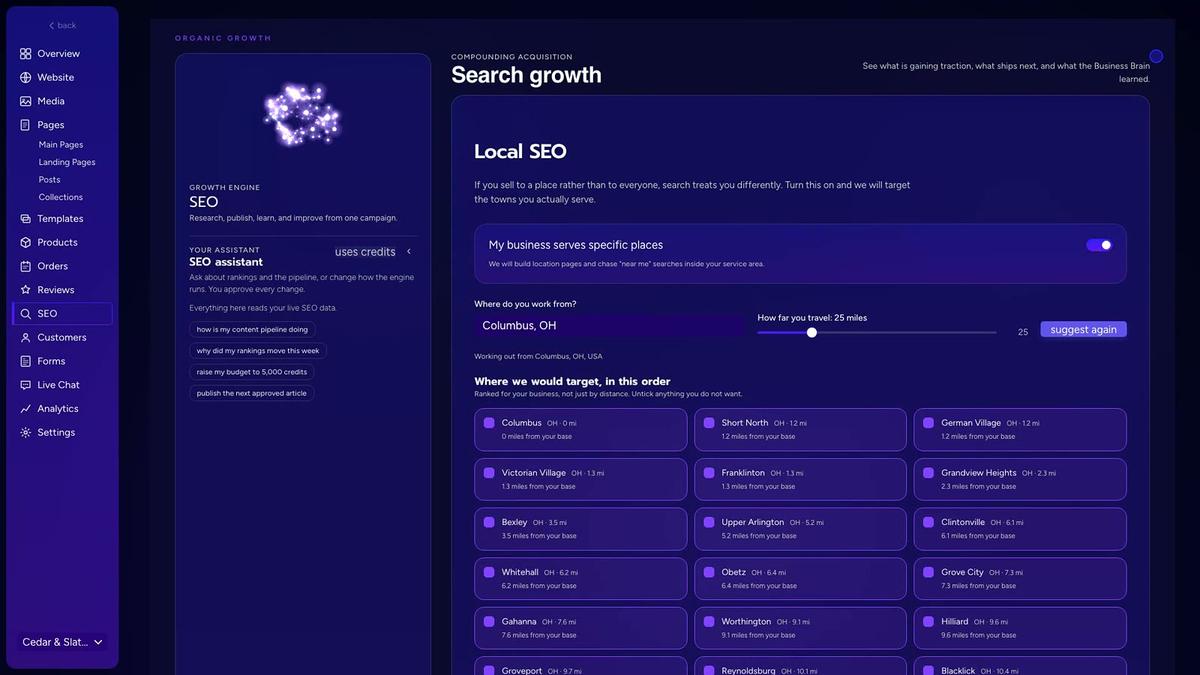
17 towns form the local map for 1 central Ohio roofer. The exteriors company runs separate pages for each trade and each city.
Every city page highlights local work. Each one links straight to the repair pages. The clean grid lets a growing contractor expand into nearby suburbs.
Buyers in all 17 towns land on a page built for them. A structured site scales cleanly across an entire region.
How Do You Show Proof That a Roofer Is Real?
Trust signals are real photos, verified licenses and genuine local reviews. Homeowners fear storm chasers and fake contractors after heavy weather.
In 2026, buyers check proof before any roofing contractor sets foot on the property. Show license numbers, insurance details and real crew faces on every key page.
Why Do Real Photos and Verified Credentials Matter?
97% of buyers rely on reviews before they hire a roofing contractor. BrightLocal's Local Consumer Review Survey agrees. "97% of consumers still lean on reviews to guide their purchase decisions".
Learning how to get more roofing reviews starts with fair requests. Google's review policy is strict. "Reviews and other user contributions to Google Maps must reflect a genuine experience".
Show real crew photos. List only licenses you can prove. Verified proof protects your name and convinces careful homeowners to call.
How Should You Format Before-and-After Photos?
Before-and-after photos are visual proof of real roofing work. Label each pair with the town name and roof type.
Shrink large camera files so they load fast on cell networks. Add short alt text that describes the roof work.
Labeled, compressed job photos build instant trust and keep the site quick.
Results you can check
Past SEO campaigns grew organic traffic 26x in 14 months, and 15x on another. Top Rated Plus on Upwork with 99% job success.
Work for hundreds of small businesses and large clients like New Balance. Before The Software Society, our founders’ agency worked with Planned Parenthood.
How Does Mobile Speed Shape Roofing Contractor Website Design?
Roofing contractor website design is a phone-first system for local buyers. Most homeowners search for roofers from a driveway or a living room.
Your site must load fast and fit small screens with no pinching or zooming. Test the main pages on a basic cell connection every few months.
What Does Phone-First Design Look Like?
A mobile-first layout is a design built for small screens first. Use large fonts and wide buttons. Keep paragraphs to 2 sentences.
Tiny links make frustrated callers hit the back button. Check every button, menu and photo on a handset first.
A site that feels easy on a phone wins more emergency calls.
What Keeps Every Page Fast?
Page speed is how fast a roofing website appears after a click. Slow pages lose impatient buyers with water leaking through a ceiling.
Heavy plug-ins and huge photos cause most slow sites. Remove unused add-ons. Size every picture down before you publish.
Fast pages keep stressed callers around long enough to dial.
How Does Roofing Contractor Website Design Connect to Google?
Roofing contractor SEO is the link between your site and Google Maps. The 2 work together to bring free calls from nearby homeowners.
Strong local signals help you show up when storms hit your area. Clear text helps both Google and buyers understand your trades. Roofing SEO services build on that clarity.
Where Does Your Google Profile Fit?
Your Google profile is a free map listing above normal search links. Keep your business name, street address and phone identical everywhere. The guide to Google Business Profile for roofers covers each field.
Link the map profile straight to your homepage. Google Business Profile Help explains the ranking. "Local results are mainly based on relevance, distance, and popularity".
Clear trade and city pages boost your relevance in local map searches. Local SEO for roofing companies builds on the same pages.
How Should Roofers Write Skimmable Page Text?
Skimmable text is short website writing under clear headings. Skip heavy jargon like flashing valley coefficients, or explain it fast.
Google rewards clear writing aimed at real buyers. Google Search Central says it plainly. "People-first content means content that's created primarily for people, and not to manipulate search engine rankings".
Plain text helps busy homeowners find answers and pick up the phone.
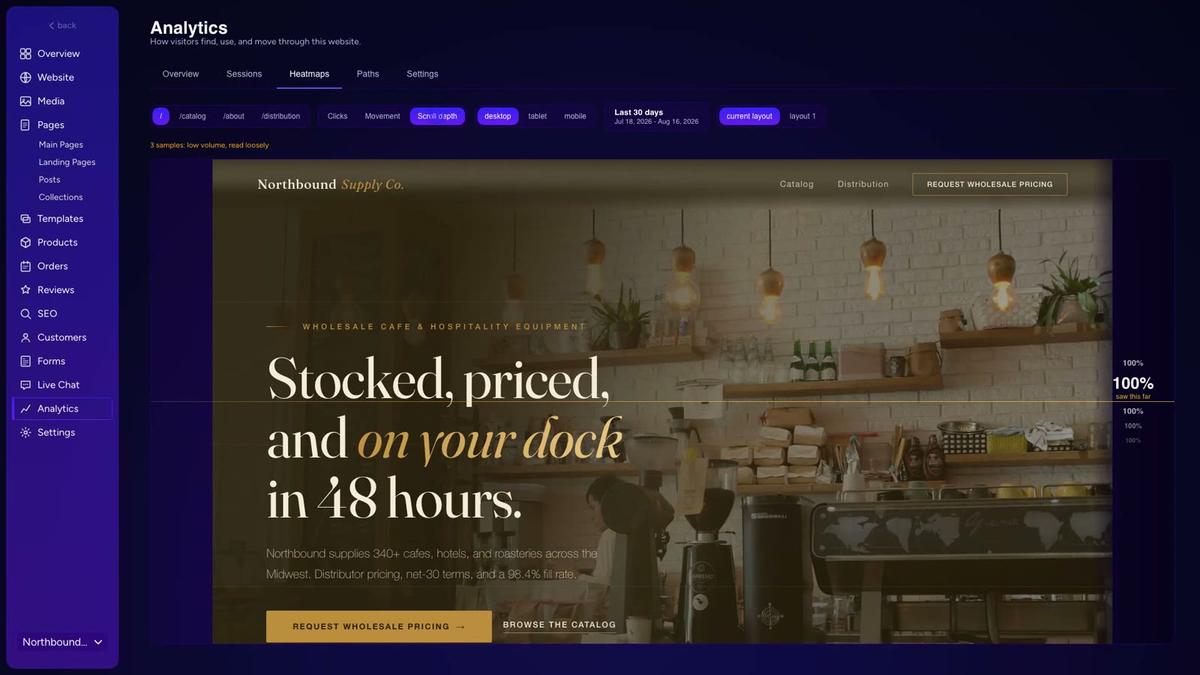
How Should Roofers Track Calls and Map Visibility?
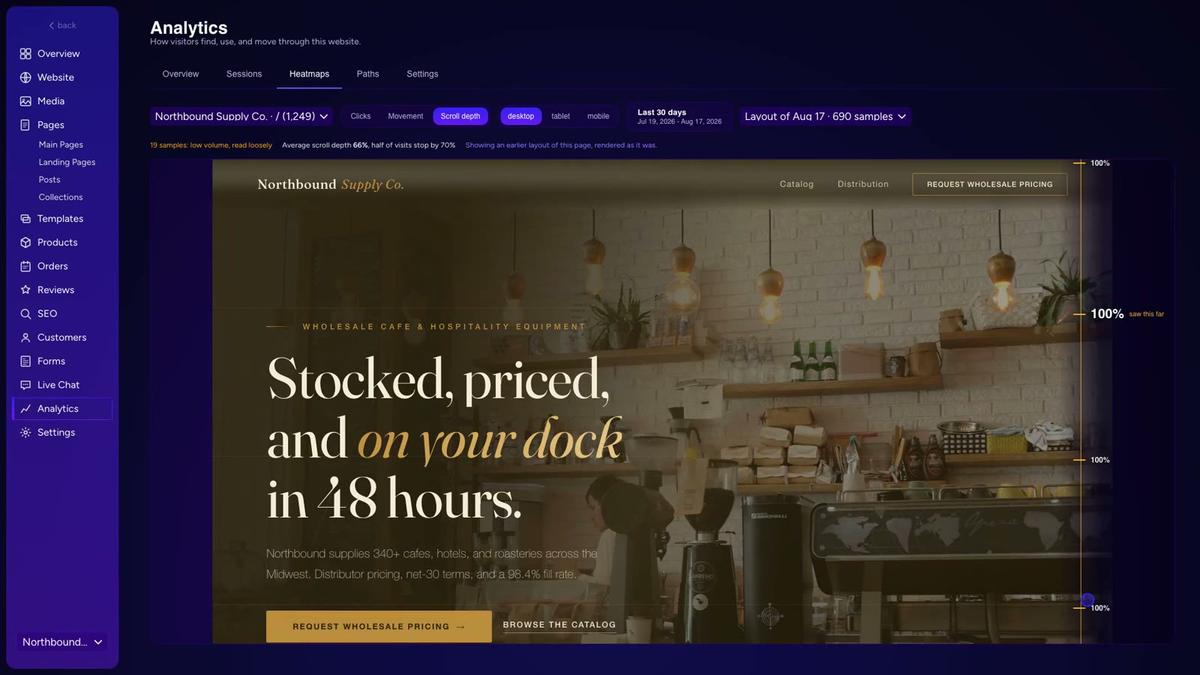
Call tracking is how a roofing contractor measures every lead by source. Without it, you guess at the marketing dollars that pay off.
Track both calls and web forms. No lead should go uncounted. Clean data protects your budget every month.
Why Set Up Source Tracking Before Launch?
Source tracking is a system that sorts leads by channel. It separates organic search, Google Maps, paid ads and AI bots.
Keep the monthly report simple enough to read in 5 minutes. Google Local Services Ads Help sets the rule. "Pay only for leads related to your business and the services you offer". The guide to Google Ads for roofing companies covers the paid side.
Clean source data shows the pages and ads that bring your best roof jobs.
What Does a Map Grid Show a Roofer?
The Map Pack is the 3-business box under the map on Google. A roofing contractor's rank inside it shifts block by block.
A Google Maps grid scan checks your spot across dozens of map points. A monthly scan shows strong zones and weak pockets over time.
Monthly grid scans reveal local growth without false ranking promises.
Why Count Visits From AI Tools Separately?
AI tool traffic is visits from ChatGPT, Gemini or Perplexity. Track those website visits apart from normal search totals.
As of early 2026, more buyers use AI tools to compare local roofers. These tools quote pages with clear headings and direct facts.
Separate AI tracking shows how new search habits send real leads.
Get a second opinion on your current setup
Already paying for roofing marketing? Get a free second opinion on what works and what wastes money.
What Mistakes Cost a Roofing Website Calls?
6 common errors quietly cost a roofing website dozens of calls each season. Fixing them lifts calls without extra ads.
- Hidden phone number: a buried number loses calls. Mobile users leave.
- Long quote forms: 12 questions scare buyers off. They want a quick estimate.
- Fake stock photos: generic models destroy trust. Buyers want a local crew.
- One trade page: every trade on 1 page blurs the match. Repair searches miss it.
- Broken web forms: unchecked forms drop emails. That wastes paid clicks.
- Copied city pages: identical text across 15 towns risks penalties. It looks lazy too.
Removing these 6 roadblocks lets existing traffic turn into booked inspections.
What Should You Ask a Roofing Website Designer?
5 direct questions help you judge any roofing contractor website design provider. Good partners answer plainly and show their work.
- Sample work: ask to see homepages built for other roofers.
- Point of contact: ask who builds the site and if you talk to that person.
- Update speed: ask how edits work and how fast small changes go live.
- Lead tracking: ask what call and form sources appear in monthly reports.
- Realistic claims: walk away from anyone promising top spots or fixed lead counts.
These 5 questions protect your budget from slow providers and empty promises. A roofing marketing agency or a contractor website design company should answer all 5.
How Do Roofing Contractor Website Design and SEO Work Together?
Roofing contractor website design is half of 1 connected lead system. Design convinces visitors to call. Search brings more local homeowners in.
A great site stays invisible if nobody finds it on Google. Plan site structure and search growth together from day 1.
Knowing how long roofing SEO takes helps you budget steadily. It also helps you avoid a weak roofing website builder. Roofing SEO and design work as 1 system to fill your schedule all year.
What Belongs on a Pre-Launch Checklist?
A 6-point check confirms the site works before traffic arrives. Test every item on a real cell phone.
- Call button: tap the sticky bar. Confirm it dials your office line.
- Form delivery: send a test request and check the office inbox.
- Page speed: load your top 3 pages on cell data. Time them.
- Dedicated pages: check each core trade. Check each target city too.
- Real proof: check every crew photo and review. Your licenses must be real.
- Tracking setup: verify source tracking works. Test the map profile link.
Finish this check and launch with confidence. For leads beyond the site, see roofing contractor leads.
Frequently asked questions
What does a roofing contractor website need?
A roofing contractor website needs clear service pages and local town pages. Add a tap-to-call bar and a 4-field form. Real job photos and verified reviews finish the job.
Which pages should a roofing website have?
Every roofing site should have a homepage. Add separate pages for repair, replacement, storm damage and gutters. Add unique town pages for your service area. A contact page and an FAQ page round it out.
Should a roofer build a page for each town?
Yes. A unique page for each town helps a roofing website match local searches. Many of those searches include a city name. Use real neighborhood details and local job photos. Google then has no reason to flag copied pages.
How do I get more calls from my roofing website?
Pin a call bar on mobile screens. Cut the form to 4 fields. Speed up your pages. Real crew photos and local reviews near the top of your roofing website also boost caller trust.
How does Google decide local results?
Google bases local map results mainly on relevance, distance and popularity. A roofing website supports relevance with clear service and town pages. Accurate details and genuine reviews strengthen your profile.
How can I track calls and forms by source?
Use call tracking software and form tags on your roofing website. They split leads from organic search, Google Maps, paid ads and AI tools. 1 simple monthly report shows the channels that bring booked roof jobs.
What is a Map Pack grid scan?
A Map Pack grid scan checks your roofing business rank in Google Maps. It tests dozens of points across your service area. A monthly scan shows strong neighborhoods and weak spots, with no promise of fixed rankings.
What should I ask a roofing website designer?
Ask to see sample roofing websites. Ask who handles your edits and how fast updates happen. Confirm they track calls by source. Avoid anyone promising guaranteed rankings or set lead counts.
Start with a free homepage rebuild
Book a short call. Your new roofing homepage is free to see and yours to keep.
New website: $50 a month, built and hosted, cancel anytime
Ready when you are
Ready for the phone to ring more?
Book a short call. We rebuild your homepage first, and you decide after you have seen it.