


Contractor Leads
Contractor leads are homeowners who contact your business about a service job. Each lead calls, texts, or fills out a form for roofing, HVAC, painting, or remodeling work.
Counting 100 calls a month means nothing if only 15 become paid work.
Good tracking separates real buyers from spam and price shoppers. Clear numbers show which channels pay off.
Below you will find where contractor leads come from, what a good lead looks like, and how to follow up fast. You will also see how to compare bought leads with earned ones. Each section ends with a step you can take this week.
Book a call
What Are Contractor Leads?
Contractor leads are local homeowners or property managers who need a specific service. A lead reaches out by phone call, web form, text, or chat.
A lead is not a booked job yet. Calling a contractor lead a sale creates bad math in your budget.
Leads Tie to a Trade and a Town
Leads for contractor businesses always tie to a trade and a town. A homeowner asking for roof repair in Columbus, Ohio is a real prospect for a Columbus roofer. Someone outside your driving range is just noise.
Knowing that difference keeps your team focused on real revenue.
Lead, Booked Job, and Customer: What Is the Difference?
A lead is an inquiry. A booked job is a visit. A customer is a paid invoice.
Mixing up those three steps hides leaks in how you turn leads into sales.
A Monday Example
Suppose 10 people call your office on Monday. Only 6 answer when you call back. From those callbacks, 4 people book an estimate.
You close half of those estimates. So 10 contractor leads produce 2 paying customers. Counting raw calls makes Monday look five times better than it was.
Why Each Stage Matters
Owners who track each stage see the real problem. Some need more calls. Others need better phone skills.
Counting booked jobs beats counting raw leads every time.
See your new homepage before you pay anything
Your homepage, rebuilt free. You see it before you pay anything.
Past SEO campaigns grew organic traffic 26x in 14 months.
New website plus 100 SEO pages in the first month: $397 a month, cancel anytime
Book a callWhere Do Leads for Contractors Come From?
Leads for contractors come from 6 main channels: search, maps, ads, lead sites, referrals, and AI. Each source brings a different buyer at a different cost.
Some people search in an emergency. They hire the first company that answers. Others compare three quotes over a week before they pick a roofer.
Knowing each channel helps you spend your budget wisely. Our guide to contractor lead generation covers the full system.
Google Search Leads
Google search leads are inquiries from homeowners who type a need into Google. They search phrases like "roof repair near me" or "AC not cooling."
Search visitors are ready to act now. A strong site needs one page for each service and one for each town you cover.
That setup matches exact local searches to your pages. People arrive from organic results and call or submit a form. Roofers can see this in our guide to roofing leads.
Dedicated service pages give your business a steady stream of local contractor leads.
Google Map Leads
The Map Pack is a box of 3 local businesses shown on Google Maps. Many homeowners call straight from that listing. They never click a website.
Google Business Profile Help explains how those spots work. Local rank depends on relevance, distance, and popularity.
Relevance is how well your profile matches the search. Distance is how close your business sits to the searcher. Popularity reflects reviews and mentions.
A spot in the Map Pack puts your number in front of buyers first. A complete profile helps you capture more map leads.
Paid Ads Leads
Paid ad leads are calls from search ads. They stop when your budget ends. Ads work well when you have open truck slots in a slow week.
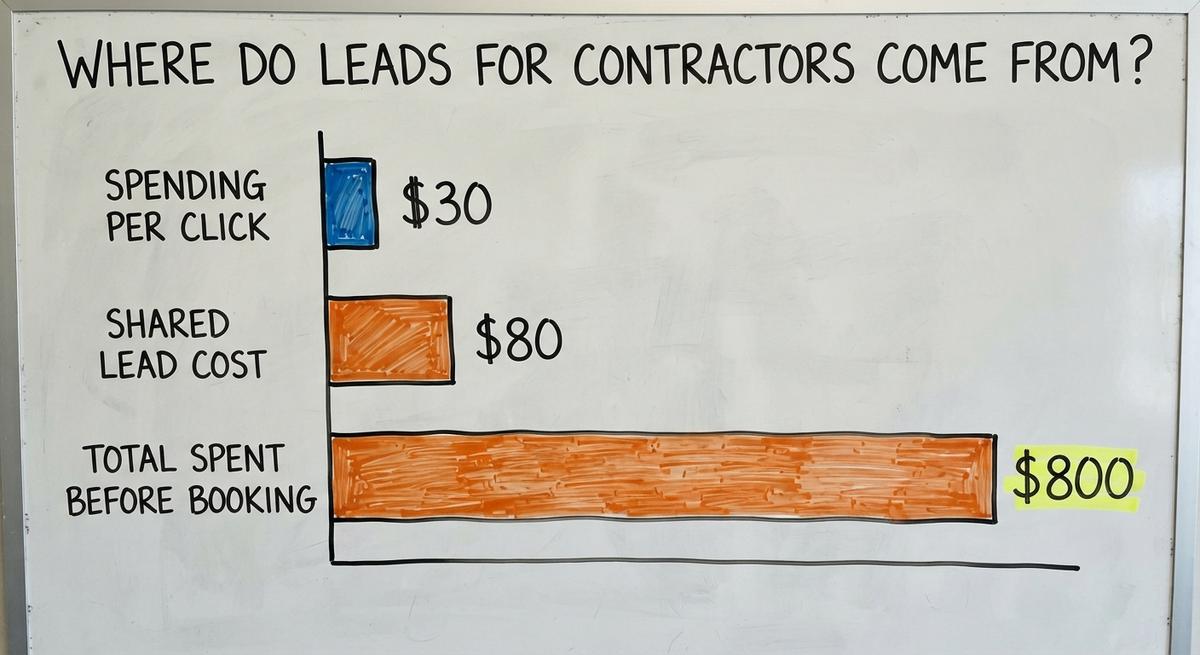
Search clicks add up fast. At $30 per click, 20 clicks cost $600. If those clicks bring 4 calls, each call costs $150.
Google also runs Local Services Ads. There you pay per lead, not per click. The Local Services Ads Help page says you pay only for leads tied to your business and services.
Track paid calls on their own number to see your true cost per job. Our contractor advertising guide compares every paid channel. Our guide to Google Ads for contractors covers setup.
Lead-Selling Sites and Shared Leads
Shared leads are homeowner contact details sold to 3 or 4 rival contractors at once. Speed decides who wins the job.
Buying leads can give a new shop early cash flow. Still, prices run high. Ten shared leads at $80 each cost $800 before you book a single visit.
Some shops pay more for exclusive contractor leads to avoid bidding wars. Even then, you rent someone else's traffic. You do not own the customer relationship.
Shared leads work as a short-term bridge, not a long-term base. If you compare lead apps, see our review of the best app for contractor leads.
Referrals and Word of Mouth
Referral leads are homeowners sent by past customers, neighbors, or local builders. Word of mouth brings high trust. You cannot turn it up on demand, though.
Even a referred homeowner checks your site and Google reviews before calling. A weak online presence can cost a job a neighbor already recommended.
Ask happy customers for honest reviews after every finished job. Strong reviews turn past customers into proof for new leads.
How Do Contractors Get Leads From AI Tools?
AI leads are inquiries from homeowners who ask chat apps who to hire. Those tools read sites and listings. Then they suggest a few local names.
AI traffic is still small next to Google search in 2026. It grows each month. Track visits from AI tools as their own channel.
Clear pages in plain language are easier for AI tools to read and quote. No tool can promise you will show up. Clear answers still give your contractor leads a boost.
Find out where you show up on the map
A free map check for your company. See which towns find you and which call a competitor.
Book a call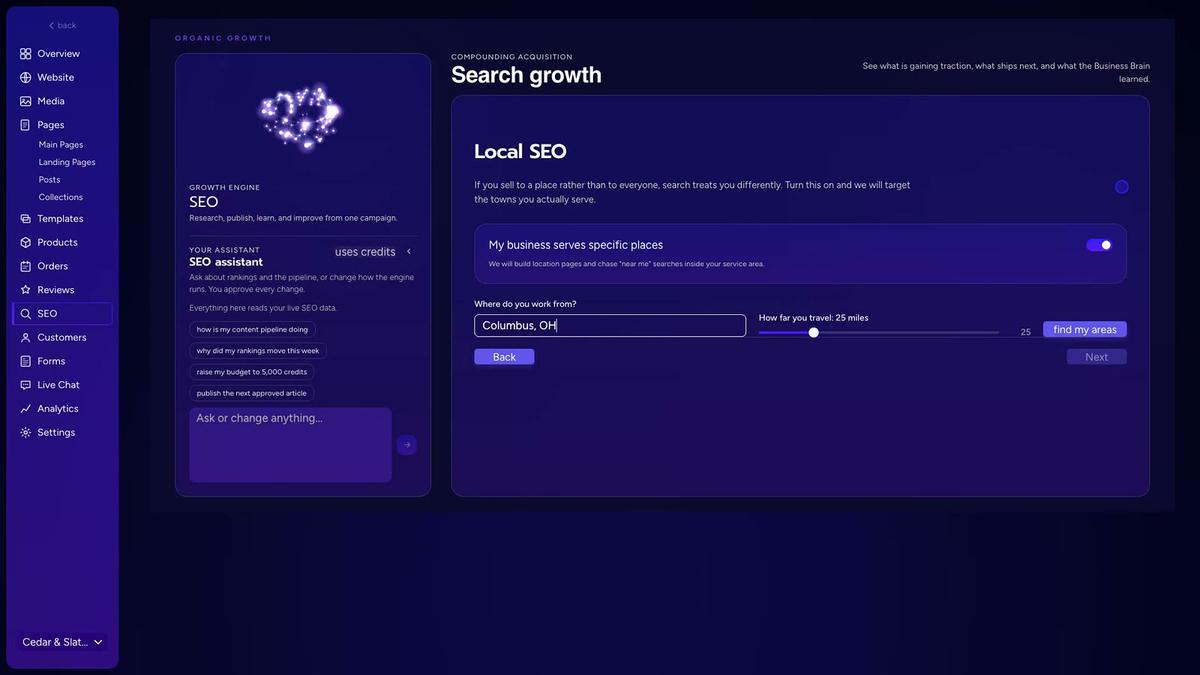
What Makes a Good Contractor Lead?
A good contractor lead is a prospect who fits your trade, area, and job size. Bad leads drain time and payroll.
Say one office worker spends 5 hours a week sorting junk calls at $24 an hour. That costs $6,240 a year. Filtering out wrong-fit callers protects your margins.
Five Traits of a Qualified Lead
Watch for these 5 traits in each of your contractor leads.
- Right service match: The caller asks for work your crews do every week, like roofing or HVAC repair. You can quote it without guessing.
- Inside your service area: The property sits in a town or county your trucks already drive through. No long drive eats the profit.
- Clear project timeline: The homeowner wants the job done soon, not rough prices for next year. Ask when they hope to start.
- Realistic job budget: The project covers your trip charge, materials, and labor. The caller accepts fair pricing without endless haggling.
- Easy phone reach: The person answers callbacks and replies to texts. You can reach them fast to book an estimate.
Signs of a Weak Lead
Weak leads fail on those points. Wrong towns, price shoppers, spam, sales calls, and web bots waste your office staff's day.
Count bot fills and spam calls in their own bucket. Then they never inflate your reports. Clear service details on your site bring buyers who are ready to book.
Why Your Website Decides How Many Leads Turn Into Calls
Your website is the tool that turns visitors into calls and forms within 5 seconds. It decides how many contractor leads you keep. Most homeowners search on a cell phone, often standing next to the problem.
Make the Phone Number Easy to Find
Visitors leave if they must hunt for your number. Put it at the top of every page with tap-to-call links.
Slow pages cost you contractor leads before the screen even loads. A fast site on a simple platform lets you fix a broken button in minutes. Our contractor website design guide covers the layout.
Build Service and Town Pages
Dedicated service and town pages guide searchers to the exact answer and bring better leads. One page per service and one per town lets local search match your business to specific queries.
Every town page needs real, useful details. Copied paragraphs with only the city name swapped do not count. "People-first content means content that's created primarily for people," says Google Search Central.
Avoid Copied City Pages
Copied city pages break Google's rules too, and they bring fewer leads. Google's spam policies call this "doorway abuse" and treat it as spam.
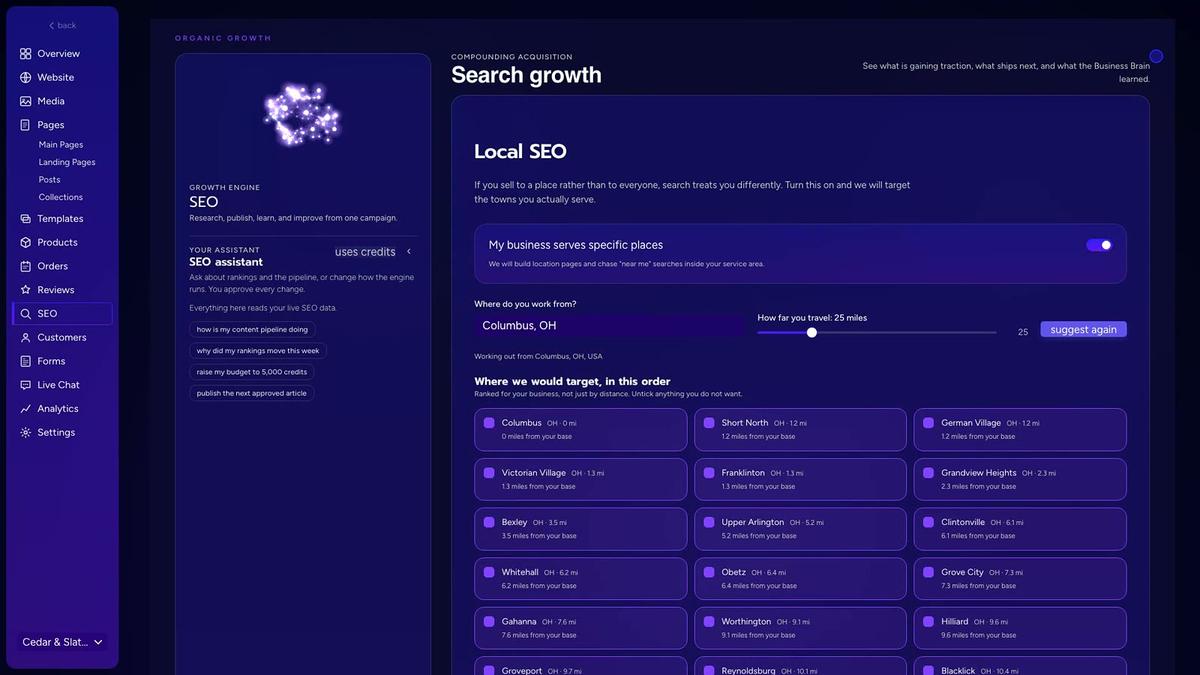
Take a roofing and exteriors company in central Ohio that serves 17 towns. Unique service and town pages across all 17 towns help local buyers find the exact roof or siding service they need.
Useful, fast pages turn local clicks into real phone calls.
How to Check Where You Show on the Map
A grid scan is a map check that tests your local search visibility, the source of many contractor leads. Your Map Pack position changes with where the homeowner stands.
Checking from your own shop gives you a false picture. A grid scan runs the same local search from dozens of points across your area.
What a Grid Scan Shows
One image shows strong green spots near your office and weak red spots 10 miles away. That central Ohio roofing company checks its whole area each month.
The grid shows the towns that need stronger pages or more local reviews to win leads. No company can promise a number one spot on Google Maps.
Regular grid scans give honest proof of where your business really appears. Compare providers of local SEO services for contractors by asking for one. If you do not show at all, read why a business is not showing up on Google.
Results you can check
Past SEO campaigns grew organic traffic 26x in 14 months, and 15x on another. Top Rated Plus on Upwork with 99% job success.
Work for hundreds of small businesses and large clients like New Balance. Before The Software Society, our founders’ agency worked with Planned Parenthood.
Book a callHow Do Your Google Business Profile and Reviews Bring Leads?
Your Google Business Profile is a free listing that brings leads by proving you are open. Complete profiles show up more often and convert more callers.
Complete Your Profile
Fill out your exact services, service towns, real hours, and photos of finished jobs. Complete listings win more map leads. Keep your name, address, and phone number identical across every directory.
BrightLocal studied this at scale. Its Google Business Profile insights study looked at the listings of 45,000 local businesses. The goal was "an in-depth benchmark to help GMB users understand how their results stack up," in BrightLocal's words.
Earn Real Reviews
Reviews drive homeowner trust before any contractor gets the call. "97% of consumers still lean on reviews to guide their purchase decisions," reports BrightLocal's Local Consumer Review Survey.
The same survey found that 47% of consumers skip businesses with fewer than 20 reviews. Another 89% expect owners to reply.
Always follow Google's review policy. It says reviews "must reflect a genuine experience" and bans paid ratings.
Never offer gifts or discounts for reviews. Reply to every customer comment politely. Our guide on how to get more Google reviews has more honest tactics.
How to Track Where Your Leads Come From and Follow Up Fast
Call tracking is a system that shows the channels that pay for themselves. Guessing where calls come from leads to cutting the wrong budget.
Track Every Source
Use separate tracking numbers for Google search, your map listing, and paid ads. Set up web forms that record the source: search, ads, or an AI tool.
Count spam and bot fills apart from real home service leads. Ask every caller how they found you as a simple backup check.
Follow Up Fast
Once a real lead arrives, speed wins the job. Homeowners with a broken furnace or a leaking roof call three shops in 10 minutes.
Missing a call on a $450 repair or an $8,000 roof replacement hands revenue to a rival. Use a clear voicemail greeting and an automatic missed-call text reply.
Fast follow-up plus clean source tracking turns more contractor leads into scheduled estimates.
Who Answers Your Leads
Some states regulate the people who sell home improvement jobs. In California, salespeople need a Home Improvement Salesperson registration. The CSLB application says the contractor must notify CSLB "within 90 days after the date that an HIS registrant ceases to be employed by the contractor."
Check your own state's rules before you hand leads to a sales team.

Should You Buy Leads or Earn Them?
Bought leads are rented calls. Earned leads from SEO for contractors stay yours. Most busy shops use a mix of both.
Bought Leads
When you buy leads or run ads, you rent attention. The day you pause payments, the calls stop. Your cost per lead can jump at any time.
Lead generation is hard for everyone. ClicData reports that "63% of marketers consider lead generation their biggest challenge," across industries.
Earned Leads
Earned leads come from local SEO for contractors, strong service pages, and an active map profile. That work stays with your business year after year.
A January 7, 2025 guide from UK Construction Blog also shares 10 tips to attract quality prospects and keep them as loyal customers.
Ads bring calls in week one. Organic search and map work grow over several months. The timeline depends on local competition, town size, and your current site.
No honest marketer can promise a set rank or a fixed number of contractor leads.
Get a second opinion on your current setup
Already paying for marketing? Get a free second opinion on what works and what wastes money.
Book a callSide-by-Side Comparison
Comparing bought and earned channels side by side helps you pick the right mix.
| Feature | Bought Leads and Ads | Earned Search and Map Leads |
|---|---|---|
| Speed to first call | Starts within days of launch. | Builds steadily over months. |
| Long-term ownership | Calls stop when budget stops. | Assets stay on your website. |
| Lead exclusivity | Shared sites sell to rivals. | Callers contact only your business. |
| Monthly cost pattern | Price per click shifts. | Steady spend on site assets. |
| Best use | Filling a slow week fast. | Building a full schedule. |
Ads for short gaps plus organic pages give your shop short-term and long-term stability. Some owners also start with free leads for contractors before paying for any. Others bid on posted jobs through a contractor bidding website.
Mistakes That Cost Contractors Leads
Five common website mistakes cost contractors leads every year. Fixing them brings more calls without extra ad spend.
Check your business for these 5 common leaks.
- Missing service pages: Offering metal roofing or panel upgrades needs its own page. Without a dedicated page, local searchers cannot find you.
- Wrong listing hours: Outdated phone numbers or closed hours hurt your profile. Ready buyers see the wrong info and call another shop.
- Slow mobile loading: Heavy photos and cluttered menus frustrate cell phone visitors. Slow pages make people hit the back button fast.
- Zero source tracking: Dumping all calls into one bucket hides ad waste. Without clean tracking, you cannot cut the losing campaigns.
- Counting website traffic: Celebrating clicks instead of booked jobs hides your real numbers. Traffic never tells you if marketing pays the bills.
Closing those gaps keeps ready homeowners from slipping away to competitors. Trade owners can find more fixes in our guides to HVAC contractor leads and roofing contractor leads.
What Should You Ask Anyone Who Offers You Contractor Leads?
Five key questions protect your budget before you buy contractor leads. Ask any provider who owns your website, how they track calls, and if leads are shared.
Watch out for anyone who guarantees a number one Google rank or a fixed lead count. No outside company controls Google or homeowner demand.
Questions to Ask a Lead Provider
Ask these 5 questions on your first call with anyone selling contractor leads.
- Lead exclusivity: Are the calls and forms only for my business? Confirm that leads are never shared with other local shops.
- Asset ownership: Who owns the website, domain name, and map listing? Make sure you keep them if you stop working together.
- Source reporting: How will monthly reports split your sources? Demand clear numbers for search calls, map calls, ads, and spam.
- Realistic promises: Do you guarantee a specific search rank or lead count? Any firm promise on rankings is a major red flag.
- Account staffing: Who actually builds the pages and runs the work? Ask if you will talk directly to that person each month.
Honest providers answer plainly and show real call data. Hard questions up front save you from costly contracts.
A Simple Plan to Get Started This Month
Five simple steps give you better tracking and stronger leads for contractors this month. Work through one step each week.
- Check your map listing: Confirm your hours, phone number, services, and town list. Make sure every detail on your Google Business Profile is right.
- Audit your website pages: Make sure every core service has its own page. Check that every target town has a fast, helpful page.
- Set up call tracking: Add tracking numbers and form source tags to your site. Clear tags show the channel behind each incoming call.
- Ask for genuine reviews: Send a direct review link to recent happy customers. Reply politely to every customer comment on your profile.
- Review booked jobs monthly: Compare your marketing spend against paid invoices every month. Never rely on raw clicks or total call counts.
This five-step checklist turns guesswork into a repeatable system for growing your contractor leads. For more ways to fill the schedule, read how to get more jobs as a contractor and our full contractor marketing guide.
Frequently asked questions
How much should contractor leads cost?
Contractor lead costs vary by trade, town, and competition. Compare your cost per booked job, not cost per raw call. A $150 call that books a $9,000 roof replacement beats a cheap $30 shared lead.
Why do some contractor leads never turn into booked jobs?
Many leads fall through due to slow callbacks, wrong service requests, or callers outside your driving area. Price shoppers and missed calls also cut conversion rates. Fast follow-up and clear website pages fix most of those leaks.
Do bots and spam count as leads?
Bots, robocalls, and sales pitches never count as real leads. Always tag and remove spam from your monthly marketing reports. Mixing junk forms with real homeowner inquiries makes your cost per lead look artificially low.
Are leads for contractor businesses better from search or ads?
Both channels serve different goals for a contractor. Paid ads deliver leads within days when trucks sit idle. Organic search and map visibility take months to build, yet they keep working without a fee per click.
Do I need a website if I have a Google listing?
Yes. A contractor website gives homeowners proof of your work and targets specific services and towns. Google also reads your site to understand what you offer. A listing alone leaves your business exposed.
What is a good way to count contractor leads?
Count qualified leads, calls and web forms, by channel. Then track how many become scheduled estimates and paid invoices. The full path shows the marketing dollars that bring real revenue.
Start with a free homepage rebuild
Book a short call. Your new homepage is free to see and yours to keep.
New website plus 100 SEO pages in the first month: $397 a month, cancel anytime
Book a callRelated guides
More on the same work.
- Roofing Contractor Leads
- Free Leads for Contractors
- Best App for Contractor Leads
- HVAC Contractor Leads
- Exclusive Contractor Leads
- Contractor Lead Generation
- Concrete Contractor SEO
- General Contractor SEO
- Roofer Contractor Marketing
- How to Get More Jobs as a Contractor
- Website General Contractor
- Contractor Website Development
- Facebook Ads for Contractors
- Contractor SEO Company
- SEO for Contractors
- Contractor Marketing
- Local SEO Services for HVAC Contractors
- Electrical Contractor SEO
- SEO for Concrete Contractors
- Digital Marketing for Roofing Contractors
- Google Ads for Contractors
- Contractor SEO Services
- Contractor SEO Marketing
- Independent Marketing Contractor