



Contractor Bidding Website
A contractor bidding website is an online marketplace where owners post jobs and trades compete to win them. As of April 2026, roofers, painters, and HVAC owners use 2 main types to find work.
Lead marketplaces send home repair requests. Bid boards list larger commercial or public projects. Both fill open weeks fast, with no wait for search rankings. A bid is a priced offer to do a job. On these bidding websites, you pay for the chance to make one.
Book a callHow a Contractor Bidding Website Works
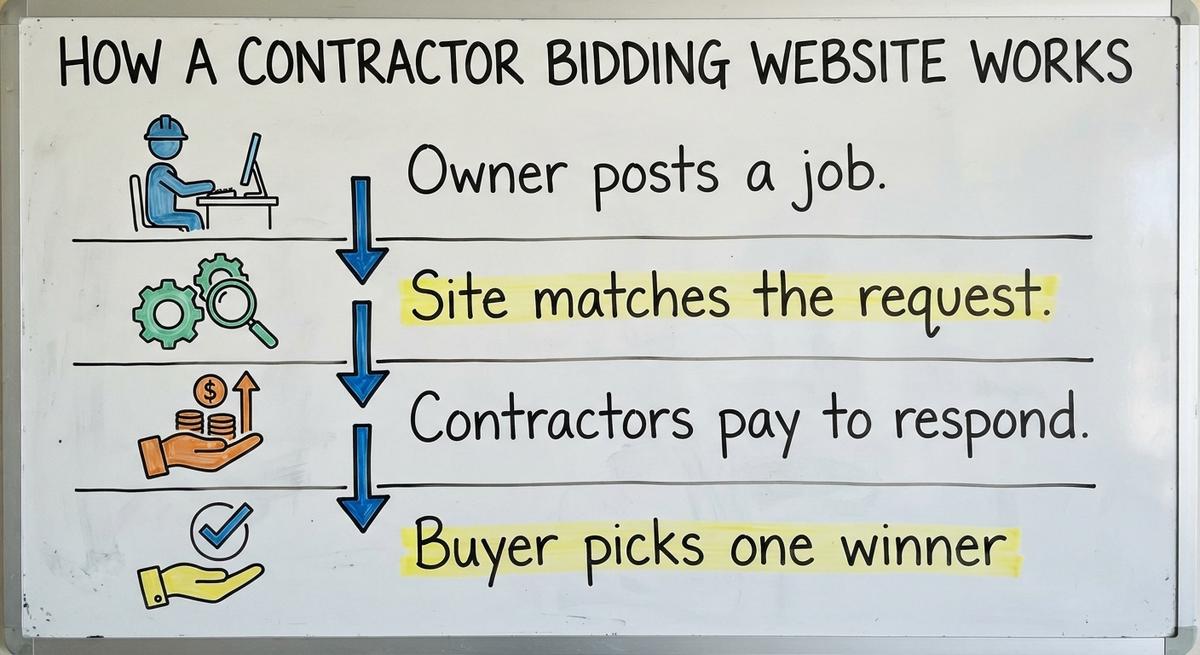
A contractor bidding website sits between you and buyers, much like other contractor lead generation channels. It collects project details, matches each request to local trades, and charges contractors to reply.
- Owner posts a job: A homeowner or project manager enters the repair type, ZIP code, and timeline.
- Site matches the request: The software checks trade categories and service areas.
- Contractors pay to respond: Pros buy the contact details or pay a fee to quote.
- Buyer picks one winner: The owner compares prices, reviews, and timing, then hires one crew.
What Is the Difference Between a Lead Marketplace and a Bid Board?
A lead marketplace is a site that sells home repair requests. Homeowners use these sites for quick fixes like roof leaks, broken furnaces, or storm damage.
A bid board is a list of commercial builds, public projects, and subcontract packages. General contractors post plans and invite trades to send formal estimates. ConstructConnect builds its search around trade, scope, and location.
Home repair crews fit marketplaces. Commercial firms fit bid boards. Bidclerk promotes subs to general contractors bidding out private projects.
See your new homepage before you pay anything
Your homepage, rebuilt free. You see it before you pay anything.
Past SEO campaigns grew organic traffic 26x in 14 months.
New website: $50 a month, built and hosted, cancel anytime
Book a call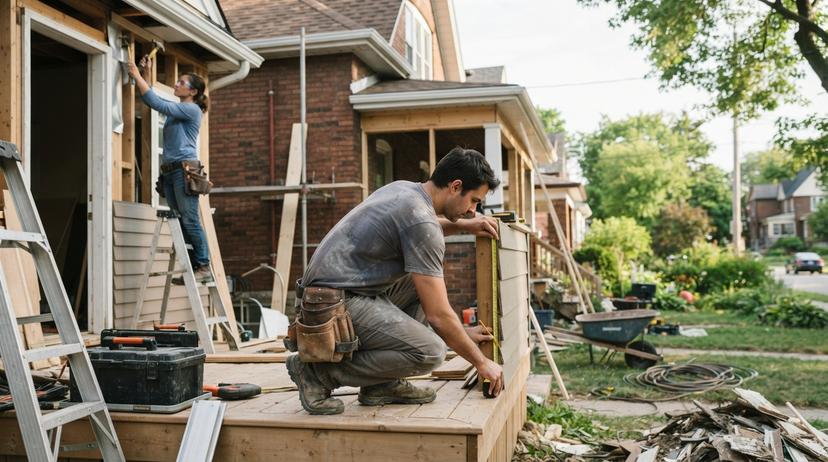
Bidding Sites vs. Other Ways to Get Jobs
Every lead channel trades money, time, and control.
The table compares 6 common ways contractors find work.
| Lead Source | Who Owns the Customer | How You Pay | How Fast |
|---|---|---|---|
| Lead marketplace | The platform. | Per lead, shared with 3 to 5 rivals. | Days. |
| Bid board | The general contractor. | Subscription or fee. | Days. |
| Paid search ads | You own the click. | Per click or lead. | Days. |
| Google Business Profile | You. | Free to list. | Months. |
| Your own website | You. | Build and SEO cost. | Months. |
| Referrals | You. | Zero ad spend. | Years. |
Rented channels bring fast calls today. Owned channels like Google Ads for contractors and local pages build steady work over time.
How Contractors Pay on a Contractor Bidding Website
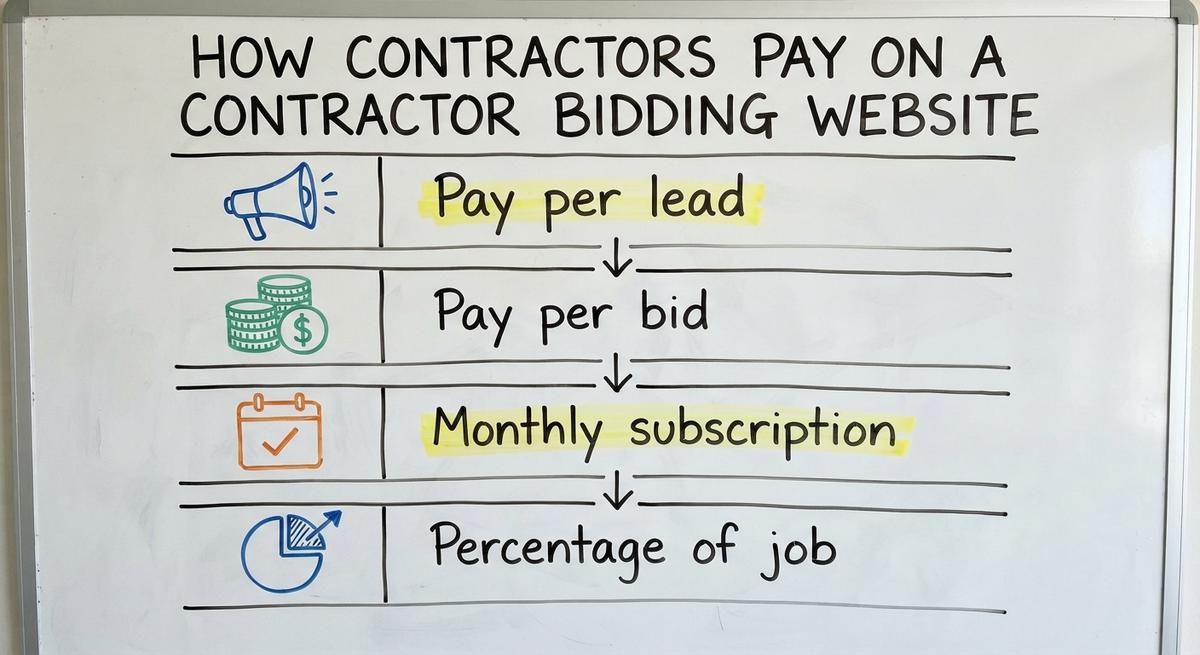
Bidding platforms use 4 main payment models.
Ask what rule applies before you enter a card.
- Pay per lead: You pay a flat fee each time a homeowner shares contact details.
- Pay per bid: You pay a smaller fee just to send an estimate.
- Monthly subscription: You pay a fixed rate for access and project alerts.
- Percentage of job: You pay the site a cut of the final invoice.
A paid lead is not a booked job. Confirm the fee structure before signing.
Are Shared Leads Worth the Real Cost?
Say 1 roofing lead costs $40. You buy 10 for $400 and book 2 jobs. Your true cost per booked job is $200.
A shared lead is a request sold to several crews at once.
It costs more than the sticker price.
Run that math on your HVAC contractor leads and roofing contractor leads before raising your budget.

Find out where you show up on the map
A free map check for your company. See which towns find you and which call a competitor.
Book a callPros and Cons of Contractor Bidding Sites
Bidding sites bring quick volume at a price.
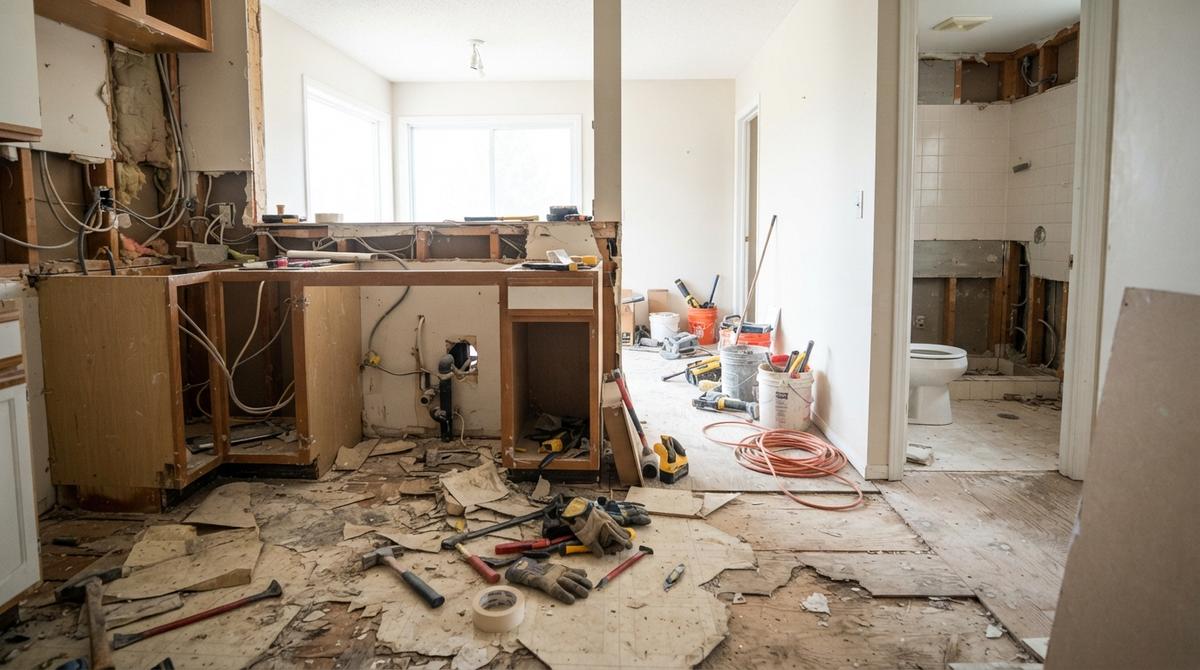
You gain fast access to active buyers.
- Fast calendar fills: New crews and slow seasons get requests right away.
- High buyer intent: Requests come from people who need help now.
- No website needed: Trades can quote work before building an online presence.
What Are the Downsides?
The catch is control. The platform owns the customer relationship.
- Heavy price pressure: Competing bids push quotes toward thin margins.
- Rented traffic only: Leads stop the moment you pause your budget.
Weigh volume against margins.
Who Should Use a Contractor Bidding Website?
Crews with open schedules gain the most from bid sites.
Teams that answer fast and quote clearly win enough jobs to cover fees.
Commercial subcontractors also gain from bid boards with local plans. Small crews with thin margins must stay careful.
Match your sales speed and margins to the site. Other ways to get more jobs as a contractor cost less.
How to Pick a Contractor Bidding Website
Smart owners test a new platform with small budgets.
Check 4 key rules first.
- Verify trade and town coverage: Confirm steady requests in your exact ZIP codes.
- Read lead-sharing limits: Check how many contractors get each request.
- Check bad-lead refund rules: Look for credit on fake numbers, wrong trades, or duplicates.
- Start with a small test: Set a $200 cap to measure real booked jobs first.
Testing small protects your cash flow. Compare paid sites with free leads for contractors before you commit.
What Questions Should You Ask Before You Join?
Four clear questions protect your budget.
Ask sales reps for written answers.
- How many contractors get each lead? Fewer rivals per request give you a better shot.
- Can I dispute a fake lead? Clear refund terms stop you paying for dead numbers.
- Can I cancel anytime? Month-to-month terms keep you out of long contracts.
- Who owns customer reviews? Your business should keep contact info and future referrals.
The guide to the best app for contractor leads adds more checks.
How to Write a Bid That Wins
Fast, clear quotes win more home service leads.
What Should Every Bid Include?
Homeowners pick contractors who talk plainly and back up every claim with proof.
- Reply within minutes: Calling first puts your estimate at the top of the pile.
- State scope and price range: Explain what the repair includes. Give an honest ballpark.
- Share real job photos: Pictures of past roofs or units build instant trust.
- Define the next step: Tell the homeowner how to book an inspection or lock a date.
Honest details beat vague promises. General contractors expect the same on a general contractor website.
Results you can check
Past SEO campaigns grew organic traffic 26x in 14 months, and 15x on another. Top Rated Plus on Upwork with 99% job success.
Work for hundreds of small businesses and large clients like New Balance. Before The Software Society, our founders’ agency worked with Planned Parenthood.
Book a callHow to Track Whether a Bidding Site Pays Off
Tracking cost per booked job beats guessing.

Log every call, form, lead, quote, and booked job by its source.
Compare each bidding website by what a closed job costs, not by lead price. "Pay only for leads related to your business and the services you offer," says Google Local Services Ads Help.
A spreadsheet shows the channels that make a profit. Drop any source that burns cash without booking work.
What Channels Should You Track Every Month?
Four channels show where every dollar goes. Put all your numbers in one simple monthly report.
- Organic search calls: Homeowners who click your website from regular results.
- Map Pack calls: Phone taps from your Google Business Profile listing.
- Paid ads and bid sites: Separate ad clicks from marketplace leads.
- AI tool visits: Traffic from ChatGPT, Perplexity, or Gemini in 2026, as its own channel.
One report removes guesswork from your contractor marketing budget.
Why Do Owners Want Leads They Own?
Rented leads stop the day your budget stops.
Paid platforms keep you paying just to stay visible.
Search and map visibility build equity that belongs to your company. Mixing contractor bidding sites with owned web assets gives you a safety net for slow seasons.
Owned leads lower your costs over time. Exclusive contractor leads sit between the two.
How Do Homeowners Find Contractors on Google?
Google ranks local results on 3 signals. "Local results are mainly based on relevance, distance, and popularity," says Google Business Profile Help.
Relevance means matching the searched trade.
Distance is how close your shop sits to the searcher. Popularity reflects your reputation and review count.
Homeowners search their trade plus their town. They check the Map Pack first, then a contractor website.
"97% of consumers still lean on reviews to guide their purchase decisions," per BrightLocal's 2025 survey. "Reviews and other user contributions to Google Maps must reflect a genuine experience," warns Google's review policy.
Building Your Own Website and Local Pages
Your own site turns searches into direct calls. Good local SEO for contractors starts with clean pages built for real buyers.
"People-first content means content that's created primarily for people... " notes Google Search Central.
Why Do Copied Town Pages Fail?
Copies fail. "Doorway abuse is when sites or pages are created to rank for specific, similar search queries," Google's spam policies warn.
Every trade needs a page for each service and town. Pages must load fast, with tap-to-call numbers and short forms. The websites for contractors checklist covers the rest.
What Do Town Pages and Map Scans Look Like in Practice?
One central Ohio roofer built pages for 17 towns. The roofing and exteriors contractor created service and town pages across its whole area.
A Google Maps grid scan is a monthly map check. It shows where the business appears across those 17 towns.
Steady local visibility gives the crew direct calls with no fee per lead.
Get a second opinion on your current setup
Already paying for marketing? Get a free second opinion on what works and what wastes money.
Book a callHow to Mix a Contractor Bidding Website With Local SEO
Put part of your profits into SEO for contractors and your map profile each month. Review your booked-job numbers every 30 days. Shift money toward your cheapest winning channel.
A smart mix fills today and builds tomorrow. Larger firms also use networks like ConstructionMarketData to meet architects and general contractors early. Use contractor leads from bid boards to keep trucks busy now.
Balance protects your business all year. The contractor marketing tips guide shows how to split budgets.
What Mistakes Do Owners Make on Bidding Sites?
Four common mistakes drain contractor ad budgets fast.
- Chasing the lowest price: Cutting rates to beat 4 other bids leaves zero profit.
- Replying too late: Waiting hours hands the homeowner to a faster rival.
- Ignoring booked-job math: Cheap leads waste money if none of them close.
- Relying on one source: Putting 100% of your budget into one site leaves you exposed.

Key Takeaways
Own your long-term traffic. Rent short-term leads. A contractor bidding website fills open weeks fast.
- Judge by booked jobs: Divide total spend by closed jobs, not raw lead counts.
- Test with small caps: Start small and track every call and form.
- Keep a balanced mix: Pair fast bid-site volume with local pages you own.
Start 1 tracking sheet today. Log your next 10 leads by source.
Frequently asked questions
Are bidding sites worth it for small contractors?
Yes, small contractors benefit when schedules have open gaps and crews answer leads within minutes. Track your close rate closely so lead fees never eat your job profits.
Do I need a website if I use a bidding platform?
Yes. Homeowners look up your company name on Google before hiring you. A fast, clean contractor website proves you are real and captures direct calls with no extra lead fees.
Can I use both bid sites and SEO together?
Yes. Pairing both channels works well for growing trades. Bid sites bring fast work during slow weeks. Search and map pages build free, steady calls over several months.
How fast should I reply to a contractor lead?
Call or message the homeowner within 5 minutes of receiving the alert. Fast replies reach buyers before competing contractors even open the app, raising your booking rate.
Start with a free homepage rebuild
Book a short call. Your new homepage is free to see and yours to keep.
New website: $50 a month, built and hosted, cancel anytime
Book a callRelated guides
More on the same work.
- Website General Contractor
- Contractor Website Development
- Contractor Website Design Company
- Best Contractor Websites
- Painting Contractor Website Design
- Electrical Contractor Website
- Paint Contractor Website
- Contractor Website Builder
- General Contractor Website
- Roofing Contractor Website
- Contractor Website Design
- Roofing Contractor Website Design
- Website for Electrical Contractor
- Best General Contractor Website
- Website Builder Contractor
- Websites for Contractor
- Painting Contractor Website
- Concrete Contractor SEO
- General Contractor SEO
- Roofer Contractor Marketing
- How to Get More Jobs as a Contractor
- Roofing Contractor Leads
- Free Leads for Contractors
- Facebook Ads for Contractors