

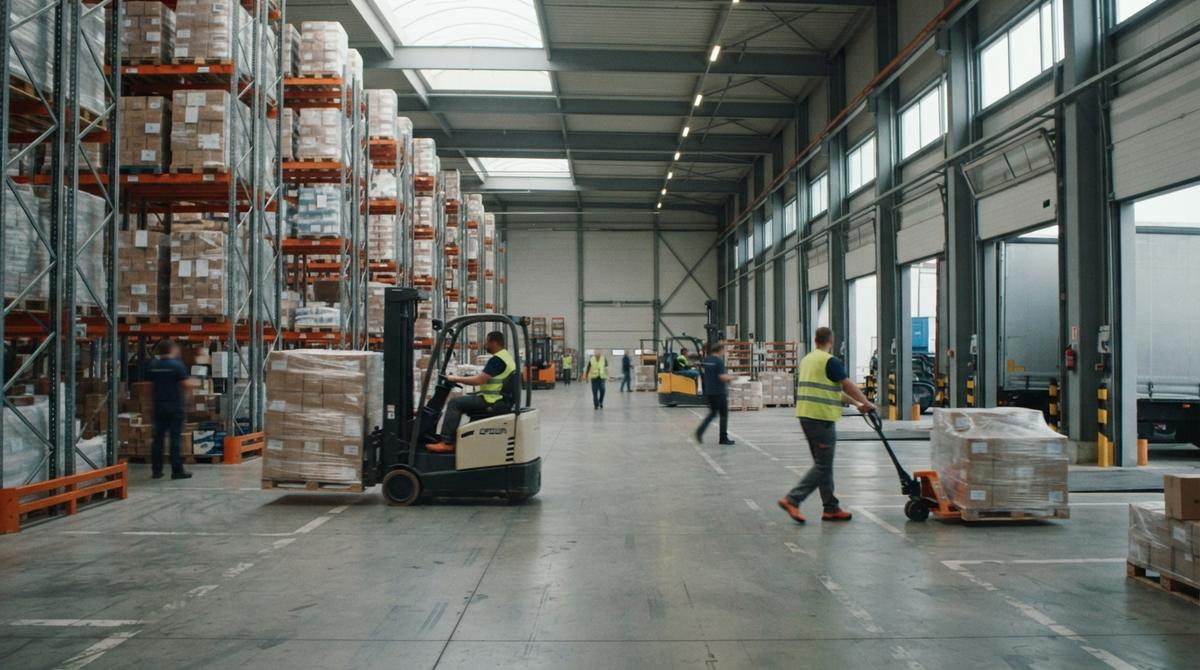
Dealer and Distributor
Learn the difference between a dealer and a distributor, how each fits the supply chain, and how to cut manual work without leaving QuickBooks.
Book a callDealer and Distributor: The Short Answer
A distributor buys in bulk from makers and sells to dealers and other businesses. A dealer buys from a distributor or a maker and sells to the end customer. Both sit in the supply chain, at different steps. In some trades the two words overlap, so check how a firm really buys and sells.
We build it for your operation, and the first look is free
If you would rather not compare products, describe how your operation already works and we build the system around it.
Reviewed November 2026.
No build cost. You see it running on your own process first, and the monthly subscription starts only once it is live.
Book a callWhat Is a Distributor and What Is a Dealer?
The two roles differ by who they buy from and who they sell to. Each has a clear job.
What Is a Distributor?
The distributor definition is simple. A distributor buys large lots from makers, stores them in a warehouse, and sells smaller lots on. Buyers are dealers, retailers, and other firms. Many handle shipping, returns, and credit terms too. Stock has a tax side. The IRS says in Publication 538 that "To figure taxable income, you must value your inventory at the beginning and end of each tax year."
What Is a Dealer?
A dealer is a business that sells directly to the final buyer. That buyer is often a contractor or another business. The dealer definition also covers firms that hold small stock or order as needed. Many dealers add service, installation, or advice. A brand can authorize a dealer to sell its line. The dealer owns the customer relationship.
Dealer vs Distributor: Key Differences
The difference between dealer and distributor shows up in five places. The table lays them out in plain words.
| Topic | Distributor | Dealer |
|---|---|---|
| Buys from | Makers | Distributors or makers |
| Sells to | Dealers and businesses | End customers |
| Order size | Large | Small to mid |
| Stock | Deep, in a warehouse | Lean, close to need |
| Customer contact | Account-level | Hands-on, with service |
A distributor wins on volume. A dealer wins on closeness to the buyer.
Where Each Sits in the Supply Chain
The usual flow runs from maker to distributor to dealer to customer. Real firms skip steps. A maker can sell direct to a large dealer. The middle steps exist for 3 reasons: storage, credit, and variety. The NIST Manufacturing Extension Partnership offers vendor-neutral guidance on supply chain and stock process. Wholesale distribution fills the gap between makers and buyers.
Can One Company Be Both a Dealer and a Distributor?
Yes, one company can be both. Many small firms sell wholesale to some customers and direct to others. That needs two price lists and two sets of rules. Tracking gets messy fast. A business with both roles must know which price and which terms apply to each order. Search for "wholesale vs distributor" and you will find the same overlap.
Not sure this is the right shape for your operation
Describe how the work runs today. We map it on a call and show you what it would look like built around that, before you spend anything.
Book a callHow Dealer and Distributor Agreements and Pricing Work
An agreement sets the rules between a distributor and a dealer. Pricing sets the money. Both need care.
What Does a Dealer and Distributor Agreement Cover?
A dealer and distributor agreement covers territory, pricing tiers, and minimum orders. Territory sets the area where the dealer may sell the line. Pricing tiers set what the dealer pays at each volume level. Minimum orders set the smallest buy the distributor will accept. The agreement also says if terms are exclusive or non-exclusive. Exclusive means no other dealer sells the line in that area. Non-exclusive means the distributor may name other dealers in the same area. Read each of these points closely before you sign. Get a lawyer to review any contract.
How Does Dealer Pricing Work?
Dealer pricing uses tiers, volume breaks, and special deals. Margin stacks at each step. The maker adds a margin. The distributor adds one. The dealer adds the last. So who makes more? The dealer often keeps a higher percent per sale. The distributor makes more in total through volume. Price lists in spreadsheets drift out of date, and old prices cost real money.
What Each Side Needs From the Other

What Does a Distributor Need From Its Dealers?
A distributor needs 3 things from its dealers: on-time payment, clear orders, and honest reports. On-time payment keeps cash moving back to the distributor. Clear orders cut errors and delays at the warehouse. Honest reports let the distributor see what is selling. Dealers should share sales numbers and forecasts. They should handle returns and warranty claims in good faith. Those habits let the distributor plan stock and keep credit open.
What Does a Dealer Need From Its Distributor?
A dealer needs stock that is truly on the shelf. If the system shows goods that are not there, the dealer promises something it cannot deliver. Shipping must be fast and correct. Terms must be fair. Order status must be clear. A dealer who cannot tell a customer when goods arrive loses the sale. Reliable business distributors win loyal dealers.
Choosing Between Being a Dealer and Being a Distributor
Choosing between dealer and distributor is a business choice, and 3 things drive it. First, cash: a distributor needs money for inventory and warehouse space. Second, people: a distributor needs staff and trucks for delivery. Third, customers: a dealer keeps close ties and higher margin per sale, while a distributor chases volume. A small firm with little cash fits the dealer role. A firm with space, drivers, and credit can grow into distribution.
The comparison is easier when one option is built for you
Off-the-shelf means fitting your process to the software. We do it the other way round, and the first look costs nothing.
Book a callCommon Problems and the Tools That Fix Them
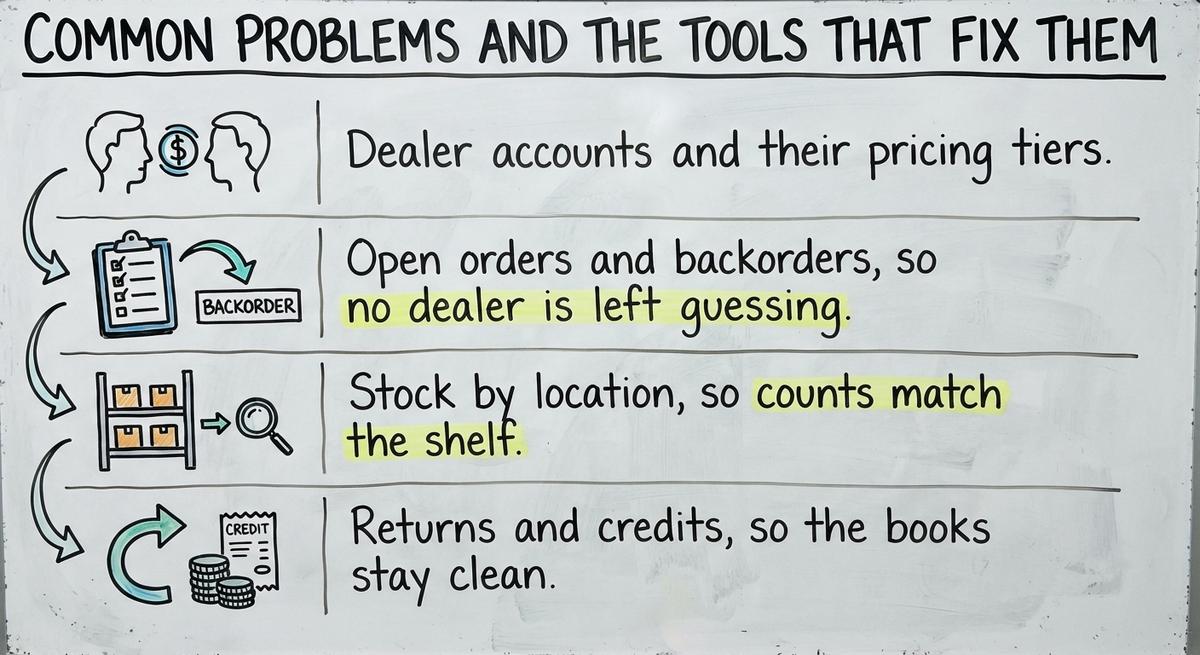
Common problems hit both roles. Stock counts miss the shelf. Orders arrive by phone, email, and paper. Quotes run slow, and follow-ups slip. Customer pricing lives in someone's head. Each is a manual step, and each costs time.

Here is the math. Say 3 people spend 6 hours a week retyping orders at $22 an hour. That is $20,592 a year. The Bureau of Labor Statistics tracks pay for inventory and shipping clerks, so check your own local rate.
How Do Accounting Software and Spreadsheets Hold Up?
Your accounting software is good for the books. Spreadsheets and printed sheets fill the gaps. The cracks show as dealer and customer counts grow. Files split, copies clash, and no one trusts the stock number.
Track these in one place:
- Dealer accounts and their pricing tiers, so each order gets the right price.
- Open orders and backorders, so no dealer is left guessing.
- Stock by location, so counts match the shelf.
- Returns and credits, so the books stay clean.
A short checklist beats a long report.
Do You Need a Big ERP?
No, a firm with 5 to 100 staff rarely needs a big ERP. That is a large system that runs every part of a company. Rollouts run long and cost a lot. A smaller tool built around your current process can be enough. The Census Bureau reports monthly on wholesale sales and inventories, and small firms sit in that data too.
Custom Software Built Around How You Work
Wholesale distributor software should fit your process, not force a new one. Our local Columbus, Ohio team builds the software, the website, and the search presence. You keep your accounting software where it helps. We replace only the manual steps, such as order entry, dealer pricing, and stock sheets. No forced move to a new system.

An Illustrative Example
The case below is an example, not a client story. A distributor gets dealer orders by email. Staff retype each one. A shared order screen with dealer pricing ends the retyping. Your accounting software still gets the final numbers. Among distributor examples, this is the common small-firm pattern. Orders go in once, and prices come out right.
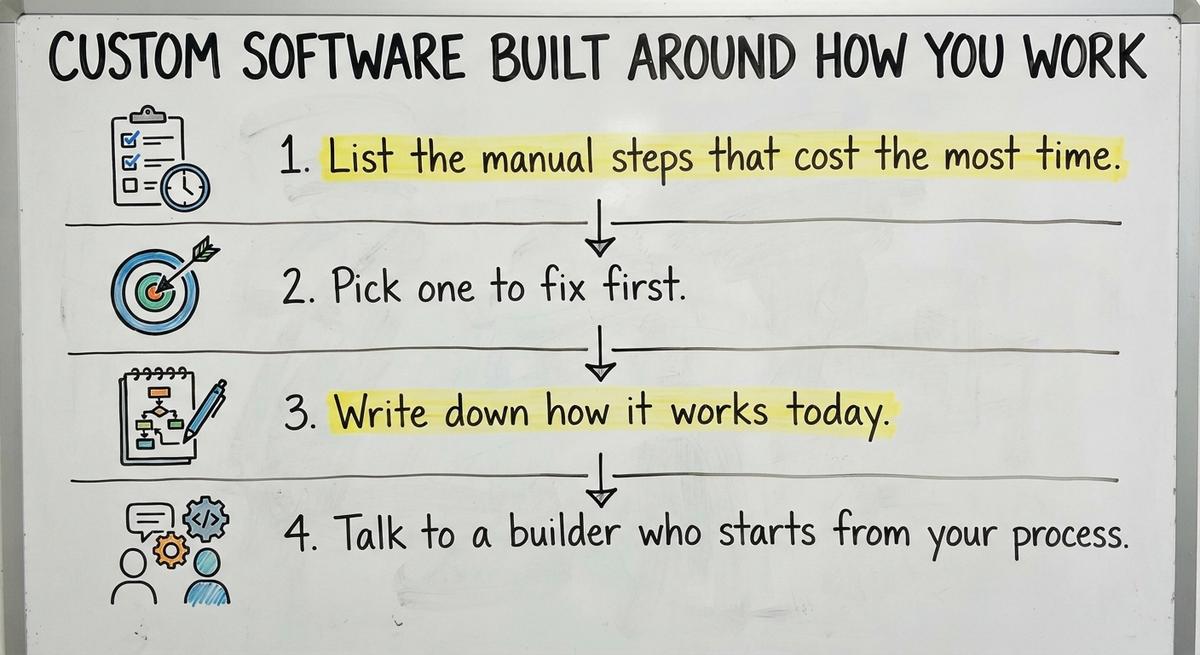
Where to Start
- List the manual steps that cost the most time.
- Pick one to fix first.
- Write down how it works today.
- Talk to a builder who starts from your process.
One fixed step shows the gain fast. You can see the time saved before you take on a second step. Book a call with our team to review yours.
Frequently asked questions
What is the difference between a dealer and a distributor?
A distributor buys in bulk from makers and sells to dealers and businesses. A dealer sells to the end customer. They sit at different steps in the supply chain.
Does a dealer buy from a distributor?
Yes. Most dealers buy from a distributor. Some large dealers buy direct from the maker.
What should a small distributor track about its dealers?
Track dealer accounts, pricing tiers, open orders, backorders, stock by location, and returns. Keep them in one place.
Can one company be both a dealer and a distributor?
Yes. Many small firms sell wholesale to some buyers and direct to others. They need two price lists and clear rules.
Is a wholesaler the same as a distributor?
Close, but not always. Both sell in bulk to businesses. A distributor often holds ties to certain brands.
Who earns the higher margin?
The dealer earns more per sale. The distributor earns more in total through volume.
How can a business keep its accounting software and still cut manual work?
Keep your accounting software for the books. Replace only manual steps such as order entry, dealer pricing, and stock sheets. Final numbers still flow into your accounting software.
Start with a free first look
A 30 minute call, your operation mapped, and a clear picture of what we would build. No obligation and nothing to install.
Book a callRelated guides
More on the same work.
Guides
- Dealer Distribution
- Business Distributors
- Distributor Examples
- Distributor Rate
- Company Distributor
- Distribution Management Software
- Cloud-based Purchase Order System
- Distribution Inventory Management