

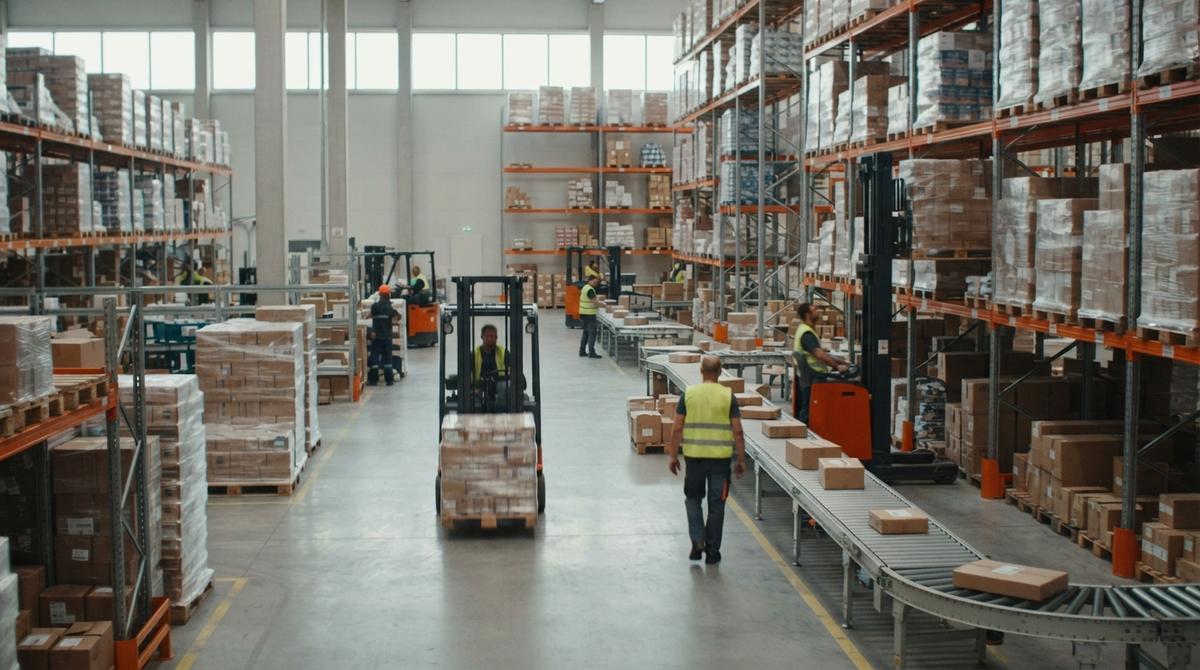
Wholesale Distribution Definition
Wholesale distribution is buying goods in bulk from makers and selling them in smaller lots to businesses that resell or use them. The buyers are businesses, not shoppers. It also shows where the records pile up.
Book a callWhat Is the Wholesale Distribution Definition?
The wholesale distribution definition has 3 parts. A distributor buys in bulk. The distributor holds the goods. Then the distributor sells to other businesses.
Reviewed November 2026.
Those buyers are stores, contractors, restaurants, shops and repair crews. A shopper walking in off the street is not the target. That is the line between wholesale and retail.
A wholesale distributor is the company that does this work. It sits in the supply chain, the path goods take from maker to user. The distributor's job is to make that path shorter for everyone else.
We build it for your operation, and the first look is free
If you would rather not compare products, describe how your operation already works and we build the system around it.
No build cost. You see it running on your own process first, and the monthly subscription starts only once it is live.
Book a callWhat Does a Wholesale Distributor Do?
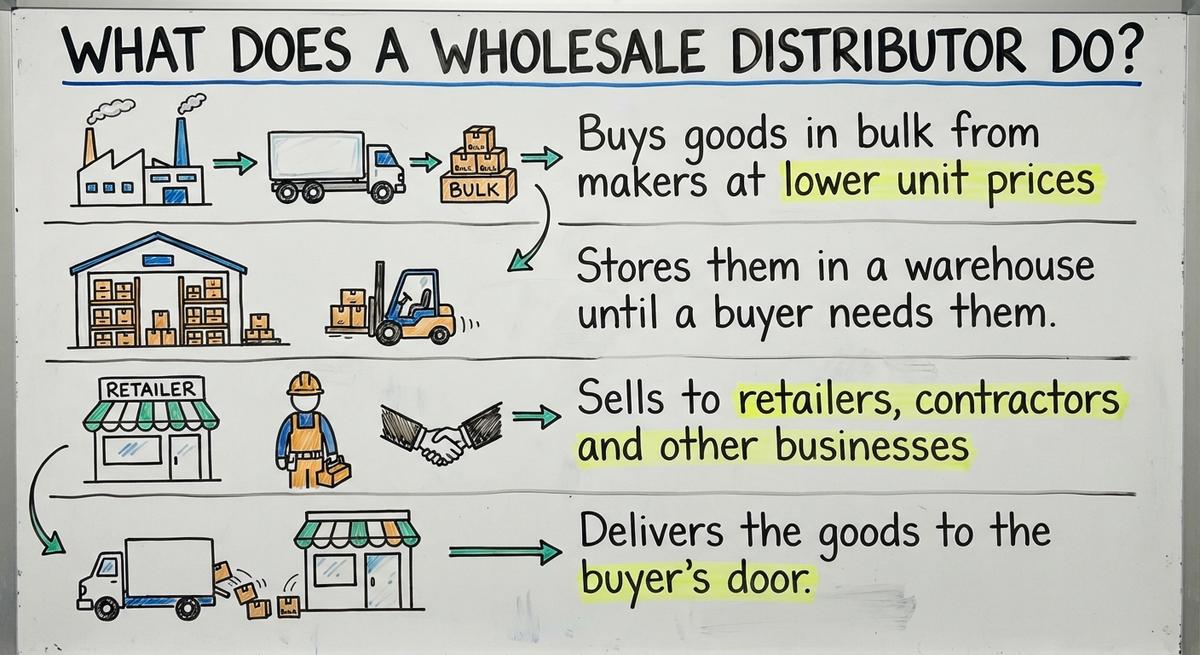
A wholesale distributor is the middle step between the maker and the seller. The work has 4 parts:
- Buys goods in bulk from makers at lower unit prices.
- Stores them in a warehouse until a buyer needs them.
- Sells to retailers, contractors and other businesses.
- Delivers the goods to the buyer's door.
Many add services too. These include credit terms, product advice and fast restocking.
The IRS ties this work to money. IRS Publication 538 says, "To figure taxable income, you must value your inventory at the beginning and end of each tax year." Stock on your shelves is a legal count, not just a habit.
How Does Wholesale Distribution Work Step by Step?
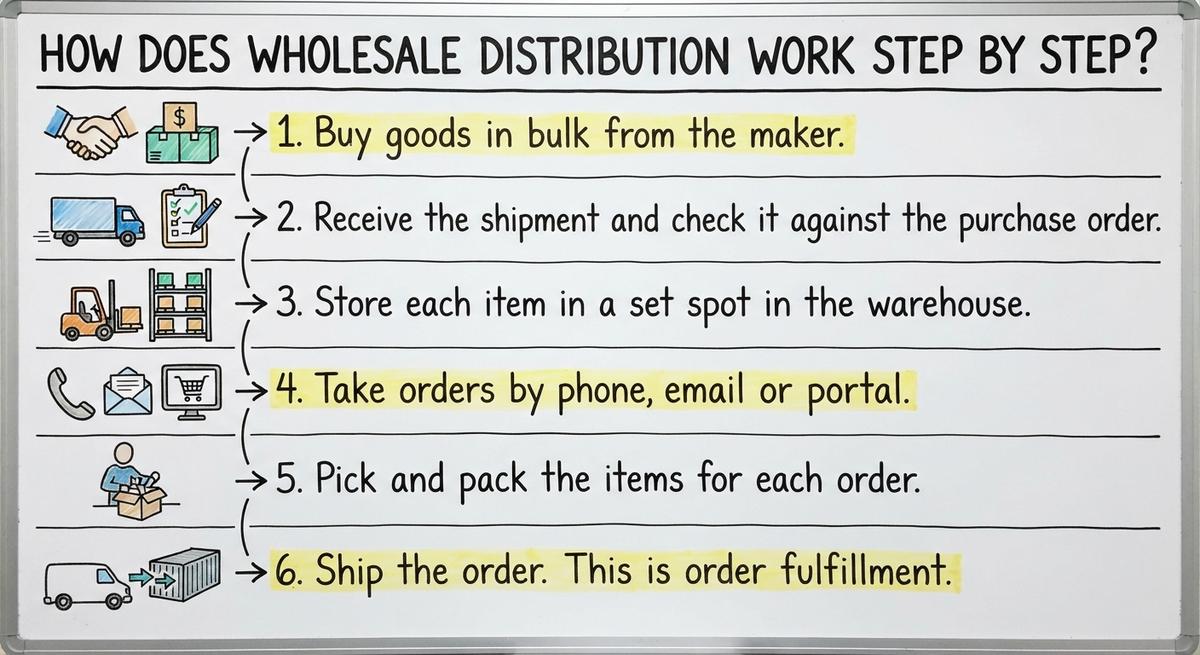
Wholesale distribution works in 8 steps, from buying stock to collecting payment. Here is the flow:
- Buy goods in bulk from the maker.
- Receive the shipment and check it against the buy order.
- Store each item in a set spot in the warehouse.
- Take orders by phone, email or portal.
- Pick and pack the items for each order.
- Ship the order. This is order fulfillment.
- Send the invoice.
- Collect payment.
Each step makes a record. Someone must keep that record right. A wrong count at step 2 becomes a wrong promise at step 4.
Wholesale vs. Retail: What Is the Difference?
In wholesale vs retail, the difference is who buys and how much. Wholesale sells to businesses in larger lots at lower unit prices. Retail sells to the end user, one item at a time.
Three things set them apart:
- Order size: a wholesale buyer orders a case or a pallet.
- Pricing tiers: the more a buyer orders, the lower the unit price.
- Account terms: buyers often pay on credit, such as net 30, instead of at the counter.
Tiers and terms add records that a checkout line never needs.
Not sure this is the right shape for your operation
Describe how the work runs today. We map it on a call and show you what it would look like built around that, before you spend anything.
Book a call
Wholesale Distributor vs. Wholesaler vs. Manufacturer
A manufacturer makes goods. A wholesaler and a distributor both buy goods and resell them. The words overlap in daily talk, and many owners use them loosely.
One gap does exist. A distributor has closer ties to certain makers and may carry set brands. A wholesaler often sells whatever mix of products moves. Readers who want more on this can look up wholesale vs distributor.
The label matters less than the job. Both buy, hold and resell.
Types of Wholesale Distribution
Wholesale distribution comes in 3 main types. Each fits a different kind of buyer.
- Broadline: carries a wide range, such as a food distributor that stocks hundreds of items for restaurants.
- Specialty: carries a narrow range in depth, such as flooring or medical supplies.
- Industrial or trade supply: sells building supplies and parts to contractors and repair shops.
Fulfillment centers and warehouses do similar work for other companies. They store, pack and ship goods the client still owns.
The type sets how many items you stock and how fast they must move.
What Does a Wholesale Distribution Business Need to Track?
A distribution business needs to track 7 things: stock levels, stock locations, buy orders, customer orders, pricing, deliveries and payments. That list is the core of inventory control.
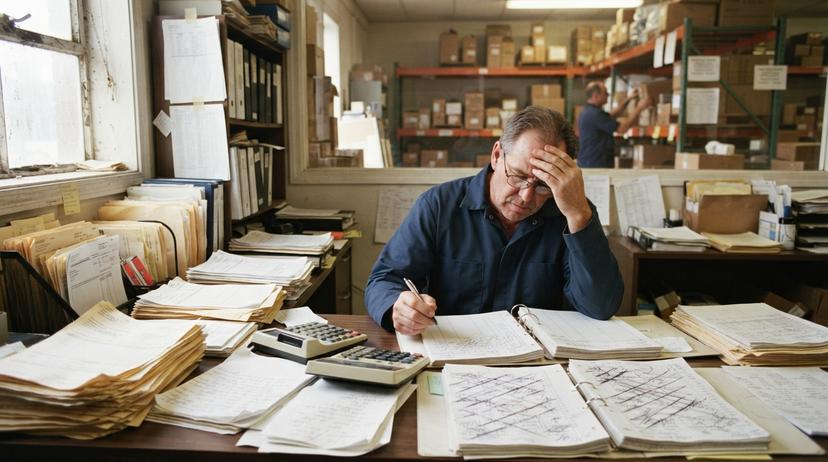
Many small distributors run this on accounting software plus spreadsheets, desktop databases, printed sheets and email. That works at first. One person knows where everything lives.
Then volume grows. Staff type the same order into 2 or 3 places. Counts drift apart. Say 3 people lose 6 hours a week to retyping at $22 an hour. That is $20,592 a year. The Census Bureau tracks wholesale inventories and sales at the national level, so stock is a big number for the whole trade.
Gaps and double entry grow faster than sales do.

How Software Fits Into Wholesale Distribution
Not every business needs a big ERP, which is one large system for the whole company. Custom software can be built around how your operation already works. Keep your accounting software where it helps, such as the books. Replace only the manual parts.
Software ties the steps together so staff stop retyping the same data. One order entry can feed the pick list, the invoice and the stock count.
The Software Society is a local Columbus, Ohio team. The same team builds your website and search presence. The NIST Manufacturing Extension Partnership offers vendor-neutral guidance on supply chain and inventory process.
To see where your manual work sits, ask us for a short review of your steps.
Frequently asked questions
Is wholesale distribution the same as retail?
No. Wholesale distribution sells in larger lots to businesses, while retail sells single items to the end user.
Who are the customers of a wholesale distributor?
The customers are businesses such as stores, contractors, restaurants and repair shops. They resell the goods or use them in their work.
Can a small company be a wholesale distributor?
Yes. A company with 5 staff and one warehouse can buy in bulk and sell to local businesses.
What is the middleman's value in wholesale distribution?
The distributor saves makers and sellers time and cost. It holds stock, ships fast and offers credit terms.
What is the difference between a wholesaler and a distributor?
Both buy and resell. A distributor often has closer ties to certain makers and may carry set brands.
When does a distributor outgrow spreadsheets and accounting software alone?
The sign is double entry. When staff retype orders in 2 or 3 places and counts stop matching, the manual parts need software.
Start with a free first look
A 30 minute call, your operation mapped, and a clear picture of what we would build. No obligation and nothing to install.
Book a callRelated guides
More on the same work.
Guides
- Distribution Management Software
- Dealer Distribution
- Distribution Inventory Management
- Business Distributors
- Cloud-based Purchase Order System
- Distributor Examples
- Distributor Rate
- Company Distributor
- Dealer and Distributor
Common questions
- Wholesale Distributors Definition
- Wholesale vs Distributor
- Definition of Warehouse Management System
- What is the Definition of Inventory Management
- Inventory Asset Definition
- Stock Inventory Definition
- Inventory Economics Definition
- Inventory Account Definition
- What is the Distributor
- Difference Between a Wholesaler and a Distributor
- Distributors vs Suppliers
- Dealer vs Distributor
- How Distributors Work