

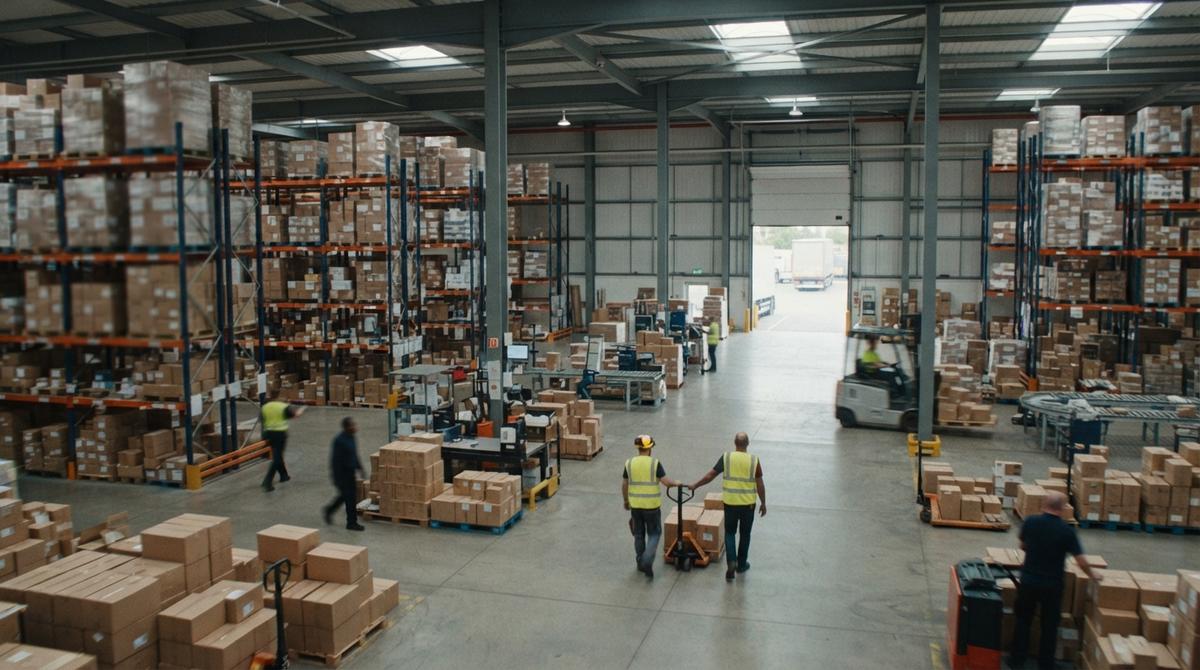
Dealer Distribution
Dealer distribution is a way to sell where a distributor sells products to dealers, and the dealers sell to end customers. The dealer is a business buyer, not a shopper. Reviewed November 2026 for small distributors who run on accounting software, spreadsheets, and paper.
Book a callWhat Is Dealer Distribution and How Does It Work?
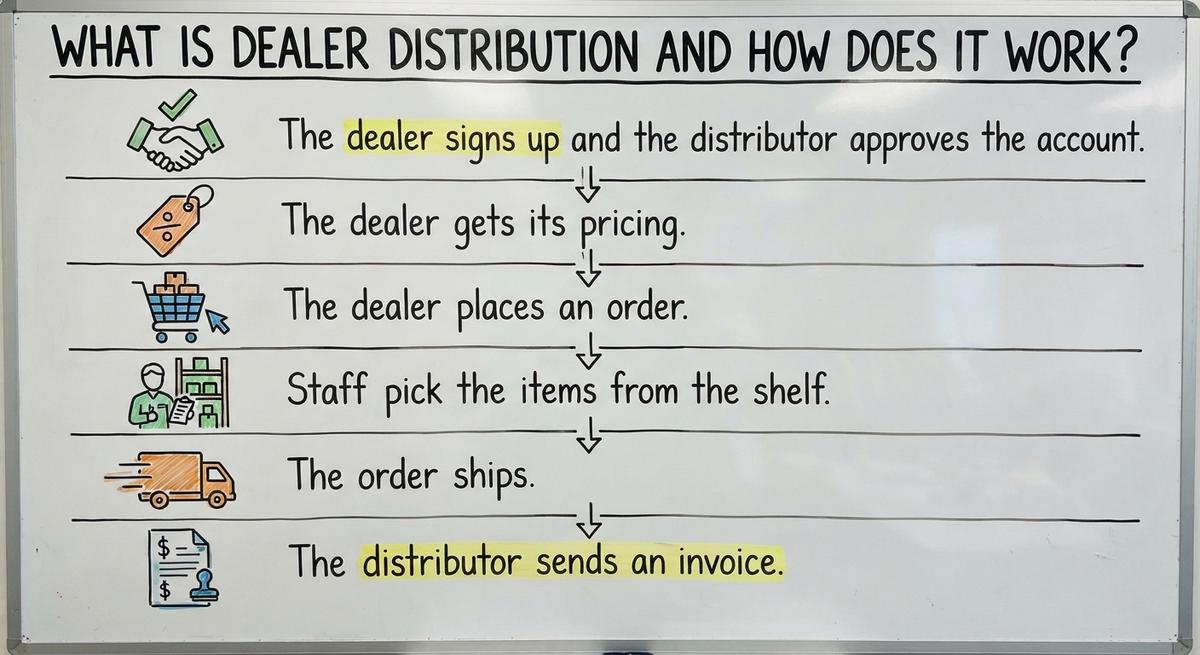
Dealer distribution is a supply chain with 4 links: maker, distributor, dealer, customer. The distributor buys from the maker. The dealer buys from the distributor and resells. One order moves through 7 steps:
- The dealer signs up and the distributor approves the account.
- The dealer gets its pricing.
- The dealer places an order.
- Staff pick the items from the shelf.
- The order ships.
- The distributor sends an invoice.
- The dealer pays.
Errors start at the hand-offs, such as when a person retypes an order into a new file. Stock counts matter by law too. IRS Publication 538 says, "To figure taxable income, you must value your inventory at the beginning and end of each tax year." Each hand-off is a spot where one person's note becomes another person's mistake.
We build it for your operation, and the first look is free
If you would rather not compare products, describe how your operation already works and we build the system around it.
No build cost. You see it running on your own process first, and the monthly subscription starts only once it is live.
Book a callIs Dealer Distribution the Same as Wholesale Distribution?
No. Wholesale distribution is the wider term, and dealer distribution is one model inside it where the buyers are approved dealers. Dealers get set pricing, territories, or written agreements. The two overlap, so both face the same problems: slow orders, wrong prices, and bad stock counts. The dealer vs distributor question is simple. The distributor holds stock and sells to dealers. The dealer resells to the end customer.
Who Is in a Dealer Network?
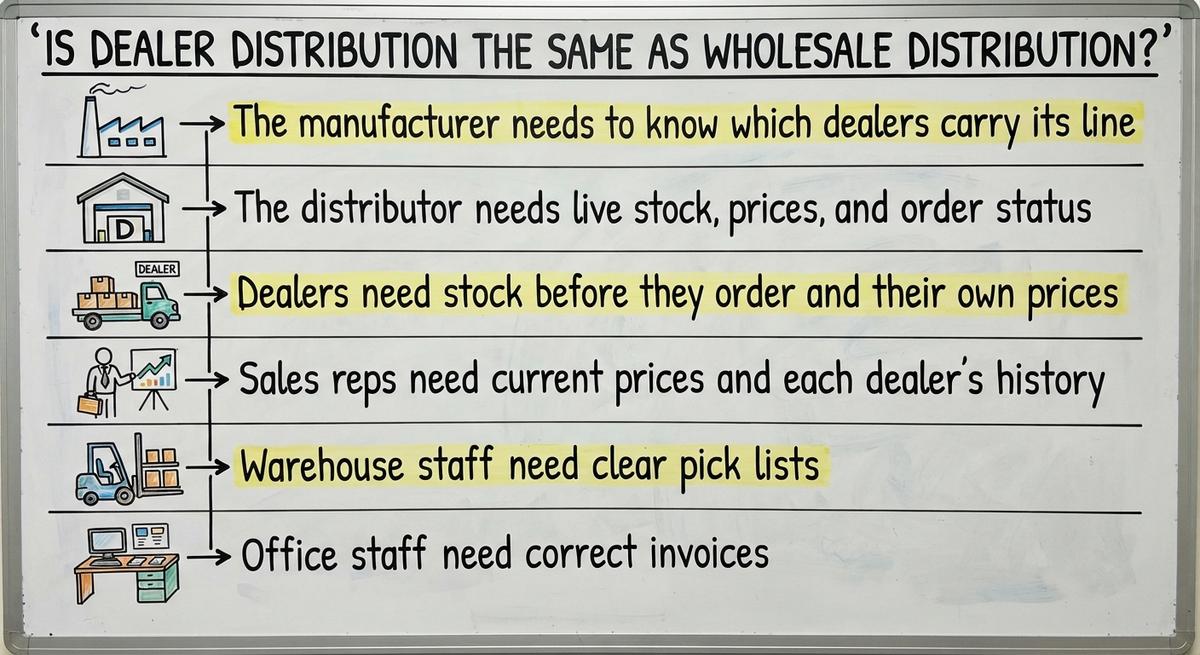
A dealer network has 6 kinds of people, and each needs to see something different.
- The manufacturer needs to know which dealers carry its line.
- The distributor needs live stock, prices, and order status.
- Dealers need stock before they order and their own prices.
- Sales reps need current prices and each dealer's history.
- Warehouse staff need clear pick lists.
- Office staff need correct invoices.
Small teams wear several hats. One person may quote, pick, and bill. That person is the network's single point of failure.
Common Dealer Distribution Models
Most distributors use one of 3 setups, or a mix. Each one protects someone and creates its own record-keeping job. Pick the model first. Then decide what you must track.
Exclusive Dealer Territories
Exclusive dealer territories give one dealer one area. The dealer is safe from rivals nearby. You must track who owns which area, and that list often lives in Excel. A stale sheet sends a lead to the wrong dealer and starts a fight.
Authorized Dealer Programs
An authorized dealer program sets rules a dealer must meet to carry a line. The distributor checks each dealer and records who qualifies. That record shows who may buy and who may not. The program is about the dealer's status, not any award held by your business.
Open Dealer Accounts With Tiered Pricing
Open accounts let any approved buyer order. Tiered pricing sets the price by volume or tier, so bigger dealers pay less per unit. Errors rise when price sheets sit in many files. One wrong sheet means one wrong invoice.
Why Does Dealer Pricing Get Hard to Manage?
Dealer pricing gets hard because it has many moving parts: tiers, special deals, rebates, and price changes. Printed sheets and old emails go stale fast. Picture two reps who quote the same dealer. One uses last month's sheet. The other uses a new email. The dealer gets two prices and trusts neither. One price source for every rep ends the guessing.
Not sure this is the right shape for your operation
Describe how the work runs today. We map it on a call and show you what it would look like built around that, before you spend anything.
Book a callWhy Do Dealer Orders Cause So Many Errors?
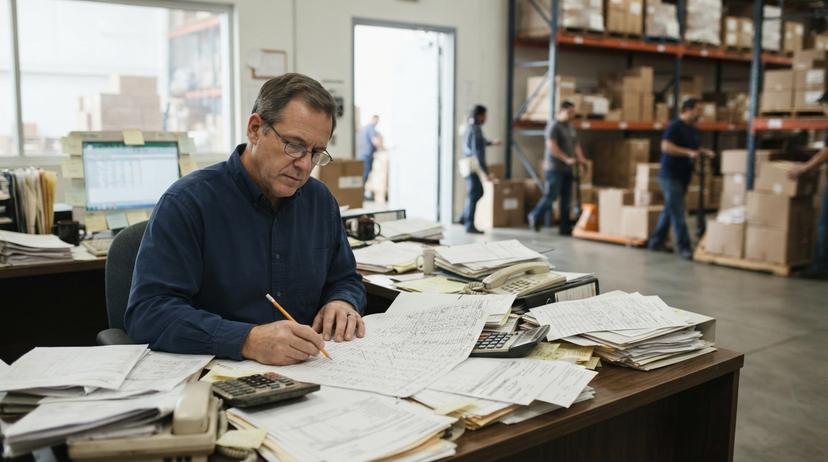
Dealer orders cause errors because they arrive by phone, email, and text, and staff retype each one. Every retype is a chance to miss a digit. Say 2 people spend 5 hours a week retyping at $20 an hour. That is 2 x 5 x 20 x 52, or $10,400 a year. The US Bureau of Labor Statistics publishes pay data for shipping, receiving, and inventory clerks if you want to use your own wage. Add the "where is my order?" calls, and the time cost grows.

Stock Counts and What Dealers Expect
Dealers want to see stock before they order. Counts in the accounting software, in spreadsheets, and on the shelf often disagree. A promise you cannot keep hurts trust more than a backorder you flag early. Dealers expect fast, correct orders, clear prices, order status, easy reordering, and fair, steady support. The US Census Bureau tracks wholesale inventories and sales each month. Your own count needs the same care.
Signs Your Dealer Distribution Process Has Outgrown Spreadsheets
Spreadsheets fail when dealer count or order volume grows. Check this list:
- Staff type the same data in 2 or more places.
- Price mistakes show up on invoices.
- Orders get lost between email and the warehouse.
- One person knows how it all works, and no one else can cover.
- Dealers call to ask what is in stock.
Two or more checks mean the process needs repair now.
Do You Need a Big ERP for Dealer Distribution?
No. Most small distributors do not need an ERP, a large system that runs every part of the business. Many fear a long, costly rollout. The middle path is to fix only the manual parts. Your accounting software stays for accounting, where it works well. Custom distribution software then handles the rest and connects to your accounting software. You move no data you do not want to move. Custom software can give you:
- A dealer ordering page that shows each dealer's own prices.
- Order status and a live stock view.
- Dealer and territory records in one place.
The build follows how your team already works.

How to Improve Your Dealer Distribution Step by Step
Start small and build on what works. Map your current flow from sign-up to payment. Find the 3 slowest hand-offs and fix one first. Gather every price sheet into one source. Then add the next piece. NIST offers vendor-neutral guidance on supply chain and inventory process.
Before you build or buy distribution management software, ask 4 questions:
- Will it work with our accounting software?
- Does it fit our process?
- Who supports it after launch?
- What is the scope of phase one?
Good answers to those 4 let you judge any partner. Clear distribution inventory management is the base for everything else.
Frequently asked questions
What is the difference between a dealer and a distributor?
A distributor buys from the maker, holds stock, and sells to dealers. A dealer is a business that buys from the distributor and resells to end customers. The distributor serves dealers. The dealer serves the public or its own clients.
How is dealer distribution different from wholesale distribution?
Wholesale distribution is the wider term for selling to businesses. Dealer distribution is one model inside it, where buyers are approved dealers. Dealers often get set pricing, territories, or agreements. The daily work of orders, prices, and stock is much the same.
How should dealer pricing be managed?
Keep all dealer pricing in one source, not in many sheets and emails. Store each dealer's tier, special deals, and rebates there. Let every rep and every ordering page read from it. Then two reps can never quote the same dealer two prices.
Why do dealer orders cause so many errors?
Dealer orders come by phone, email, and text. Staff retype each one into another system. Every retype can add a wrong digit or a missed line. Fewer hand-offs mean fewer errors. A dealer ordering page removes the retyping step.
Do small distributors need a big ERP?
Not always. A big ERP can mean a long, costly rollout. Many small distributors fix only the manual parts: dealer orders, price rules, and status tracking. They keep their accounting package for books. That path costs less and moves faster.
Can I keep my accounting software and still improve dealer order handling?
Yes. Your accounting software can stay for accounting. Custom distribution software can take dealer orders, apply price rules, and show status, then pass the data to your accounting software. You do not move all your data to a new system.
When has a distributor outgrown spreadsheets?
A distributor has outgrown spreadsheets when staff enter the same data twice, price mistakes reach invoices, orders get lost, or one person holds all the process knowledge. Growth in dealer count or order volume is the usual trigger.
Start with a free first look
A 30 minute call, your operation mapped, and a clear picture of what we would build. No obligation and nothing to install.
Book a callRelated guides
More on the same work.
Guides
- Dealer and Distributor
- Distribution Management Software
- Distribution Inventory Management
- Business Distributors
- Cloud-based Purchase Order System
- Distributor Examples
- Distributor Rate
- Company Distributor