

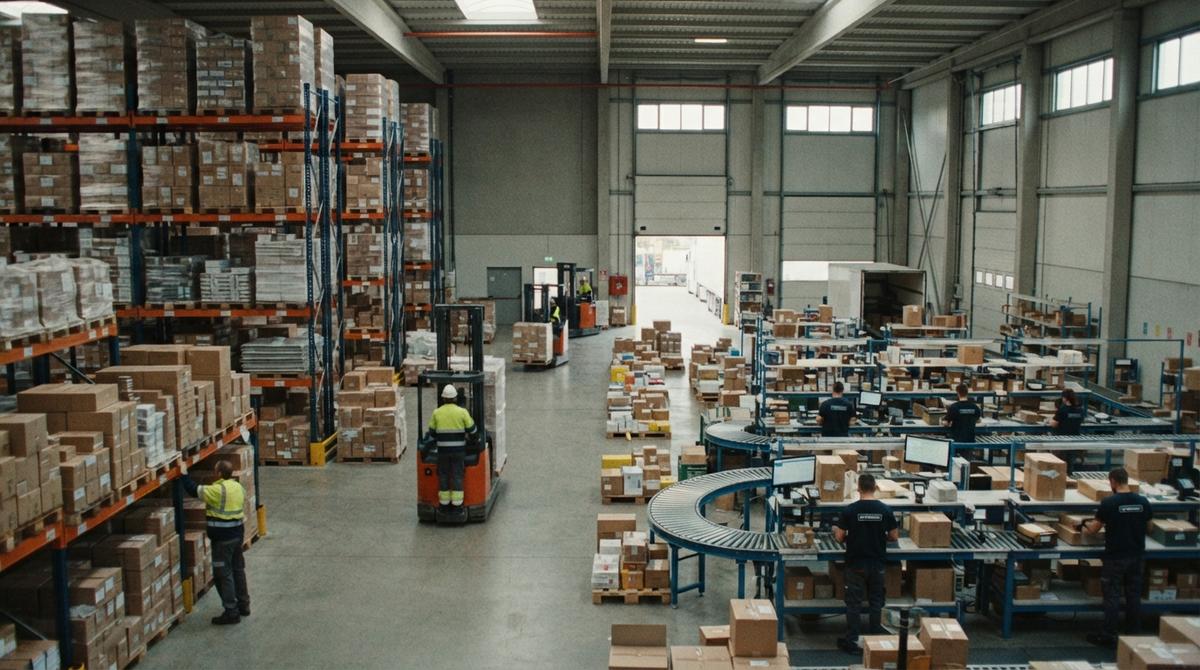
Difference Between a Wholesaler and a Distributor
A wholesaler buys in bulk from many makers and sells to retailers and other businesses. A distributor has a closer tie to a maker, often a written deal that sets what it can sell and where. People mix the two words up, and many firms are both.
Book a callWhat Is a Wholesaler, and What Is a Distributor?
A wholesaler buys from many makers and sells to many buyers. A distributor works with fewer makers, under closer terms. The two sit in the same spot in the supply chain. Each is a middleman between the maker and the shop. The ties and the services are what set them apart.
Reviewed November 2026.
What does a wholesaler do?
The wholesaler wins on price, range and stock on hand. It has little say in how the maker sells the product. The IRS Publication 538 says that "To figure taxable income, you must value your inventory at the beginning and end of each tax year." A wide range means a lot to count. A wholesaler lives or dies on how well it knows what is on the shelf.
A wholesaler buys large lots from many brands. It stores the stock and sells it in smaller lots. Who do wholesalers sell to? Retailers, restaurants, repair shops and other businesses.
What does a distributor do?
A distributor is a firm that sells a maker's products under an agreement. That deal sets what it can sell and where. Do distributors have exclusive rights to a brand? Some do, for a set area. Many do not.
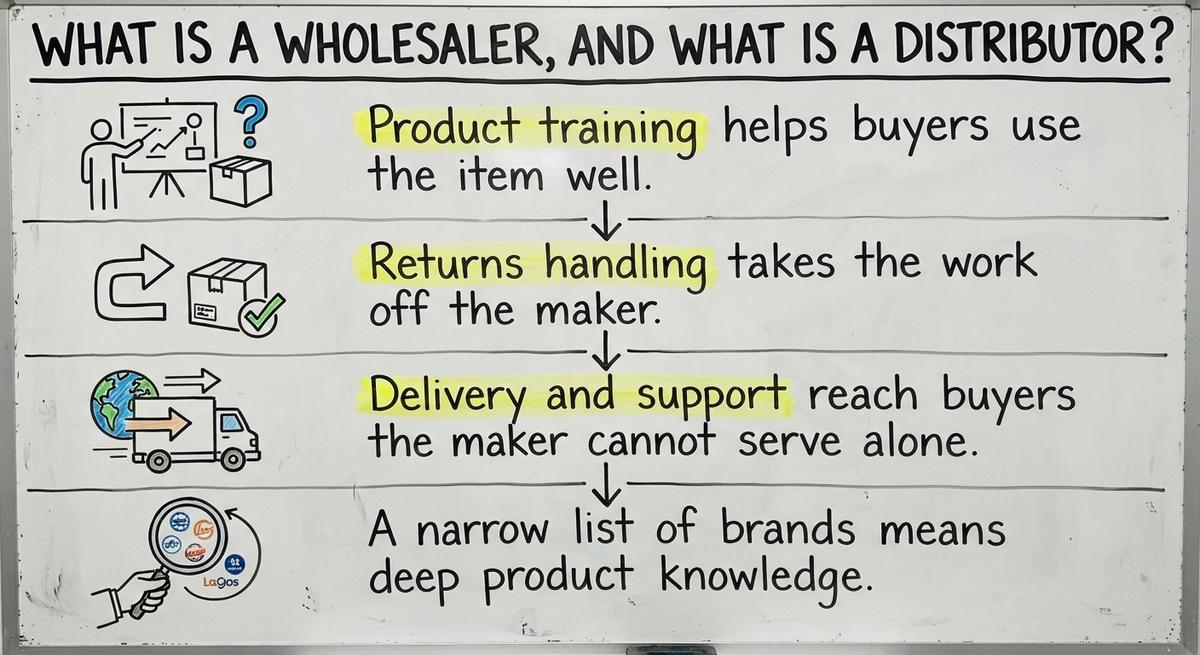
A distributor often adds extras:
- Product training helps buyers use the item well.
- Returns handling takes the work off the maker.
- Delivery and support reach buyers the maker cannot serve alone.
- A narrow list of brands means deep product knowledge.
The distributor links one maker to many buyers. That link is its value.
We build it for your operation, and the first look is free
If you would rather not compare products, describe how your operation already works and we build the system around it.
No build cost. You see it running on your own process first, and the monthly subscription starts only once it is live.
Book a callWholesaler vs Distributor: Side-by-Side
The table below shows the wholesaler vs distributor split on six points.
| Point | Wholesaler | Distributor |
|---|---|---|
| Supplier ties | Many, informal | Few, formal |
| Product range | Wide | Narrow, deep |
| Pricing | Set price list | Agreed margins |
| Customers | Retailers, businesses | Retailers, businesses |
| Services | Few | Training, support |
| Exclusivity | Rare | Sometimes |
The wholesaler sells range and price. The distributor sells a brand and the help that comes with it.

How Do Wholesalers and Distributors Make Money?
Wholesalers and distributors both earn on the gap between the buy price and the sell price. A wholesaler buys a case for $10 and sells it for $11.50. On 10,000 cases, that is $15,000. The margin is thin, so volume does the work.
A distributor earns on agreed margins. It may also earn maker rebates, which are cash back for hitting sales goals. Fees for service add more. Say a distributor earns $2 a unit, plus a 2% rebate on $200,000 of sales. The rebate alone is $4,000.
The wholesaler grows by selling more. The distributor grows by keeping its deal terms.
Not sure this is the right shape for your operation
Describe how the work runs today. We map it on a call and show you what it would look like built around that, before you spend anything.
Book a call
Where Do the Two Terms Overlap?
Many firms are both, and the label matters less than the setup. A firm can buy from makers, resell to businesses and use either word. Some trades say distributor. Others say wholesaler.
Is a distributor the same as a wholesaler? Not always. Can a firm be both? Yes. It may hold a formal deal for 2 brands and buy 50 others on the open market. Describe how you work: your supplier deals, your buyers and your services. Buyers and makers will trust that more than a title. Business distributors and wholesale distribution firms often mix both models.

Why the Difference Matters for Daily Operations
Each model needs different records, and both need exact stock counts. A distributor tracks supplier agreements, areas, special prices and returns. A wholesaler tracks many suppliers, fast stock turns and price lists for each buyer. Both track orders and buy orders.
The Census Bureau reports monthly sales and inventories for wholesale firms. That shows how much stock the sector holds. Your own count matters as much. The NIST Manufacturing Extension Partnership offers vendor-neutral help on supply chain and stock process.
Spreadsheets, printed sheets and email work at first. They strain as you add suppliers, buyers and orders. Wholesale distributor operations then slow down.
What Software Fits a Small Wholesaler or Distributor?
A small firm does not need a big ERP, which is a large system that runs a whole company. Many run on accounting software, spreadsheets, database files, printed sheets and email. The goal is to fix the manual steps, not to throw out what works.
Custom software can be built around how your team already works. It keeps the accounting software where it helps. It replaces only the steps done by hand, such as re-keying orders or checking stock on paper. That works at small scale. A team of 5 can use it as well as a team of 80.
At The Software Society, we build workflow software around real operations. Start by listing the steps that eat the most hours.
Which One Are You? A Quick Self-Check
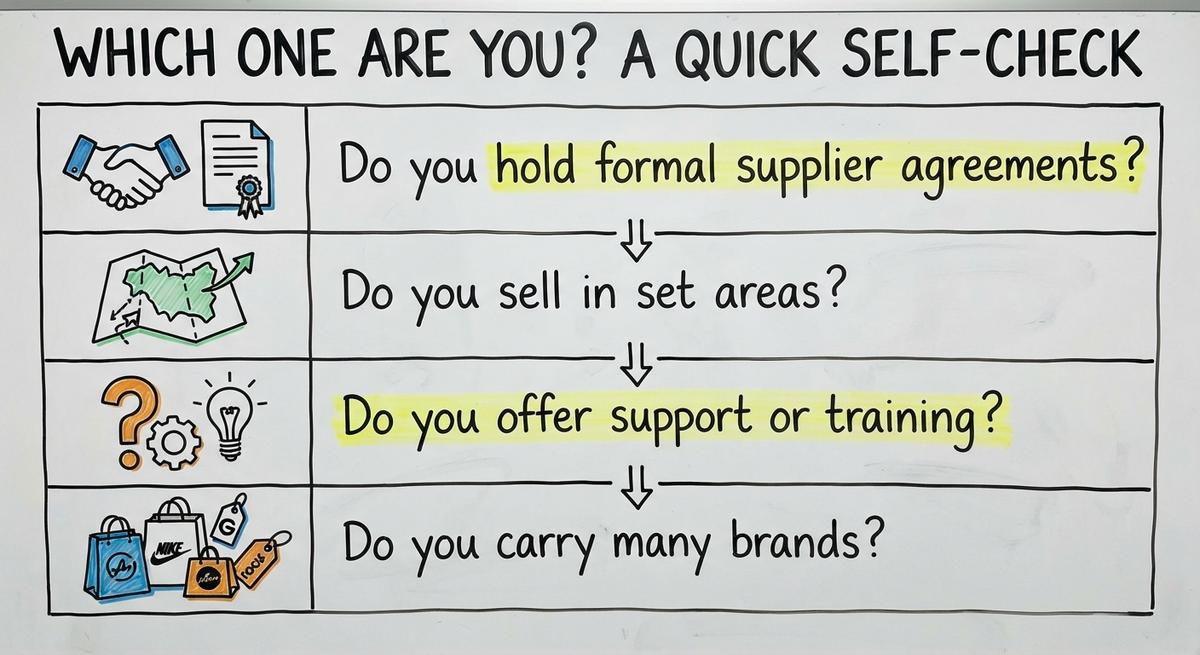
You are a distributor if you mostly answer yes to the first 3 questions below. You are a wholesaler if you carry a wide range and sell on price.
- Do you hold formal supplier agreements?
- Do you sell in set areas?
- Do you offer support or training?
- Do you carry many brands?
Being both is common. Pick the tracking your mix demands, then book a call with The Software Society to map your manual steps.
Frequently asked questions
What is the difference between a manufacturer and a wholesaler?
A manufacturer makes the product. A wholesaler buys it in bulk from makers and resells it to retailers and other businesses. The maker controls design and quality. The wholesaler controls storage, range and sale in smaller lots.
Is a distributor the same as a wholesaler?
Not always. A distributor usually has a closer, formal tie to a maker. A wholesaler buys from many sources. Many firms act as both, so the words overlap.
Who do wholesalers sell to?
Wholesalers sell to retailers, restaurants, repair shops and other businesses. Most do not sell to the public.
Do distributors have exclusive rights to sell a brand?
Some do, for a set area. Others hold non-exclusive deals. The written agreement with the maker decides.
How do wholesalers and distributors make money?
Both earn on the gap between buy and sell price. Wholesalers rely on volume and thin margins. Distributors may add rebates and service fees.
Can a business be both a wholesaler and a distributor?
Yes. A firm can hold formal deals for some brands and buy others on the open market. Describe the real setup, not just the label.
What do wholesalers and distributors need to track to run well?
Both need exact stock counts, orders and buy orders. Distributors also track agreements, areas, special prices and returns. Wholesalers track many suppliers and varied price lists.
Start with a free first look
A 30 minute call, your operation mapped, and a clear picture of what we would build. No obligation and nothing to install.
Book a callRelated guides
More on the same work.
Guides
- Business Distributors
- Distributor Examples
- Distributor Rate
- Company Distributor
- Dealer and Distributor
- Distribution Management Software
- Cloud-based Purchase Order System
- Dealer Distribution
- Distribution Inventory Management
Common questions
- What is the Difference Between Aggregate and Item Inventory Management
- What is the Difference Between Warehousing and Inventory Management
- Wholesale vs Distributor
- What is the Distributor
- Distributors vs Suppliers
- Dealer vs Distributor
- How Distributors Work
- Wholesale Distributors Definition
- How to Manage Inventory Between Etsy and Shopify
- Wholesale Distribution Definition