



Website Builder Contractor
A website builder contractor is either a software tool or a hired web team. Both put a trade business online.
Owners pick a DIY tool or pay a web pro. Each path has real costs. A tool costs your evenings. A pro costs more cash up front. Two missed calls a week at $400 each cost $41,600 a year.
Your goal is simple. You want more calls from Google search and Google Maps. A roofer, painter, remodeler, or electrician wants the same thing: a phone that rings with local jobs.
Smart owners check results before signing any deal.
Book a call
Who This Website Builder Contractor Guide Is For
Trade owners are the readers here. The advice fits roofing, HVAC, painting, remodeling, and electrical companies. You need a site that brings steady calls.
Many contractors have an old site due for a redesign. Homeowners cannot hire a crew they cannot find.
Google's own local ranking guide names the signals behind who shows up.
A home service website works when local buyers find it and call.
Should You Use a DIY Website Builder or Hire Someone?
Owners have 2 main site paths. A contractor can use a do-it-yourself website builder. The other path is paying a web pro.
What Is It Like to Use a DIY Builder?
Self-serve tools are low-cost starters. You can start today.
Watch out for hidden time costs. Rigid design limits are common too. Nobody checks if your forms break or pages load slowly.
Most trade owners spend long days on job sites. Updates slip. A DIY builder can sit half-finished for months.
What Changes When You Hire Someone?
Web teams are time savers. A good contractor web design team builds pages that match local search.
Watch for long contracts, lock-in traps, and vague promises. Ask who builds your site. Ask if you can call that person.
Paying a pro works best when you keep full ownership of your site.
See your new homepage before you pay anything
Your homepage, rebuilt free. You see it before you pay anything.
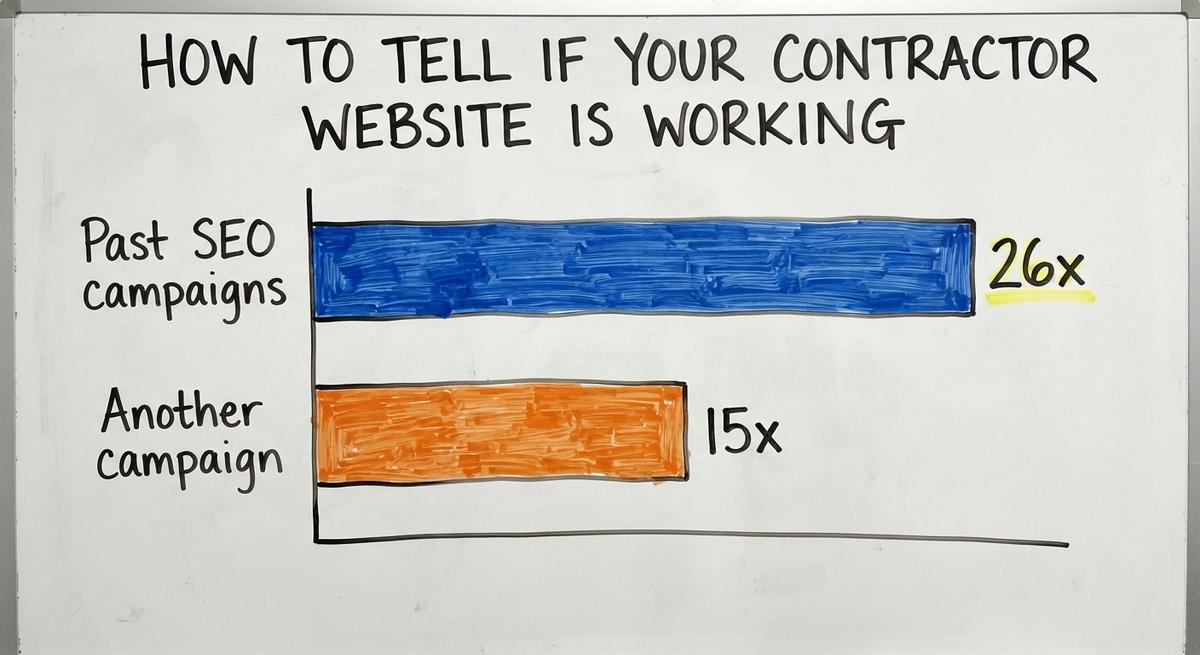
Past SEO campaigns grew organic traffic 26x in 14 months.
New website: $50 a month, built and hosted, cancel anytime
Book a call
What a Contractor Website Must Do to Bring Calls
A contractor website is a storefront. It turns local visitors into booked jobs. Buyers must see your services and coverage in seconds.
Real job photos and reviews build trust fast. Any good painting contractor website proves it. Skip claims you cannot prove.
Every page needs one clear goal. Get a local homeowner to call or submit a form.
The best contractor websites follow this rule on every screen.
Why Does Mobile Speed Matter for Home Service Sites?
Mobile speed is vital for calls. Many urgent trade searches happen on a phone. A sparking outlet leaves no time for slow pages.
Put a tap-to-call button at the top of every screen. Keep contact forms short. Ask for name, phone, and problem.
A fast electrical contractor website captures urgent calls before buyers click back.
What Features Should a Website Builder Have?
Pick 5 key builder features first. Any contractor website builder must support local search growth from day one. Check these neededs before committing.
- Local pages. The tool must publish a separate page for each trade and city.
- Title control. Edit page titles, headings, and clean web addresses directly.
- Mobile speed. Pages must open under 3 seconds on cell networks.
- Lead tracking. The system must record phone clicks and form submissions.
- Quick edits. Updating prices or service areas should take minutes.
A roofing website builder with these tools stops costly rebuilds later.
Do Contractors Need Separate Service Pages and Town Pages?
Local pages are key search magnets. Yes, separate service pages and city pages help Google match local searches. One generic page listing everything fails to rank well.
Picture a roofing company that serves 17 towns. Each town has its own trade and area pages.
Never copy text and swap town names. "Doorway abuse is when sites or pages are created to rank for specific, similar search queries," warn Google's spam policies.
Content should be "created primarily for people, and not to manipulate search engine rankings," notes Google Search Central.
Unique town pages prove your crew works in that area.

Find out where you show up on the map
A free map check for your company. See which towns find you and which call a competitor.
Book a call
How Google Decides Who Shows on the Map
Google Maps uses 3 ranking signals. "Local results are mainly based on relevance, distance, and popularity," says Google Business Profile Help. Relevance asks if your site and profile match the search.
Distance measures how close your shop sits to the searcher. You cannot change your street address.
Popularity reflects links, brand mentions, and reviews. "97% of consumers still lean on reviews to guide their purchase decisions," reports BrightLocal's survey.
BrightLocal also reports 47% of shoppers skip firms with under 20 reviews. Never offer gifts for ratings.
"Reviews and other user contributions to Google Maps must reflect a genuine experience," says Google's review policy.
No website builder contractor can promise a top map rank.
What Can a Website Do for Map Results?
Map results need 2 connected tools. Your website supports relevance with clear service and city details. Strong pages tell Google the jobs you want.
A site alone cannot win the Map Pack. It also needs a complete business listing and steady reviews.
Treat your roofing website design and your map profile as 1 connected system. A profile guide for roofers covers the listing half.
Limits and Mistakes With a Website Builder Contractor
Trade sites fail for 2 reasons. Template limits are one. Owner shortcuts are the other.
What Builder Limits Do Contractors Hit?
Pre-made templates have 2 common limits. They make every HVAC site look and sound identical. Heavy visual add-ons drag down load speed on phones.
Basic builders make 20 or 30 local pages painful. Limited code control also blocks proper search setup.
Outgrowing a rigid website builder for contractors forces a full rebuild.
What Mistakes Do Contractors Make With Their Websites?
Rushed sites repeat 5 costly errors. Watch for these habits in every trade.
- One catch-all homepage. Listing every service and 15 towns on 1 page hurts relevance.
- Stock photos. Fake smiling models destroy trust faster than fewer crew shots.
- Missing phone buttons. A number buried in the footer costs urgent repair calls.
- Stale updates. Outdated hours and broken forms tell buyers you closed down.
- Zero lead tracking. Guessing call sources leaves you paying for useless tools.
Red Flags and Questions When Hiring a Website Builder Contractor
Bad deals have 2 clear signs: high fees and zero ownership. Spot them before signing.
When Should You Walk Away?
Watch for 5 warning signs. Walk away fast if a provider shows these habits.
- Guaranteed top rankings. Anyone promising a number 1 spot on Google is lying.
- Hostage domains. Some providers register your domain in their own name.
- Lock-in contracts. Multi-year deals with exit fees trap you with zero calls.
- Hidden page builders. Never speaking with the person editing your site leads to sloppy work.
- Vague traffic reports. Raw clicks without live call counts hide poor results.
What Should You Ask Before You Hire?
Ask 5 questions ahead of any contract. Use them with any web designer, studio, or freelancer.
- Who builds my pages? Ask for a name and a way to reach them.
- Can I see a sample first? A sample front page proves skill better than sales calls.
- Who holds the web address? Confirm in writing that your business owns it.
- How fast are edits? Ask how many days a price update takes.
- How do you track leads? Demand separate call and form reports by traffic source.
Is a Sample Page Worth Asking For?
A sample is a smart risk reducer. It shows what a builder can deliver.
Ask 2 or 3 website builder contractors to show how your site will look. Compare speed, clarity, and mobile buttons side by side.

Results you can check
Past SEO campaigns grew organic traffic 26x in 14 months, and 15x on another. Top Rated Plus on Upwork with 99% job success.
Work for hundreds of small businesses and large clients like New Balance. Before The Software Society, our founders’ agency worked with Planned Parenthood.
Book a callWebsite Builder Contractor Cost and SEO Differences
Website costs fall into 3 buckets: builder plans, one-time builds, and monthly care. Always separate build prices from ongoing SEO for contractors.
Ask every provider for clear line items. Get written exit terms. Compare at least 3 quotes.
Recall those 2 missed calls a week. From January 2026 to December 2026, they cost $41,600. A site capturing those calls pays back fast at a fair price.
Website Builder or SEO: What Is the Difference?
Builders and SEO are different tools. A website builder creates your pages. Local SEO helps those pages rank in search and maps. Trade guides like HVAC SEO show the ranking side in detail.
Ask if SEO plans charge by towns, services, and monthly pages. Some owners also run paid ads. "Pay only for leads related to your business and the services you offer," says Google Local Services Ads Help.
Knowing how website design and SEO differ keeps you from buying the wrong service.
How to Tell if Your Contractor Website Is Working
Lead tracking is the only real test. Count calls and forms by source. Raw visitor counts mean nothing if your phone stays quiet.
Split leads into 4 buckets.
- Organic search: Clicks from regular results.
- Google Maps: Taps from your listing.
- Paid ads: Calls from search or local ads.
- Spam bots: Fake fills to strip out. Watch visits from ChatGPT, Gemini, and Perplexity as their own channel.
Judge your website over several months, not 1 slow week.
Why Does a Map Grid Scan Help?
A grid scan is a map of your rank at many points. Map Pack rankings shift block by block. A desk check gives a false picture.
A monthly grid scan shows where your business appears. It also shows where it vanishes. Monthly scans spot weak towns. Start yours in December 2026 and repeat it each month.
Grid data turns local search tracking into clear next steps.
What Results Should You Expect?
Real SEO results are never instant. They take months of steady effort. No ethical website builder contractor promises rankings.
Ask any contractor SEO services provider to show traffic growth on real client sites.
Verified past traffic growth proves more than any sales promise. For the full build side, see contractor website development.
Get a second opinion on your current setup
Already paying for marketing? Get a free second opinion on what works and what wastes money.
Book a callDoes Your Website Builder Contractor Pass This Checklist?
A good builder passes 6 tests. Run these checks before you spend a dollar.
- Handles town pages. The platform publishes clean trade and city pages without template fights.
- Opens quickly on cell data. Every page keeps a call button in view.
- Gives you full ownership. Your company keeps legal control of your domain, text, and photos.
The next 3 tests cover accountability.

What Accountability Checks Should a Website Builder Contractor Pass?
Accountability checks are 3 simple rules. Every website builder should meet them before taking payment.
- Tracks leads by source. Reports split inbound calls and web leads across search, maps, ads, and AI.
- Shows a layout first. The builder proves design skill with a sample.
- Connects you to the maker. You speak directly with whoever edits your pages.
Pick a website builder contractor that fits your schedule. It should build dedicated local pages and track every call. Compare it against your contractor website design checklist.
Frequently asked questions
What is the best builder for a contractor website?
The best option publishes separate service and town pages. It loads fast on phones and tracks calls. Choose self-serve software if you have spare hours. Hire a team if you work in the field all day.
How long does a new contractor website take to bring calls?
Paid ads can bring calls within days. Organic search and map rankings take several months. Adding service pages, town pages, and reviews speeds up local visibility over time.
Can a contractor website rank on Google without SEO?
A clean site rarely ranks well in busy towns without ongoing search work. Local rankings depend on matching buyer searches and earning genuine Google reviews.
How much should a home service owner spend on a website?
Self-built sites cost a low monthly software fee. Hired teams charge a higher one-time build fee plus monthly care. Get three itemized quotes or more. Keep website build costs apart from SEO fees.
Who should own the domain name and site content?
Your contracting business must hold the web address, written copy, and job photos in its own account. Never let a provider register your web address under their company name. You could lose it later.
What numbers should I track after launching my site?
Track real calls and contact forms per channel, including Maps and AI tools. Pair those lead counts with a monthly map check across your area.
Start with a free homepage rebuild
Book a short call. Your new homepage is free to see and yours to keep.
New website: $50 a month, built and hosted, cancel anytime
Book a callRelated guides
More on the same work.
- Contractor Website Builder
- Website General Contractor
- Contractor Website Development
- Contractor Website Design Company
- Best Contractor Websites
- Painting Contractor Website Design
- Electrical Contractor Website
- Paint Contractor Website
- General Contractor Website
- Contractor Bidding Website
- Roofing Contractor Website
- Contractor Website Design
- Roofing Contractor Website Design
- Website for Electrical Contractor
- Best General Contractor Website
- Websites for Contractor
- Painting Contractor Website
- Roofing Website Builder
- Concrete Contractor SEO
- General Contractor SEO
- Roofer Contractor Marketing
- How to Get More Jobs as a Contractor
- Roofing Contractor Leads
- Free Leads for Contractors