

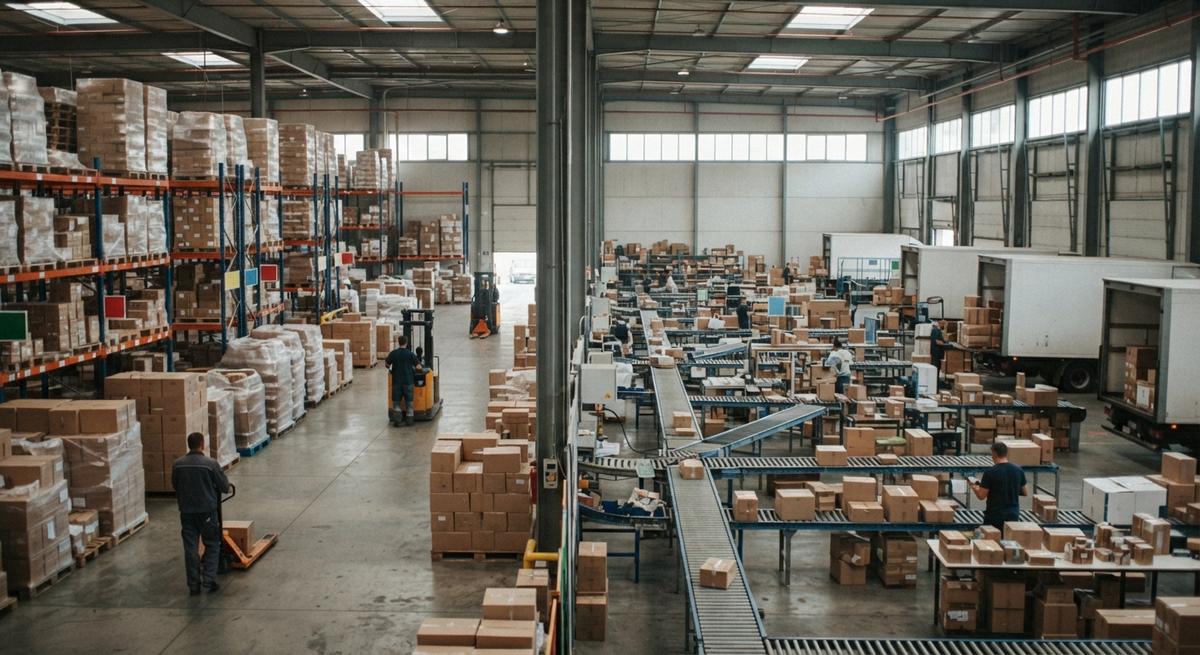
Distributor vs Wholesaler
Distributor vs wholesaler: learn the difference between a distributor and a wholesaler, who each sells to, and which label fits your business.
Book a callWhat Is the Difference Between a Distributor and a Wholesaler?
A wholesaler buys goods in bulk from many makers and resells them to retailers or businesses. A distributor holds a closer tie to set makers or brands, and often sells and supports their goods. Many people use the two words as if they mean the same thing. In daily work, the gap shows up in contracts, support, and price lists.
We build it for your operation, and the first look is free
If you would rather not compare products, describe how your operation already works and we build the system around it.
Reviewed November 2026.
No build cost. You see it running on your own process first, and the monthly subscription starts only once it is live.
Book a callWholesale Distribution: Two Roles Defined
Wholesale distribution moves goods from makers to the businesses that sell or use them. Two kinds of firm do that work. Each one earns its money in a different way.
What Is a Wholesaler?
A wholesaler is a firm that buys large lots at a discount and sells smaller lots at a markup. Most carry many brands in one category. Buyers are retailers, contractors, and other businesses. Wholesalers compete on price, range, and fast stock.
Wholesalers must also count what they hold. IRS Publication 538 states: "To figure taxable income, you must value your inventory at the beginning and end of each tax year." Stock counts are a legal duty, not a choice.
What Is a Distributor?
A distributor is a firm that sells a maker's goods under a manufacturer agreement, a written deal that sets a territory or product line. The distributor acts as the maker's sales and delivery arm. Many add product training, returns help, warranty support, and sales help.
Does a distributor work with only one manufacturer? Not always. Some carry one maker. Others carry several lines that do not compete. A distributor wins on service and trust, not on price alone.
Distributor vs Wholesaler: Key Differences Side by Side
The table shows the main gaps between the two roles. Read each row as a pull toward one side, not a hard rule.

| Factor | Wholesaler | Distributor |
|---|---|---|
| Supplier tie | Buys from many | Agreement with makers |
| Brands carried | Many brands | Set brands or lines |
| Customers | Retailers, resellers | Dealers, trade buyers |
| Services | Fast stock, low price | Training, warranty, support |
| Pricing | Own markup | Maker price lists |
| Contracts | Few | Written, often exclusive |
Real firms sit between the columns. Use the table to see which way your business leans.
Who Do Distributors and Wholesalers Sell To?
Distributors and wholesalers both sell business to business, not to the public. Wholesalers lean toward retailers and resellers. Distributors lean toward dealers, contractors, and industrial buyers who need support.
A retail counter at either firm serves trade buyers with an account. A sales rep visits those accounts, takes orders, and brings in the maker's training. The customer sets the service level, not the label.
Not sure this is the right shape for your operation
Describe how the work runs today. We map it on a call and show you what it would look like built around that, before you spend anything.
Book a call
How Do Inventory and Pricing Differ?
Wholesalers move wide ranges of stock and watch turns and margin closely. Distributors follow maker price lists, rebates, and agreed terms. The Census Bureau tracks wholesale inventories each month, because stock tied up on a shelf costs money.
Both firms need the same basics:
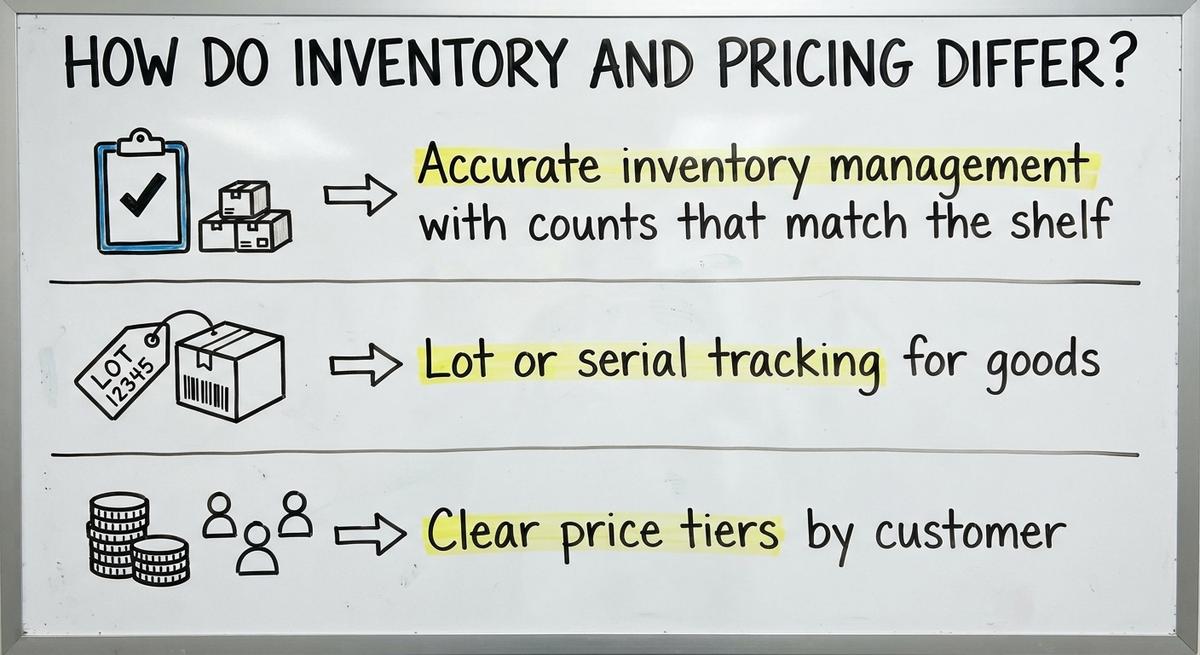
- Accurate inventory management with counts that match the shelf.
- Lot or serial tracking for goods that need recalls or warranty claims.
- Clear price tiers by customer, so a big buyer and a small buyer see the right price.
Here is a simple case. A case of 12 costs $48, or $4 each. A small buyer pays a each price of $5. A large buyer pays the case price. Clean price tiers keep both orders right.
Which Term Fits Your Business?
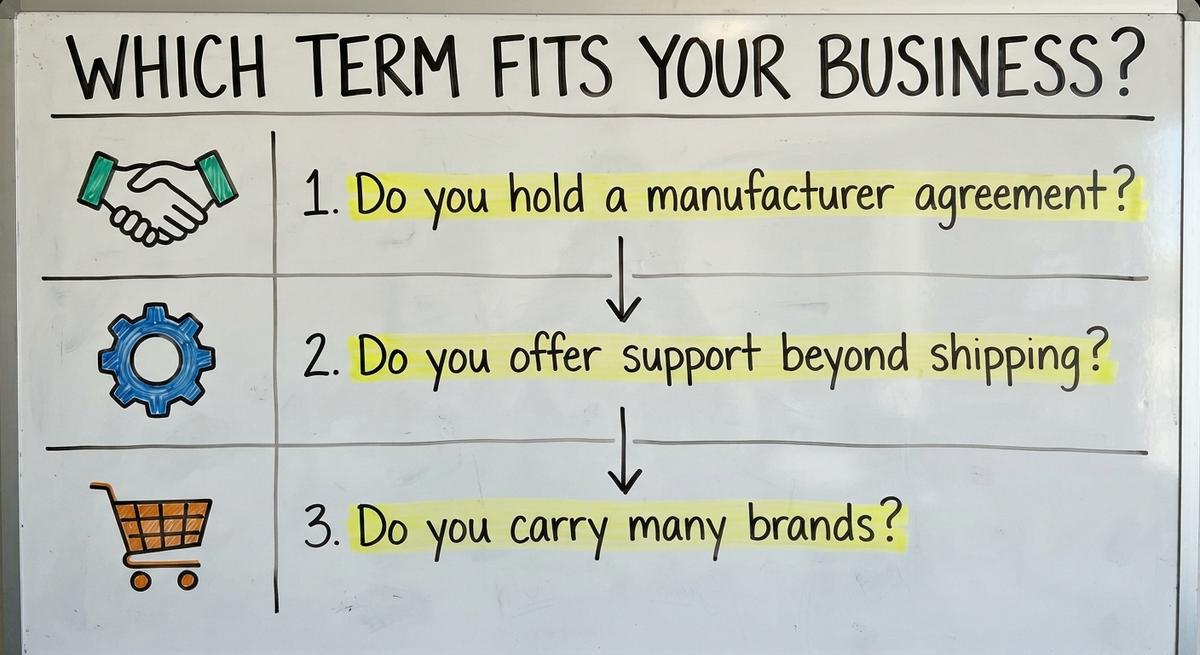
The label matters less than how the business runs. Ask three questions:

- Do you hold a manufacturer agreement?
- Do you offer support beyond shipping?
- Do you carry many brands?
Two yes answers on the first two points mean you act as a distributor. A yes on the third means you act as a wholesaler. Many firms are both, split by product line.
Why the Difference Matters for Daily Operations
Manual steps are where errors start. Say 2 people spend 5 hours a week re-keying orders at $22 an hour. That is $11,440 a year. Checking stock on paper adds more.
A distributor tracks agreements, rebates, and territory rules. A wholesaler needs fast quotes and wide price lists. Both run on QuickBooks, with overflow in Excel, Access databases, printed sheets, and email.
Good software follows how the work already runs. It keeps QuickBooks where it helps and replaces only the manual parts. It works at small scale, with no big ERP and no long rollout. The Software Society builds custom working software from Columbus, Ohio. NIST also offers neutral guidance on inventory process.
Is a Distributor the Same as a Wholesaler?
Not always. People use the words as if they match, but the agreement and the support set them apart.
Can a Business Be Both?
Yes. A firm can hold a maker agreement for one line and resell open stock in another. Each line follows its own rules. The agreed line may come with set territories, pricing, and support duties, while the open stock line is bought and sold freely without those limits. In practice, the firm acts as a distributor for the first line and as a wholesaler for the second, and it should keep the terms of each line clear for staff and customers.
Is a Distributor or Wholesaler Cheaper for Buyers?
Neither is always cheaper. Price depends on volume, terms, and service needs. A buyer who needs training may pay more and save time. A buyer who orders large quantities and needs little help may get a lower unit price from either type of firm. Payment terms, delivery speed, and returns also change the total cost, so buyers should compare full quotes rather than assume one label always costs less.
Which Term Should My Business Use?
Use the term that matches your work. Hold an agreement and give support, and you are a distributor. Otherwise, call yourself a wholesaler. The agreement means a formal arrangement with a maker, and support means services such as training for your customers. If your business does not have both, wholesaler is the accurate label. Choosing the term that fits your actual work helps buyers know what to expect from you.
Frequently asked questions
Does a distributor work with only one manufacturer?
Not always. Some distributors carry one maker. Others carry several lines that do not compete, each under its own agreement.
Who do wholesalers and distributors sell to?
Both sell to businesses, not the public. Wholesalers lean toward retailers and resellers. Distributors lean toward dealers, contractors, and trade buyers who need support.
How do pricing and inventory differ between a distributor and a wholesaler?
Wholesalers set their own markup and watch stock turns. Distributors follow maker price lists, rebates, and agreed terms. Both need accurate counts and price tiers.
Is a distributor the same as a wholesaler?
Not always. People use the words as if they match. A distributor holds a closer tie to set makers, while a wholesaler buys from many.
Can a business be both a distributor and a wholesaler?
Yes. A firm can hold a maker agreement for one line and resell open stock in another. Each line follows its own rules.
Is a distributor or wholesaler cheaper for buyers?
Neither is always cheaper. Price depends on volume, terms, and service needs. A buyer who needs training may pay more and save time.
Start with a free first look
A 30 minute call, your operation mapped, and a clear picture of what we would build. No obligation and nothing to install.
Book a callRelated guides
More on the same work.
Guides
- Is a Distributor a Wholesaler
- Business Distributors
- Distributor Examples
- Distributor Rate
- Company Distributor
- Dealer and Distributor
- Distribution Management Software
- Cloud-based Purchase Order System
- C2 Distribution
- Wholesale Inventory Software
- Dealer Distribution
- Distribution Inventory Management
Common questions
- Difference Between a Wholesaler and a Distributor
- Wholesale vs Distributor
- Wholesale Distributor Meaning
- What is the Distributor
- Distributors vs Suppliers
- Dealer vs Distributor
- How Distributors Work
- Difference Between a Dealer and a Distributor
- Wholesale Distributors Definition
- Difference Between Wholesale and Distribution
- Wholesale Distribution Definition