

Is a Distributor a Wholesaler
Is a distributor a wholesaler? Yes, most of the time. Learn the real difference, see simple examples, and find out why the daily work looks the same.
Book a callIs a Distributor a Wholesaler? The Short Answer
Yes. A distributor is a type of wholesaler, since both sell to businesses and not to shoppers. Some wholesalers are not distributors, though. The gap is in the tie to the maker and the extra services.
Reviewed November 2026. Owners use the two words as if they mean the same thing. In daily talk, that is fine.
We build it for your operation, and the first look is free
If you would rather not compare products, describe how your operation already works and we build the system around it.
No build cost. You see it running on your own process first, and the monthly subscription starts only once it is live.
Book a callWhat Is a Wholesaler and What Is a Distributor?
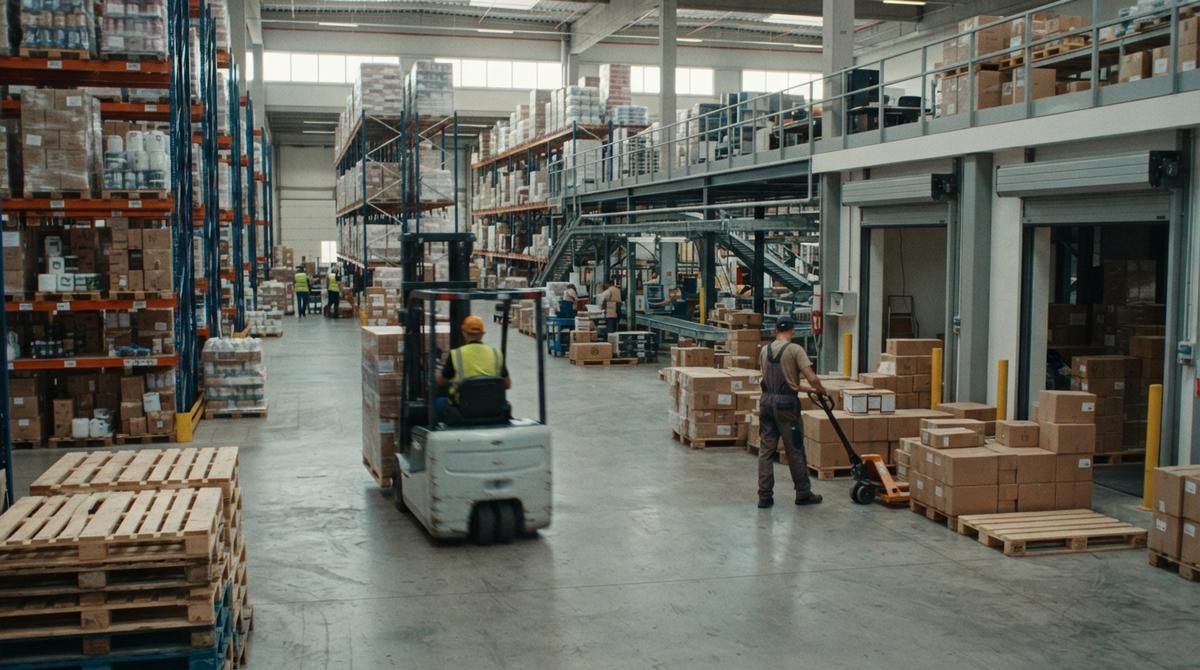
A wholesaler is a firm that buys in bulk and resells to other businesses, and a distributor is a wholesaler with a closer tie to the maker. Both fit under the label wholesale distribution.
So what is a wholesaler in practice? The firm buys goods from many sources. It sells them to stores or contractors. It carries many brands and makes money on the gap between buy price and sell price.
What is a distributor, then? The firm buys from a maker, often under a set agreement. It handles delivery, stock, and support for a chosen set of brands. The word suggests a closer bond with the maker. A wholesale distributor can wear either label.
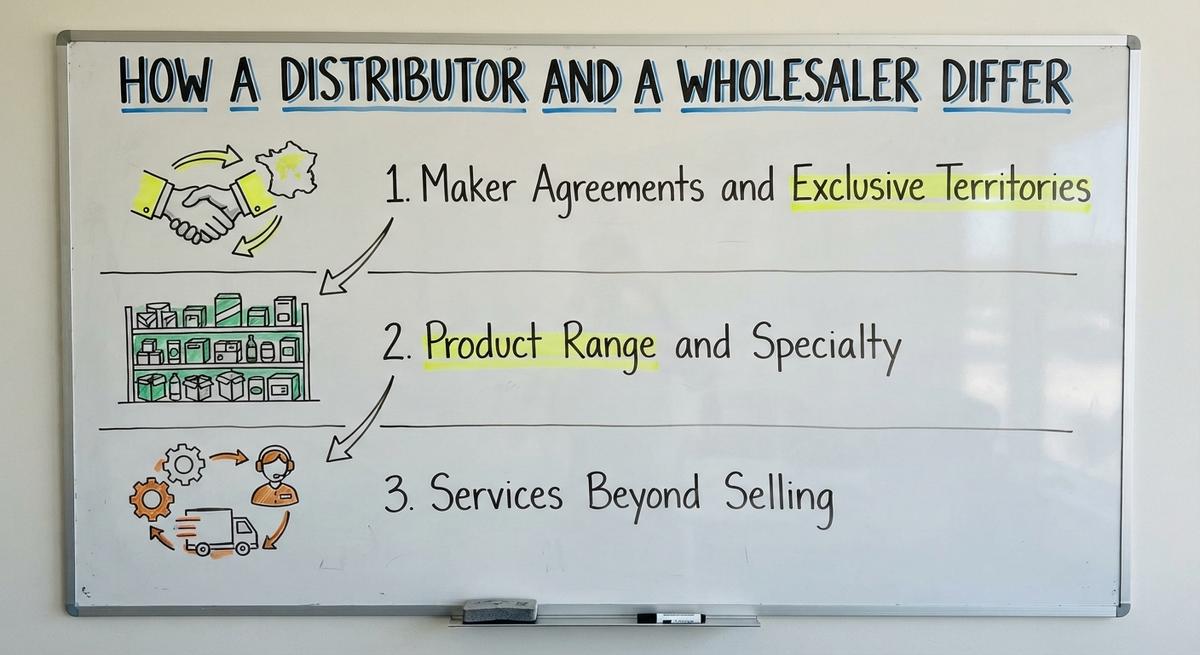
How a Distributor and a Wholesaler Differ
The difference between a distributor and a wholesaler comes down to 4 things: maker ties, brand range, support, and price terms. The table shows the common pattern.
| Trait | Wholesaler | Distributor |
|---|---|---|
| Maker ties | Buys from many sources | Holds a deal with the maker |
| Brand range | Broad mix of goods | A few brands or 1 line |
| Support | Light | Training, returns, tech help |
| Price terms | Set by volume and market | Set by the maker deal |
Real firms mix both models. The table shows a pattern, not a rule.
Maker Agreements and Exclusive Territories
A distributor can hold an agreement to sell a brand in one area. Other firms are shut out of that area. A wholesaler buys from many sources and holds no set deal. That split is common, but not universal. Some wholesalers hold deals, and some distributors buy on the open market.
Product Range and Specialty
A general goods wholesaler sells a broad mix, from cleaning supplies to snacks. A plumbing supply house sells a few lines of pipe, valves, and fixtures. Its staff know each part well. Depth of knowledge in a narrow field marks the distributor. Breadth across many kinds of goods marks the wholesaler. Product range is one clear way to tell the two apart.
Services Beyond Selling
A distributor can offer training, returns help, or tech support for the brands it carries. A wholesaler tends to compete on price and volume instead. Many firms do both, so the line between them blurs. The service list, not the label, tells you which model a firm actually runs.
Not sure this is the right shape for your operation
Describe how the work runs today. We map it on a call and show you what it would look like built around that, before you spend anything.
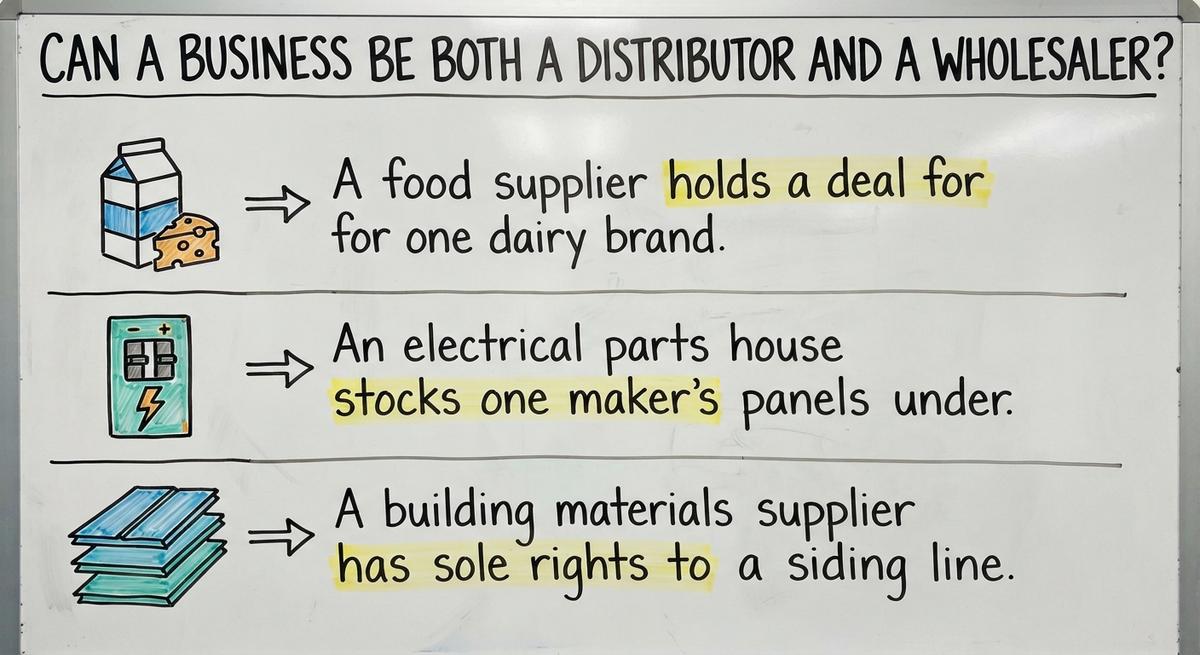
Book a callCan a Business Be Both a Distributor and a Wholesaler?
Yes. One firm can hold maker deals for 3 brands and buy 200 other items on the open market. It is a distributor for the first group and a wholesaler for the rest.
Three plain examples show how this works:
- A food supplier holds a deal for one dairy brand. It also buys canned goods from many mills. Its buyers call it either name.
- An electrical parts house stocks one maker's panels under contract. It sells wire and plugs from several makers too.
- A building materials supplier has sole rights to a siding line in one county. It sells lumber with no deal at all.
The name a firm picks follows what its customers say. Both words are right.

Where Retailers and Brokers Fit In
A retailer sells to the public. A wholesaler or distributor does not. So the answer to "does a distributor sell to the public?" is no, with rare exceptions such as a counter open to walk-in buyers.
A broker connects buyers and sellers. A broker may never hold stock. A distributor holds stock and ships it. That is why a broker is not a wholesaler. A wholesaler is not a retailer either.
Some people call a wholesaler a middleman. The word is fair, since the firm sits between maker and store. It is also a plain label for a job that adds stock, delivery, and credit.
Does the Label Matter for Your Business?
The label can matter in 3 places: maker contracts, tax forms, and how you describe yourself. A maker deal may name you a distributor with set duties. A tax form may ask for your business type. Ask an accountant or an attorney about legal or tax questions.
The label rarely changes how customers buy. They care about price, stock on hand, and on-time delivery.
Your day-to-day work stays the same under either name.
What Both Types Struggle With Day to Day
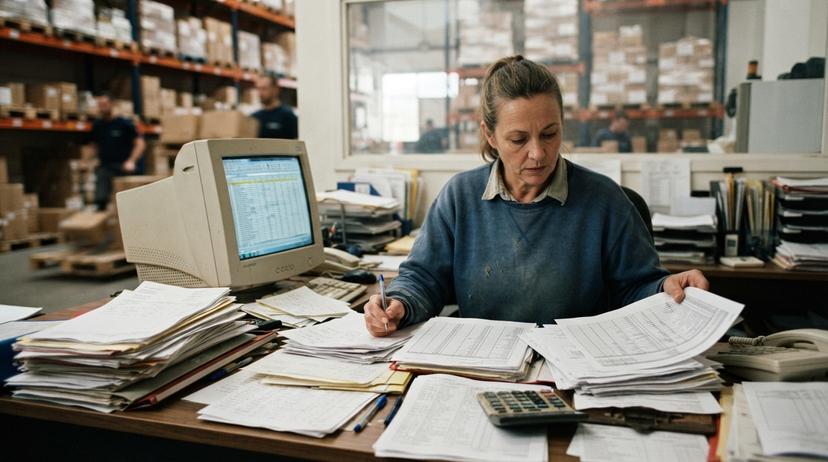
Both run on orders, stock counts, buy orders, and shipping. Both also share the same pain: manual work that eats hours.
Many small firms run on an accounting package, spreadsheets, small databases, printed sheets, and email. The pain shows up in 3 ways:
- Staff re-type the same order into 2 or 3 places.
- Stock numbers go stale before the shift ends.
- Tasks fall through the cracks when one person is out.
The cost adds up. Say 3 people spend 6 hours a week on re-typing at $22 an hour. That is $20,592 a year. The US Bureau of Labor Statistics tracks pay for this kind of work if you want a local wage.
The comparison is easier when one option is built for you
Off-the-shelf means fitting your process to the software. We do it the other way round, and the first look costs nothing.
Book a callStock Counts and Why Off-the-Shelf Tools Fit Poorly
Counting stock is also a legal duty. IRS Publication 538 says, "To figure taxable income, you must value your inventory at the beginning and end of each tax year." A count nobody trusts makes that harder.
The workflow is the same under either label: take the order, pick it, ship it, get paid. What differs is special pricing or maker rules. Those quirks are why off-the-shelf tools fit poorly.
Is It Time to Replace the Manual Work?
Yes, if you see any of these 3 signs:

- Staff type orders in more than once, so each order costs extra minutes and adds a chance for error.
- Stock counts live in a spreadsheet that no one trusts.
- Only one person knows how a key sheet works, so a sick day stops the work.
One sign is a warning. Two mean the cost is already real.
Do You Need a Big ERP to Manage a Distribution Business?
No. An ERP is a large system that runs a whole company. Many owners fear a long, costly project. You can skip that. Custom software can be built around how your team already works.
The software can work with your accounting software, so the accounting stays where it is useful. Only the manual parts get replaced. This works at small scale, not just at big firms.
How to Describe Your Business Clearly
Use the term your customers use. Then say 3 things: what you sell, who you sell to, and what you handle for them. For example: "We stock pipe and fittings for plumbers and deliver the next day." Plain words beat a fancy label every time.
In short, a distributor is a kind of wholesaler with closer maker ties. Both sell to businesses and share the same daily work. The label matters less than running orders and stock well.
Talk to a Columbus Team About Your Workflow
Tell us how orders and stock move at your firm today. We are a Columbus, Ohio team. The same people build the software, the website, and your search presence. Describe your process, and we will look at where the manual work can go. Reach out whenever you are ready to start the conversation.
Frequently asked questions
What is the difference between a wholesaler and a distributor?
A wholesaler buys in bulk from many sources and resells to businesses. A distributor buys from a maker, often under a set deal, and adds support such as delivery, training, or returns help. Both sell to businesses, and many firms act as both.
Is a distributor a wholesaler?
Yes, in most cases. A distributor sells to businesses in bulk, which is what a wholesaler does. The distributor label points to a closer tie with the maker.
Can a business be both a distributor and a wholesaler?
Yes. A firm can hold a maker deal for some brands and buy other goods on the open market. It acts as a distributor for the first group and a wholesaler for the rest.
Does a distributor sell to the public?
No, not as a rule. A distributor sells to businesses such as stores and contractors. A firm that sells to the public is a retailer.
Do distributors buy straight from the maker?
Yes, most do. That direct tie is what sets them apart. Some also buy from other distributors to fill gaps.
Is a wholesaler the same as a middleman?
In a broad sense, yes. A wholesaler sits between the maker and the store. The role adds stock, delivery, and credit.
Does the label change how I run my business?
No. Orders, stock counts, shipping, and getting paid work the same way. The label can matter for maker contracts and tax forms, so ask an accountant or attorney.
Do I need a big ERP to manage a distribution business?
No. Custom software built around your current steps can replace the manual parts. Your accounting package can stay where it is useful.
Start with a free first look
A 30 minute call, your operation mapped, and a clear picture of what we would build. No obligation and nothing to install.
Book a callRelated guides
More on the same work.
Guides
- Business Distributors
- Distributor Examples
- Distributor Rate
- Company Distributor
- Dealer and Distributor
- Distribution Management Software
- Cloud-based Purchase Order System
- C2 Distribution
- Wholesale Inventory Software
- Dealer Distribution
- Distribution Inventory Management
Common questions
- Distributor vs Wholesaler
- Difference Between a Wholesaler and a Distributor
- Wholesale vs Distributor
- Wholesale Distributor Meaning
- What is the Distributor
- Distributors vs Suppliers
- Dealer vs Distributor
- How Distributors Work
- Difference Between a Dealer and a Distributor
- Wholesale Distributors Definition
- Difference Between Wholesale and Distribution
- Wholesale Distribution Definition