

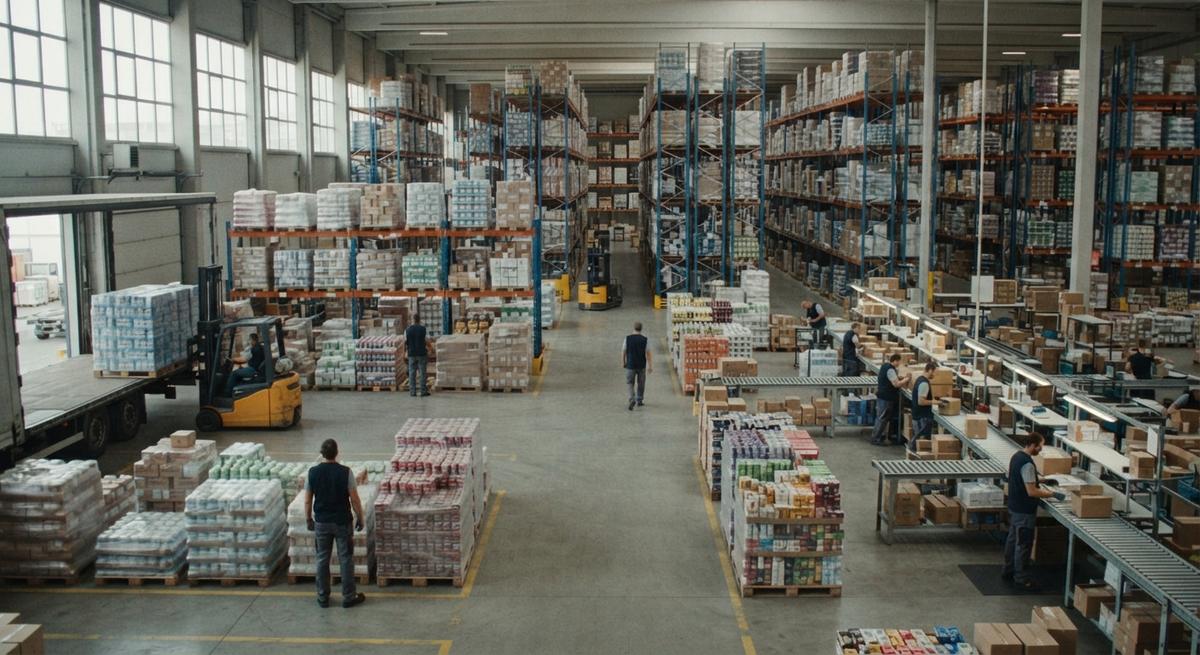
Difference Between Wholesale and Distribution
The difference between wholesale and distribution: one is a type of sale, the other a role in the supply chain. See a side-by-side table and what it means for your warehouse.
Book a callThe Difference Between Wholesale and Distribution
The difference between wholesale and distribution is the job each one does. Wholesale is a type of sale: bulk goods sold to businesses that resell them. Distribution is a role in the supply chain: the link between a maker and the sellers, often under a formal agreement.
Reviewed November 2026 for US operators. Many firms do both jobs, so the words get mixed up. A wholesaler may carry goods from many makers. A distributor often holds a deal with one maker. Both move goods to the next buyer.
We build it for your operation, and the first look is free
If you would rather not compare products, describe how your operation already works and we build the system around it.
No build cost. You see it running on your own process first, and the monthly subscription starts only once it is live.
Book a callWhat Wholesale and Distribution Each Mean
Each term has a plain definition. Read them one at a time, then compare.
What Is Wholesale?
Wholesale is buying large amounts of goods and selling bulk lots to retailers or other businesses. A wholesaler carries products from many makers. Prices follow volume: the more a shop buys, the lower the price per unit. For example, a wholesaler sells cleaning supplies to local shops.
Who does a wholesaler sell to? Shops, restaurants, and other businesses. Rarely the public. Stock counts matter by law. The IRS says in Publication 538, "To figure taxable income, you must value your inventory at the beginning and end of each tax year." A wholesaler needs an exact count of what sits on the shelf.
What Is Distribution?
Distribution is moving products from the maker to the seller or buyer. Do distributors work directly with makers? Yes. A distributor holds a set agreement with the maker, such as a sales territory or a product line.
Services include storage, delivery, and order handling. For example, a distributor carries one maker's parts for a whole region. Dealer distribution is a close cousin: the maker sells through dealers, and the distributor supplies them. The agreement defines the distributor's job.
Not sure this is the right shape for your operation
Describe how the work runs today. We map it on a call and show you what it would look like built around that, before you spend anything.
Book a call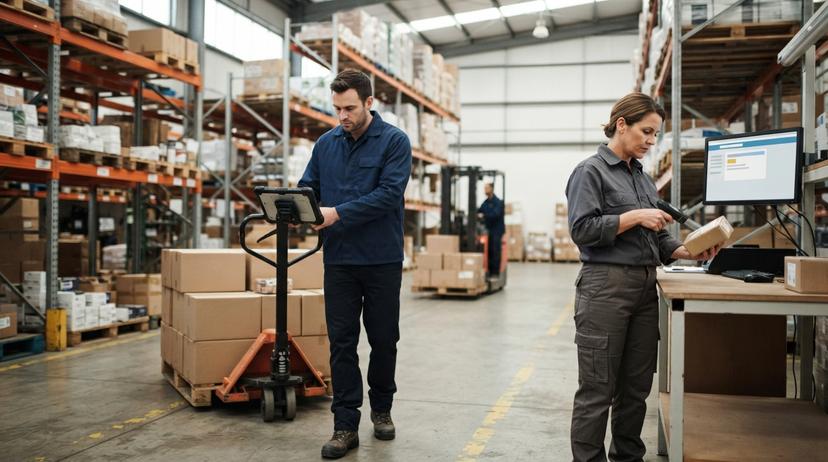
Wholesale vs Distribution Side by Side
The table below sets wholesale vs distribution next to each other. Each cell is short on purpose.
| Wholesale | Distribution | |
|---|---|---|
| Buys from | Many makers | One or a few makers |
| Sells to | Retailers and businesses | Retailers, dealers, and buyers in a territory |
| Maker tie | Loose, order by order | Formal agreement |
| Product range | Broad, mixed brands | Set product line |
| Services | Bulk sale, fast shipping | Storage, delivery, order handling |
| Pricing | Volume tiers | Often set by the maker's deal |
Wholesale describes how you sell. Distribution describes where you sit in the supply chain.
Why People Mix Up the Terms
Most firms do both jobs. That is why "wholesale distribution" is a common phrase. Is a wholesaler the same as a distributor? Not always, but one business can be both. Trades use the words in different ways, so the sign on the door may not match the work. The difference between a wholesaler and a distributor shows up in the contract, not the logo. Clear terms help when you talk to customers, suppliers, and software partners.
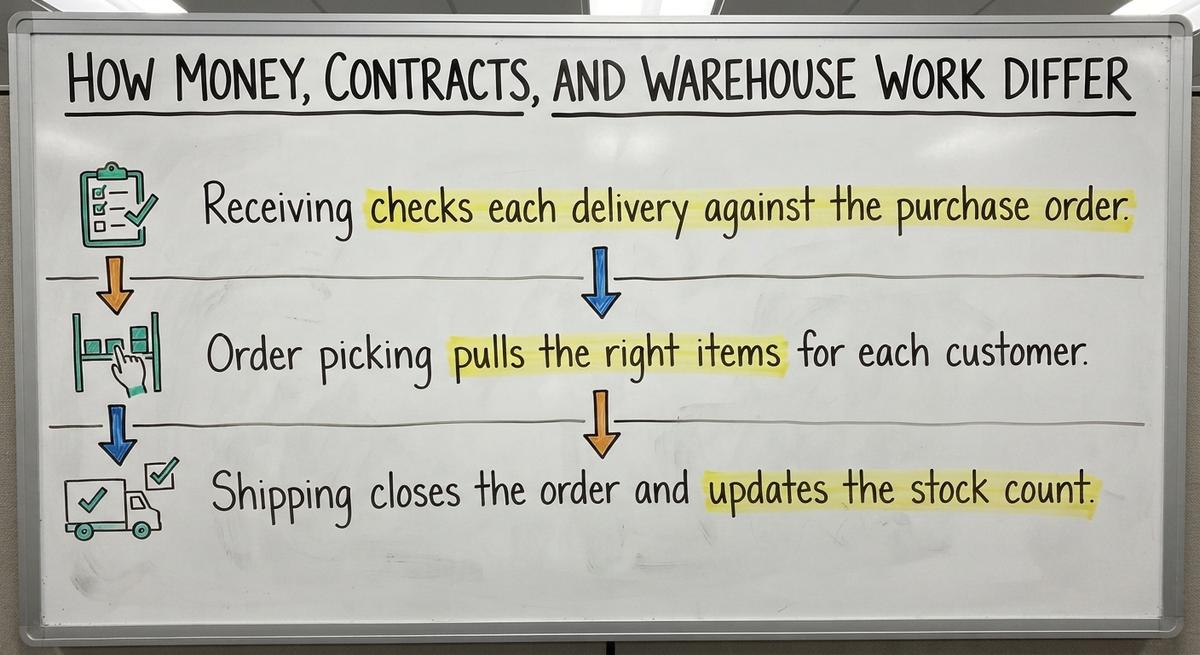
How Money, Contracts, and Warehouse Work Differ
Margins and daily tasks change with the model.
Margins and Contracts
How do margins differ? A wholesaler earns by buying in volume and selling at a markup. A distributor's margin may come from the maker's agreement, with rules on price, territory, or minimum orders. Read your own agreements closely. This is not legal advice.
The comparison is easier when one option is built for you
Off-the-shelf means fitting your process to the software. We do it the other way round, and the first look costs nothing.
Book a callWork in the Warehouse
Does the difference change how you run your warehouse? Slightly. Both models share the same core tasks:
- Receiving checks each delivery against the buy order.
- Order picking pulls the right items for each customer.
- Shipping closes the order and updates the stock count.
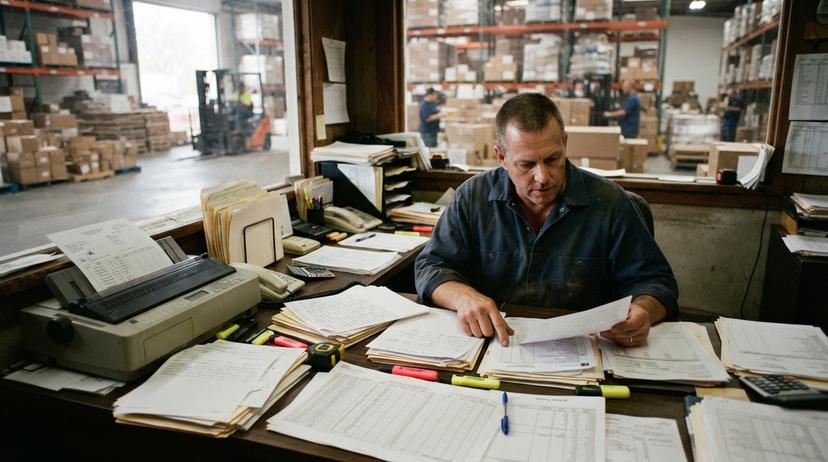
Distribution adds maker rules, such as lot tracking and return handling. Wholesale adds many price levels and many small customers. The Census Bureau tracks wholesale inventories and sales each month. Many owners still run all of this on an accounting package, spreadsheets, and printed sheets.
That gets costly. Say 2 people spend 5 hours a week retyping orders at $20 an hour. That is $10,400 a year. The Bureau of Labor Statistics lists pay for shipping, receiving, and inventory clerks if you want to use your own wage figures. Manual re-entry is paid work that adds no sales.

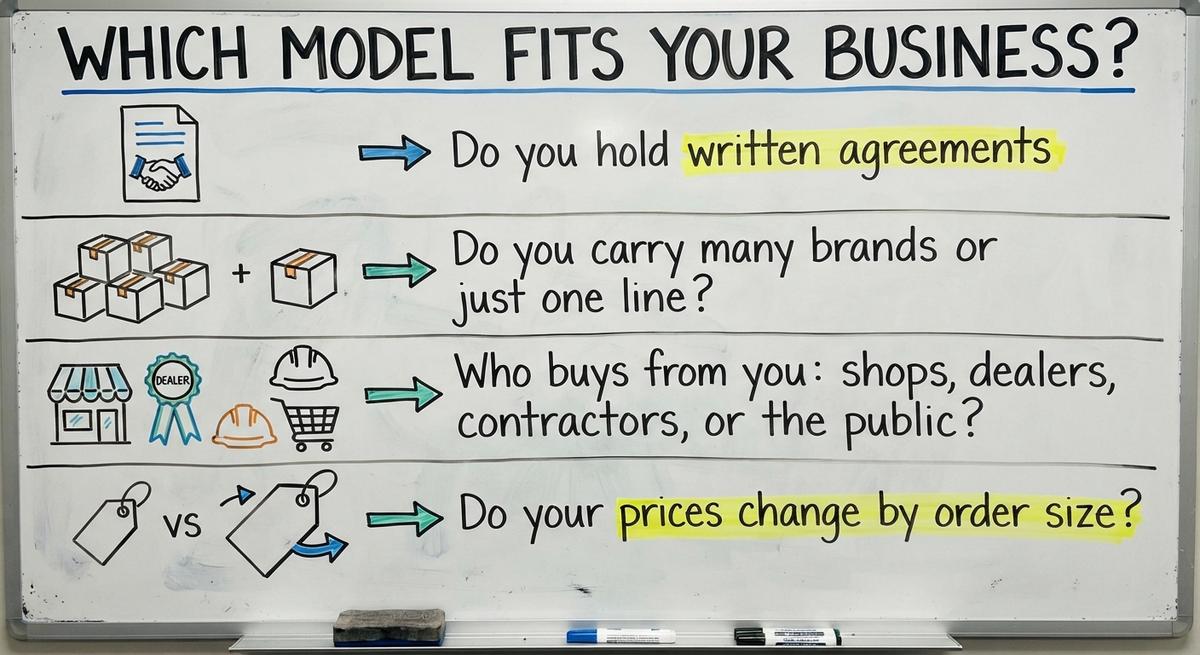
Which Model Fits Your Business?
Most small operations land in a mix, and that is fine. Ask yourself these questions:
- Do you hold written agreements with makers that set territory or price?
- Do you carry many brands or just one line?
- Who buys from you: shops, dealers, contractors, or the public?
- Do your prices change by order size?
Yes to the first means you lean toward distribution. Yes to the last three means you lean toward wholesale. Both is common. How you work matters more than the label. For more on process, NIST offers vendor-neutral supply chain and inventory guidance.
Does Your Software Need to Know the Difference?
The Software Society builds custom workflow software for small teams in Columbus, Ohio, and beyond. Ask for a short review of your warehouse steps. You will see which manual tasks are worth replacing first.
Yes, but only to match how your operation really runs. The label does not matter to a tool. Your price tiers, maker rules, and order steps do.
Custom software can keep your accounting software for what it does well. It then replaces only the manual parts, such as spreadsheets and printed sheets. You need no big ERP and no forced move. Distribution management software does not have to be huge to help.
Frequently asked questions
Can you give me an example of wholesale distribution?
A company buys paper goods from 20 makers and sells cases to local restaurants and shops. It also holds a deal to supply one maker's line in a 3-county area. The first job is wholesale. The second is distribution. One firm does both.
Is a wholesaler the same as a distributor?
Not always. A wholesaler sells bulk goods to businesses, often from many makers. A distributor links a maker to sellers, usually under a formal agreement. One business can be both.
Do distributors work directly with makers?
Yes. A distributor usually holds an agreement with the maker. It may set a territory, a product line, or minimum orders.
How do margins differ between wholesale and distribution?
A wholesaler earns by buying in volume and selling at a markup. A distributor's margin may follow the maker's agreement, with rules on price or territory. Check your own contracts.
Who does a wholesaler sell to?
A wholesaler sells to retailers, restaurants, contractors, and other businesses that resell or use the goods. Sales to the public are rare.
Can one business be both a wholesaler and a distributor?
Yes. Many firms sell in bulk to shops and also hold maker agreements. That is why the phrase wholesale distribution is common.
Does the difference change how I run my warehouse or my software?
A little. Distribution may add lot tracking and return rules. Wholesale may add many price levels. Your tools should match your real steps, whatever the label.
Start with a free first look
A 30 minute call, your operation mapped, and a clear picture of what we would build. No obligation and nothing to install.
Book a callRelated guides
More on the same work.
Guides
- Distribution Management Software
- C2 Distribution
- Wholesale Inventory Software
- Dealer Distribution
- Distribution Inventory Management
- Business Distributors
- Cloud-based Purchase Order System
- Is a Distributor a Wholesaler
- Distributor Examples
- Distributor Rate
- Company Distributor
Common questions
- Difference Between a Wholesaler and a Distributor
- Difference Between a Dealer and a Distributor
- Wholesale Distribution Definition
- What is the Difference Between Aggregate and Item Inventory Management
- What is the Difference Between Warehousing and Inventory Management
- Wholesale vs Distributor
- Wholesale Distributor Meaning
- Wholesale Distributors Definition
- How to Manage Inventory Between Etsy and Shopify
- Distributor vs Wholesaler
- What is the Distributor
- Distributors vs Suppliers
- Dealer vs Distributor