

Wholesale Distributor Meaning
Wholesale distributor meaning in plain words: what a distributor does, how it earns money, and how it differs from a wholesaler or a retailer.
Book a callWhat Is the Wholesale Distributor Meaning?
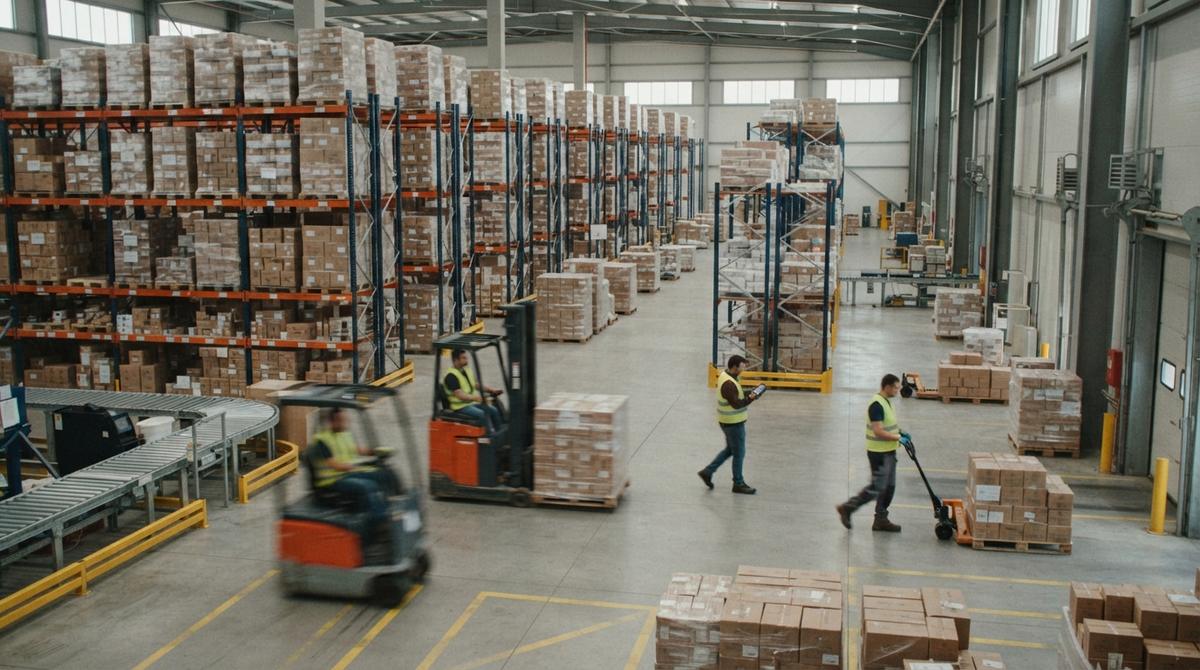
A wholesale distributor buys bulk goods from makers and sells them in smaller lots to other businesses. Buyers include retailers, contractors, restaurants, and repair shops. A distributor does not sell to the public as its main business. Bulk goods are items bought in large amounts at a low unit price. The maker gets one big customer. The buyer gets a fair order size. That is the wholesale distributors definition in plain words.
We build it for your operation, and the first look is free
If you would rather not compare products, describe how your operation already works and we build the system around it.
Reviewed November 2026.
No build cost. You see it running on your own process first, and the monthly subscription starts only once it is live.
Book a callWhat Does a Wholesale Distributor Do, and How Does It Earn Money?
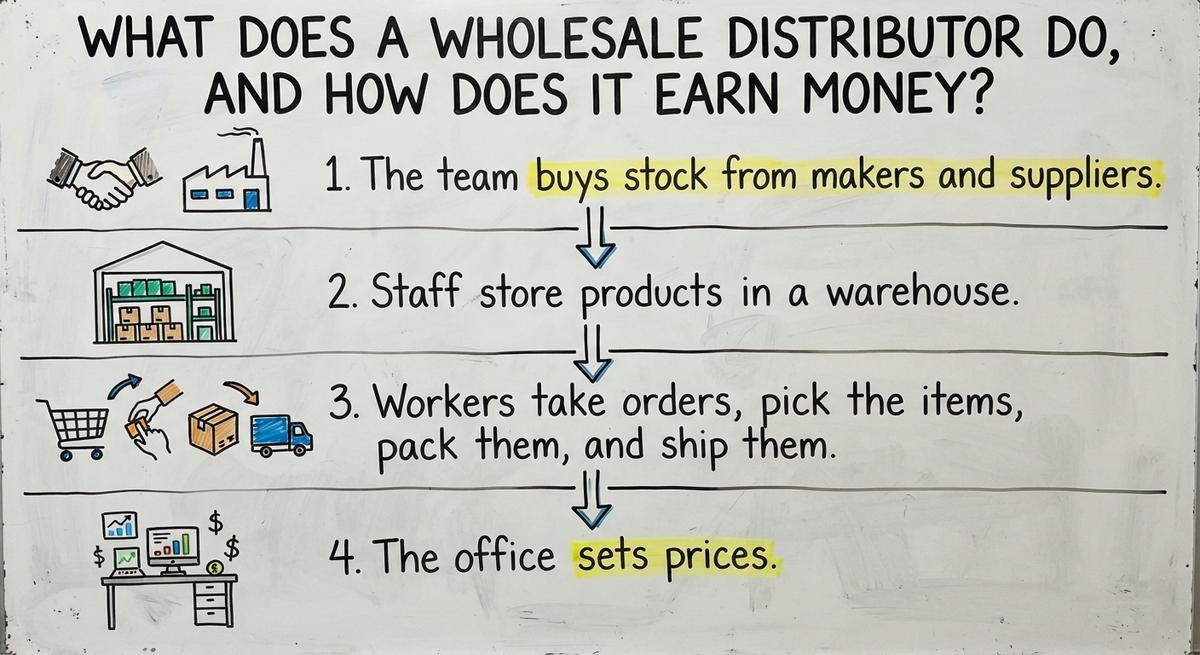
A wholesale distributor buys, stores, sells, and ships goods every day. The job sits in the middle of the supply chain, which is the path goods take from maker to buyer. A distribution business links both sides.
The daily work
The daily work follows a set order. Each step has a place where errors creep in.
- The team buys stock from makers and suppliers.
- Staff store products in a warehouse, a large building built to hold goods.
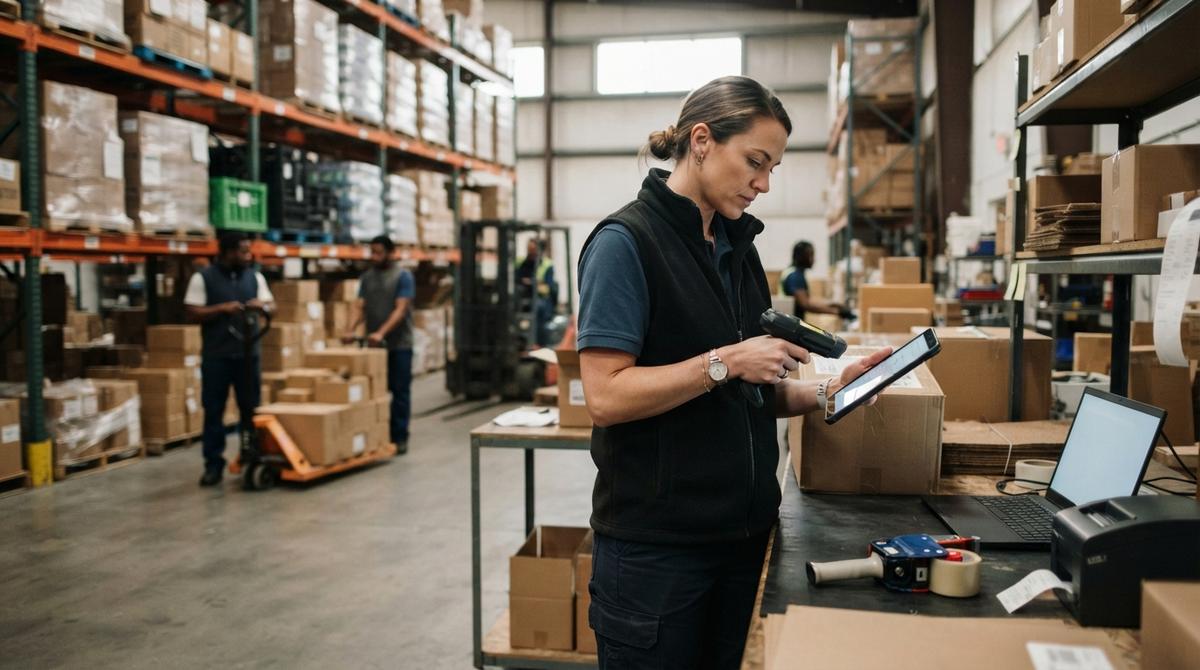
- Workers take orders, pick the items, pack them, and ship them.
- The office sets prices, handles returns, and manages customer accounts.
Counts matter by law, too. In IRS Publication 538, the agency states: "To figure taxable income, you must value your inventory at the beginning and end of each tax year." A distributor that cannot count its stock cannot file a clean return.
How a distributor makes money
A distributor buys at a low price and sells at a markup, which is an amount added on top of cost. Margins are thin. One wrong pick or one lost return can wipe out the gain from many sales. Some distributors add income from delivery fees, services, or private label items. Private label items are goods sold under the distributor's own name. On thin margins, accuracy is the profit.
Is a Wholesale Distributor the Same as a Wholesaler?
Nearly, yes. Most people use both words for the same job, and the line between them is blurry. A distributor has a closer tie to a maker, such as a deal to carry certain brands. A wholesaler buys a wide mix of goods and resells them with no such tie. That is the wholesaler vs distributor split, and the terms overlap in daily use. Ask about brand deals when the difference matters to you.
How is a distributor different from a retailer?
A retailer sells to the public. A distributor sells to other businesses. The gap shows up in how each one sells.
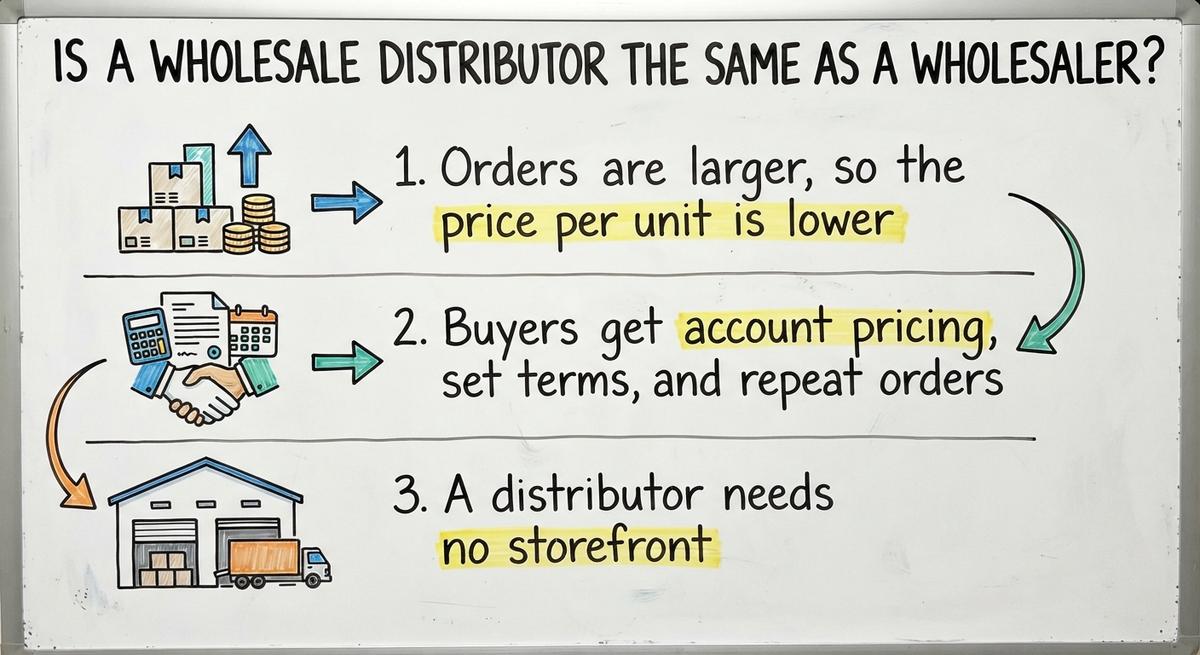
- Orders are larger, so the price per unit is lower.
- Buyers get account pricing, set terms, and repeat orders.
- A distributor needs no storefront, only space to hold and ship goods.
The buyer, not the product, draws the line between the two.
Not sure this is the right shape for your operation
Describe how the work runs today. We map it on a call and show you what it would look like built around that, before you spend anything.
Book a call
What Types of Wholesale Distributors Are There?
Wholesale distributors split by range and by maker tie. Range comes first.
- Broadline distributors carry many product types.
- Specialty distributors focus on one category.
- Exclusive distributors hold the only right to sell a brand in an area.
- Non-exclusive distributors share that right with others.
Common fields include industrial parts, food, building supply, and medical supply. A shop that stocks repair parts and supplies may fall under mro inventory meaning, which covers items used to keep a site running.
Businesses use business distributors for good reasons. Makers reach buyers without handling thousands of small accounts. Retailers and trades buy many items in one place. Delivery is faster, and order sizes are smaller than buying direct. Shared storage and shipping spread the cost. One call to a distributor replaces ten calls to makers.
What Does a Small Distributor Need to Run Well?
A small distributor needs 4 things to run well: clean orders, true stock counts, clear pick lists, and correct customer pricing. Many shops with 5 to 100 staff run on accounting software plus spreadsheets, simple databases, printed sheets, and email. That setup works until volume grows.

The gaps show up in plain ways:
- Staff key the same order twice, once in email and once in the books.
- An order slips through and the buyer calls to ask where it is.
- The stock count on screen does not match the shelf.
The cost adds up. Say 2 people spend 5 hours a week fixing these errors at $22 an hour. That is $11,440 a year. The US Bureau of Labor Statistics tracks pay for stock clerks and order fillers, so you can check your own wage. Receiving is the step where goods first arrive, so ask what does receiving mean in a warehouse? and fix errors there first. Small gaps repeat every day, and the yearly bill is real.
How Can Custom Software Help a Wholesale Distributor?
The Software Society is a Columbus, Ohio team. We build the software, the website, and the search presence together. If you want to talk through your gaps, start there. Fix the 1 or 2 steps that cost you most.
Custom software helps by replacing the manual steps and leaving the rest alone. The team builds it around how your shop already works. You do not need a full move off current tools. Your accounting software can stay where it helps, with other software handling orders, stock counts, and pick lists around it.
This works at small scale. You do not need a big rollout, and the meaning of warehouse management system, a tool that tracks stock in a building, does not have to mean a huge buy. The Census Bureau tracks sales and inventories for wholesale firms. NIST offers vendor-neutral guidance on supply chain and inventory process.
Frequently asked questions
What is the meaning of wholesale distributor?
A wholesale distributor buys goods in bulk from makers and sells them in smaller lots to other businesses, such as retailers, contractors, and restaurants.
What does a wholesale distributor do?
A wholesale distributor buys stock, stores it in a warehouse, takes orders, then picks, packs, and ships them. It also sets prices and handles returns and accounts.
What is the difference between a wholesaler and a distributor?
A distributor often has a closer tie to a maker, such as a deal to carry certain brands. A wholesaler resells a wide mix of goods. The terms overlap in daily use.
How is a distributor different from a retailer?
A retailer sells to the public. A distributor sells to businesses in larger orders at a lower price per unit, with account pricing and repeat orders.
How does a wholesale distributor make money?
A distributor buys at a low price and sells at a markup. Some also earn from delivery, services, or private label items.
What types of wholesale distributors are there?
Broadline distributors carry many product types. Specialty distributors focus on one category. Others are exclusive or non-exclusive for a brand.
Why do businesses buy from distributors?
Buyers get one place for many items, faster delivery, and smaller orders than buying direct. Makers reach more buyers without managing many small accounts.
Start with a free first look
A 30 minute call, your operation mapped, and a clear picture of what we would build. No obligation and nothing to install.
Book a callRelated guides
More on the same work.
Guides
- Wholesale Inventory Software
- Business Distributors
- Is a Distributor a Wholesaler
- Distributor Examples
- Distributor Rate
- Company Distributor
- Dealer and Distributor
- Fnsku Meaning
Common questions
- Wholesale vs Distributor
- Wholesale Distributors Definition
- Difference Between Wholesale and Distribution
- Wholesale Distribution Definition
- Distributor vs Wholesaler
- What is the Distributor
- Difference Between a Wholesaler and a Distributor
- Distributors vs Suppliers
- Dealer vs Distributor
- How Distributors Work
- Difference Between a Dealer and a Distributor
- Warehouse Meaning
- What Does Receiving Mean in a Warehouse?
- Meaning of Warehouse Management System
- 3PL Meaning
- Mro Inventory Meaning