

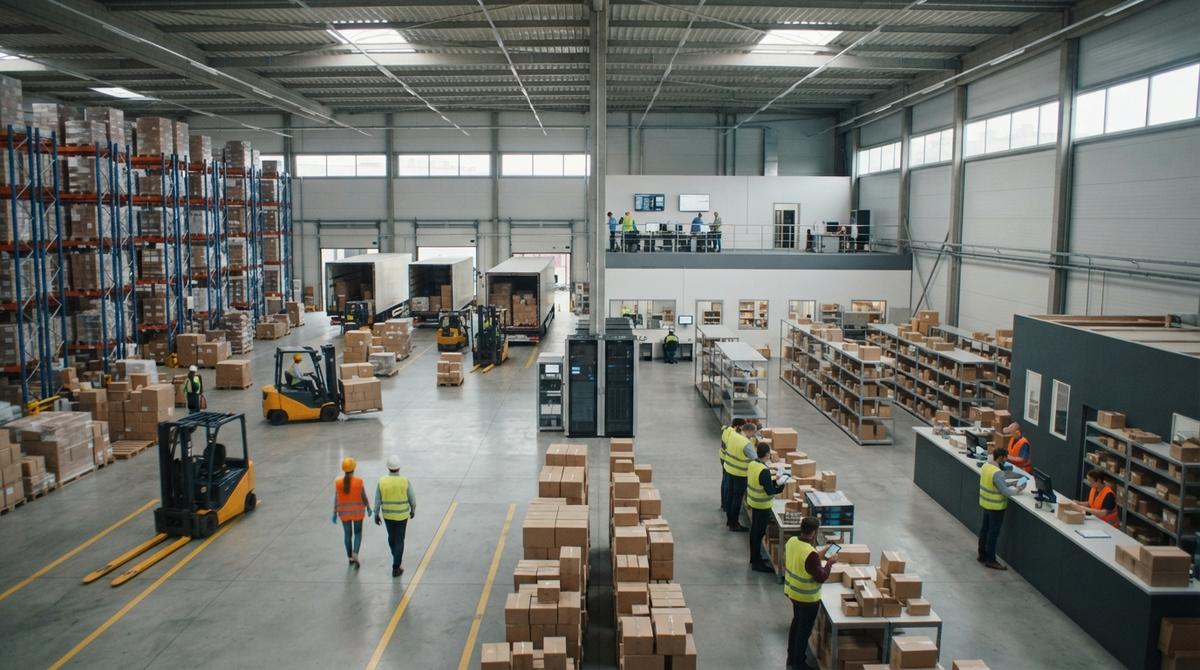
Difference Between a Dealer and a Distributor
A distributor sells in bulk to dealers and other businesses. A dealer sells to the end user. See the difference between a dealer and a distributor.
Book a callWhat Is the Difference Between a Dealer and a Distributor?
A distributor buys in bulk from makers and sells to dealers and other businesses. A dealer buys from distributors or makers and sells to the end user, the person or firm that uses the product. Distributors sell to resellers. Dealers sell to users.
Some trades blur the two terms. Check how your own market uses them. Reviewed November 2026.
We build it for your operation, and the first look is free
If you would rather not compare products, describe how your operation already works and we build the system around it.
No build cost. You see it running on your own process first, and the monthly subscription starts only once it is live.
Book a callWhat Is a Distributor and What Is a Dealer?
The two roles sit at different steps of the supply chain, the path a product takes from maker to user. Each step has its own job.

What Does a Distributor Do?
A distributor is a firm that buys large lots from makers and resells them to dealers. It keeps stock in a warehouse and ships smaller orders to each reseller. It also sets credit terms, takes returns, and backs dealers with product support. Its money comes from volume, with a small margin on each item. Counts matter by law too. IRS Publication 538 states: "To figure taxable income, you must value your inventory at the beginning and end of each tax year." A distributor lives on volume, so its stock counts must be right.
What Does a Dealer Do?
A dealer is a firm that sells to the final customer, such as a contractor, a shop, or a business. Its stock is narrower, and it restocks from a distributor. It adds local service, advice, installation, or repair. Each sale brings a higher margin, but the volume is lower. So a dealer earns more per sale because it sells help along with the product.

Dealer vs Distributor: Side-by-Side Comparison
The table shows the dealer vs distributor split in six rows.
| Point | Distributor | Dealer |
|---|---|---|
| Buys from | Makers | Distributors or makers |
| Sells to | Dealers and businesses | End users |
| Order size | Large | Small |
| Stock level | Deep | Narrow |
| Margin per sale | Lower | Higher |
| Customer tie | Account and terms | Local and personal |
In short, the distributor earns less per item and moves far more items.

How Are Dealers and Distributors Different From Wholesalers and Retailers?
A wholesaler sells in bulk to businesses. So a wholesale distributor is common, and the two terms overlap. The difference between a wholesaler and a distributor is the maker link. Distributors often hold a formal agreement with the maker, sometimes with a set territory. In a distributor vs wholesaler debate, that agreement is the test. A retailer sells to the public. A dealer sells to businesses or the public, depending on the trade.
Can One Company Be Both a Dealer and a Distributor?
Yes, one firm can play both roles. It sells to resellers on some lines and direct to users on others. That means 2 price lists, 2 sets of terms, and 2 order sizes. Each customer type needs a clear label in the records. Mixed firms stay in order only when every customer carries a type.
Not sure this is the right shape for your operation
Describe how the work runs today. We map it on a call and show you what it would look like built around that, before you spend anything.
Book a call
Why the Difference Matters for Price Tiers, Stock, and Orders
The split decides what each customer pays, waits for, and must buy. Price tiers are set prices for each customer group. A dealer gets one tier, and an end user gets another. Terms and minimum orders differ too.
Stock rules differ as well. Dealers expect fast, complete shipments. A short pick means a lost sale down the chain. Yet many teams keep tier and stock rules in Excel, on printed sheets, or in one person's head. Errors follow.
The cost adds up. Say 2 staff spend 5 hours a week fixing price and stock mistakes at $20 an hour. That is $10,400 a year. The US Census Bureau tracks wholesale sales and inventories each month. Stock is large money for these firms.
How Do Small Distributors Track Both Customer Types?
Most small teams run on accounting software, with spreadsheets and email around it. That setup can stay. Start by tagging each customer by type. Then tie price tiers and terms to that tag, so the right price shows up on its own.
Software can follow how your shop already works. We keep the accounting software where it helps and replace only the manual steps. The NIST Manufacturing Extension Partnership offers neutral guidance on supply chain and inventory process. One clear tag per customer removes most price errors.
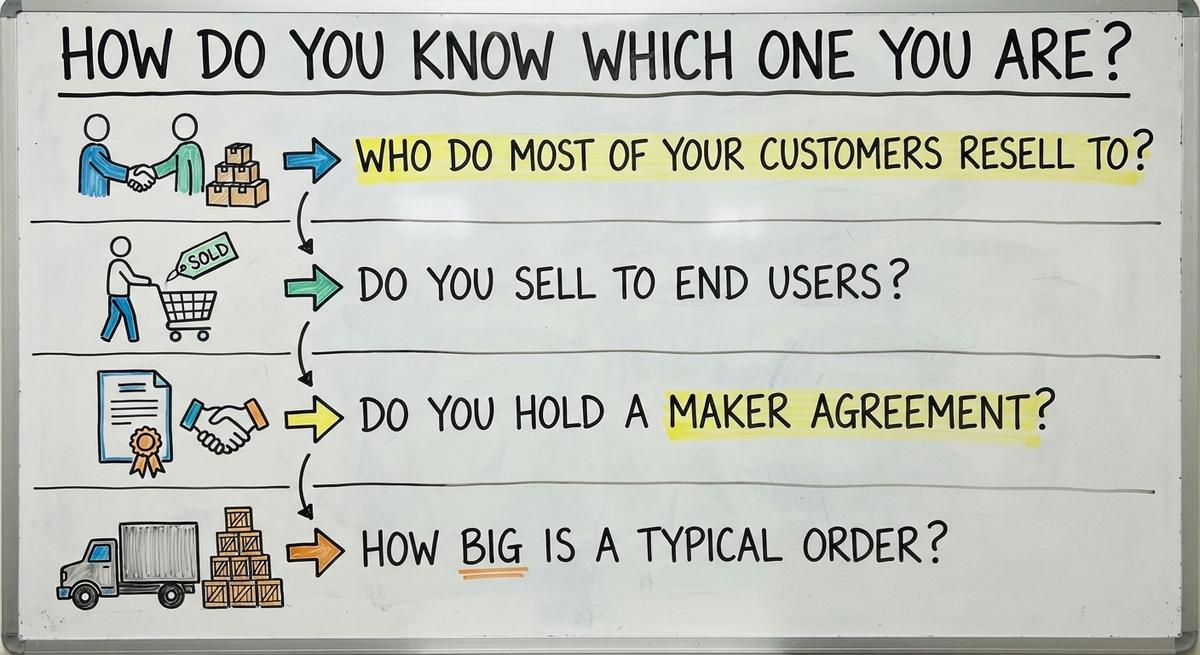
How Do You Know Which One You Are?
You are a distributor if most of your buyers resell what you sell. You are a dealer if most of them use it. Ask 4 questions:
- Who do most of your customers resell to?
- Do you sell to end users?
- Do you hold a maker agreement?
- How big is a typical order?
Next, write down each customer group and the rules that apply to it. Do this before you change any tools. The Software Society, in Columbus, Ohio, builds software around how your operation already runs. Reach out when your list of rules outgrows your spreadsheets.
Frequently asked questions
What's the difference between a vendor and a distributor?
A vendor is any firm that sells goods or services to you. A distributor is one kind of vendor. It buys in bulk from makers and resells to dealers and other businesses. Every distributor is a vendor, but many vendors are not distributors.
Who does a distributor sell to?
A distributor sells to dealers, resellers, and other businesses. Some also sell direct to end users on certain lines.
Who does a dealer buy from?
A dealer buys from a distributor or straight from the maker. Small dealers lean on distributors for restocking.
Is a distributor the same as a wholesaler?
Not always. A wholesaler sells in bulk to businesses, and many distributors do the same. A distributor usually holds a formal agreement with the maker. A wholesaler may not.
Which one earns a higher margin per sale?
A dealer earns the higher margin per sale. A distributor earns a smaller margin on each item but sells far more items.
Can a company be both a dealer and a distributor?
Yes. Many firms sell to resellers on some lines and to end users on others. They need separate price lists, terms, and order sizes for each group.
How should a business track different customer types and price levels?
Tag each customer by type. Tie price tiers, terms, and minimum orders to that tag. Keep one source for those rules, not spreadsheets, paper sheets, and memory.
Start with a free first look
A 30 minute call, your operation mapped, and a clear picture of what we would build. No obligation and nothing to install.
Book a callRelated guides
More on the same work.
Guides
- Dealer and Distributor
- Dealer Distribution
- Business Distributors
- Is a Distributor a Wholesaler
- Distributor Examples
- Distributor Rate
- Company Distributor
- Distribution Management Software
- Cloud-based Purchase Order System
- C2 Distribution
- Wholesale Inventory Software
Common questions
- Difference Between a Wholesaler and a Distributor
- Difference Between Wholesale and Distribution
- Dealer vs Distributor
- What is the Difference Between Aggregate and Item Inventory Management
- What is the Difference Between Warehousing and Inventory Management
- Wholesale vs Distributor
- Wholesale Distributor Meaning
- Distributor vs Wholesaler
- What is the Distributor
- Distributors vs Suppliers
- How Distributors Work
- Wholesale Distributors Definition
- How to Manage Inventory Between Etsy and Shopify