

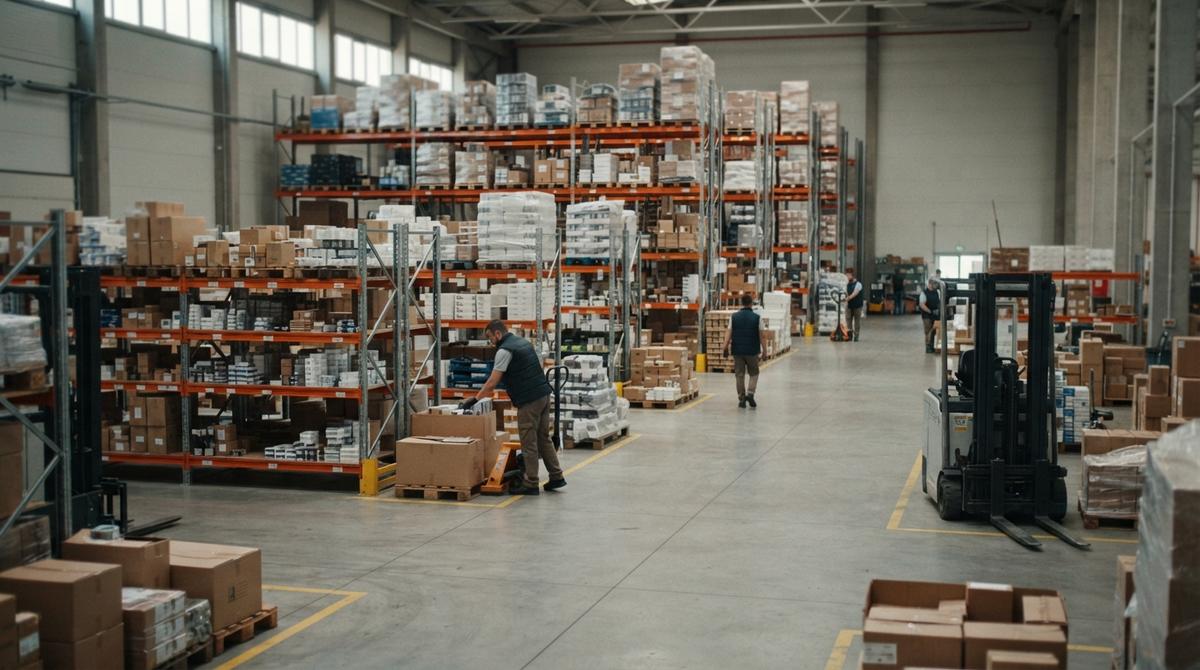
Define Wholesale Distributor
Define wholesale distributor in plain words. Learn what a distributor does, how it differs from a retailer, and how small teams can fix manual work.
Book a callDefine Wholesale Distributor: The Short Answer
A wholesale distributor buys goods in bulk from makers and sells them in smaller bulk lots to businesses that resell or use them. The distributor sits in the middle, between the maker and the buyer. That is the short answer to what is a wholesale distributor.
Reviewed November 2026.
It also shows what the job looks like on a normal day for a team of 5 to 100 people.
We build it for your operation, and the first look is free
If you would rather not compare products, describe how your operation already works and we build the system around it.
No build cost. You see it running on your own process first, and the monthly subscription starts only once it is live.
Book a callWhat Does a Wholesale Distributor Do?
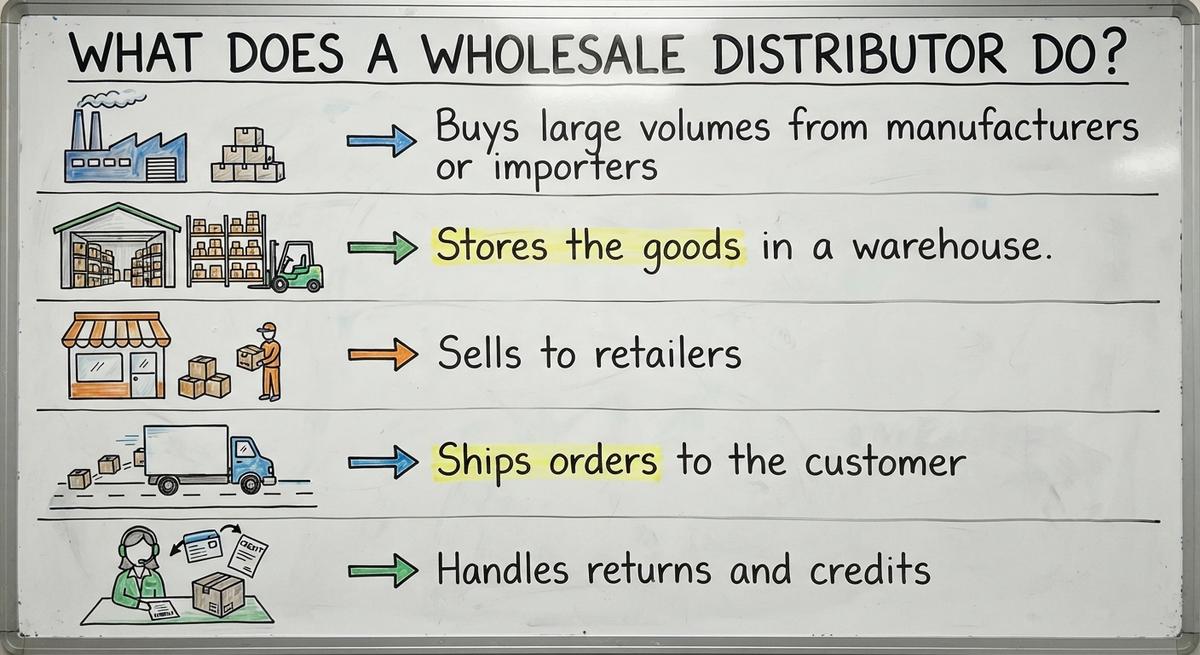
A wholesale distributor does 5 core jobs. Each one moves goods from the maker to the buyer.
- Buys large volumes from manufacturers or importers.
- Stores the goods in a warehouse.
- Sells to retailers, contractors, restaurants and other businesses.
- Ships orders to the customer.
- Handles returns and credits.
The tax office cares about the stock on the shelf. IRS Publication 538 says, "To figure taxable income, you must value your inventory at the beginning and end of each tax year." Counting stock is a legal duty, not a choice.
Where Does a Wholesale Distributor Sit in the Supply Chain?
A wholesale distributor sits between the maker and the business buyer in the supply chain, the path goods take from factory to user. The chain is simple: maker, distributor, retailer or business buyer, end user.
Makers like a few big buyers. One large order is cheaper to fill than 500 small ones. Retailers like one source for many brands. One call, one invoice and one truck beat 20 separate accounts.
The distributor makes both sides easier. The NIST Manufacturing Extension Partnership offers vendor-neutral guidance on supply chain and inventory process. The distributor's job is to keep that chain smooth.
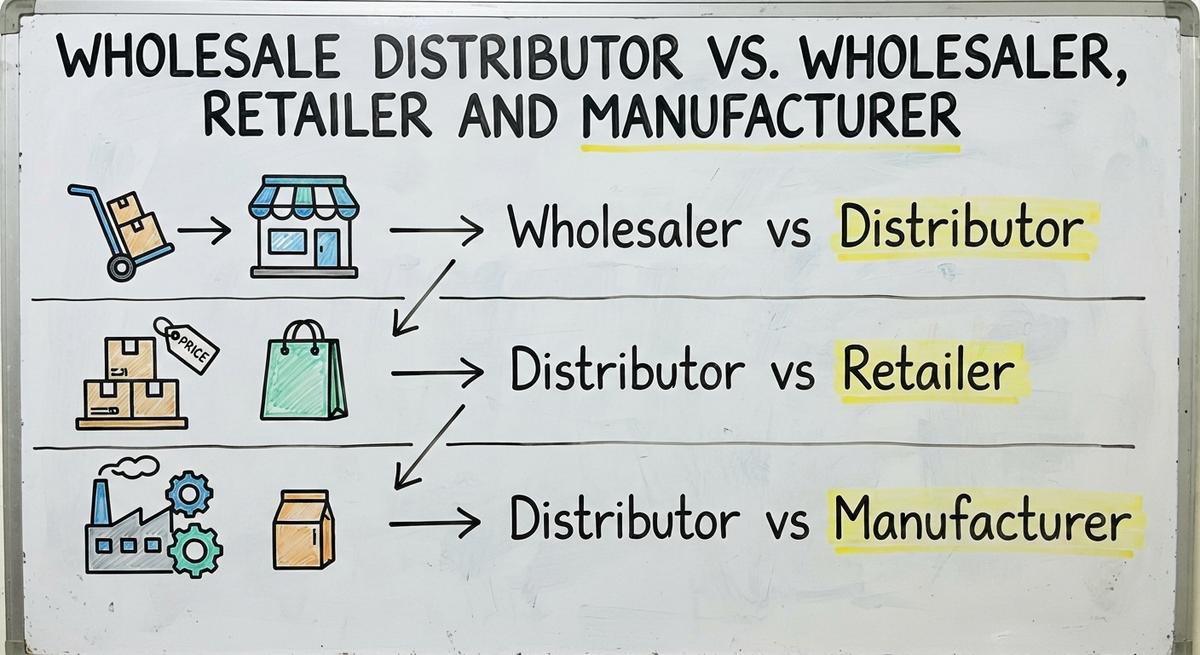
Wholesale Distributor vs. Wholesaler, Retailer and Manufacturer
A wholesale distributor differs from 3 nearby players: the wholesaler, the retailer and the maker. Each gets a short answer below.
Wholesaler vs Distributor
Is a distributor a wholesaler? Often yes. People use the two words as one thing. The difference between wholesale and distribution shows up in the details.
- A distributor often has a close tie to certain brands or product lines. It may offer more services.
- A wholesaler often buys and resells many lines from many makers.
Usage varies by industry. In some trades the words swap freely. In others, a distributor vs wholesaler split is firm. Ask which one your suppliers and customers mean.
Not sure this is the right shape for your operation
Describe how the work runs today. We map it on a call and show you what it would look like built around that, before you spend anything.
Book a callDistributor vs Retailer
The distributor vs retailer split is who buys. A retailer sells to the public. A distributor sells to businesses only.
- Orders are larger and the price per unit is lower.
- Customers are fewer and place repeat orders.
- Terms like net 30 are common. That means the buyer pays 30 days after the invoice.
A distributor wins by keeping accounts, not by winning walk-in traffic.
Distributor vs Manufacturer
A manufacturer makes the product. A distributor moves and stocks it. The distributor adds local stock, quick delivery and credit terms that a factory will not offer a small buyer.
Some distributors add light work too, such as kitting (bundling parts into one pack) or labeling. The maker builds the goods, and the distributor gets them to the customer fast.
Main Types of Wholesale Distributors
The types of wholesale distributors fall into 2 pairs. One pair splits by range of products. The other splits by the rights and services a distributor offers.
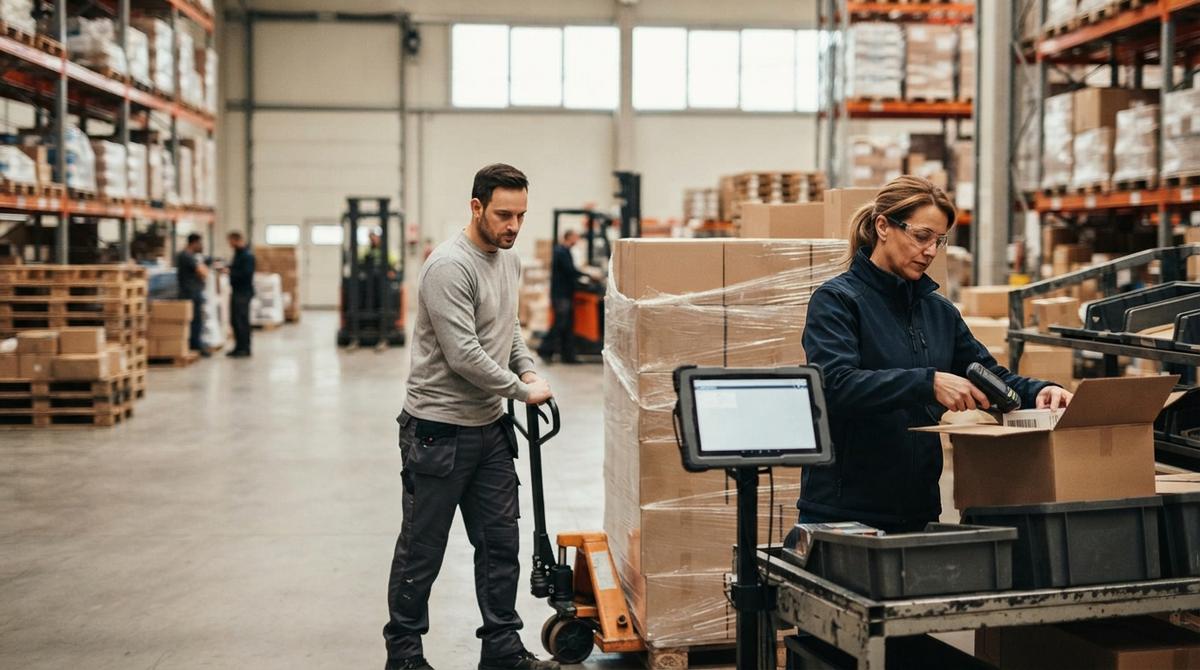
Broadline and Specialty Distributors
A broadline distributor carries many product types. A food service distributor that stocks produce, dry goods, paper and cleaning supplies is one example.
A specialty distributor focuses on one niche. A supplier that sells only plumbing parts is one. So is a supplier of restaurant equipment.
Broadline wins on one-stop buying. Specialty wins on deep knowledge of one trade.
What Is an Exclusive Distributor, and What Is a Value-Added One?
An exclusive distributor holds the sole right to sell a brand in an area. A value-added distributor adds services on top of the goods. Those services include assembly, custom packaging or technical help.
A distributor can be both. Exclusive rights protect the territory. Added services protect the price.
Examples of Wholesale Distributors
Wholesale distribution shows up in many trades. Common examples include:
- Food service suppliers that stock restaurants and cafeterias.
- Building supply yards that serve roofers and framers.
- Auto parts suppliers that serve repair shops.
- Medical supply firms that serve clinics.
- Janitorial goods suppliers that serve offices and schools.
All five buy in bulk and sell to other businesses.
How Wholesale Distributors Make Money
How distributors make money comes down to 3 streams. Margin is the first. The distributor buys at one price and sells at a higher one. The gap pays for rent, trucks and staff.
Volume rebates are the second. A supplier pays money back when the distributor hits a buy goal.
Fees are the third. Delivery, special packaging and rush orders can carry a charge.
Margins are thin, so small errors cost real money. A wrong price on 1 order line or a missed stock count eats the profit. Tight stock and firm price control protect the margin.
What Distributors Must Keep Track Of, and Why Work Gets Messy
A distributor tracks a long list of things every day. The daily list looks like this:
- Stock levels and bin locations in the warehouse.
- Customer price lists and special deals.
- Buy orders, receiving and backorders.
- Shipping, returns and customer credit.
The Census Bureau's Monthly Wholesale Trade report tracks wholesale sales and inventories each month. Stock is the biggest asset these firms hold.
The comparison is easier when one option is built for you
Off-the-shelf means fitting your process to the software. We do it the other way round, and the first look costs nothing.
Book a callWhy Daily Work Gets Messy at Small Scale
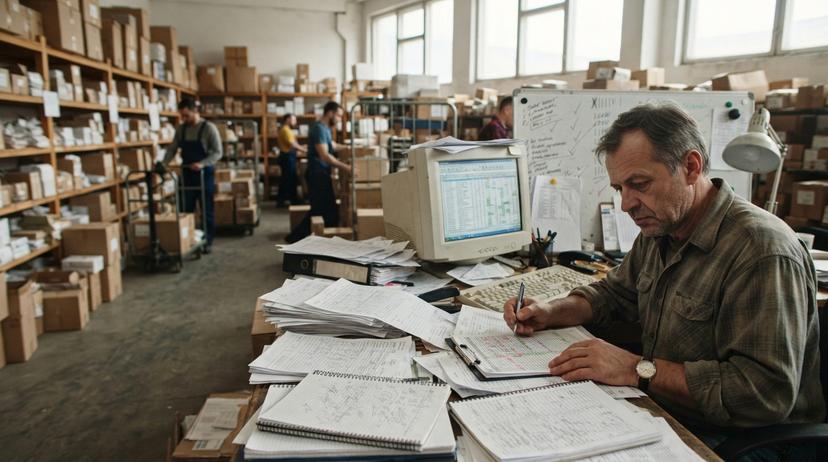
Teams of 5 to 100 often run on an accounting package, spreadsheets, Access databases, printed sheets and email. This is a common pattern, not a claim about any one company.
Here is how one order gets typed more than once:
- A customer emails an order.
- Someone retypes it into a spreadsheet.
- Someone prints a pick sheet.
- Someone retypes it again into the accounting package.
Each retype is a chance for a wrong count or price. Errors grow with order volume.
The cost adds up. Take 3 people who spend 6 hours a week on retyping at $22 an hour. That is $20,592 a year. The Bureau of Labor Statistics publishes pay data for stock clerks and order fillers, so you can swap in your own wage.
Retyping is a steady cost, and it hides in plain sight.
Do You Need a Big ERP to Run a Distributor?
No, not always. An ERP is a large system that runs finance, stock and orders in one place. Many small distributors fear the long, costly setup, and the fear is fair.
There is a middle path. Keep your accounting package for the books. Replace only the manual steps around it. Accounting software, for one, can stay as the accounting home while a lighter tool handles orders and stock.
Start with the step that costs the most time. Fix that one, then move on to the next. You can fix the manual parts without a big ERP move.
How Can Custom Software Fit the Way You Already Work?
Custom software can fit your work because it is built around your current operation. You do not bend your team to a stock product.
The software replaces three things:
- Spreadsheets that hold stock counts.
- Paper pick sheets that walk the floor.
- Email order entry that someone retypes.
It works at small scale, so a team of 5 gets the same care as a team of 100.
The Software Society is based in Columbus, Ohio. It builds the software, the website and the search presence as one team. The result is one connected system instead of five loose parts.

Signs You Run a Wholesale Distribution Business
You run a wholesale distribution business if most of these are true:
- You sell to businesses, not the public.
- You buy goods in bulk.
- You hold stock in a warehouse or fulfillment center.
- You offer account terms such as net 30.
- You ship orders and take returns.
Fulfillment centers and warehouses that store and ship for other firms fit this list too. Three or more checks mean you are a distributor, whatever your sign says.
Next Steps for Your Distribution Business
To define wholesale distributor in one line: it buys in bulk, holds stock and sells to businesses. Now look at your own week.
List every manual step that slows your team. Note where an order gets typed twice. Note where a count goes wrong.
That list is the start of a fix. If you want a second set of eyes, talk with The Software Society about a fit. No big move is needed.
Frequently asked questions
How do you define a wholesale distributor?
A wholesale distributor buys goods in bulk from makers and sells them in smaller bulk lots to businesses that resell or use them. It sits between the maker and the buyer. It stores stock, ships orders and offers account terms.
What does a wholesale distributor do?
A wholesale distributor buys large volumes from makers, stores goods in a warehouse, sells to retailers and other businesses, ships orders and handles returns. It also tracks inventory, prices and customer credit.
What is the difference between a wholesaler and a distributor?
The two words often mean the same thing. A distributor often has a closer tie to certain brands and may offer more services. A wholesaler often buys and resells many lines. Usage varies by industry.
How do wholesale distributors make money?
Distributors earn margin between the buy price and the sell price. They also earn volume rebates from suppliers and fees for services such as delivery or custom packaging. Tight stock and price control protect that margin.
How is a distributor different from a retailer or a manufacturer?
A retailer sells to the public, and a distributor sells only to businesses in larger orders at lower unit prices. A manufacturer makes the product. A distributor stocks it, delivers it fast and offers credit terms.
What are the types of wholesale distributors?
The main types are broadline, specialty, exclusive and value-added. Broadline carries many product types. Specialty serves one niche. Exclusive holds sole rights to a brand in an area. Value-added adds services such as assembly or packaging.
Does a small distributor need a big ERP?
Not always. A small distributor can keep its accounting package and replace only the manual steps, such as spreadsheet stock counts, paper pick sheets and email order entry. Fix the costliest step first and build from there.
Start with a free first look
A 30 minute call, your operation mapped, and a clear picture of what we would build. No obligation and nothing to install.
Book a callRelated guides
More on the same work.
Guides
- Wholesale Inventory Software
- Business Distributors
- Is a Distributor a Wholesaler
- Distributor Example
- Distributor Examples
- Distributor Rate
- Company Distributor
- Software for Distributors
- Dealer and Distributor
- Distributor Markets
- Distributor Brand
Common questions
- Wholesale vs Distributor
- Wholesale Distributor Meaning
- Wholesale Distributors Definition
- Difference Between Wholesale and Distribution
- Wholesale Distribution Definition
- Wholesale Distribution Meaning
- Distributor vs Wholesaler
- What is the Distributor
- Difference Between a Wholesaler and a Distributor
- Distributors vs Suppliers
- Dealer vs Distributor
- How Distributors Work
- Difference Between a Dealer and a Distributor