


How To Manage Inventory Fallout 76
To manage inventory in Fallout 76, carry less, store more, and scrap often. Keep one main weapon, one backup, ammo, and a few healing items. Move the rest to your stash box. Scrap junk at a workbench. Sell or drop what is left. Do this after every trip.
The holding cost is the part nobody prices. 500 units sitting for 90 days, at 3 dollars a unit a month, is 4,500 dollars of shelf time on stock that has not sold. Turning that stock 4 times a year instead of 2 halves it.
This guide was reviewed in October 2026. Game patches change limits, so check each number in your own game.
Book a callWhy Inventory Fills Up So Fast in Fallout 76
Fallout 76 inventory fills fast because carry weight is limited, and every pickup adds to it. Loot, junk, ammo, and aid items all stack up. Soon you are overencumbered, which means you carry more than the game lets you move freely. That slows your walk. It can also block fast travel until you drop some items.
The cure is not a magic perk. It is a habit. Carry less. Store more. Scrap often. The rest of this guide shows how to do that in small steps.
We build it for your operation, and the first look is free
If you would rather not compare products, describe how your operation already works and we build the system around it.
No build cost. You see it running on your own process first, and the monthly subscription starts only once it is live.
Book a callHow Does Fallout 76 Carry Weight Work?
Fallout 76 carry weight is a cap on the total weight of what you hold. Every item shows its weight in the item list. Add them up and you get your load. Your base limit rises with the Strength stat.
Patches change limits, so read the current numbers in your game. Do not trust old guides, including this one, for exact figures. Think of it like a labeled shelf. GS1, the standards group behind barcodes, calls itself "the global language of business", and a weight tag on each item is a small shared language too. Read the tags and you will know what to cut.

What Should You Keep in Your Inventory?
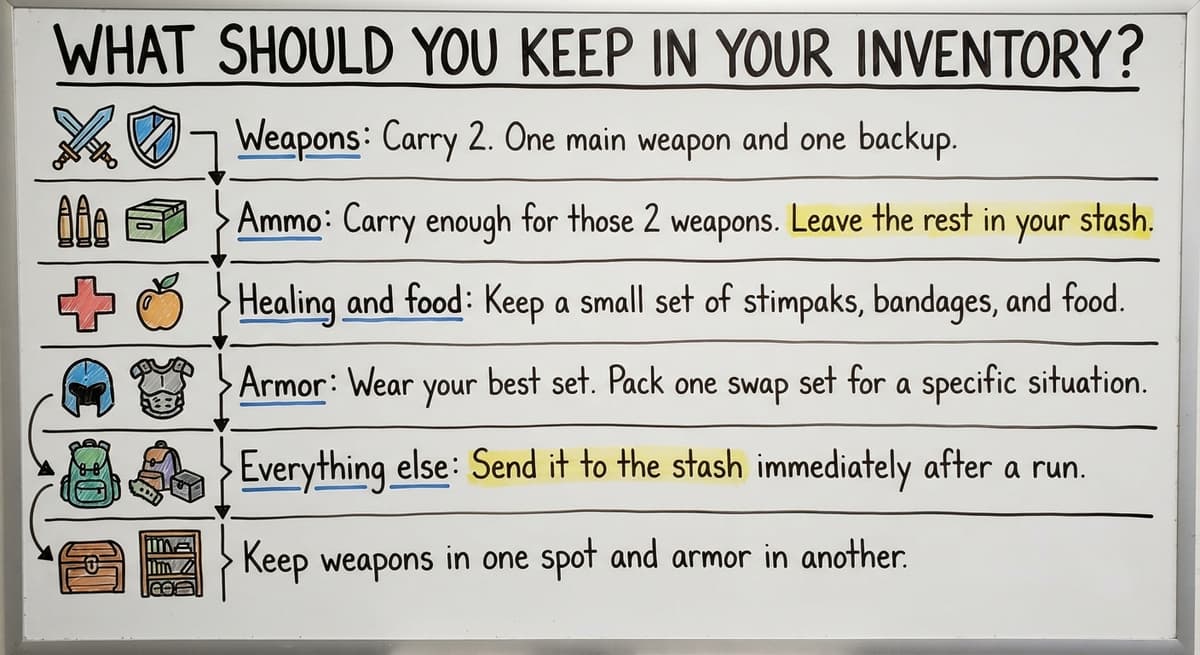
You should keep only what you will use on this trip: one main weapon, one backup, and the ammo they use. Everything else can go to the stash. A short kit keeps your load low and your choices simple.
Use this list as a start:
- Weapons: Carry 2. One main weapon and one backup that uses a different ammo type is a good pair.
- Ammo: Carry enough for those 2 weapons. Leave the rest in storage.
- Healing and food: Keep a small set of stimpaks, clean water, and a few meals.
- Armor: Wear your best set. Pack one swap set for a different fight or a heavy load.
- Everything else: Send it to the stash.
If an item has not helped you in 3 trips, it does not need to ride with you.
How Do You Use the Stash Box Well?
You use the stash box well by treating it as free storage you visit often. It sits at your camp and at many other spots in the world. Open it before you leave on a big loot run and after you return.
The stash has its own weight limit, so check the current number in your game. Once it fills, you must scrap, sell, or drop items too. Sort by type so you can find things fast:
- Keep weapons in one spot and armor in another.
- Keep aid items together, apart from junk.
- Keep ammo near the top of the list.
- Keep mods and plans in their own group.
A tidy stash saves minutes every session. A messy one hides the item you need.
The comparison is easier when one option is built for you
Off-the-shelf means fitting your process to the software. We do it the other way round, and the first look costs nothing.
Book a callHow Do You Scrap Junk the Right Way?
You scrap junk by breaking it into basic parts at a workbench. Junk is the odd stuff you pick up, like a bent pipe or a tin can. Scrapping turns it into basic components such as steel or wood. Those parts weigh less than the many items they came from.

Here is a simple example. Say you hold 10 junk items at 2 pounds each. That is 20 pounds. Suppose they break down into parts that weigh 5 pounds in total. You just freed 15 pounds. Weights differ in your game, so look at your own item list.
Follow these steps:
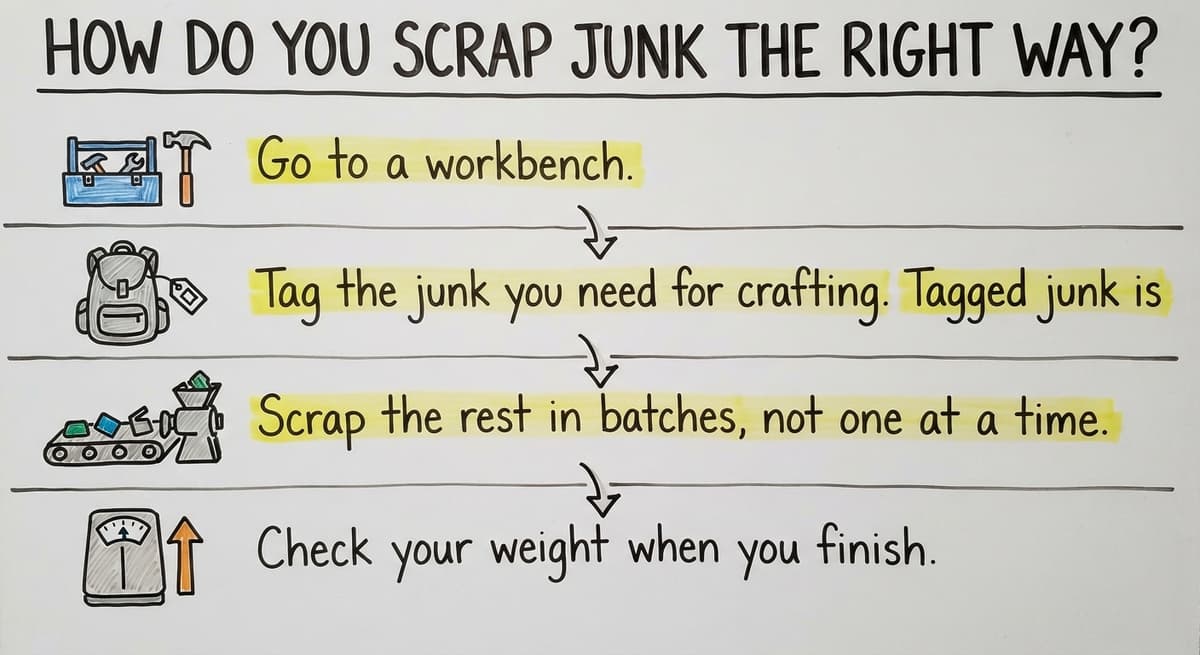
- Go to a workbench.
- Tag the junk you need for crafting. Tagged junk is flagged for search.
- Scrap the rest in batches, not one at a time.
- Check your weight when you finish.
Scrapping in bulk is the quickest way to win back space.
Which Perks and Gear Reduce Weight?
Perk cards and gear can cut or raise your limit. Some cards lower the weight of junk, food, or weapons. Some armor mods and backpacks add carry weight. You do not need all of them.

Pick one or two weight perks that match how you play. A crafter may want a card for junk. A fighter may want a card for guns and ammo. A player who cooks may want one for food.
Perk names and effects change with patches. Open the perk screen in your game and read the card text before you spend points. Choose by what you carry most, not by what sounds best.
What Does the Scrap Box Do?
The scrap box is a separate store for crafting components. It comes with a paid subscription, so it is optional. Free players can still manage well with the stash box and regular scrapping.
If you craft a lot, it can free up much space in your main stash. Details can change, so confirm them in your game before you count on it. If you skip it, nothing breaks. You just need to sort a bit more often.
How Do You Sell or Drop What You Don't Need?
You sell extras to vendors for caps, the game money. You can also list items at your own camp vendor for other players to buy. Anything you will never use should be scrapped or dropped.
Try this order:
- Sell duplicates: Two copies of the same gun? Sell one to a vendor.
- Set up a camp vendor: Price items other players may want, such as spare armor or plans.
- Scrap weapons and armor you will not use: You may get parts back.
- Drop the rest: Hoarding junk costs more than losing it.
Do a quick sort after every trip. It takes a few minutes and keeps the pile from growing.
See it running on your own process first
No build cost. The subscription starts once it is live and doing the job, not before.
Book a call
What Is a Simple Routine to Stay Under the Limit?
A simple routine has 3 steps: sort before, during, and after each trip. Run it every play session. It turns a messy bag into a habit you barely think about.
- Before a trip: Store extras at the stash. Load ammo and healing.
- During a trip: Pick up only items with real value. Skip the rest.
- After a trip: Scrap junk, stash gear, and sell the rest.
Repeat this each session. The habit is the same one a warehouse crew uses. Count what is on hand, move it to the right place, and clear what you do not need. The IRS says "To figure taxable income, you must value your inventory at the beginning and end of each tax year." A check at the start and end of each trip works the same way.
Common Inventory Mistakes to Avoid
Most inventory trouble comes from 4 habits. Spot them early and your weight stays low.
- Hauling every weapon you find. Guns are heavy. Keep two and scrap or sell the rest.
- Carrying food that will spoil. Rotten food is dead weight. Eat it or drop it.
- Keeping junk just in case. If you have no plan for it, scrap it.
- Forgetting to check stash weight. A full stash blocks you from storing anything new.
One rule fixes most of these: if you cannot name a use for an item, let it go.
Quick Checklist for a Clean Inventory
Use this checklist at the end of each session. It mirrors the routine above and takes only a few minutes.
- Check your weight against the limit shown in your game.
- Scrap junk you do not need for crafting.
- Move extra weapons, armor, and ammo to the stash.
- Sell duplicates to a vendor or list them at your camp.
- Review your perks and swap in a weight card if you need one.
A clean bag means you can pick up what matters on your next run.
Put the Routine to Work
Now you know how to manage inventory in Fallout 76. Sort before, during, and after every trip. Start with one session. Scrap your junk, clear your stash, and see how much lighter you feel. The same idea works at work too: count what you have, store it well, and clear the surplus. For help with that side of your business, talk to a team that can set up a clean system for you.
Frequently asked questions
How do I stop being overencumbered in Fallout 76?
Drop or store the heaviest items first. Scrap junk, move extra weapons to the stash, and sell duplicates. Then check your weight again. Limits can change with game updates.
How much can the stash box hold?
The stash box has its own weight limit. The number can change with patches, so read it in your game. When it fills, scrap, sell, or drop items.
What should I scrap and what should I keep?
Scrap junk you have no plan to use. Keep tagged junk you need for crafting. Keep two weapons, their ammo, and a small set of healing items.
Which perks reduce item weight?
Some perk cards cut the weight of junk, food, or weapons. Pick one or two that match how you play. Check the card text in your game, since patches change effects.
Is the Scrap Box worth it?
It helps players who craft a lot. It needs a paid subscription and is optional. Free players can manage well with the stash box and regular scrapping.
How do I sell extra items?
Sell extra gear to vendors for caps. You can also set up a camp vendor for items other players may want. Drop or scrap what you will never use.
Start with a free first look
A 30 minute call, your operation mapped, and a clear picture of what we would build. No obligation and nothing to install.
Book a callRelated guides
The rest of this guide, for the parts of the job this page does not cover.
- How to Manage Inventory in Rocket League
- How to Manage Food Inventory
- How to Manage Consignment Inventory
- How to Manage Inventory in Stardew Valley
- How to Manage Fba Inventory
- How to Improve Inventory Management
- How to Manage Inventory Diablo 4
- How to Manage Slow-moving Inventory
- How to Manage Hardware Inventory
- How to Manage Inventory Efficiently
- How to Manage Spare Parts Inventory
- How to Manage Pharmacy Inventory
- How to Create an Inventory Tracking System?
- How to Keep Track of Ebay Inventory
- How to Keep Track of Inventory
- How to Resolve Inventory Discrepancies
- How to Record Inventory on Hand
- How to Manage Inventory in a Warehouse
- How to Manage Inventory in Retail Store
- How to Manage Inventory Between Etsy and Shopify
- How to Manage Inventory for Small Business
- What is E Inventory Management
- What is Roq in Inventory Management
- What is Barcoding in Inventory Management