


How To Manage Consignment Inventory
To manage consignment inventory, keep consignment stock physically separate from owned goods, log every receipt and sale in its own record, pay vendors only after items sell, and send vendors regular reports. The core rule: you do not own the goods until they sell, so they must never mix with your own inventory counts or your financial statements.
Reviewed and updated: October 2026
Book a callWhat Consignment Inventory Actually Means
Consignment inventory is stock that a vendor owns but stores at your warehouse or facility. You hold the goods and sell them on the vendor's behalf. Ownership does not pass to you until a sale happens. That single fact separates consignment from standard purchased inventory, where you buy goods upfront and own them from the moment they arrive. Because you never paid for consignment goods, you cannot count them as your assets, and you owe the vendor nothing until you make a sale.
We build it for your operation, and the first look is free
If you would rather not compare products, describe how your operation already works and we build the system around it.
No build cost. You see it running on your own process first, and the monthly subscription starts only once it is live.
Book a callWhy Consignment Inventory Is Hard to Track
Consignment stock sits on the same shelves as goods you own. That proximity causes mistakes. Staff pick the wrong item. Receiving clerks log it under the wrong account. Counts get combined, and vendor payments come out wrong.
Most accounting packages handle owned inventory well but have no built-in way to flag consignment goods as a separate category. Spreadsheets and printed tracking sheets fill the gap, but they create version-control problems and leave gaps whenever someone forgets to update a file.
The barcode standards that make scan-based counts reliable are maintained by GS1, which notes that "barcodes are the most widely used automatic spotting technology in the world". Without consistent labeling, a consignment pallet looks identical to a purchased one, and that is where errors start. Sloppy tracking leads to short payments, disputed quantities, and strained vendor relationships.
How Should You Set Up Storage for Consignment Stock?
Physical separation is the first fix. Assign a dedicated shelf, bin, or zone for consignment goods so staff can identify ownership at a glance without checking a system. Label every location clearly with the vendor name and the word "consignment" in large print.
Tie each physical location to a matching record in your inventory system. When a bin is labeled and linked to a record, a picker who grabs from the wrong zone will see the discrepancy before it becomes a payment error. A labeled, system-linked bin is the cheapest mistake-prevention tool in the warehouse. This step alone removes most of the picking and receiving mix-the carrier that distributors report with consignment goods.
Record Every Consignment Agreement Before Stock Arrives
A missing agreement is the most common source of vendor disputes in consignment. Before goods arrive, document the vendor name, the full product list, the agreed price per unit, payment terms, and the return policy. Store this document somewhere every operations staff member can find it, not buried in someone's email inbox.
Treat the agreement as a living document. When terms change, update it and note the date of the change. If a dispute arises six months later, you need a clear record of what was agreed and when.
The IRS Publication 538 states: "To figure taxable income, you must value your inventory at the beginning and end of each tax year." A solid consignment agreement tells you exactly which goods are yours to value and which belong to the vendor. Without that clarity, your year-end count is guesswork.
Track Consignment Receipts Separately from Purchase Orders
When consignment goods arrive, do not run them through your standard buy order process. Create a separate receiving record that logs the vendor name, the quantity received, and the arrival date. This record lives outside your purchased inventory count.
Do not book consignment goods as a cost when they arrive. Cost is recorded only when a sale happens. This keeps your books accurate and your cost of goods in line with what you actually sold.
A clean receiving log also protects you when a vendor questions quantities. If a vendor says they shipped 200 units and you can only find 180, your dated receiving record is your evidence. Receiving records are your first line of defense in any vendor quantity dispute.
The comparison is easier when one option is built for you
Off-the-shelf means fitting your process to the software. We do it the other way round, and the first look costs nothing.
Book a callHow to Account for Inventory on Consignment
Keep consignment goods off your balance sheet entirely until a sale occurs. Log receipts in a separate consignment record, not as a buy. When a sale happens, record the cost of that item and trigger payment to the vendor. Your accounting package should only reflect goods you own. A separate consignment ledger or module handles the rest without touching your financial statements.

Monitor On-Hand Quantities in Real Time
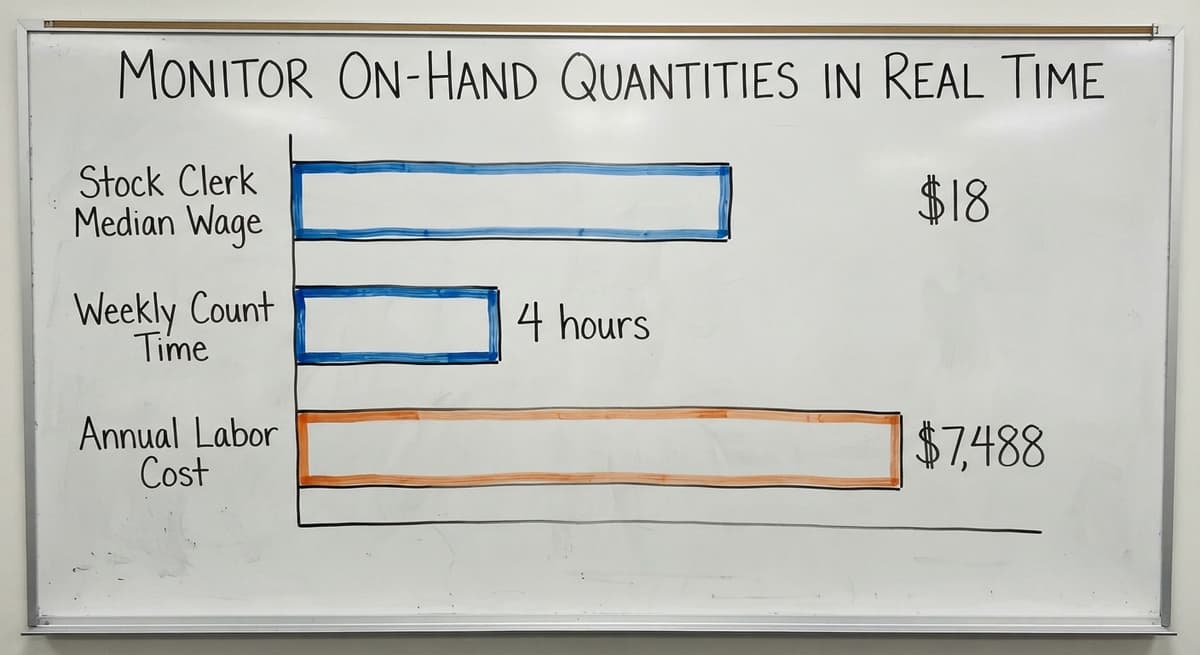
Consignment vendors often want to know what stock remains at your location. A weekly manual count works when you have 1 vendor and 20 SKUs. It breaks down fast when you have 5 vendors and 300 SKUs.
A system that updates quantities as items are picked or sold gives you accurate numbers without scheduling a count. Real-time data also helps you act on slow-moving consignment goods before the agreement deadline passes.
Consider the cost of doing this manually. According to the US Bureau of Labor Statistics, stock clerks and order fillers earn a median wage near $18 an hour. If 2 staff members spend 4 hours each week on manual consignment counts, that is $7,488 a year in labor before you count errors and rework. A system that automates the count pays for itself quickly.
Record Sales and Trigger Vendor Payment at the Right Time
Vendor payment is due after a sale, not after delivery. Your process needs to flag each consignment sale and match it to the right vendor agreement automatically.
Batch reporting on a set schedule, such as weekly or monthly, keeps payments organized and predictable for both sides. Ad hoc payments made whenever someone remembers create confusion and erode trust.
Errors in consignment payment directly affect your cost of goods and your vendor relationships. Overpaying a vendor because a return was not logged, or underpaying because a sale was missed, are both problems that compound over time. A clear, scheduled payment process tied to actual sales data is the fix.
When Should a Vendor Be Paid for Consignment Goods
Pay the vendor after the item sells, not when it arrives. Most agreements set a reporting and payment cycle, weekly or monthly, where you send a sales summary and remit payment for units sold in that period. Never pay on receipt. If you do, you have well purchased the goods and the consignment structure no longer applies.
See it running on your own process first
No build cost. The subscription starts once it is live and doing the job, not before.
Book a call
Handle Returns and Unsold Stock Correctly
Unsold consignment goods must go back to the vendor or be written off according to the terms in your agreement. Neither outcome happens automatically. You need a process to catch it.
Track every return shipment the same way you track receipts: vendor name, quantity, date, and reason. This keeps your on-hand count accurate and gives the vendor a record they can match against their own.
Set calendar alerts or automated system reminders tied to agreement end dates. A pallet sitting in a corner past its return window becomes a write-off, and write-offs that were avoidable are pure cost.
Steps to Close Out a Consignment Return Cleanly
- Log return shipments with the same detail as receiving records so quantities never drift.
- Match returned quantities against the original receipt before the shipment leaves your dock.
- Confirm receipt with the vendor in writing so there is no dispute about what came back.
Unsold stock that ages without action is the most avoidable cost in consignment operations.
Should Consignment Goods Appear in Your Inventory Valuation?
No. Consignment goods should never appear in your inventory valuation. Including them inflates your asset count and gives your accountant and your lender a false picture of what you own.
Keep consignment quantities in a separate ledger or module that feeds vendor reports without touching your balance sheet. Your accounting package shows only goods you have purchased and own. The consignment module tracks receipts, sales, returns, and vendor balances in parallel.
This separation also makes year-end counts cleaner. When your auditor or accountant asks what you own, the answer is clear because consignment goods were never mixed in.

Send Accurate Vendor Reports on a Regular Schedule
Most consignment agreements need periodic reporting. The vendor wants to see how many units sold, how many remain, and what payment is due. Manual reports built from spreadsheets take time and introduce errors, especially when multiple vendors each need a different format.
A system that pulls live data and generates vendor reports automatically removes the manual step. Consistent, accurate reporting builds vendor trust. Vendors who trust your numbers are more likely to offer better terms, larger consignment quantities, and priority stock on new products.
The US Census Bureau's Monthly Wholesale Trade data tracks inventory-to-sales ratios across wholesale sectors, a reminder that inventory accuracy is a competitive variable, not just an administrative one. Vendors notice which distributors report cleanly and which ones do not.
How to Send Accurate Consignment Reports to Vendors
Pull the report from live sales and on-hand data rather than building it manually from a spreadsheet. The report should show units received, units sold in the period, units remaining, and the payment amount due. Send it on the schedule your agreement specifies. A system that generates this automatically from your sales records removes the risk of a transcription error and saves hours each reporting cycle.
Not sure this is the right shape for your operation
Describe how the work runs today. We map it on a call and show you what it would look like built around that, before you spend anything.
Book a callWhere Standard Small-Business Accounting Software Falls Short for Consignment Inventory
Standard small-business accounting software handles owned inventory well. It was built for that. Consignment is a different structure, and most general accounting platforms have no native module for it.
Workarounds using custom fields or class tracking can handle 1 or 2 vendors. They break down when you add a third vendor, a second product line, or a vendor who wants weekly reports in a specific format. The gap usually gets filled with spreadsheets, which creates version-control problems and accuracy risks as the number of vendors grows.

Adding a Consignment Layer Without Replacing Your Accounting Setup
Wholesale distributors and warehouse operators running on general accounting software often need a layer on top of it to handle consignment properly. That layer tracks receipts, sales, returns, and vendor reports. It feeds payment data back to your accounting software without replacing the accounting setup you already rely on. The goal is not to replace your accounting package. It is to give consignment the structure it needs alongside it.
Inventory management software for wholesale distributors is built with this split in mind, keeping consignment data clean without forcing a full system replacement.
When a Custom Inventory System Makes Sense
If you manage more than 2 or 3 consignment vendors, manual tracking becomes a large time cost. Someone is spending hours each week on counts, reports, and payment reconciliation that a system could handle in minutes.
A custom system built around your workflow tracks consignment receipts, sales, returns, and vendor reports automatically. It sits alongside your accounting package rather than replacing it, so your financial records stay intact. Accounting software integration for warehouse operations means your accountant keeps working in the tool they know while your operations team gets the consignment visibility they need.

How to Calculate Whether a Consignment System Pays for Itself
Operations managers at small and mid-sized distributors often find this is the step that removes the most manual work from their week. Custom operations software for small distributors is not a large-enterprise buy. It is a targeted fix for a specific working gap.
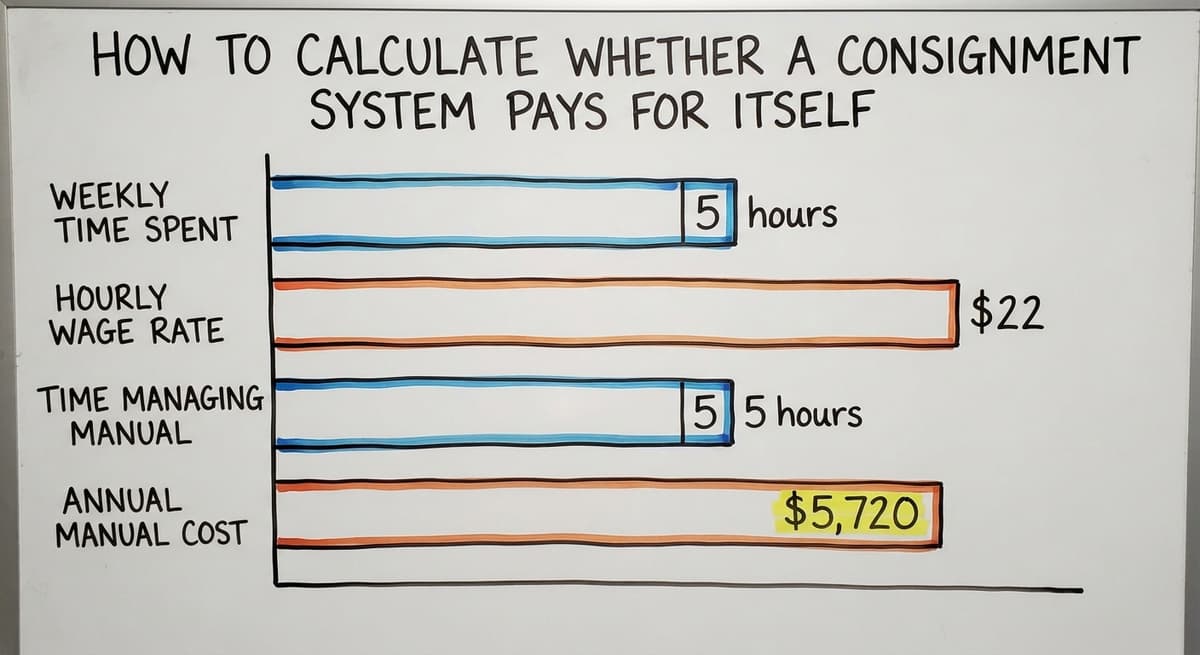
If you are spending more than 5 hours a week managing consignment manually across multiple vendors, the math usually favors a system. At $22 an hour, 5 hours a week is $5,720 a year before errors, disputes, and the cost of a missed return window are counted.
Warehouse inventory tracking without a full ERP is possible when the system is scoped to the actual problem rather than built to cover every scenario.
Frequently asked questions
What is the 80/20 rule in inventory?
The 80/20 rule in inventory holds that roughly 80% of your sales come from 20% of your SKUs. A small number of items drive most revenue. For consignment, this means watching your top-selling consignment items closely and acting fast on slow movers before the return window closes.
What items sell well on consignment?
Items that sell well on consignment have a clear market price, a reasonable shelf life, and a vendor willing to take back unsold stock. In wholesale distribution, this often includes seasonal goods, specialty components, and new product lines a vendor wants to test in a new market.
What is the best inventory software for consignment?
There is no single best option. The right choice depends on your vendor count, order volume, and whether you need to keep your existing accounting package. A spreadsheet works for 1 vendor and a handful of SKUs. A dedicated inventory app fits small operations. A cloud platform suits growing distributors. A custom build makes sense when your workflow is too specific for off-the-shelf tools.
How to account for inventory on consignment?
Keep consignment goods off your balance sheet until a sale occurs. Log receipts in a separate consignment record, not as a buy. When a sale happens, record the cost and trigger payment to the vendor. Your accounting package should only reflect goods you own. A separate consignment ledger handles the rest without touching your financial statements.
When should a vendor be paid for consignment goods?
Pay the vendor after the item sells, not when it arrives. Most agreements set a weekly or monthly reporting and payment cycle where you send a sales summary and remit payment for units sold in that period. Paying on receipt well converts consignment into a buy, which removes the financial benefit of the arrangement.
How do you send accurate consignment reports to vendors?
Pull the report from live sales and on-hand data rather than building it manually from a spreadsheet. The report should show units received, units sold in the period, units remaining, and the payment amount due. Send it on the schedule your agreement specifies. A system that generates this automatically removes the risk of transcription errors.
How do you track consignment stock separately from owned inventory?
Assign a separate physical location and a separate record in your inventory system. Never receive consignment goods through your standard buy order process. Log them in a consignment receipt record that tracks vendor, quantity, and date. Your owned inventory count and your consignment count should never share the same ledger line.
What records do you need before consignment goods arrive at your warehouse?
You need a signed agreement covering the vendor name, product list, price per unit, payment terms, and return policy. Store it where operations staff can find it, not just in the inbox of whoever negotiated it. Without this record, every quantity dispute and every payment cycle becomes a negotiation from scratch.
Start with a free first look
A 30 minute call, your operation mapped, and a clear picture of what we would build. No obligation and nothing to install.
Book a callRelated guides
The rest of this guide, for the parts of the job this page does not cover.
Guides
- Multi Location Inventory Management Software
- Inventory Management for Multiple Locations
- Inventory Management System for Manufacturing
- Inventory Management Pics
- B2b Inventory Management
- Jewelry Inventory Management
- Dental Inventory Management
- The Objective of Inventory Management is To
- Qr Code for Inventory Management
- Hvac Inventory Management Software
- Inventory Management Software for Schools
Common questions
- How to Improve Inventory Management
- How to Manage Fba Inventory
- How to Manage Pharmacy Inventory
- How to Manage Hardware Inventory
- How to Manage Food Inventory
- How to Manage Inventory Efficiently
- How to Keep Track of Inventory
- How to Record Inventory on Hand
- How to Manage Inventory in a Warehouse
- How to Manage Inventory for Small Business
- How to Manage Inventory Between Etsy and Shopify
- How to Manage Inventory in Retail Store
- What is Inventory Management and Its Types