


How To Manage Pharmacy Inventory
Updated October 2026. Managing pharmacy inventory means counting what you have, setting reorder points before you run out, rotating stock so nothing expires on the shelf, and logging every movement in and out. Start with a physical count, build a written routine, and add software where manual steps are causing the most errors. That is the full answer, and the rest of this guide shows you how to do each part.
Book a callWhy Pharmacy Inventory Management Matters
Pharmacies carry high-value, time-sensitive products. A single expired lot on the shelf is a patient safety risk. A stockout on a critical medication is a lost customer and a compliance flag. Poor pharmacy inventory management turns both into regular events.
The IRS adds a legal layer. IRS Publication 538 states: "To figure taxable income, you must value your inventory at the beginning and end of each tax year." That is not optional. Counting is not just good practice; it is a legal requirement.
Most small pharmacies start on paper or a spreadsheet. That works at low volume. As SKU count grows and transaction pace picks up, manual systems break. Errors build silently until a count reveals a large gap. Building good habits early costs far less than fixing a crisis later.
We build it for your operation, and the first look is free
If you would rather not compare products, describe how your operation already works and we build the system around it.
No build cost. You see it running on your own process first, and the monthly subscription starts only once it is live.
Book a callKnow What You Have: Conducting a Full Stock Count
What is the first step in managing pharmacy inventory? Start with a full physical count of every item on the shelf.
Record the quantity, lot number, and expiration date for each SKU. Then compare those numbers against your buy records. Gaps between the two show you where product is going missing or where records have not been kept.
GS1 sets the barcode standards that make scan-based counting faster and more accurate than reading labels by hand. Even without a scanner, a paper tally sheet works. The goal is a clean baseline. A baseline count is the foundation every reorder decision, expiration check, and compliance audit is built on. Schedule counts on a fixed calendar, not only when something seems wrong.
How Should You Organize Pharmacy Inventory?
Organizing inventory into clear categories makes every other step faster. Group products by type: controlled substances, refrigerated medications, over-the-counter items, and specialty stock. Each group has different storage rules, different reorder cycles, and different tracking needs.
Separate fast-moving items from slow movers. A high-volume generic fills and empties a bin quickly. A specialty item may sit for weeks. Treating them the same way creates both stockouts and excess.
Practical tools that help:
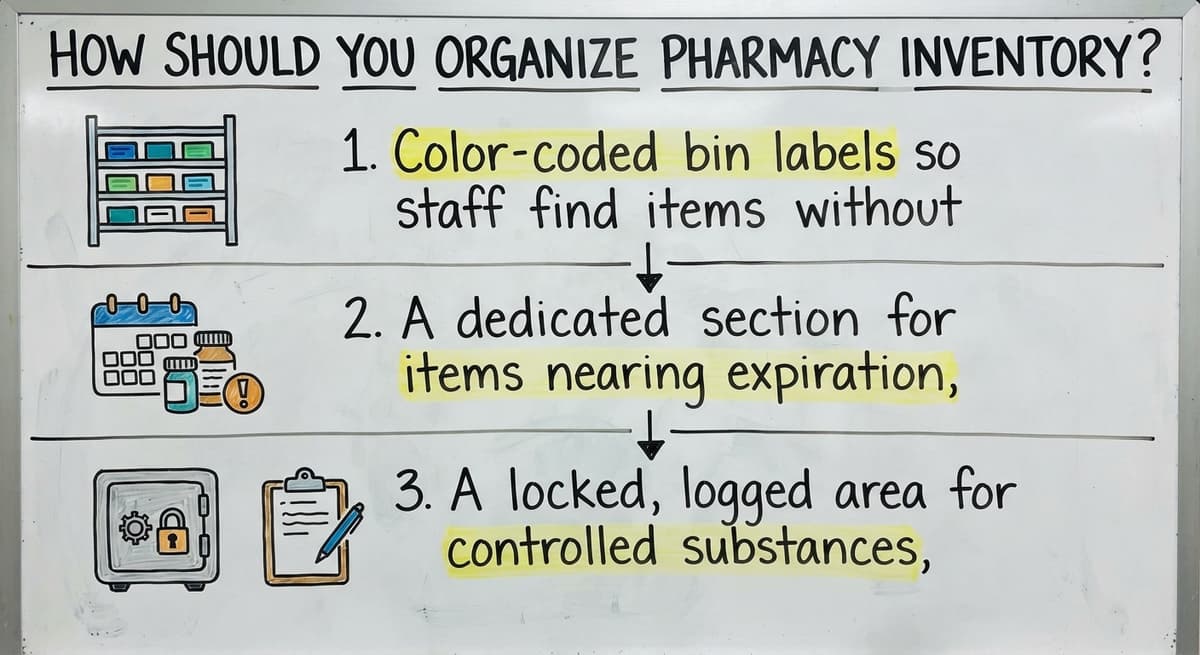
- Color-coded bin labels so staff find items without hunting
- A dedicated section for items nearing expiration, checked weekly
- A locked, logged area for controlled substances, separate from general stock
Clear categories cut picking errors and make reorder decisions a matter of checking a number rather than walking the whole shelf.
Set Minimum Stock Levels and Reorder Points
A reorder point is the quantity on hand that tells you to place a new order before you run out. Calculate it by multiplying average daily usage by your supplier's lead time in days, then adding a small buffer for delays.
For example: if you dispense 20 units a day and your supplier takes 3 days to deliver, your reorder point is 60 units, plus whatever buffer your operation needs. A minimum stock level sits below that. It is the floor you should never drop beneath.
Review these numbers at least quarterly. Demand shifts with seasons, formulary changes, and patient mix. A reorder point set in January may be wrong by July. Avoid over-ordering: excess stock ties up cash and raises the chance that product expires before it sells. Getting these numbers right is the single most direct way to reduce both stockouts and waste.
The comparison is easier when one option is built for you
Off-the-shelf means fitting your process to the software. We do it the other way round, and the first look costs nothing.
Book a call
What Does FIFO Mean and Why Does It Matter in a Pharmacy?
FIFO stands for First In, First Out. It means older stock gets dispensed before newer stock of the same item.
When a delivery arrives, place the new units behind the existing stock on the shelf. Staff then pick from the front, which is always the older product. This keeps expiration dates moving in the right direction.
FIFO is especially critical for refrigerated medications and any item with a short shelf life. A simple label showing the receipt date on each lot is enough to support FIFO without any software at all. Consistent FIFO practice is the most reliable way to reduce expired stock waste in a pharmacy.
Track Every Movement In and Out
Every receipt, dispense, return, and disposal should be recorded at the time it happens. Real-time inventory tracking stops small discrepancies from growing into large gaps.
Controlled substance tracking demands the tightest logs. Every unit in and out must be recorded, and the running total must match the physical count at all times. For general stock, even a basic written log beats relying on end-of-day memory.
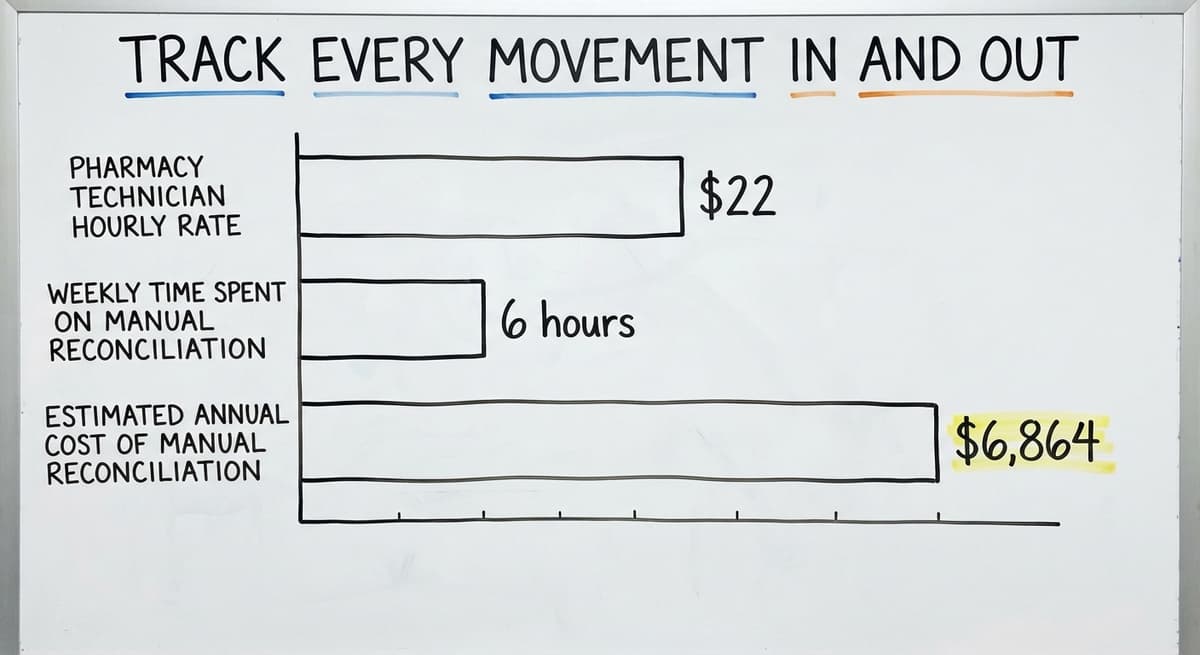
Consider what manual logging actually costs. A pharmacy technician earning around $22 per hour, which is close to the median reported by the US Bureau of Labor Statistics, spending 6 hours a week on manual matching costs roughly $6,864 a year in labor alone. That is before counting the errors manual entry introduces. Consistent movement records are also the raw data that reveals which items to reorder more often and which to cut.

Handle Controlled Substances Separately
Controlled substances need stricter records than general pharmacy stock. A perpetual inventory log, meaning a running count updated with every single transaction, is required. Each entry should show the date, quantity, staff member, and reason.
Limit access to authorized staff only. A locked cabinet with a sign-in sheet is a minimum. Many states need electronic logging or specific forms; verify the rules for your state before setting up your process.
Disparities between the log and the physical count must be investigated and written up promptly. Leaving a gap unexplained is a compliance failure even if the product turns up later. Tight controlled substance tracking protects both patients and your license.
Manage Returns and Expired Stock Properly
Pull expired items from active shelves on a fixed schedule, at least weekly. Place them in a clearly marked, separate area so they cannot be dispensed by mistake.
Expired medications cannot go in regular trash. Use a licensed reverse distributor or a DEA-approved disposal method. Document every return and every disposal: the item, the lot number, the quantity, and the date.
Tracking expiration losses over time shows you which SKUs are consistently expiring before they sell. That pattern is a signal to cut your order quantity or switch to a supplier with shorter lead times. Expiration data, when you keep it, becomes an ordering tool.
See it running on your own process first
No build cost. The subscription starts once it is live and doing the job, not before.
Book a call
What Are the Warning Signs That Your Inventory System Is Failing?
Frequent stockouts on the same items mean your reorder points are set too low. Growing expired stock means you are over-ordering or carrying SKUs that move too slowly for your current order size.
Large gaps between recorded counts and physical counts point to tracking failures, not just theft. Staff spending hours each week reconciling numbers by hand is a red flag that the process has outgrown the tool.
Catch these signs early. A stockout costs a sale and risks a patient relationship. A compliance gap on controlled substances can cost a license. The warning signs are visible before the crisis; the only question is whether someone is looking.
When a Spreadsheet Is No Longer Enough
Spreadsheets work when SKU counts are low and one person manages everything. They break when multiple staff edit the same file, when transaction volume grows, or when you need to know current stock levels in real time.
Common failure points:
- Version conflicts when two people update the file at the same time
- Manual entry errors that compound across weeks before anyone catches them
- No automatic alert when stock drops below the minimum level
- No lot number or expiration tracking without building complex formulas
Replacing manual inventory tracking with custom software does not mean replacing everything at once. Start with the part causing the most pain. If expiration tracking is the problem, fix that first. If controlled substance logs are taking too long, automate those logs. A system built around your existing workflow is faster for staff to learn and less likely to be ignored.
This is where inventory management software for small distributors often fits better than enterprise tools built for large chains. The goal is removing friction, not adding a new system to manage.
What Good Pharmacy Inventory Software Should Do
The right tool does specific things. It should:
- Send a reorder alert the moment stock hits the minimum level, without waiting for someone to check
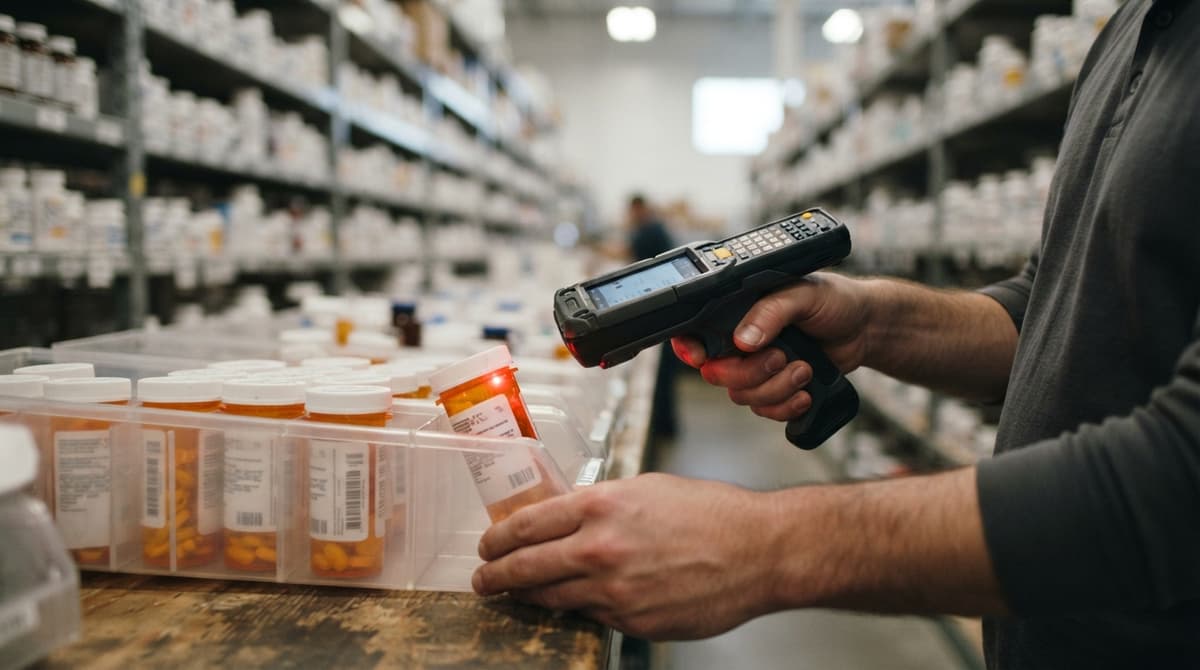
- Track lot numbers and expiration dates automatically from a scan at receiving
- Connect to your existing purchasing or accounting package rather than forcing a full replacement
- Produce simple reports on usage, turnover, and expiration losses without custom queries
- Scale to your operation size, not just to large chain pharmacies
Software that needs a full IT project to implement is the wrong fit for a lean operation. Look for tools that handle the manual steps causing the most errors today. An accounting software integration for warehouse operations is one example of a connection that removes duplicate data entry without replacing the accounting tool your team already knows.
Custom workflow software for operations managers can also close gaps that off-the-shelf tools leave open, especially for pharmacies with unusual workflows or multiple locations.
Build a Routine That Keeps Inventory Under Control
A written routine removes guesswork and keeps the whole team aligned. Structure it by frequency:

Daily
- Verify controlled substance counts against the perpetual inventory log
- Check for low-stock alerts and place orders before the reorder point is breached
Weekly
- Review pending orders and confirm expected delivery dates
- Pull items nearing expiration and move them to the designated hold area
Monthly
- Reconcile physical counts against system records for all categories
- Review and document any discrepancies found
Quarterly
- Adjust reorder points based on the past 90 days of actual usage
- Review expiration loss data and cut order quantities on slow movers
A routine written down and assigned to specific roles is the difference between a system that holds and one that drifts. If your current process relies on one person's memory, it is one resignation away from failing.
Pharmacy inventory management does not need expensive software to start. It needs a clean count, a written routine, and a habit of recording every movement. Build that foundation first. Then identify the manual steps that are costing the most time or producing the most errors, and replace those with tools that fit your scale. That path is cheaper, faster, and more likely to stick than buying a platform and hoping staff adopt it.
Frequently asked questions
What is the first step in managing pharmacy inventory?
Start with a full physical count of every SKU on the shelf. Record quantities, lot numbers, and expiration dates, then compare the count against your buy records. That baseline is what every reorder decision and compliance audit depends on.
How do you set reorder points for pharmacy products?
Multiply your average daily usage by your supplier's lead time in days, then add a buffer for delays. Review the number at least quarterly, because demand shifts with seasons and formulary changes. A reorder point that was right in January may cause stockouts by summer.
How should controlled substances be tracked differently from regular stock?
Controlled substances need a perpetual inventory log updated with every single transaction, not just a periodic count. Access must be limited to authorized staff, and any discrepancy must be investigated and documented right away. State rules vary, so verify local requirements before setting up your process.
How do you handle expired medications properly?
Pull expired items from active shelves on a fixed schedule and store them in a clearly marked, separate area. Use a licensed reverse distributor or a DEA-approved disposal method. Document the item, lot number, quantity, and date for every disposal so you have a clean audit trail.
What does FIFO mean and why does it matter in a pharmacy?
FIFO stands for First In, First Out. Older stock is dispensed before newer stock of the same item. Place new deliveries behind existing stock on the shelf so staff always pick from the front. This keeps expiration dates moving in the right direction and reduces the chance of dispensing a product that has expired.
When should a pharmacy move from spreadsheets to dedicated inventory software?
When multiple staff are editing the same file, when manual entry errors are showing up in counts, or when you have no real-time visibility into stock levels. You do not need to replace everything at once. Start with the part causing the most errors, whether that is expiration tracking, controlled substance logs, or reorder alerts.
How often should a pharmacy do a physical stock count?
Controlled substance counts should be verified daily. A full physical count for all categories should be done monthly, with a matching against system records. Quarterly, review reorder points and expiration loss data to adjust ordering patterns. Counts scheduled on a fixed calendar catch problems before they become compliance issues.
What should pharmacy inventory software be able to do?
It should send automatic reorder alerts when stock hits the minimum level, track lot numbers and expiration dates from a scan at receiving, connect to existing purchasing or accounting tools, and produce simple usage and turnover reports. It should work at your operation's scale, not just for large chains.
Start with a free first look
A 30 minute call, your operation mapped, and a clear picture of what we would build. No obligation and nothing to install.
Book a callRelated guides
The rest of this guide, for the parts of the job this page does not cover.
Guides
- Multi Location Inventory Management Software
- Inventory Management for Multiple Locations
- Inventory Management System for Manufacturing
- Inventory Management Pics
- B2b Inventory Management
- Jewelry Inventory Management
- Dental Inventory Management
- The Objective of Inventory Management is To
- Qr Code for Inventory Management
- Hvac Inventory Management Software
- Inventory Management Software for Schools
Common questions
- How to Improve Inventory Management
- How to Manage Fba Inventory
- How to Manage Hardware Inventory
- How to Manage Food Inventory
- How to Manage Inventory Efficiently
- How to Manage Consignment Inventory
- How to Keep Track of Inventory
- How to Record Inventory on Hand
- How to Manage Inventory in a Warehouse
- How to Manage Inventory for Small Business
- How to Manage Inventory Between Etsy and Shopify
- How to Manage Inventory in Retail Store
- What is Inventory Management and Its Types