

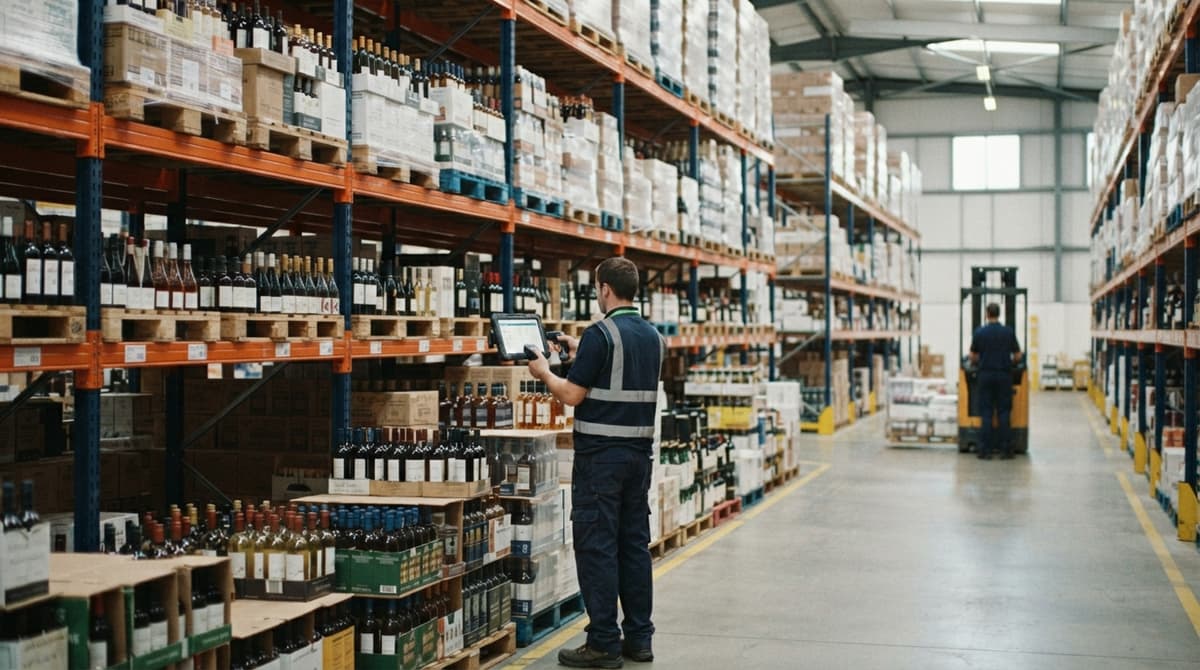
How To Keep Track Of Alcohol Inventory
Learn how to keep track of alcohol inventory in a warehouse: one item list, fixed locations, live records, and cycle counts. Plain steps for wholesalers.
Book a callHow Do You Keep Track of Alcohol Inventory?
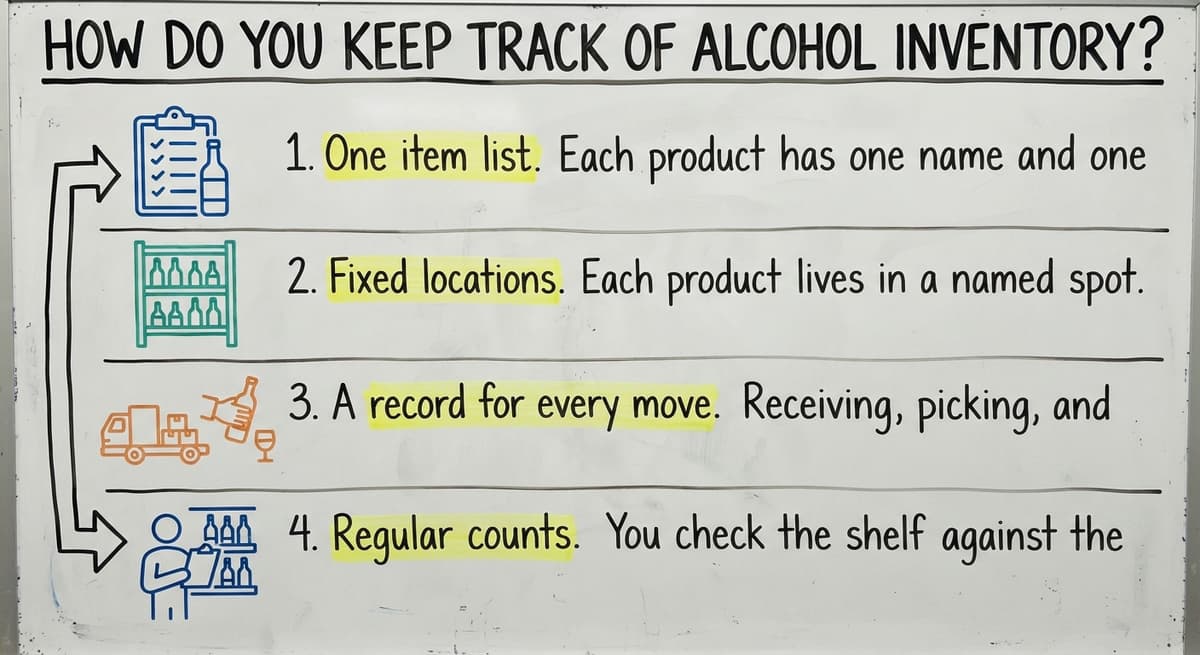
You count your stock, record every move, and compare the two on a set schedule. That is how to keep track of alcohol inventory at any size. Four habits make it work:
Reviewed October 2026.
- One item list. Each product has one name and one code.
- Fixed locations. Each product lives in a named spot.
- A record for every move. Receiving, picking, and returns all get logged.
- Regular counts. You check the shelf against the record often.
This works for a 5-person warehouse. It also works for a 100-person distributor. This guide was reviewed in the current month and uses only sources you can check.
We build it for your operation, and the first look is free
If you would rather not compare products, describe how your operation already works and we build the system around it.
No build cost. You see it running on your own process first, and the monthly subscription starts only once it is live.
Book a callWhy Alcohol Inventory Is Harder to Track Than Other Stock
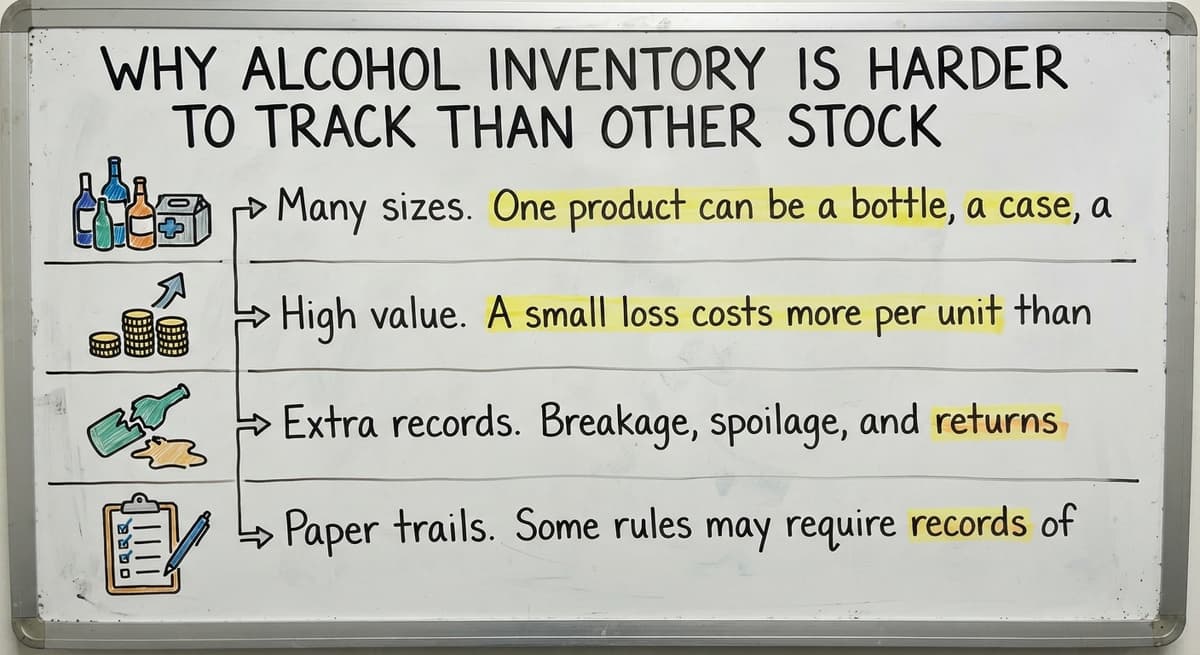
Alcohol inventory tracking is harder than most stock work for four reasons. Each one adds a way to get the count wrong.
- Many sizes. One product can be a bottle, a case, a keg, or a pallet.
- High value. A small loss costs more per unit than it would for most goods.
- Extra records. Breakage, spoilage, and returns each need their own line.
- Paper trails. Some rules may need records of where product came from and went. Ask your own advisor or regulator what applies to you.
Barcodes help with the first problem. GS1 says its barcode standards are used so that products can be "identified, captured and shared" the same way everywhere; check the wording on the GS1 barcode standards page before you rely on it. Good data starts with a clear item code.
Step 1: Build One Clean Item List
How do you build an item list that does not break?
You give every product one unique SKU and one name format. A SKU is a short code that names one item and nothing else. Follow these rules:
- Use the same name pattern each time: brand, type, size, pack.
- Never reuse a code for a new item.
- Merge duplicates. Your spreadsheet and your accounting software often hold the same item under two names.
- Record the case-to-bottle number for each item, such as 12 bottles per case.
One bad name can split your stock into two lines. Then neither line is right. A clean list is the base that every later step stands on.
Step 2: Count in the Right Units
Pick one base unit and count everything in it. Most warehouses choose the bottle or the can. Then the system can turn cases into bottles for you.
Show full cases and loose bottles in separate boxes on the count sheet. That way counters never guess. Mixed cases cause trouble when units are not set. One person writes "3" and means cases. The next reads "3" and means bottles.
Keep kegs and open product on their own lines. A half-used keg is not the same item as a sealed one. Set the unit once, and make every screen show it.
The comparison is easier when one option is built for you
Off-the-shelf means fitting your process to the software. We do it the other way round, and the first look costs nothing.
Book a call
Step 3: Give Every Product a Home
A named location makes counts faster and moves clearer. Label each aisle, rack, shelf, and bin. Then store each item in one named spot. Good warehouse bin location setup means a counter can walk straight to the stock.
Use separate marked areas for stock that is not ready to sell:
- Damaged goods wait in one area until you decide what to do.
- Held stock stays apart so no one picks it by mistake.
- Returned goods sit in their own zone until checked.
Put high-value items in a cage or locked area if your business decides it needs one. A product with no home is a product you will lose.
Step 4: Record Every Move When It Happens
Log each move at the time it happens. That includes receiving, putaway, picking, transfers, returns, and write-offs. A write-off is a record that stock is gone and why.
Do not wait until the end of the day. By then people forget what they moved. Printed sheets get lost. Email threads bury the facts. Both lose moves, and each lost move becomes a gap in your count.
Also record who made each change. A name beside each entry turns a mystery into a short talk. A move you did not record is a gap you will chase later.

Step 5: Track Lots, Dates, and Batches Where They Matter
Do you need lot tracking for alcohol? Sometimes. A lot, or batch, is a group of product made together and given one number. Lot tracking helps in three cases:
- A recall, when you must find every case from one batch.
- Beer and some wine, which can spoil with age.
- First-in, first-out picking, which ships the oldest stock first.
Capture the lot at receiving, when the label is in your hands. Track only what your operation needs. Add a lot step only where it saves you from a real problem.
Step 6: Count on a Schedule and Find the Gaps
How often should alcohol inventory be counted? Often, and in small pieces. Cycle counts are short counts of a few items each week. They replace one big yearly count. See cycle counting basics for a longer guide.
Count fast movers and high-value items more often. Slow items can wait longer. After each count, compare the shelf to the system and note the difference.
Then look for the cause of repeat gaps:
- Wrong units on a count sheet.
- Returns that no one logged.
- Breakage that never made it into the record.
This answers why alcohol inventory never matches the books. The gap is rarely magic. It is usually one habit repeated. IRS Publication 538 states that "To figure taxable income, you must value your inventory at the beginning and end of each tax year." A count you trust makes that task easier.
See it running on your own process first
No build cost. The subscription starts once it is live and doing the job, not before.
Book a call
Step 7: Set Reorder Points and Watch Slow Movers
What is a reorder point?
A reorder point is the stock level that triggers a new order. Base it on sales speed and supplier lead time. Lead time is the wait between your order and the delivery.
Here is a simple example. Say you sell 20 cases a week and the supplier takes 2 weeks. Your reorder point is at least 40 cases, plus a small safety cushion.
Also flag slow items. They tie up cash on a shelf. Review both lists monthly, not only when a shelf is empty. Stock that sits is money that cannot work.
Can a Spreadsheet and Accounting Software Handle Alcohol Inventory?
Yes, at first. Many small firms track liquor inventory in a spreadsheet and keep the books in an accounting package. With a short item list and one counter, that works fine.
Limits show up as you grow. They show first with locations, lots, many users, and case-to-bottle units. Watch for these signs of strain:
- Duplicate sheets with different totals.
- Counts that never match.
- One person who holds all the knowledge.
Accounting software inventory is still a good fit for accounting. The gap is day-to-day stock tracking. Read more on accounting software inventory limits and what to add, and on replacing spreadsheet inventory sheets. Keep the books where they work and fix the floor.
When a Custom System Makes Sense
When should a distributor move off spreadsheets? Move when the signs above show up every week. A big ERP is not the only path. Custom software for wholesale operations is built around how you already work.
The Software Society builds this kind of system. We keep your accounting software where it helps. We replace only the manual parts, like sheets, Access files, and email threads. It works at small scale, not just enterprise.
Our team is local to Columbus, Ohio. We also build the website and search presence, so your tools connect in one place. Inventory management software for small distributors does not need a huge project. Replace the manual parts first and leave the rest alone.
Common Mistakes to Avoid
Most alcohol inventory management errors come from habits, not tools. Avoid these:
- Skipping counts because the system "should be right."
- Letting many people edit one spreadsheet at once.
- Leaving breakage and samples out of the record.
- Failing to train staff on units and locations.
Fix one habit per month. Small steady changes beat a big rebuild. Want help? Talk to The Software Society about a system that fits your warehouse.
Frequently asked questions
What is the 80/20 rule for inventory?
The 80/20 rule says about 20% of your items cause about 80% of your sales or value. It is a rule of thumb, not a law. Count those top items more often and watch them closely. Check your own sales data to see where the line falls.
What is the best app to keep track of liquor inventory?
No single app is best for everyone. The right choice depends on your size, your units, and how many people use it. A spreadsheet suits a tiny shop. An inventory app suits one site. A cloud platform or custom build suits cases, lots, and locations.
What is the easiest way to keep track of inventory?
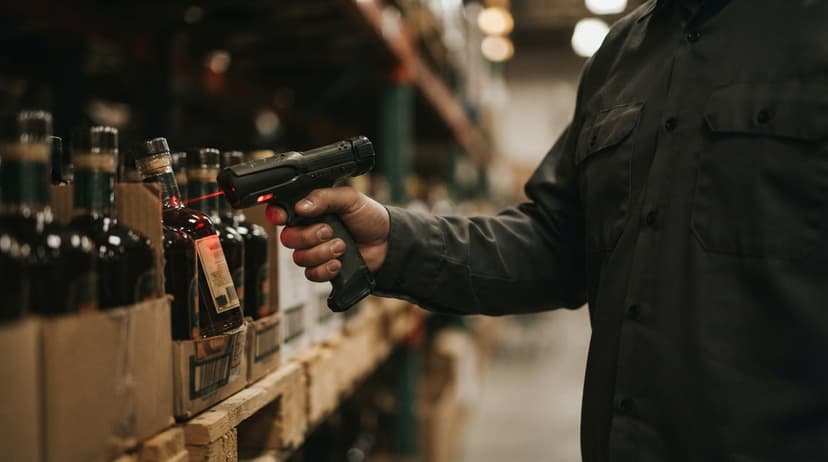
Give every item one code, store it in a named spot, and log each move as it happens. Then count a few items every week. Barcode scans make this faster because they cut typing errors.
What is the 50% rule in bartending?
This is a bar rule, not a warehouse one. It is often used as a loose guide for pricing or pour cost, and meanings vary by source. Wholesale work looks at cases, lots, and locations instead.
What is the best way to track cases and bottles together?
Pick the bottle as the base unit. Store the number of bottles per case for each item. Then count full cases and loose bottles in separate boxes and let the system add them up.
Do you need lot tracking for alcohol?
Not always. It helps most with recalls, beer and wine that can spoil, and first-in, first-out picking. Ask your advisor or regulator what rules apply to you.
Start with a free first look
A 30 minute call, your operation mapped, and a clear picture of what we would build. No obligation and nothing to install.
Book a callRelated guides
More on the same work.
- How to Keep Track of Inventory
- How to Keep Track of Inventory on Clover
- How to Keep Track of Consignment Inventory
- How to Keep Track of Ebay Inventory
- How to Keep Track of Poshmark Inventory
- How to Keep Track of Grocery Inventory
- How to Keep Track of Freezer Inventory
- How to Keep Track of Cigarette Inventory
- How to Create an Inventory Tracking System?
- How to Keep Track of Inventory in Warehouse
- How to Keep Track of Inventory Small Business
- How to Record Inventory on Hand
- How to Manage Inventory in Rocket League
- How to Improve Inventory Management
- How to Manage Fba Inventory
- How to Manage Inventory in Stardew Valley
- How to Manage Inventory Fallout 76
- How to Manage Inventory Diablo 4
- How to Manage Pharmacy Inventory
- How to Manage Hardware Inventory
- How to Manage Food Inventory
- How to Manage Inventory Efficiently
- How to Manage Inventory Apex Legends
- How to Manage Consignment Inventory