

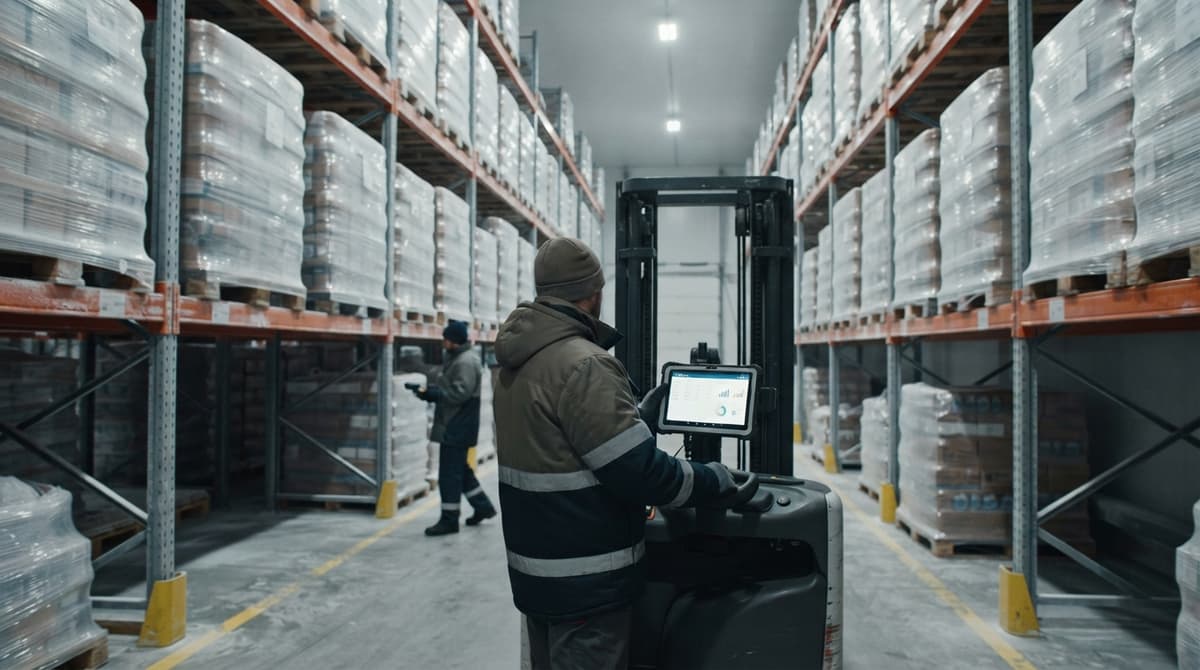
How To Keep Track Of Freezer Inventory
To keep track of freezer inventory, give every item a label, a place, and a date. Then write down every move in and out. Do it at the time it happens. Reviewed October 2026 for wholesale and warehouse teams.
Book a callHow Do You Keep Track of Freezer Inventory?
Four habits make up the whole system: label, locate, log, count. Each one is simple. Together they tell you what you own, where it sits, and how old it is.
- Label each case or box with the item name and a date.
- Locate each item with a short code for its freezer, shelf, and bin.
- Log each receipt, pick, move, and throw-out as it happens.
- Count a small part of the stock every week and compare it to the log.
The steps stay the same on a clipboard, in a spreadsheet, or in software. Only the speed changes. Start with the habits, and pick the tool later.
We build it for your operation, and the first look is free
If you would rather not compare products, describe how your operation already works and we build the system around it.
No build cost. You see it running on your own process first, and the monthly subscription starts only once it is live.
Book a callWhy Freezer Inventory Gets Lost So Easily
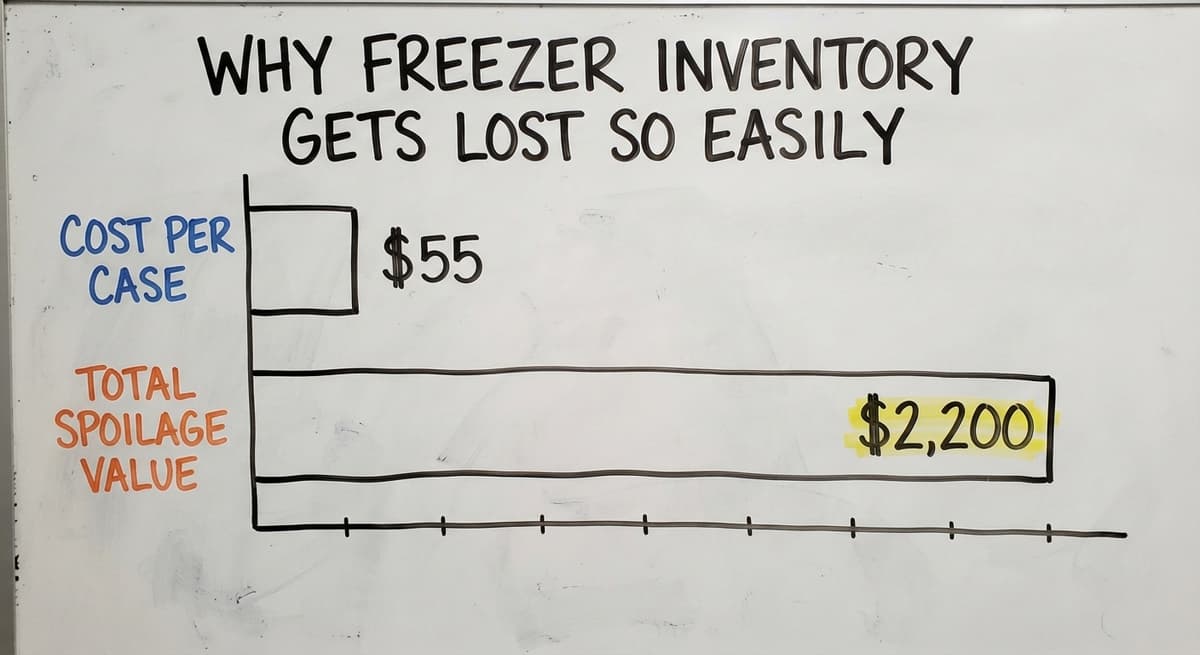
Freezer inventory goes missing because cold storage makes every task slower and harder. Counting in a freezer is cold, bulky work, so people skip it. Frost and ice cover labels. Thick gloves make writing hard. Several people add and pull stock, and few of them write it down.
The cost is real. Say 40 cases are lost to spoilage at $55 a case. That is $2,200 gone, plus any order you promised from that stock. The US Federal Trade Commission expects sellers to ship when they said they would, and only a true count protects that promise.
GS1, the standards group behind barcodes, calls its system "the global language of business", and a shared language is what a messy freezer lacks.
What Information Should You Record for Each Freezer Inventory Item?
Record six facts for each item and no more. A short list gets filled in. A long list gets skipped by tired staff in a cold room.
- Item name or SKU, which is the short code you use for the product.
- Quantity and unit, such as 24 cases or 12 bags.
- Received date, so you know how long it has been there.
- Use-by date, so you know when it must leave.
- Lot or batch number, so you can trace a problem back to its source.
- Location, such as freezer, shelf, and bin.
Lot tracking means you note which batch each item came from. If a supplier calls about a bad batch, you can find every case in minutes. Lot and expiration date tracking is the base for that kind of recall.
How Do You Label Freezer Items So They Stay Readable?
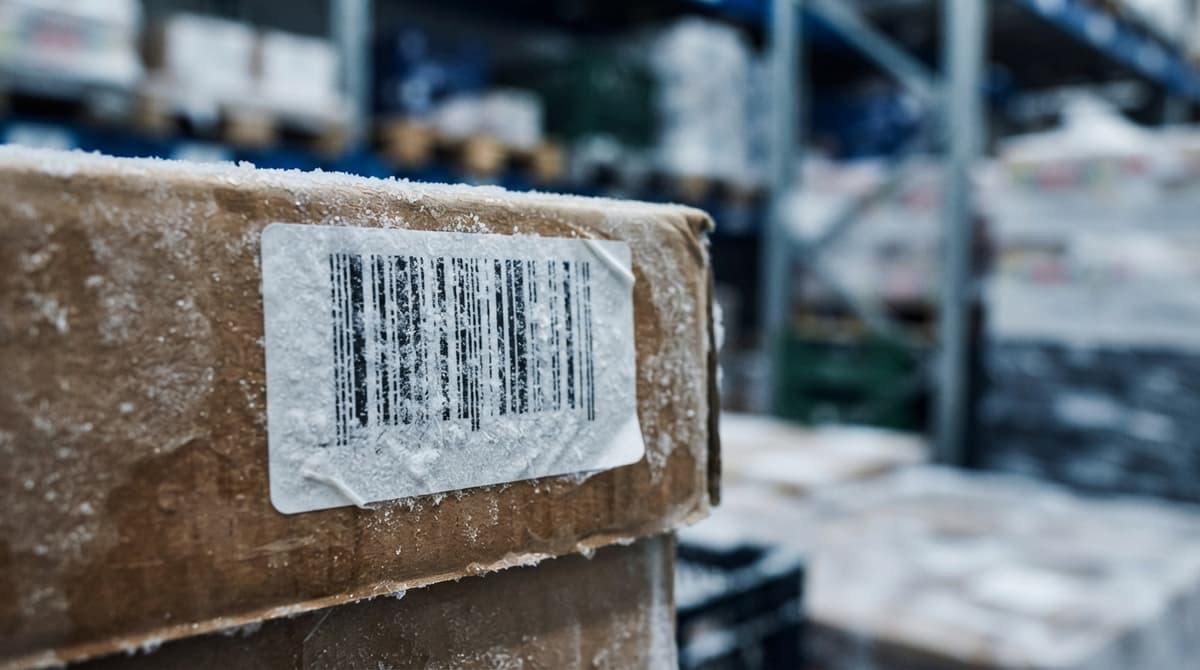
Use freezer-rated labels and waterproof markers. Standard paper labels peel off in the cold. Ordinary ink smears when frost forms. A label that falls off is the same as no label.
A few rules keep labels useful:
- Put the label in the same spot on every box or case, so eyes learn where to look.
- Print the item and date in large letters that you can read through frost.
- Add a barcode if you can. Scans are faster than reading, and a barcode cuts typing mistakes.
- Replace a torn or faded label the same day you see it.
A label is only as good as the last person who checked it. Make that check part of every pick.
The comparison is easier when one option is built for you
Off-the-shelf means fitting your process to the software. We do it the other way round, and the first look costs nothing.
Book a call
How Should You Organize Cold Storage Inventory by Location?
Give each freezer, rack, shelf, and bin a short code. For example, F2-R3-B4 means freezer 2, rack 3, bin 4. A code lets a worker walk to stock without digging through boxes.
Two habits help the code work:
- Keep one product type in one zone where you can. Fewer zones mean fewer lost pallets.
- Post a simple map on the freezer door. A new hire can read it in 30 seconds.
Write the code in the log and on the bin. If an item moves, change both. Time in a freezer costs comfort and safety, so a clear map pays for itself on every trip. Good cold storage inventory starts with a place for everything.
How Does FIFO Work in a Freezer?
FIFO means first in, first out. The oldest stock ships or gets used first. In a freezer, you load new stock at the back or bottom. You pull from the front or top.
Sort by date when a lot arrives. Then the oldest case is always the easiest one to reach. Staff do not need to think. The layout does the work.
When Should You Use FEFO Instead?
FEFO means first expired, first out. Use it when use-by dates do not match the order of arrival. A case that came in last week may expire before a case from last month. Ship by the use-by date, not the receive date.
This is why you record both dates. The log shows which case really goes next.
How Do You Stop Frozen Product From Expiring Before It Ships?
Check use-by dates every week and pull anything that will expire soon. Move it to the front. Offer it first on new orders. Flag it to sales while there is still time to sell it. Stock you can see is stock you can move.

How Do You Log Items In and Out?
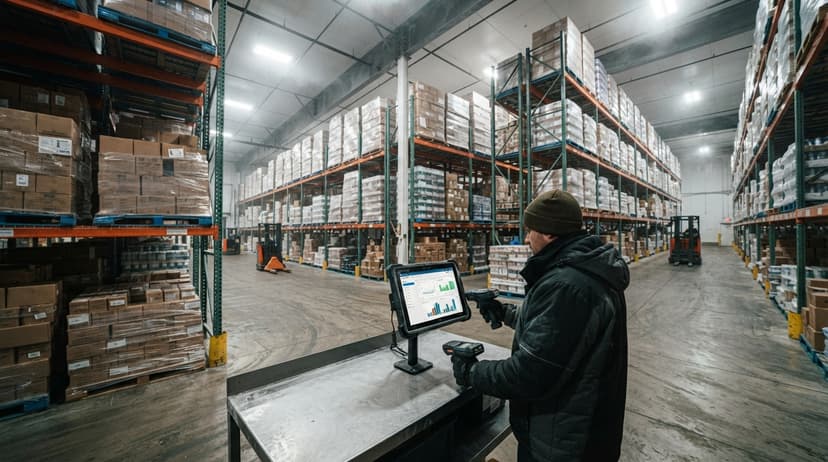
Record every receipt, pick, transfer, and throw-out at the time it happens. Put a clipboard or a handheld scanner at the freezer door. Staff then log the move before they walk away.
Tie each removal to an order number or a reason code. Reason codes can be short: SHIP, MOVE, SPOIL, SAMPLE. They show where stock really goes.
Same-day entry beats an end-of-week catch-up. By Friday, nobody remembers what left on Tuesday. A late entry is a guess, and guesses add up.
A log is how warehouse inventory stays honest between counts.
How Often Should You Count Freezer Stock?
Count a small slice of stock every week instead of everything once a year. These are called cycle counts, and they take less time and catch errors sooner. Cycle counting basics for warehouses cover how to pick which items to count each week.
The law also asks for counts. IRS Publication 538 says, "To figure taxable income, you must value your inventory at the beginning and end of each tax year."
How Do You Run a Count?
- Pick the fast-moving and high-value items first. Count them more often.
- Count the physical stock, then compare it to the log.
- Write down the gap.
- Find the cause of each gap. Fix the habit, not just the number.
- Keep each trip short. Less time inside is safer and more comfortable.

Can You Use a Spreadsheet to Track Freezer Inventory?
Yes, a spreadsheet can track freezer inventory when you have one freezer and a few people. It is cheap and familiar. It works until the team or the stock grows.
Set it up with care:
- Use one row per lot, not one row per item.
- Lock the column headings so no one renames them.
- Keep one shared copy and delete the rest.
Watch for the usual trouble. Staff save duplicate files and then argue over which is right. Typing errors slip in. Nothing warns you when a lot is close to its date. Those gaps are why many teams outgrow the sheet.
See it running on your own process first
No build cost. The subscription starts once it is live and doing the job, not before.
Book a callWhat Are the Signs You Have Outgrown Paper and Spreadsheets?
You have outgrown paper and spreadsheets when the manual work starts costing more than it saves. Look for these signs:
- Counts do not match what your accounting software shows for the same stock.
- Staff argue over which sheet is the current one.
- Product expires before it ships.
- You promise orders from stock that is not there.
- Only one person knows how the system works.
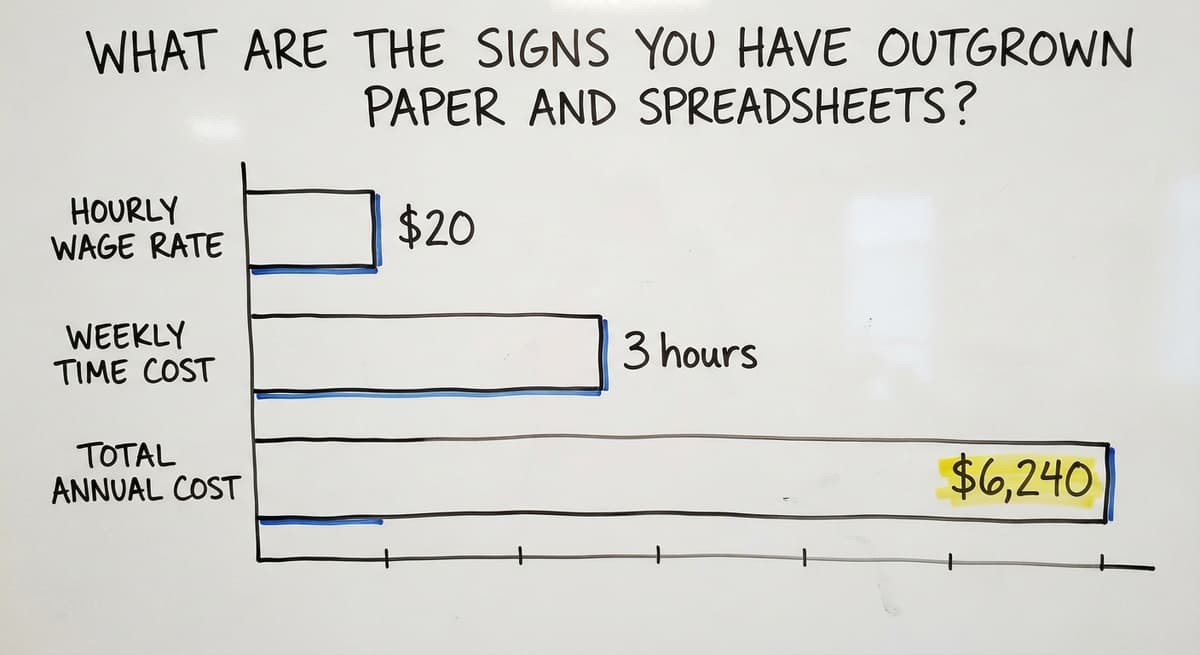
Put a price on it. Say 2 people spend 3 hours a week fixing sheets at $20 an hour. That is 2 x 3 x 20 x 52, or $6,240 a year, before any spoiled stock. The US Bureau of Labor Statistics lists pay for inventory clerks if you want a local rate to use.
How Can Software Help Without a Big ERP?
Software can track lots, dates, and locations, and warn you when stock nears its date. You do not need a big ERP, which is a large system that runs a whole company. Inventory management software for small warehouses can be much lighter.
A custom tool can follow the way your freezer already runs. It does not force a new process on your team. At The Software Society, we build custom workflows that replace fragmented manual work with a system aligned to real operations.
Your accounting stays where it is. We support your accounting software as an integration, so only the manual tracking parts change. Connecting your accounting software to warehouse inventory keeps the books and the freezer in step.
Replacing Excel inventory sheets with custom software works at small scale, not just at big companies. It starts with the steps you already do.
What Is a Simple Plan to Start This Week?
You can start in 5 steps, and none of them need new tools.
- Do one full count and clear out expired items.
- Add location codes and put fresh labels on every case.
- Set the log-in and log-out routine at the freezer door.
- Schedule weekly cycle counts and name who runs them.
- Review after 1 month. Ask if gaps keep coming back.
When Does a Paper Process Need More Help?
If the same problems return, the process needs more help than paper can give. The US Census Bureau tracks monthly wholesale inventories and sales, a reminder that stock is a large share of what wholesalers hold. NIST also offers supply chain guidance that does not favor any vendor.
If you want a second pair of eyes on your process, talk with The Software Society about a freezer inventory tracking workflow built around how you work today.
Frequently asked questions
What should be written on freezer inventory labels?
Write the item name or SKU, the received date, and the use-by date in large print. Add the lot number and a location code if there is room. Use freezer-rated labels and waterproof ink so the text stays readable under frost.
How often should freezer inventory be counted?
Count a small slice every week. Check fast-moving and high-value items more often. Weekly cycle counts catch errors sooner than one big yearly count, and each trip into the cold stays short.
What is a good way to keep track of inventory?
A good way is to label every item, give it a location code, log each move at the time it happens, and count a small part each week. The method matters more than the tool. It works on paper, in a spreadsheet, or in software.
What is the best app for tracking freezer inventory?
There is no single best app. The right one depends on a few things: how many freezers you run, how many people use them, whether you need lot and use-by tracking, and whether it must connect to your accounting package. A spreadsheet suits one freezer. An inventory app or cloud platform suits several users. A custom build suits a process that off-the-shelf tools do not fit.
How to make a freezer inventory list?
List each item on its own row. Add columns for name or SKU, quantity, unit, received date, use-by date, lot number, and location. Keep it short so staff fill it in. Update it each time stock moves, and check it against a physical count every week.
Why put a penny in the freezer?
The penny trick is a home tip. People freeze a cup of water with a penny on top. If the penny sinks later, the contents melted at some point and then froze again. It does not suit a warehouse. Commercial cold storage uses temperature loggers and alarms, which record the actual readings over time.
When is it time to use software for freezer inventory?
It is time when counts stop matching your accounting records, staff argue over which sheet is current, product expires before it ships, or only one person understands the system. At that point, software can take over the manual tracking while your accounting stays in place.
Start with a free first look
A 30 minute call, your operation mapped, and a clear picture of what we would build. No obligation and nothing to install.
Book a callRelated guides
More on the same work.
- How to Keep Track of Inventory
- How to Keep Track of Inventory on Clover
- How to Keep Track of Consignment Inventory
- How to Keep Track of Alcohol Inventory
- How to Keep Track of Ebay Inventory
- How to Keep Track of Poshmark Inventory
- How to Keep Track of Grocery Inventory
- How to Keep Track of Cigarette Inventory
- How to Create an Inventory Tracking System?
- How to Keep Track of Inventory in Warehouse
- How to Keep Track of Inventory Small Business
- How to Record Inventory on Hand
- How to Manage Inventory in Rocket League
- How to Improve Inventory Management
- How to Manage Fba Inventory
- How to Manage Inventory in Stardew Valley
- How to Manage Inventory Fallout 76
- How to Manage Inventory Diablo 4
- How to Manage Pharmacy Inventory
- How to Manage Hardware Inventory
- How to Manage Food Inventory
- How to Manage Inventory Efficiently
- How to Manage Inventory Apex Legends
- How to Manage Consignment Inventory