

Warehouse Meaning
A warehouse is a building or space where goods are stored before they are sold, shipped, or delivered. That is the short answer. But if you run a small or mid-size operation, the warehouse meaning goes deeper than a dictionary entry. It shapes how your business moves product, fills orders, and keeps customers happy.
Published 28 July 2026. Reviewed and updated 15 September 2026.
This article explains what a warehouse is, what happens inside one, and why the way you manage it matters more than most people realize.
Book a callWhat Does Warehouse Mean?
A warehouse is a dedicated space for storing goods. It is not a store. Customers do not walk in and browse. Goods arrive, get organized, wait, and then move out to wherever they are needed.
The word itself tells the story. "Ware" is an old word for goods or merchandise. "House" means a place to keep something. Put them together and you get a house for goods.
Warehouses come in every size. A small business might use a back room or a rented storage unit. A large distributor might run a facility the size of several football fields. The warehouse definition fits all of them.
The key difference between a warehouse and a retail store is purpose. A store targets customers. A warehouse is built for inventory. Everything inside is organized around moving product efficiently, not displaying it attractively.
Would you rather have it built around your operation?
The first look is free. If you would rather not compare products, describe how your operation already works and we build the system around it.
No build cost. You see it running on your own process first, and the monthly subscription starts only once it is live.
Book a callTypes of Warehouses
Storage and Ownership Models
Not every warehouse works the same way. The type you use depends on your business size, your budget, and how much control you need over your inventory storage.
Walking is the hidden cost. A picker covering 40 feet to a fast mover 60 times a shift walks 2,400 feet a day, and across 250 days that is 600,000 feet a year per picker.
Moving 20 fast movers nearer the pack bench removes most of it.
Walking is the hidden cost. A picker covering 40 feet to a fast mover 60 times a shift walks 2,400 feet a day, and across 250 days that is 600,000 feet a year per picker.
Moving 20 fast movers nearer the pack bench removes most of it.
The obligation behind all of this is not optional. IRS Publication 538 states: “To figure taxable income, you must value your inventory at the beginning and end of each tax year.” A stock figure nobody trusts makes that number a guess.
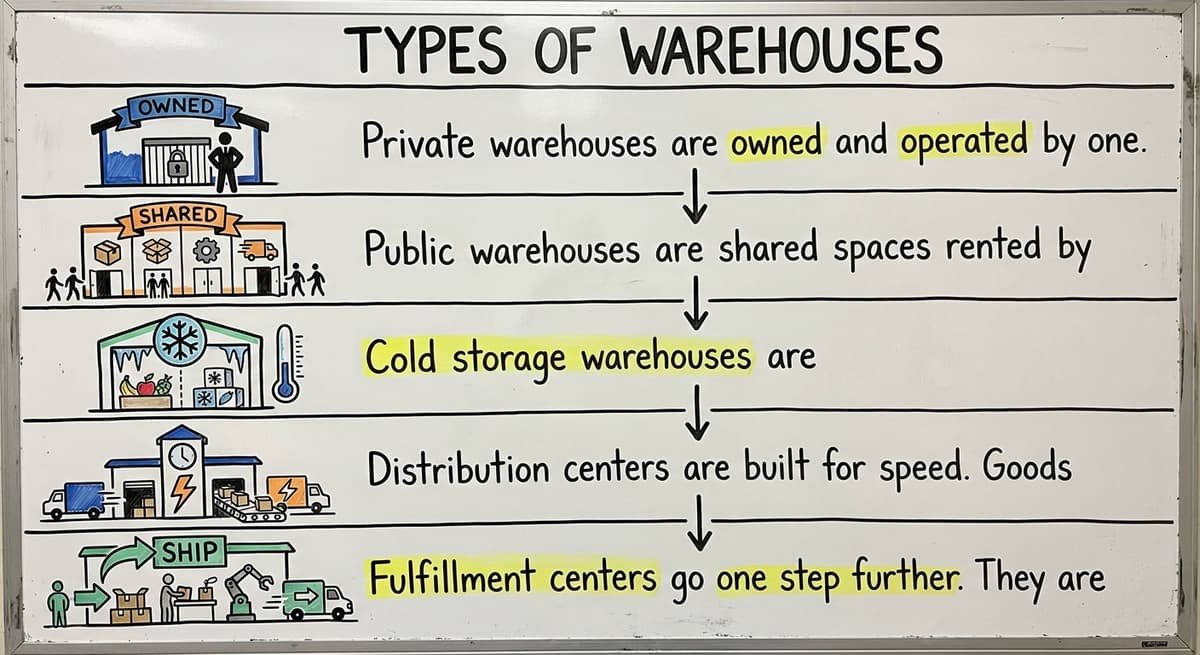
- Private warehouses are owned and operated by one business. You control the space, the layout, and the systems. This works well for businesses with consistent, high-volume inventory needs.
- Public warehouses are shared spaces rented by multiple businesses. You pay for the space you use. This is a practical option for smaller operations that do not need a full facility.
- Cold storage warehouses are temperature-controlled. If you handle perishable goods like food, medicine, or flowers, this is not optional. It is a requirement.
For small and mid-size businesses, public warehouses and cold storage are the most accessible starting points.
Warehouses Built for Speed
Some warehouses are less about storing and more about moving.
Reviewed August 2026. Each figure comes from the assumptions stated beside it, so you can substitute your own and the arithmetic still holds.
- Distribution centers target speed. Goods come in and go out quickly. Long-term storage is not the goal. If you supply retailers or other businesses, you may operate more like a fast-moving distribution center than a traditional warehouse.
- Fulfillment centers go one step further. They focus on picking items, packing them, and shipping orders directly to end customers. If you sell online and ship to individuals, this is the model that fits.
As OSHA notes, "Warehouse work involves many hazards," and their guidance at https://www.osha.gov/warehousing covers safety requirements that apply across all these warehouse types.
Knowing the type you operate helps you design the right processes from the start.
What Happens Inside a Warehouse?
Receiving, Putaway, and Storage
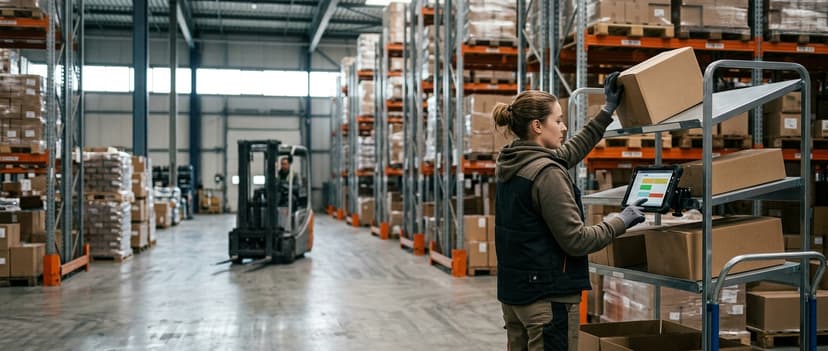
Every warehouse operation follows a similar flow, even if the scale is different. It starts the moment goods arrive.
- Receiving: A shipment arrives. Staff check the goods against a purchase order, look for damage, and confirm quantities. This step is where errors get caught early or get buried for weeks.
- Putaway: Items are moved from the receiving area to their assigned storage locations. A good putaway system means anyone on the team can find any item without asking around.
- Storage: Goods sit in their assigned spots until an order comes in. This is where warehouse inventory management earns its value. Knowing exactly what you have and where it is prevents costly mistakes.
These three steps set the foundation. If they are done well, everything downstream runs smoother.
The comparison is easier when one option is built for you
Choosing between off-the-shelf software and a custom-built system is easier when one option matches how you already work. Off-the-shelf means fitting your process to the software. We do it the other way round, and the first look costs nothing.
Book a callPicking, Packing, and Shipping
Once an order comes in, the warehouse shifts into fulfillment mode.
- Picking: A staff member gets a pick list and pulls the right items from their storage locations. In small operations, this list is printed on paper. That works until order volume grows.
- Packing: Picked items are boxed, labeled, and prepared for shipment. Accuracy here protects your reputation with customers.
- Shipping: The packed order leaves the warehouse. It gets handed off to a carrier and tracked until it arrives.
These six steps describe warehouse operations at any scale. The tools change. The steps do not.
Why Does Warehouse Organization Matter?
The Cost of Disorganization
A disorganized warehouse is expensive. Not in a vague, theoretical way. In a real, daily way.
Lost inventory means you reorder things you already have. Slow fulfillment means customers wait longer than they should. Picking errors mean returns, refunds, and frustrated buyers. These problems compound fast when volume grows.
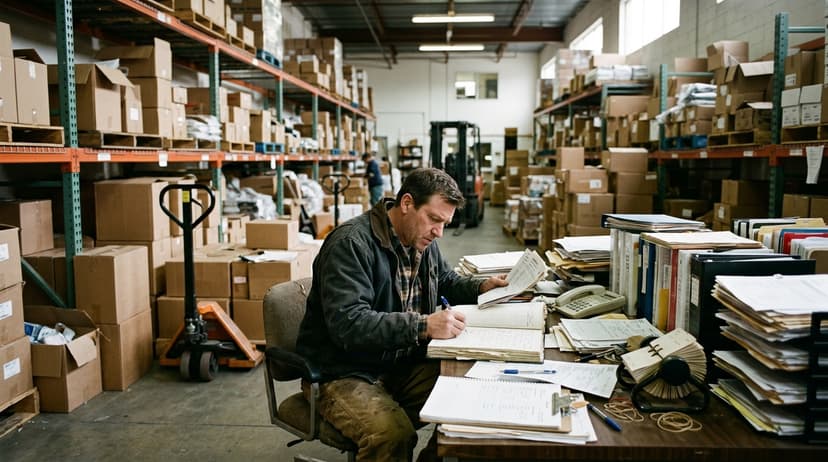
Many small operations run on printed sheets, spreadsheets, and memory. That system works when the team is small and the orders are manageable. It breaks down when a new product line launches, a key employee leaves, or order volume doubles.
When Do Manual Systems Stop Working?
Wholesale distributors and fulfillment centers running on your accounting software and the software know this problem well. The tools are familiar and flexible, but they were not built for warehouse operations.
A spreadsheet cannot tell you in real time where an item is or flag when stock is running low.
Good warehouse organization means knowing exactly what you have, where it is, and when it needs to move. That level of clarity requires a system built for the job.
A warehouse inventory management software overview explains what those systems look like and what they actually do for operations your size.
Organization is not about perfection. It is about building a process that holds up when things get busy.
How Does Warehouse Software Fit the Definition in Practice?
Replacing Manual Work with a Single Source of Truth
Warehouse software takes the core warehouse meaning and adds a digital layer. Every movement gets tracked. Every item has a location. Every order has a status. You stop relying on memory and start relying on data.
For small operations, the best systems do not replace your existing tools. They work alongside them. Integrating your accounting software with warehouse operations means your inventory data and your financial data stay connected without double entry or manual reconciliation.
The guide on replacing spreadsheet-based inventory tracking walks through what that shift looks like in practice, including what to expect during the transition.
What does it look like running on your own process?
The first thing you see is it running on your own process, at no build cost. The subscription starts once it is live and doing the job, not before.
Book a callMatching Software to How You Already Work
The biggest mistake small operations make is buying software built for large enterprises and then trying to fit their team into it. That approach is slow, expensive, and demoralizing.
Custom warehouse software for small distributors works the other way around. The system matches how your warehouse already operates. Staff do not need to learn a completely new workflow. They get tools that support the process they already know.
Local, implementation-led partners can deliver this without a long, expensive rollout. You get a working system faster, with real support from people who understand your operation. That is the difference between software that sits unused and software that actually improves your day.

Common Questions About Warehouse Meaning
Is a Warehouse the Same as a Distribution Center?
Is a warehouse the same as a distribution center? Not exactly. A warehouse focuses on storing goods for an extended period. A distribution center is built for speed.
Goods move in and out quickly, within hours or days. Many businesses operate somewhere between the two, storing some inventory while also fulfilling orders regularly.
Can a small business have a warehouse? Yes. Warehouses exist at every scale. Some rent a single bay in a shared facility or dedicate a back room to inventory storage. The warehouse definition applies regardless of size.
What Is Warehouse Management?
What does warehouse management mean? Warehouse management is the process of overseeing everything that happens inside a warehouse. That includes receiving, storage, picking, packing, and shipping. It also includes tracking inventory levels, managing staff, and making sure orders go out accurately and on time.
Good warehouse management turns a storage space into a reliable part of your business.
How does warehouse software connect to your accounting tools? The best warehouse software for small operations integrates directly with your accounting software. When inventory moves, the financial records update automatically. You avoid manual data entry, reduce errors, and keep your books accurate without extra work.
Understanding the warehouse meaning is a practical starting point. The definition tells you what a warehouse is. Your operations tell you how to run one well.
If your current system is starting to crack under the weight of growth, that is a signal worth paying attention to.
If you are ready to move from spreadsheets and printed lists to a system that actually fits your operation, reach out to The Software Society. We build and implement warehouse and inventory tools that work the way your business already does.
Frequently asked questions
Frequently asked questions
What is warehouse in simple words?
A warehouse is a building or space used to store goods before they are sold, shipped, or delivered. It is not a store for customers. It is a working space where inventory is received, organized, and sent out when it is needed.
What are the three types of warehouses?
There is no single definitive list, but three common types are private warehouses (owned by one business), public warehouses (shared space rented by multiple businesses), and distribution centers (focused on moving goods quickly rather than storing them long term). Cold storage and fulfillment centers are also widely recognized types.
What is the main purpose of a warehouse?
The main purpose of a warehouse is to store goods safely and organize them so they can be found, picked, and shipped accurately and on time. A well-run warehouse keeps inventory visible and orders moving without delays or errors.
What is the meaning of warehouse job?
A warehouse job is a role that involves working inside a warehouse. Common warehouse jobs include receiving clerk, picker, packer, forklift operator, and warehouse manager. The work centers on moving, organizing, and tracking physical goods as they flow through the facility.
What is the difference between a warehouse and a distribution center?
A warehouse is primarily for storing goods over a period of time. Distribution centers focus on speed, with goods arriving and leaving quickly, within the same day. Many small operations do both: they store inventory and fulfill orders from the same space.
What does warehouse management mean?
Warehouse management is the process of overseeing all activities inside a warehouse. That includes receiving shipments, organizing storage, picking and packing orders, and shipping them out. It also means tracking inventory levels and making sure the operation runs smoothly and stays on schedule.
Can a small business benefit from warehouse software?
Yes. Small businesses benefit the most: they are the ones most likely to be running on spreadsheets and printed lists that break down as volume grows.
Warehouse software designed for smaller teams gives a real-time view of inventory without requiring an expensive enterprise system.
What activities happen inside a warehouse?
The main warehouse activities are receiving, putaway, storage, picking, packing, and shipping. Goods arrive and are checked in, placed in assigned locations, held until needed, then pulled, packed, and sent out. These six steps describe warehouse operations at any scale.
How do you pronounce warehouse?
Warehouse is pronounced WAIR-howss, with two syllables and the stress on the first one. It combines "ware," an old word for goods or merchandise, with "house," meaning a place to keep something.
Said together, it simply means a house for goods, and that is exactly what the building is for.
What does warehousing mean?
Warehousing means storing goods in a dedicated space before they are sold, shipped, or delivered, rather than displaying them for customers to browse. It covers everything that happens to inventory while it sits in that space, including how it is received, organized, tracked, and eventually moved out.
Warehousing applies to a small back room and to a massive distribution facility alike.
What are the main functions of a warehouse?
A warehouse handles six main functions: receiving, putaway, storage, picking, then packing, then shipping. Receiving checks incoming goods against orders, putaway moves them to assigned locations, and storage keeps them organized until needed.
After that, picking pulls the right items, packing prepares them for shipment, and shipping hands them off to a carrier for delivery to the customer.
What is in a free first look?
A 30 minute call, your operation mapped, and a clear picture of what we would build. No obligation and nothing to install.
Book a callRelated guides
The rest of this guide, for the parts of the job this page does not cover.
Guides
- Fnsku Meaning
- Warehouse Inventory Management Software
- Warehouse Inventory Tracking Software
- Warehouse Inventory Management Systems
- Pick and Pack in Warehouse
- Warehouse Receiving Software
- Warehouse Inventory Systems
- Warehouse Stock Management Software
- Warehouse Management System Top 10
- Software for Warehouse Management System
- Warehouse Shipment
- Warehouse Tracking System
- Warehousing Operations
- Inventory and Warehouse Management Software
- Small Business Warehouse Management System
- Cloud Based Warehouse Management