


Why Is Safety Shot Stock Dropping
Small-cap stocks like Safety Shot usually fall when sales miss hopes, cash runs low, new shares are sold, or investors lose trust. The exact cause can change week to week. Check the latest company filings to see which one applies now.
Last reviewed: October 2026. Check primary filings for anything newer.
Book a callWhy Is Safety Shot Stock Dropping? The Short Answer
Safety Shot stock can fall for the same reasons most small-cap stocks fall. Sales may come in below what investors hoped to see. The company may sell new shares to raise cash. Cash on hand may look thin. Or buyers may simply lose faith and sell.
Which reason fits today is a fact you must check yourself. Read the latest SEC filings and company press releases before you decide. Causes can shift from one week to the next.
This is general information, not financial advice.
We build it for your operation, and the first look is free
If you would rather not compare products, describe how your operation already works and we build the system around it.
No build cost. You see it running on your own process first, and the monthly subscription starts only once it is live.
Book a callWho Is Safety Shot and What Does It Sell?
Safety Shot is a publicly traded company in the beverage and wellness space. Confirm the current product line and business description in its own annual report before you rely on any summary, including this one.
A company with a small product line and a short sales history reacts hard to news. One weak quarter is a big share of its story. A large, old brand has years of sales to cushion a bad report.
Inventory also matters to every seller. The IRS says in Publication 538: "To figure taxable income, you must value your inventory at the beginning and end of each tax year."
Do Sales Results Affect the Stock Price?
Yes, sales results move a stock because investors compare reported sales with what they hoped to see. When revenue lands below that hope, the stock often falls. When it beats the hope, the stock often rises.
Open the latest quarterly report, called the 10-Q. Find two lines first:
- Revenue shows how much the company sold in the period, and whether that number grew or shrank against the last period.
- Gross margin shows what is left after the direct cost of making the product, so a falling margin can hurt even when sales rise.
Early-stage brands often have uneven sales. Retail orders arrive in waves. A chain may stock shelves in one quarter and wait months to reorder. So one lumpy quarter does not always mean demand is gone. Read several quarters side by side before you judge the trend.
Does Selling New Shares Push the Price Down?
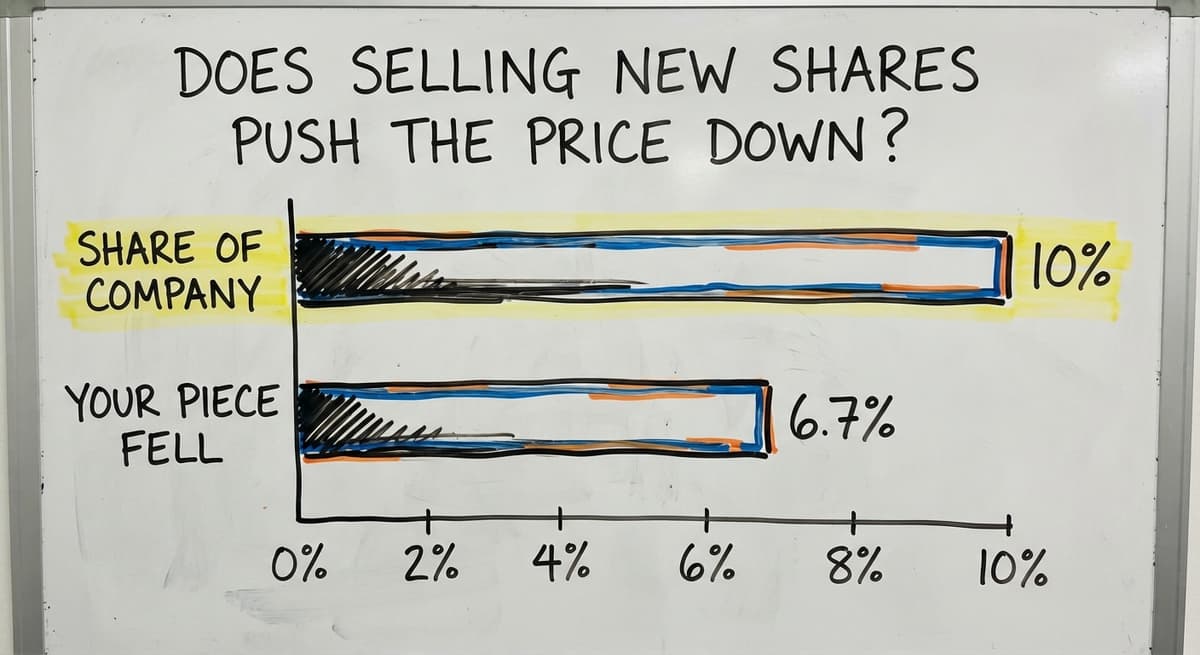
Selling new shares can push the price down. This is called stock dilution. It means each existing share now owns a smaller piece of the company.
Think of a pizza cut into 8 slices. Cut the same pizza into 16 slices and each slice is smaller. The pizza did not grow. You just have more slices.
Here is a simple case. You own 100 of 1,000 shares. That is 10%. The company sells 500 new shares. You still own 100, but now of 1,500. Your piece fell to about 6.7%.
Small companies often sell new shares or warrants to raise cash. A warrant is a right to buy shares later at a set price. Both can weigh on the price.
Where to look for share sales
Search the SEC filings for offering announcements. Then compare the share count on the cover of each 10-Q. A count that climbs quarter after quarter is the sign. Name a specific offering only after you read the filing itself.
The comparison is easier when one option is built for you
Off-the-shelf means fitting your process to the software. We do it the other way round, and the first look costs nothing.
Book a call
How Does Cash Burn Worry Investors?
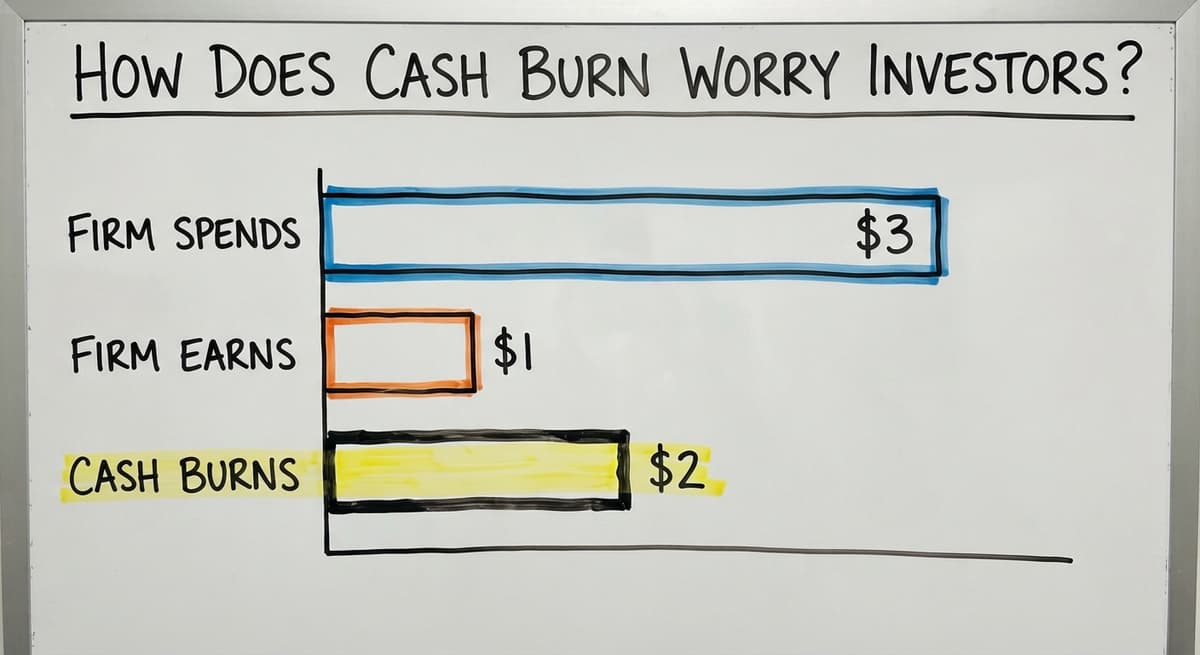
Cash burn is the money a company spends each quarter beyond the money it earns. If a firm earns $1 million and spends $3 million, it burns $2 million.
Now compare that to cash on hand. If the bank balance covers only a few quarters, investors expect new share sales soon. They sell first. The price drops before the dilution even happens.
Look in the filings for the phrase "going concern." It can appear when auditors or managers doubt the firm can pay its bills for the next year. Do not assume it is there. Search the document, and report only what you actually find.
Why Are Small-Cap Stocks So Jumpy?
A small-cap stock drop can look wild because few shares trade each day. When volume is low, a few big sells can move the price a lot. A large stock absorbs the same sale without a blink.
Three forces make the swings worse:
- Social media buzz can send a small stock up in a day, then back down as the posts fade.
- News headlines about a deal or a new product can pull in fast buyers who leave just as fast.
- Fading spikes leave a big gap behind, and the fall afterward can look like a crash even when it just returns to the old price.
Low-priced stocks also face listing rules. An exchange can need a minimum price to stay listed. Check whether any such notice applies to this company before you mention it.
So a sharp SHOT stock decline can be part normal small-cap noise and part real news. Only the filings can separate them.

Where Can You Check the Real Reasons Yourself?
You can find the real reasons in a few public documents. Read them in this order:
- The latest 10-Q or 10-K. These are the quarterly and yearly reports. Look at revenue, margin, cash on hand and the notes on risk.
- 8-K filings. These announce big events fast, such as a stock sale, a loan or a leadership change.
- Company press releases. These show how the firm frames its own news. Compare them with the filings.
- Share count over time. Write down the count from each report and see if it rises.
Message boards and social posts are opinions. They are not proof. Treat a claim as true only when you can find it in a filing.
Why Should a Distributor or Warehouse Care About a Supplier's Stock?
A falling supplier stock can signal supplier risk, and wholesale distributors should care. Many wholesalers and warehouses stock goods from young brands. If that brand runs short of cash, your business feels it too.
This is a business view, not an investing tip. Watch for these effects:
- Slower reorders, because the brand may hold back buys to save cash.
- Changed terms, such as shorter payment windows or no returns.
- Smaller production runs, which can leave you short on a hot item.
- Unsold stock on your shelves if demand or support fades.
A falling chart does not prove any supplier is bad. No one can say that from a price alone. It is a reason to look at your own numbers a little sooner. The Census Bureau's Monthly Wholesale Trade data shows national inventories and the inventories-to-sales ratio, a handy yardstick for your own stock levels.
See it running on your own process first
No build cost. The subscription starts once it is live and doing the job, not before.
Book a callWhat Inventory Warning Signs Come With a Struggling Brand?
A struggling brand leaves clues in your own records. The earliest signs are orders that drop off and goods that sit longer on the shelf. Each one shows up as a number you already have.

- Orders drop off. Your buy orders to the brand shrink or stop. Compare the last 4 months with the 4 before.
- Slower sell-through. Fewer units leave each week. Divide stock on hand by weekly sales to see how many weeks remain.
- Aging stock. Cases sit past their usual turn. Sort by receipt date and look at the oldest.
- More returns. Customers send back more units, or you want to.
- Changed payment terms. The brand asks for cash up front or cuts your credit window.
Here is a quick check. You hold 600 units and sell 20 a day. That is 30 days on hand. If sales fall to 10 a day, it becomes 60 days. This is the pattern in how to spot slow-moving inventory.
How Can You Track Supplier Risk Without a Big ERP?
You can track supplier risk with a simple view built around how you already work. Many small operations keep stock in their accounting software plus spreadsheets, a small database, printed sheets and email. Slow-moving stock hides in those gaps. No one sees the whole picture at once.
A full ERP, which is a large all-in-one business system, is not the only fix. Custom software can sit beside your accounting software and replace only the manual parts. Your accounting software keeps doing the books. The custom piece handles the stock view. That is the idea behind replacing spreadsheet-based inventory sheets while keeping your accounting software.
A simple view could show:
- Days on hand by brand, so you see which lines are piling up.
- Last order date, so you spot a brand that went quiet.
- Open buy orders, so you know what you are still owed.
This is also the base for supplier performance tracking for wholesalers. The NIST Manufacturing Extension Partnership offers vendor-neutral guidance on supply chain and inventory process.

What Should You Do If a Brand You Carry Is Struggling?
Start by looking at your own shelves, then talk to the supplier. Stock chatter is a poor guide. A direct call gives you facts. Keep the tone calm and plain.
- Review how much stock you hold. Count units and days on hand for that brand.
- Trim reorder sizes. Buy smaller lots until the picture is clear.
- Ask about terms. Ask about returns, credit and lead times.
- Set a review date. Pick a day 30 or 60 days out and look again.
Ask the supplier how orders are shipping and when the next run is due. Their answers, and how quickly they reply, tell you more than a chart does.

Is a Falling Stock Price the Same as a Failing Business?
No. Price and business health are linked, but they are not the same thing. A stock can drop on dilution or market mood even while sales grow. It can also stay high while a firm struggles.
Judge a supplier by orders, delivery and payment behavior as well as the stock chart. Are shipments on time? Are invoices honest and steady? Those are things you can see.
To recap: sales, new shares, cash burn and small-cap swings explain most drops. Your own inventory data tells you what it means for you. If your tracking is scattered, a custom workflow built around your operation can give you that view.
Talk to The Software Society about a custom workflow rollout overview for your warehouse.
Not financial advice. Verify all company facts in primary filings.
Frequently asked questions
Why is Safety Shot stock dropping?
Small-cap stocks usually fall when sales miss hopes, cash runs low, new shares are sold, or investors lose trust. Read the latest SEC filings and press releases to see which cause applies now. This is not financial advice.
Does selling new shares make a stock price fall?
It can. New shares dilute each existing share, so every share owns a smaller piece of the company. Small firms often sell shares to raise cash, and that can weigh on the price.
Do weak sales cause small-cap stocks to drop?
Often, yes. Investors compare reported revenue with what they hoped to see. When sales fall short, the stock commonly drops. Uneven retail orders can make one quarter look worse than the trend.
Where can I find the real reasons in company filings?
Read the latest 10-Q or 10-K for revenue, margin and cash. Read 8-K filings for big events. Compare press releases with those filings and track the share count over time.
Should a distributor worry when a supplier's stock falls?
It is a reason to check your own numbers. A falling stock can point to slower reorders, changed terms or smaller production runs. It does not prove the supplier is bad, so talk to them directly.
What inventory warning signs show a brand may be struggling?
Watch for dropping orders, slower sell-through, aging stock, more returns and changed payment terms. Each one shows up in data you already keep, such as days on hand and order dates.
Is a falling stock price the same as a failing business?
No. A stock can fall on dilution or market mood even while sales grow. Judge a supplier by orders, delivery and payment behavior as well as the chart.
Start with a free first look
A 30 minute call, your operation mapped, and a clear picture of what we would build. No obligation and nothing to install.
Book a callRelated guides
The rest of this guide, for the parts of the job this page does not cover.
Guides
- Drop Ship Inventory Management
- Stock Software
- Make to Stock Examples
- Hospital Stock Management System
- Cloud Stock Management Software
- Procedure for Stock Control
- Low Stock Alert
- Types of Stock Control Systems
- Warehouse Stock Management Software
- Small Business Stock Management Software
- Warehouse Stock Software
- Warehouse Stock Management System
Common questions
- Why is Stock Rotation Important in Relation to Food Safety
- What is Inventory Management and Why is It Important
- What is Fluctuation Stock in Inventory Management
- How to Stock Control
- How to Maintain Stock Levels
- How to Prevent Stock Discrepancies
- What is Stock Taking in Inventory Management
- How to Calculate Cycle Stock
- Why is Warehousing and Inventory Management Important
- Why Warehouse Management System
- Why is Inventory Management Important for Small Businesses
- What is E Inventory Management