

Why Is Inventory Management Important For Small Businesses
Inventory management is important for small businesses because it tells you what you have, where it is, and when to buy more. Without it, you lose sales to stockouts, tie up cash in overstock, and make decisions on wrong numbers. Small businesses feel these problems faster and harder than large ones, because there is less margin for error.
Reviewed September 2026. Each figure comes from the assumptions stated beside it, so you can substitute your own and the arithmetic still holds.
Published 2 August 2026. Reviewed and updated 15 September 2026.
Book a callWhat Does Inventory Management Mean for a Small Business?
Inventory management is knowing what stock you hold, where each item sits, and when to reorder. It is not just counting boxes at year end. It covers every movement: goods arriving, items picked, stock transferred between locations, and products returned.
Many small wholesale distributors and fulfilment centres run on spreadsheets, printed pick lists, or a mix of memory and sticky notes. That works when you carry 50 SKUs and fill 20 orders a week.
Add more products, more staff, or a second location, and the cracks appear fast.
The IRS is clear about the legal side. IRS Publication 538 states: "To figure taxable income, you must value your inventory at the beginning and end of each tax year." That is not optional. It is a legal requirement, and it assumes your count is accurate.
Would you rather have it built around your operation?
The first look is free. If you would rather not compare products, describe how your operation already works and we build the system around it.
No build cost. You see it running on your own process first, and the monthly subscription starts only once it is live.
Book a callYou Cannot Sell What You Cannot Find
Poor inventory visibility kills sales. A customer orders a product. Your system shows 12 units in stock. Your picker walks the aisle and finds none.
The shelf label is wrong, the stock was misplaced weeks ago, or it was sold twice because two people updated the same spreadsheet at different times.
That customer now waits for a back-order, or they call a competitor. Small businesses rely on repeat orders and word-of-mouth. One broken promise costs more than the margin on that single sale.
The US Federal Trade Commission's Mail, Internet, or Telephone Order Rule requires sellers to ship when they said they would, or give customers the right to cancel. Accurate stock counts are what make that promise possible.
Scan-Based Tracking Closes the Gap Between System and Shelf
Scan-based tracking is the most reliable way to close the gap between what the system says and what is actually on the shelf.
As GS1 explains, "Barcodes are the foundation of global supply chains, enabling accurate and efficient identification of products and locations." A barcode scan at receiving and again at pick removes the manual entry step that causes most of these errors.
Why Do Small Businesses Feel Stockouts Harder?
A large retailer absorbs a stockout. A small wholesale distributor cannot. Your top 5 customers probably account for 60 percent or more of revenue.
Lose one of them to a competitor because you could not fulfil an order, and the damage is real and lasting. Inventory accuracy is not a back-office detail. It is a customer retention tool.
Does Overstocking Actually Cost Money?
Yes. Carrying too much stock costs money you never see on an invoice. The cash tied up in unsold goods cannot pay wages, cover a supplier invoice, or fund a new product line.
Carrying costs include:
- Warehouse space: every pallet of slow-moving stock takes up room a faster product could use
- Tied-up cash: money sitting in stock is money not working elsewhere in the business
- Insurance: premiums rise with the value of goods you hold
- Spoilage and obsolescence: food, chemicals, and electronics all have a shelf life
The Hidden Cost of Holding Excess Stock
Small businesses overbuy to feel safe. The logic makes sense: if we run out, we lose the sale.
The problem is that the cost of holding excess stock is invisible compared to the very visible pain of a stockout. Good stock control finds the middle ground. You hold enough to fill orders reliably, and no more.
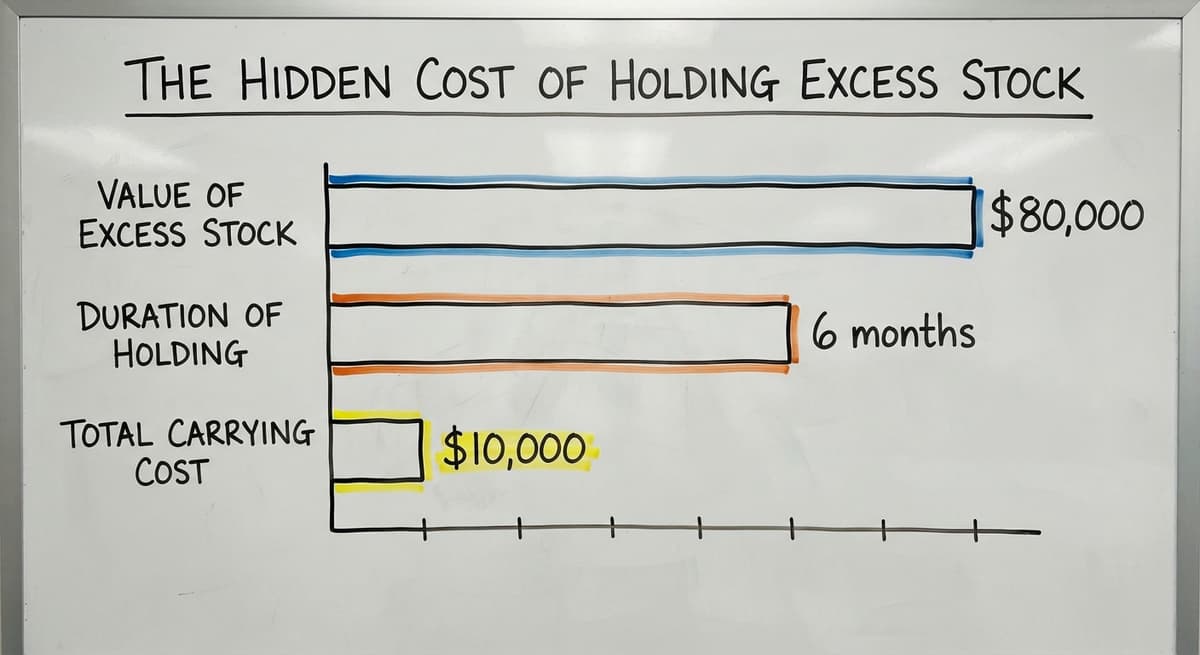
Consider a small distributor holding $80,000 in slow-moving stock for 6 months. At a conservative carrying cost of 25 percent per year, that is $10,000 gone before a single unit ships.
Is the comparison easier when one option is built for you?
Yes. Off-the-shelf means fitting your process to the software, and custom is the other way round. The first look costs nothing.
Book a callInventory Errors Make Your Books Wrong
Inaccurate stock counts flow directly into your accounting. If the accounting software thinks you have 200 units of a product and you actually have 140, your cost of goods sold is wrong.
Wrong cost of goods means wrong gross profit. Wrong gross profit means your tax return is built on bad numbers.
This is one of the most common pain points for small wholesale distributors running the accounting software alongside a spreadsheet. The two systems drift apart.
Someone updates the spreadsheet but forgets to adjust the accounting software. A return gets put back on the shelf but not recorded anywhere. Over months, the gap grows.

What Does Bad Inventory Data Do to Your Business?
Bad inventory data creates a chain of problems:
- Profit reports overstate or understate margins on individual product lines
- Tax prep takes longer because the accountant has to reconcile two sets of numbers
- Buying decisions are made on figures that do not reflect reality
- Audits become painful because the paper trail is missing
The fix is not a new accountant. It is a system where stock movements update in one place and feed everything else from there.
The accounting software Inventory and the Spreadsheet Problem
The accounting software handles basic inventory, but it was built for accounting first. When a small business bolts a spreadsheet on the side to track warehouse movements, the two systems almost always diverge. The longer that runs, the harder the reconciliation.
If your team spends more than 2 hours a week fixing the gap between your warehouse records and your accounts, you are already past the point where a proper inventory system pays for itself.
When Does Manual Inventory Tracking Stop Working?
Manual tracking stops working the moment your team cannot hold all the moving parts in their heads at once. For most small businesses, that moment comes earlier than expected.
The typical setup looks like this: an spreadsheet file tracking stock levels, a printed pick list generated each morning, email threads for supplier orders, and one person who knows where everything is. That person is the system.
When they take a holiday, orders slow down. When they leave, operations can break.

The Recognisable Points Where Manual Systems Start Failing
Manual systems start failing at recognisable points:
- More SKUs: each new product line adds rows to the spreadsheet and more chance of a cell being updated wrong
- More orders: pick lists printed in the morning are out of date by noon
- More staff: two people updating the same file create version conflicts
- A second location: no spreadsheet handles split stock reliably
The US Census Bureau's Monthly Wholesale Trade data shows that wholesale inventories relative to sales shift constantly. Businesses that track stock manually have no way to spot those shifts in their own data until a problem is already visible.
Good Inventory Data Speeds Up Fulfilment
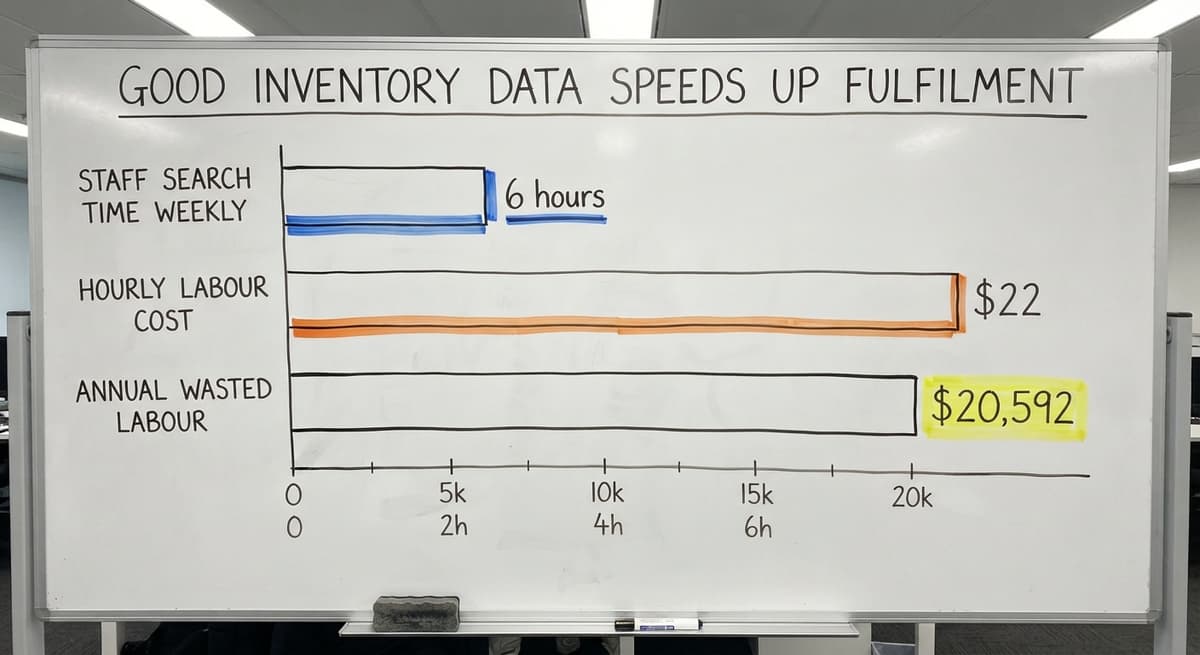
Knowing exactly where stock lives cuts pick-and-pack time. A picker who walks the warehouse looking for a product is costing you money on every order. A picker who scans a barcode and gets a bin location walks a direct route.
For a small fulfilment centre with a lean team, this compounds fast. Take 3 staff spending 6 hours a week each searching for misplaced stock.
At $22 an hour, that is $20,592 a year in wasted labour, and that figure does not include the orders that shipped late or the customers who chased for updates.
Accurate inventory data also means you can give customers a reliable ship date at the point of order. That is a promise you can keep, because the number you quoted is real.

How Does Inventory Management Help You Buy Smarter?
Reorder points are the stock level at which you place a new order automatically, before you run out.
Setting them correctly means you never buy in a panic at a supplier's emergency price. You order on your schedule, in the quantities that make sense for your cash flow.
Tracking sales velocity, which is how fast each product sells, tells you which lines to stock more of and which to cut.
A product that sells 3 units a month does not need the same buffer stock as one that sells 300. Without that data, you guess, and guessing tends to mean overbuying slow lines and underbuying fast ones.
What does it look like running on your own process?
The first thing you see is it running on your own process, at no build cost. The subscription starts once it is live and doing the job, not before.
Book a callWhy Does Buying Efficiency Protect Your Margins?
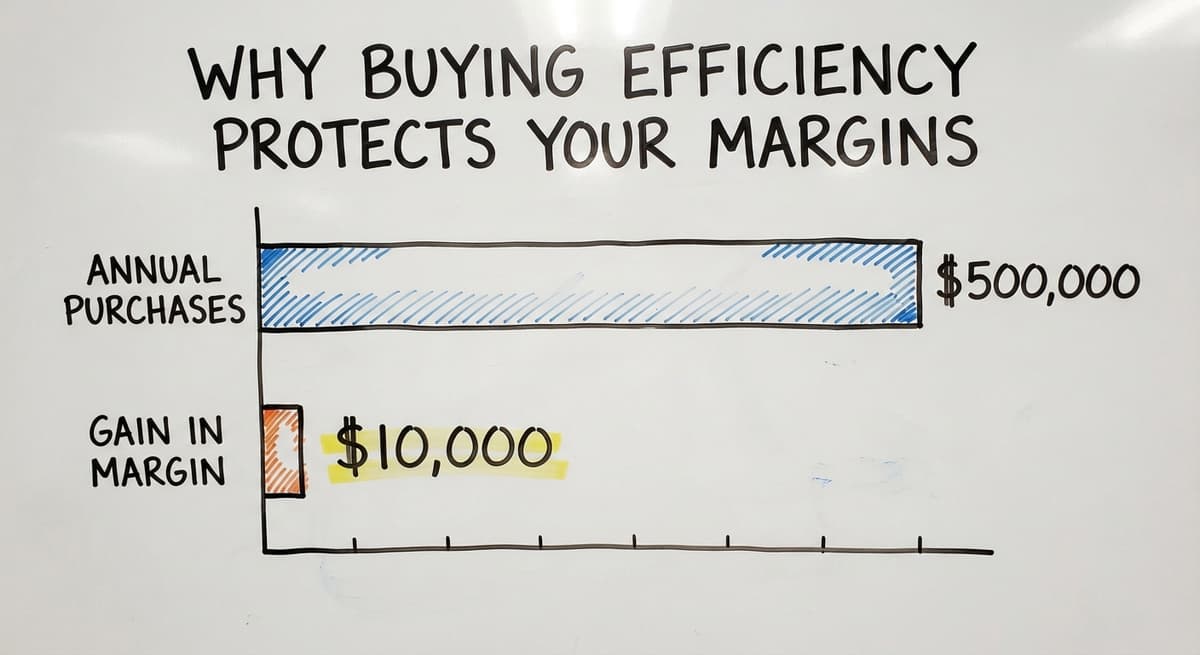
Better purchasing decisions protect margins. For small wholesale distributors, margin is everything. A 2 percent improvement in buying efficiency across $500,000 in annual purchases is $10,000 back in the business.
The NIST Manufacturing Extension Partnership provides vendor-neutral guidance on supply chain process, and a consistent theme is that small manufacturers and distributors lose the most margin in purchasing decisions made without reliable demand data.

Inventory Management Reduces Shrinkage and Mistakes
Shrinkage is the gap between what your records say you should have and what you actually find on the shelf. It has four main causes: theft, damage, receiving errors, and picking errors.
You cannot find a problem you are not measuring. A business that never counts stock cannot tell whether a shortfall came from a supplier short-shipping, a picker sending the wrong item, or stock walking out the door.
A system that logs every movement creates accountability:
- Receiving scans confirm what actually arrived against the purchase order
- Pick confirmations show who picked what and when
- Discrepancies surface in hours, not at the next stock take
- Patterns become visible: one supplier consistently short-ships, or one pick zone has repeated errors
When you can see the pattern, you can fix the cause. Without the data, you absorb the cost invisibly.
Does a Clear Inventory System Help Your Staff Work Better?
Yes. Unclear inventory processes create confusion, duplicated work, and frustration for everyone on the team. When no one is sure which record is correct, staff default to checking with the person who has been there longest. That person becomes a bottleneck.
A clear system means:
- New staff get up to speed faster because the process is written into the system, not stored in someone's memory
- Handovers are cleaner because the record shows what happened, not what someone remembers
- Mistakes are easier to trace because the log shows who did what

Removing the Single Point of Failure in Small Teams
For small teams of 5 to 100, this matters more than it does in a large operation. One person leaving should not break fulfilment. A system that holds the knowledge removes that single point of failure.
The US Bureau of Labor Statistics shows that stock clerks and order fillers earn a median wage that makes every wasted hour a measurable cost. A system that removes ambiguity pays for itself in recovered time alone.
Inventory Management Supports Customer Promises
Accurate inventory lets you tell a customer exactly when their order will ship, and mean it. That is a harder promise to make than it sounds. It requires knowing not just that a product is in stock, but that the quantity is correct, the item is in the right condition, and it can be picked and packed within your stated lead time.
Small businesses win on reliability. A large distributor can absorb a broken promise with a discount or a replacement. A small one loses the relationship.
Repeat business and referrals are the lifeblood of most small wholesale operations, and both depend on the customer trusting that you will do what you said.
Real-time stock visibility is what makes that trust possible. When your inventory system updates the moment a pick is confirmed, the number your customer sees is the number that is actually there.
Not sure this is the right shape for your operation?
The call is free. Describe how the work runs today. We map it on a call and show you what it would look like built around that, before you spend anything.
Book a call
What Does Good Inventory Management Look Like for a Small Business?
A practical setup does not need to be an ERP system. It needs to do a small number of things reliably: show real-time stock counts, trigger reorder alerts when stock hits a set level, log every movement with a timestamp, and feed the right numbers into your accounts.
For most small distributors and fulfilment centres, the right move is not overhauling everything at once. It is replacing the manual steps that cause the most errors first.
Where Do You Start When Replacing Manual Inventory Steps?
- Replace the receiving spreadsheet with a scan-based process that updates stock the moment goods arrive
- Set reorder points for your top 20 products so buying decisions are automatic, not reactive
- Connect stock movements to your accounts so the accounting software pulls from one source of truth
- Log pick confirmations so you know who picked what and can trace errors quickly
The goal is a system that fits how the business already works, not one that forces the business to change shape to fit the software.
For teams exploring how custom inventory software works for small distributors, the starting point is always the manual step that costs the most time or causes the most errors.
Signs Your Inventory System Needs an Upgrade
Most small businesses wait too long to act. The warning signs are clear, but they arrive gradually, so each one feels manageable on its own.
Recognise your situation in this list:
- Frequent stockouts on products you thought you had mean your counts are wrong before orders arrive
- Surprise overstock on slow lines means buying decisions are not connected to sales data
- Fulfilment errors where customers receive the wrong item or wrong quantity are rising
- Staff spending hours each week reconciling counts between the spreadsheet and the accounts
- One person holds all the knowledge about where things are and how the system works
- Your accountant asks the same questions every year because the inventory figures never match
What Do You Do When You Recognise the Warning Signs?
The warning signs are normal growing pains, and they have a known fix. The question is whether you address them before a major customer complaint or after.
If your wholesale business has outgrown spreadsheets, the next step is understanding what a connected system looks like in practice, and what it replaces.
For businesses running the accounting software and inventory management side by side, the decision is not whether to integrate but which manual steps to remove first.
Warehouse operations software for small teams does not need to be complex. It needs to be accurate, connected, and used by everyone on the floor from day one.
The Real Cost of Doing Nothing
Every week a small business runs on manual inventory tracking, it absorbs costs it cannot see. Wasted pick time. Buying at emergency prices. Wrong profit figures. Customer promises that cannot be kept.
None of these show up as a line item. They show up as a margin that never quite reaches target, a customer who quietly stops ordering, and a team that spends Friday afternoons fixing counts instead of shipping product.
What Does Fixing It Actually Look Like?
The businesses that fix this do not wait for a crisis. They look at the warning signs, recognise their own situation, and replace one manual step at a time. That is what good small business inventory management actually looks like: not a big system, but a connected one.
If your team is spending more time managing the gaps in your current setup than running the operation, that is the signal.
The Software Society builds connected systems that replace fragmented manual work with processes aligned to how your business actually runs. Start with a conversation about what your current setup costs you, and what a realistic fix looks like.
Frequently asked questions
Frequently asked questions
Why is inventory management important for small businesses specifically?
Small businesses have less margin for error than large ones. A stockout or a fulfilment mistake that a large distributor absorbs with a discount can cost a small business a key customer relationship.
Accurate inventory management protects sales, keeps accounts correct, and lets you make buying decisions on real data rather than guesswork.
What happens when a small business has poor inventory control?
Poor inventory control leads to stockouts on products that show as available, overstock on slow-moving lines that ties up cash, fulfilment errors that damage customer trust, and accounting figures that do not reflect reality.
Each problem compounds the others, and all of them are harder to spot without a system tracking every movement.
How does bad inventory data affect accounting and profit reports?
If your stock count is wrong, your cost of goods sold is wrong. That flows into gross profit, which flows into your tax return.
Small wholesale distributors running the accounting software alongside a spreadsheet find the two systems drift apart over months, making reconciliation slow and tax prep painful. The fix is one source of truth that feeds both.
When does manual inventory tracking stop working?
Manual tracking starts failing when your team cannot hold all the moving parts in their heads at once. Common triggers include adding new product lines, increasing order volume, bringing on more staff, or opening a second location.
At that point, spreadsheets create version conflicts, pick lists go stale, and the one person who knows where everything is becomes a bottleneck.
How does inventory management affect customer satisfaction?
Accurate inventory lets you give customers a reliable ship date and keep that promise. When stock counts are wrong, orders are delayed, wrong items ship, or customers are told a product is available when it is not.
Small businesses that rely on repeat orders and referrals feel the damage from broken promises more than large ones do.
What are the signs that a small business needs a better inventory system?
Key signs include frequent stockouts on products you believed were in stock, surprise overstock on slow lines, rising fulfilment errors, staff spending several hours a week reconciling counts, one person holding all the warehouse knowledge, and an accountant who asks the same inventory questions every year because the figures never match.
How does inventory management help with purchasing decisions?
Setting reorder points means you buy before you run out, on your schedule, at normal prices rather than emergency ones.
Tracking sales velocity shows which products move fast and which sit still, so you stock more of the right lines and cut the slow ones. For small wholesale distributors, that data directly protects margin.
What are the best inventory management methods for small businesses?
ABC classification to count the 20 percent of items that carry 80 percent of the value, a reorder point on those A items, weekly cycle counts instead of an annual shutdown, and first-in-first-out picking so old stock leaves first. Four methods, and none of them needs software to start.
How do you calculate a reorder point?
Average daily sales multiplied by supplier lead time in days, plus safety stock. A product selling 4 a day on a 10-day lead time with 3 days of safety stock reorders at 52 units.
How can inventory management improve cash flow?
Every unit on the shelf is cash that cannot be spent, and carrying it costs 20 to 30 percent of its value a year in space, insurance, and obsolescence.
Cutting stock on hand by a fifth, with reorder points set from real sales, returns that cash to the business without losing a sale.
What inventory metrics should small businesses monitor?
Inventory accuracy from cycle counts, turnover, stockout rate, days of stock on hand, and the value of stock with no sale in 90 days. Five numbers, reviewed monthly, tell you whether stock is earning its shelf space.
What is in a free first look?
A 30 minute call, your operation mapped, and a clear picture of what we would build. No obligation and nothing to install.
Book a callRelated guides
The rest of this guide, for the parts of the job this page does not cover.
Guides
- Inventory Management Small Businesses
- Best Inventory Management Software for Small Businesses
- Small Business Inventory Management System
- Small Business Inventory Management
- Small Business Stock Management Software
- Inventory Tracking Software for Small Business
- Inventory Control Software for Small Business
- Inventory Tracking Systems for Small Businesses
- Simple Inventory System for Small Business
- Inventory Sales Software Small Business
- Inventory Control for Small Business
- Inventory System for Small Business
- Wms for Small Business
- Free Inventory Management Software for Small Business
- Small Business Warehouse Management System
- Warehouse Management System for Small Business
- Accounting and Inventory Software for Small Business
Common questions
- What is the Best Inventory Management Software for Small Business
- How to Manage Inventory for Small Business
- How to Organize Inventory for Small Business
- How to Keep Track of Inventory Small Business
- Why is Warehousing and Inventory Management Important
- What is Inventory Management and Why is It Important
- What is the Best Inventory Management System for Small Businesses?