


How to Keep Track of Paparazzi Inventory
To keep track of Paparazzi inventory, count every piece once, give each item a short code, and write it all in one place. Then update the count after every sale, gift, or loss. Set a reorder point for each item so you know when to buy more.
Book a callWhat Does It Mean to Keep Track of Paparazzi Inventory?
Tracking Paparazzi inventory means you always know what pieces you own, where they are, what sold, and what to restock. Treat it as stock control for a small business, not a hobby box. Good tracking answers 4 questions:
- What do I own? You can name every necklace, earring set, bracelet, and ring on hand.
- What sold? You can see which pieces left and when.
- What is low? You know which items need a new order soon.
- What is not moving? You can spot pieces that sit for months.
It makes no claims about any company's rules or policies. Check those on your own.
We build it for your operation, and the first look is free
If you would rather not compare products, describe how your operation already works and we build the system around it.
No build cost. You see it running on your own process first, and the monthly subscription starts only once it is live.
Book a callWhy Inventory Tracking Matters for a Small Jewelry Business
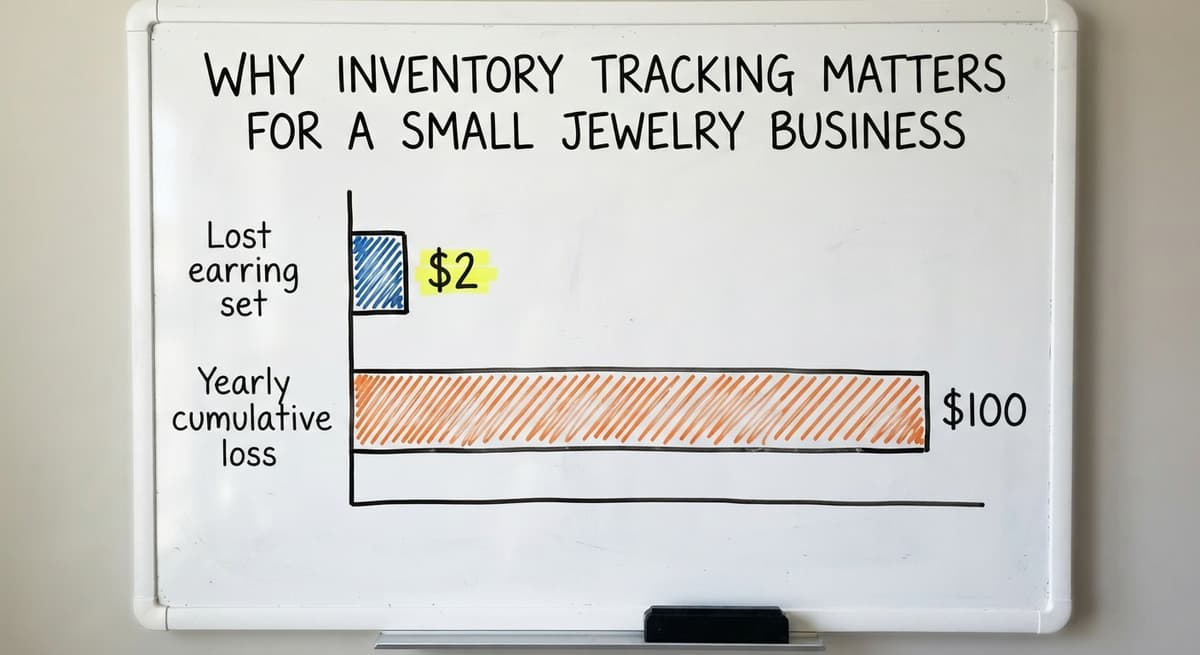
Inventory tracking matters because small pieces add up. A lost $2 earring set feels like nothing. Fifty of them over a year is $100 gone, and you never saw it leave.
Here is what counts give you:
- A true profit number. Without counts, you cannot tell profit from cash sitting in a drawer.
- Fewer stockouts. You see fast sellers before they run out.
- Less over-buying. You stop paying for slow pieces that gather dust.
The IRS agrees that counts are not optional for many sellers. IRS Publication 538 says: "To figure taxable income, you must value your inventory at the beginning and end of each tax year." That is hard to do without a count.
Counts Protect Your Promises
If you take orders ahead of time, a wrong count can make you late. The Federal Trade Commission's merchandise rule guide covers the duty to ship when you said you would. An accurate count tells you if you can keep that promise.
Step 1: How Do You Count Everything You Have Right Now?
You count everything by doing one full physical count today, touching every piece you own. This sets your starting number. Every later change builds on it, so do it once and do it well.
Follow this order:
- Clear a table and gather all stock from every drawer, bag, and bin.
- Sort by type: necklaces, earrings, bracelets, rings.
- Sort again by color or style inside each type.
- Count each group and write the number down the same day.
Do Not Skip the Hidden Stock
Count items set aside for orders. Count display pieces and returns too. These are easy to forget, and they are still yours. A count that leaves them out will be wrong from day 1.
Write each number on paper before you type it anywhere. That way a crashed phone cannot erase your work. A clean first count is the base of your whole inventory count habit.
Step 2: Give Every Item a Simple Name or Code
A simple code is the best way to name or label items. Use one short rule and stick to it. A good rule is type plus color plus style number.

Example: a gold hoop earring in style 12 becomes ER-GLD-12. A blue beaded bracelet in style 7 becomes BR-BLU-07.
The same item must carry the same name everywhere you record it. Your notebook, your sheet, and your sales list should all match.
Mixed names cause 2 problems:
- Double entries. "Gold hoops" and "hoop earrings gold" become 2 rows for 1 item.
- Wrong counts. A sale logged under one name never lowers the other row.
One naming rule keeps each piece in exactly one row.
Add a Tag if It Helps
Write the code on a small tag or the bag. When you can see the code on the piece, you will not guess later. Bigger stock may use scannable labels. GS1 calls its standards "the global language of business," and the same barcode ideas run scan-based counts. You do not need that on day 1.
Not sure this is the right shape for your operation
Describe how the work runs today. We map it on a call and show you what it would look like built around that, before you spend anything.
Book a call
Step 3: Pick One Place to Record Your Stock
Pick one home for your numbers: a notebook, a spreadsheet, or bookkeeping software you already use. Then keep to it. One source of truth beats 3 partial lists every time, because partial lists never agree.
These columns give you what you need:
| Column | What it holds |
|---|---|
| Item name | The short code, such as ER-GLD-12 |
| Quantity on hand | The count right now |
| Cost | What you paid for 1 piece |
| Price | What you sell 1 piece for |
| Reorder point | The count that triggers a new order |
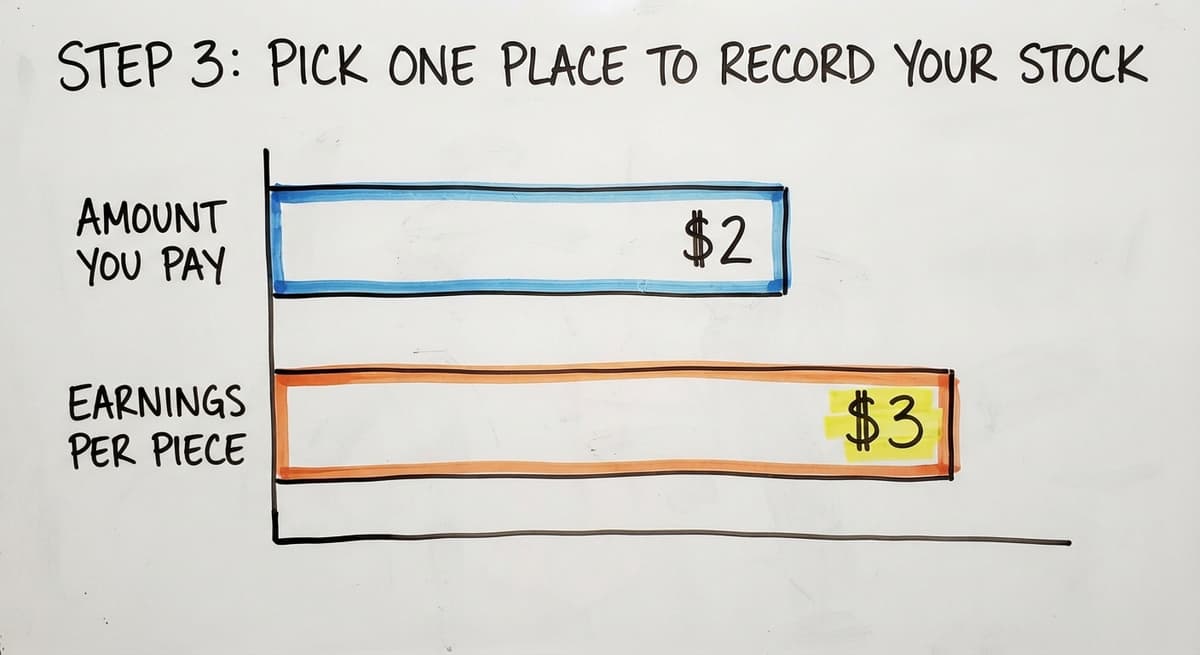
Cost and price let you see margin later. If you pay $2 and sell for $5, you earn $3 a piece. Build your own sheet. It takes 10 minutes.
The same rule shapes how to keep track of inventory for any size of shop: 1 list, 1 owner, 1 format.
Step 4: Record Every Sale, Gift, and Loss
Record every change to your stock, not just sales. Your count only stays true if you log each way a piece can leave. Update when an item sells, is given away, breaks, or goes missing.

Do it when the event happens. If that is too hard, do it at the end of each day. Do not wait a week. Memory fades fast.
Write the Reason Each Time
Add a short reason to each change. Use words like sold, gift, broken, lost, or sample. After a month you can see patterns. Maybe 6 pieces broke in transit. Maybe you give away more than you thought.
Cover Every Sales Channel
Party sales, online orders, and in-person sales all count the same. A piece sold at a friend's party lowers stock just like one sold online. Pick one place and log all of them.
A log that covers every channel is the only one you can trust.
Step 5: Set a Reorder Point for Each Item
A reorder point is the count at which you place a new order. It tells you when to buy, so you stop guessing. Base it on 2 facts: how fast an item sells and how long restocking takes.

The formula is simple:
Reorder point = (pieces sold per week × weeks to restock) + a small safety cushion.
A Worked Example
Say ER-GLD-12 sells 6 a week. Restocking takes 2 weeks. That is 6 × 2 = 12 pieces sold while you wait. Add a cushion of 6. Your reorder point is 18.
Now say BR-BLU-07 sells 1 a week. With the same 2 week wait and a cushion of 2, its reorder point is 4.
Fast sellers get a higher reorder point than slow ones. When the count hits that number, you order. Healthy stock levels come from numbers, not hunches.
How Often Should You Check Your Inventory?
Check your stock weekly with a quick scan, and do a full count monthly or quarterly. Smaller shops can lean toward monthly. Spot-check your top sellers more often, since they run out first.
During each check, compare the count on paper to the shelf. If they differ, fix the gap right away. Note why, if you can tell.
Keep the same day and time. Sunday evening or Friday morning works well. A fixed slot turns a chore into a habit.
- Weekly: scan the sheet and glance at the shelf for top sellers.
- Monthly or quarterly: count every piece and reset the sheet.
A short check on a set day beats a long one you keep putting off.
The comparison is easier when one option is built for you
Off-the-shelf means fitting your process to the software. We do it the other way round, and the first look costs nothing.
Book a call
What Mistakes Make Paparazzi Inventory Counts Wrong?
Four habits cause most wrong counts: skipped entries, mixed names, hidden stock, and mixed personal items. Each one has a quick fix.
- Skipping entries on busy days. Fix: jot sales on a pad, then enter them that night.
- Using different names for the same item. Fix: keep one code list and copy from it.
- Keeping stock in several places without noting where. Fix: add a location column or move it all to one spot.
- Mixing personal items with items for sale. Fix: store your own jewelry in a separate bag or box.
One more trap is a count you trust too much. When the shelf and the sheet disagree, believe the shelf and fix the sheet. Then find out why they split.
Using Your Numbers to Decide What to Buy Next
Your counts tell you what to buy next. Look at what sells fastest and what sits longest. Then spend more on proven sellers and less on slow ones.
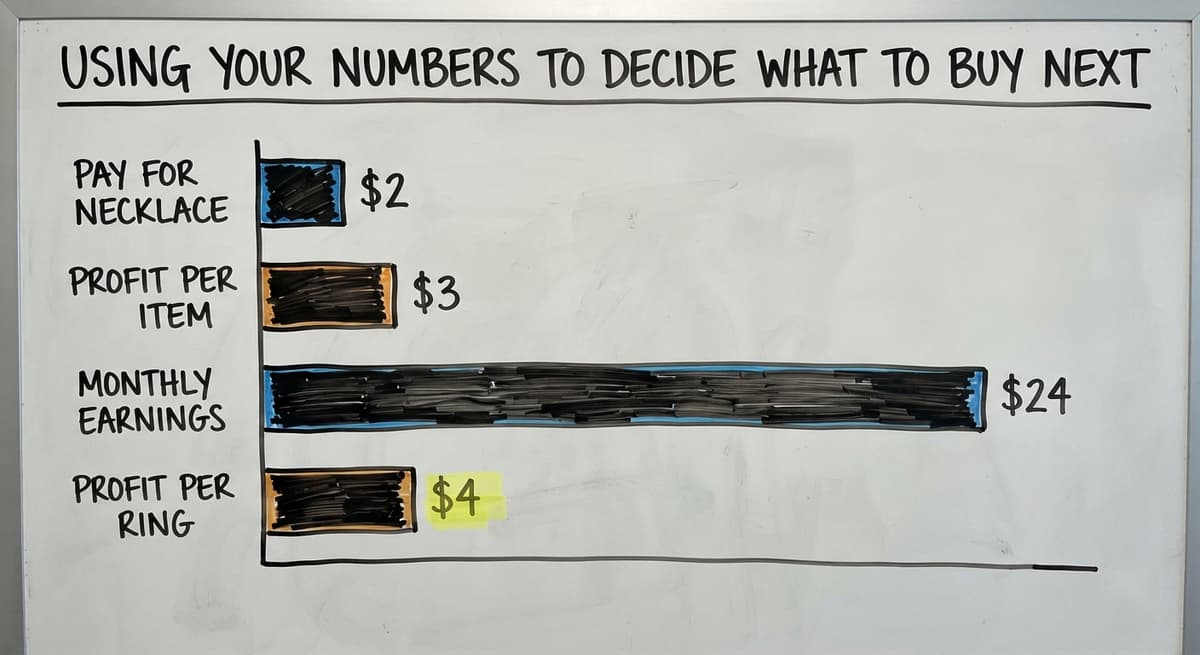
Track cost against sale price to see which items earn the most. Say you pay $2 for a necklace and sell it for $5. That is $3 profit. If it sells 8 a month, you earn $24 a month from it. A ring with a $4 profit that sells 2 a month earns $8.
The necklace wins, even with the smaller profit per piece. Numbers like these turn guesswork into confident buying choices.
When Spreadsheets and Notebooks Stop Working
Spreadsheets and notebooks stop working when the stock outgrows the person tracking it. Watch for these signs:
- Stock sits in several places, and no list shows where.
- More than 1 person updates counts, and edits collide.
- Numbers do not match what is on the shelf.
- You lose hours each week fixing errors.
Put a price on it. Say you spend 5 hours a week fixing counts at $20 an hour. That is 5 × $20 × 52 = $5,200 a year. The Bureau of Labor Statistics lists pay for inventory clerks if you want a local wage to plug in.
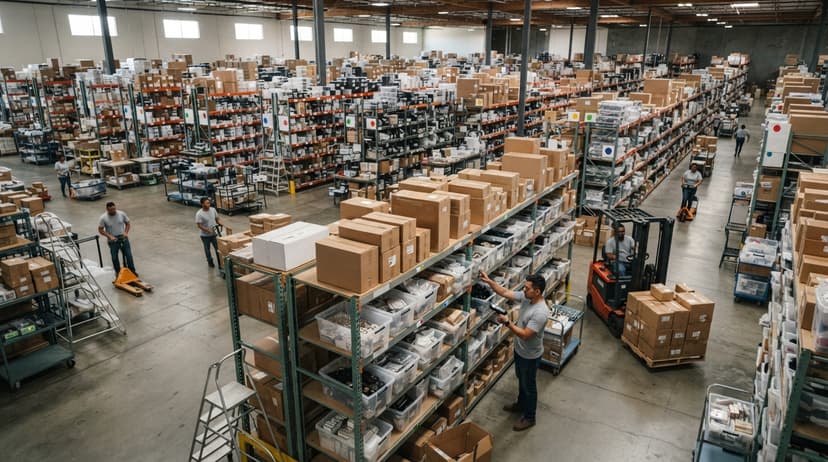
Wholesale distributors hit the same wall. The Census Bureau tracks inventories and sales for wholesale firms. Those firms carry far more stock than a jewelry seller. Their problem is the same: Excel sheets and printed lists pile up beside the accounting package. The lessons on how to keep track of inventory in warehouse settings start with the same 5 steps, just at scale.
What a Custom Inventory System Can Do Next
A custom inventory tracking system is software built around how your operation already works. It does not force a big move. The parts that work stay in place, and only the manual parts go away.
For example, your accounting software can stay where it is useful for books and invoices. The custom system takes over counts, locations, and reorder alerts. Vendor-neutral guidance on this kind of process work is at the NIST Manufacturing Extension Partnership.
This works at small scale too. A small business inventory tool does not need a giant ERP, which is a big all-in-one business suite.
The Software Society is local to Columbus, Ohio. The same team builds the software, the website, and your search presence. If your sheets are fighting you, talk with us about a system that fits how you work.
Final Thoughts
The whole habit fits in 5 steps: count, name, record, update, and reorder. Do them in that order and your Paparazzi inventory stays honest. Start with the full count this week. Then add one new habit each week until all 5 run on their own.
The same steps apply to how to keep track of consignment inventory, where other people hold your pieces. They also apply as you grow. When a notebook can no longer hold your stock, you will know it, and the next step will be clear.
Frequently asked questions
How do I keep track of Paparazzi inventory?
Count all your pieces once, give each a short code, and record them in one place. Update the count after every sale, gift, or loss. Set a reorder point for each item so you know when to buy more.
What should I record for each item?
Record the item name or code, the quantity on hand, what you paid, what you sell it for, and the reorder point. Add a short reason each time the count changes, such as sold, gift, or broken.
How do I know when to reorder?
Multiply weekly sales by the weeks restocking takes. Add a small cushion. If an item sells 6 a week, restocking takes 2 weeks, and your cushion is 6, reorder at 18 pieces.
How often should I count my stock?
Do a quick check each week and a full count each month or quarter. Spot-check top sellers more often. Use the same day and time so it becomes a habit.
What is the best way to name or label items?
Use one short rule, such as type plus color plus style number. A gold hoop earring in style 12 becomes ER-GLD-12. Use the same code in every list you keep.
What mistakes cause counts to be wrong?
The most common are skipped entries on busy days, different names for the same item, stock kept in unmarked places, and personal items mixed with stock for sale.
When is it time to move beyond a spreadsheet?
Move on when stock sits in several places, more than 1 person edits counts, numbers do not match the shelf, or you lose hours each week fixing errors.
Start with a free first look
A 30 minute call, your operation mapped, and a clear picture of what we would build. No obligation and nothing to install.
Book a callRelated guides
More on the same work.
- How to Keep Track of Inventory
- How to Keep Track of Inventory on Clover
- How to Keep Track of Computer Inventory
- How to Keep Track of Consignment Inventory
- How to Keep Track of Alcohol Inventory
- How to Keep Track of Product Inventory
- How to Keep Track of Ebay Inventory
- How to Keep Track of Poshmark Inventory
- How to Keep Track of Liquor Inventory
- How to Keep Track of Grocery Inventory
- How to Keep Track of Lularoe Inventory
- How to Keep Track of Freezer Inventory
- How to Keep Track of Cigarette Inventory
- How to Keep Track of Inventory Electronically
- How to Create an Inventory Tracking System?
- How to Track Non Inventory Items
- How to Keep Track of Inventory in Warehouse
- How to Keep Track of Inventory Small Business
- How to Record Inventory on Hand
- How to Manage Inventory in Rocket League
- How to Improve Inventory Management
- How to Manage Fba Inventory
- How to Manage Inventory in Stardew Valley
- How to Manage Inventory Fallout 76