

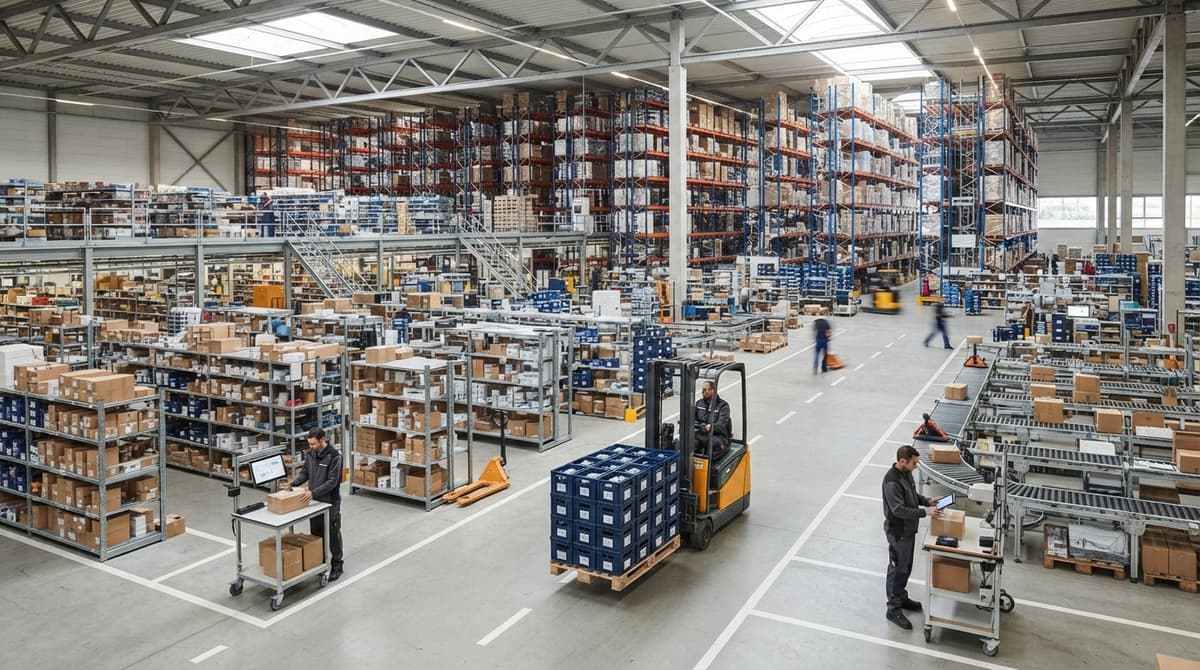
Manufacturing Serial Number
A manufacturing serial number is a unique code assigned to one specific unit of a product. No two units from the same maker should share one. It lets you trace exactly where that item went, when it shipped, and whether it is still under warranty. If you track inventory in a spreadsheet or QuickBooks today, this article explains what you are missing and what to do about it.
Reviewed September 2026. Figures are worked from the assumptions stated beside them, so you can substitute your own and the arithmetic still holds.
Reviewed and updated: June 2025
Book a callWhat Is a Manufacturing Serial Number and How Does It Differ from a SKU?
A manufacturing serial number identifies one single physical unit. A SKU, or stock-keeping unit, identifies a product type. Think of 2 identical pumps rolling off the same assembly line. Both carry the same SKU because they are the same model. Each carries a different serial number because they are different physical objects.
A part number works the same way as a SKU: it names the design, not the item. The serial number is the only code that points to one specific pump, in one specific box, that left one specific dock on one specific day.
This distinction matters the moment a customer calls about a warranty claim or a manufacturer issues a recall. The SKU tells you what kind of product is involved. The serial number tells you which units are affected and where they went.
We build it for your operation, and the first look is free
If you would rather not compare products, describe how your operation already works and we build the system around it.
No build cost. You see it running on your own process first, and the monthly subscription starts only once it is live.
Book a callHow a Serial Number Differs from a Lot Number
A lot number tracks a group of items made together in one production run. A serial number tracks one item within that group.
Lot numbers matter most in food and pharmaceutical supply chains, where a contamination event affects every unit made in the same batch. Serial numbers matter most for equipment warranties and chain-of-custody records, where you need to know what happened to one specific unit.
Many product lines need both. A medical device might carry a lot number for the batch of components used and a serial number for the finished unit. As NIST MEP notes, small manufacturers benefit from vendor-neutral guidance on which tracking method fits each product line, because the wrong choice creates gaps that only show up during a recall or audit.
For more on managing batches in a warehouse, see the section on lot number tracking in a warehouse later in this guide.
How Do Manufacturers Assign Serial Numbers?
Manufacturers set the format themselves. The distributor or warehouse receiving the goods has no say in it. Three common approaches are in use today.
- Sequential numbering is the simplest: each unit gets the next number in line. Unit 1001 was made before unit 1002.
- Encoded numbering builds meaning into the digits. A serial number might start with a plant code, then a date, then a unit count. A trained eye can read the number and know where and when the item was made.
- Random or UUID-style numbers are used when counterfeiting is a risk. There is no pattern to guess, so a fake unit cannot carry a plausible serial number.
When goods arrive at your receiving dock, the format is already fixed. Your job is to capture it correctly, not to interpret it.
Where You Find the Serial Number on a Product
Serial numbers appear in several places depending on the product type. Knowing where to look speeds up receiving and cuts errors.
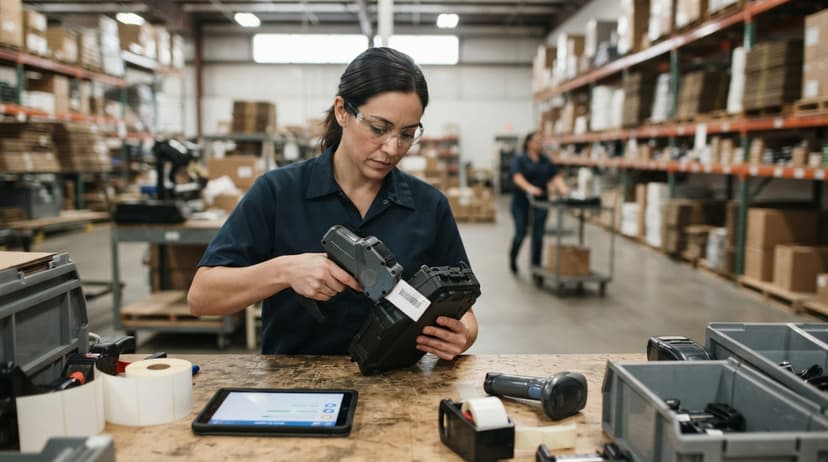
- A printed label on the unit itself is the most common location
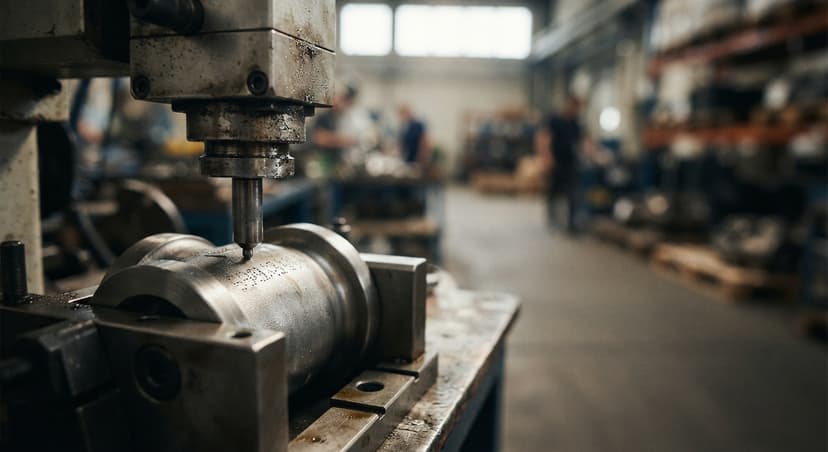
- Engraved or stamped markings on metal or plastic housing for durability
- On the outer carton or inside a fold-out panel for packaged goods
- Inside a barcode or QR code that encodes the full serial number string
Location consistency matters at the warehouse dock. If your team has to hunt for the serial number on each unit, receiving slows down and transcription errors climb. Ask suppliers to confirm placement before the first shipment arrives. A 5-minute conversation saves hours of rework.
Why Serial Numbers Matter in a Barcode Inventory System
A barcode inventory system encodes the serial number into a scannable symbol. Every scan creates a timestamped record tied to that one unit, not just the product type. This is item-level traceability: the ability to answer "where is unit 10042, and what has happened to it since it arrived?"
Without serial number scanning, your system knows you have 12 pumps. With it, your system knows you have pump 10042 in bin A3, pump 10043 in bin B1, and pump 10044 already shipped to a customer in Ohio on March 4th. That difference is the gap between inventory management and real traceability.
For a broader look at how scanning fits into daily operations, the barcode inventory management system overview covers the full workflow.
The comparison is easier when one option is built for you
Off-the-shelf means fitting your process to the software. We do it the other way round, and the first look costs nothing.
Book a callReceiving: Capturing the Serial Number When Goods Arrive
Serial number tracking starts at the receiving dock. A staff member scans or enters the serial number as each unit comes off the truck. The system matches it against the open buy order and confirms the right units arrived.
Discrepancies surface at once rather than weeks later when a customer complains. If a unit arrives with a serial number not on the PO, the system flags it before it enters stock.
This step replaces the paper receiving log that most small warehouses still use. The IRS needs accurate inventory records: IRS Publication 538 states, "To figure taxable income, you must value your inventory at the beginning and end of each tax year." A serial-level receiving scan gives you the audit trail to support that valuation.
Putaway and Picking: Linking Location to the Unit
After receiving, the system ties the serial number to a bin or shelf location. Any staff member can look up where a specific unit sits without walking the floor. During picking, the picker scans the serial number before placing the item in a shipment. The system confirms this is the correct unit for the order.
The shipping record then permanently links that serial number to the customer and the ship date. That record is your proof of what left the building and when. If a customer disputes a delivery or a manufacturer asks which units you shipped to which accounts, you answer in seconds rather than digging through paper.
How Do Serial Numbers Help with Warranty Claims and Product Returns?
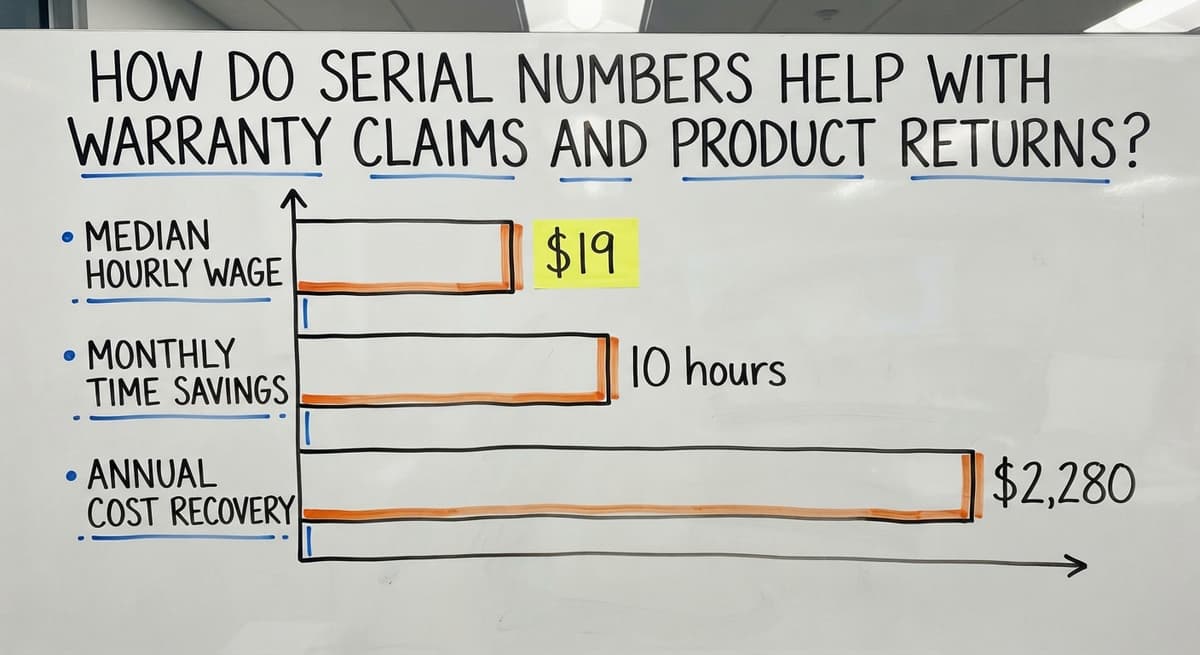
Serial numbers make warranty and return decisions fast and accurate. When a customer calls with a warranty claim, look up the serial number to see the original ship date and the destination. You know at once whether the unit is inside the warranty window without searching paper records or emailing the sales team.
On a return, scan the serial number to confirm it is a unit you actually sold and shipped. This step prevents fraudulent returns of units you never stocked. It also catches honest mistakes, such as a customer returning the wrong item.
Serial tracking turns a 20-minute phone call into a 2-minute lookup. For operations handling dozens of warranty calls a month, that time adds up fast. At the median wage for stock clerks and order fillers of around $19 per hour according to the US Bureau of Labor Statistics, even 10 hours a month recovered from manual lookups is worth roughly $2,280 a year.

Recalls and Quality Issues: Why Serial-Level Data Saves Time
When a manufacturer issues a recall covering a range of serial numbers, you need to know 2 things fast: which affected units did you receive, and where did they go?
With serial number tracking, that query takes minutes. Without it, a recall means contacting every customer who ever bought that product type, regardless of whether their unit is affected. That is expensive, slow, and damaging to customer trust.
Serial-level data turns a broad recall into a targeted one. You reach only the customers who received affected units. Everyone else keeps working without interruption. For regulated goods, this ability is not a convenience. It is a requirement.
The NIST Manufacturing Extension Partnership supply chain guidance covers how small operations can build this kind of traceability without enterprise-scale software.
Serial Numbers and QuickBooks: Where the Gap Appears
QuickBooks tracks inventory by quantity and item type. It does not track individual serial numbers in most versions. A distributor running on QuickBooks knows they have 15 units of a pump model. They do not know which 15 units those are.
Most small distributors handle this by keeping serial number records in a separate spreadsheet or notebook. Over time, the spreadsheet and QuickBooks drift apart. A unit ships but the spreadsheet is not updated. A return comes in but the serial number is not logged. Now you have 2 sources of truth and neither is fully right.
A custom barcode system closes this gap. QuickBooks stays as the accounting record. The barcode system handles the item-level detail QuickBooks was never designed to manage. The 2 systems stay in sync through a data export or direct integration, so financial records and physical inventory tell the same story.
For a full breakdown of what QuickBooks handles and what it does not, see the guide on QuickBooks inventory limitations for distributors.
See it running on your own process first
No build cost. The subscription starts once it is live and doing the job, not before.
Book a call
When Serial Number Tracking Is Worth the Effort and When It Is Not
Serial tracking is not the right answer for every product line. The decision comes down to risk and value.
Skip serial tracking for:
- Commodity goods with no warranty and no recall risk
- Very high-volume, low-value items where scanning every unit costs more than the risk it prevents
- Products that customers never return and manufacturers never recall
Add serial tracking for:
- High-value items where a misshipment is expensive to fix
- Products with manufacturer warranties you need to verify at the unit level
- Regulated goods that need chain-of-custody records
- Items that customers frequently return or exchange
- Equipment or parts that get serviced and then re-stocked
Start by listing your product lines and asking one question about each: if this unit goes missing or gets shipped to the wrong customer, what does it cost to sort out? Where the answer is "a lot," serial tracking earns its keep.
Barcodes and Serial Numbers: How They Work Together
A barcode is a way to read a number quickly without typing it. The serial number is the data; the barcode is the delivery method. A scanner reads the barcode and passes the serial number string to the inventory system in under a second.
Common formats include:
- Code 128 for alphanumeric serial strings used in general warehouse settings
- GS1-128 for supply chain standards where trading partners need to read the same label
- QR codes when the serial number is long or when the label also carries other data fields
The format does not change what the serial number does. It only changes how fast and correctly a scanner can capture it. For guidance on choosing the right hardware, the article on how to choose a warehouse barcode scanner covers the key decisions.
What Should You Look for in Software That Handles Serial Numbers?
Good serial number software captures the number at every stage without asking staff to type it twice. Look for these capabilities before buying anything.
- Capture at receiving, putaway, pick, and ship in one connected workflow, not 4 separate data entry steps
- Search and filter by serial number across all transaction history so you can answer a warranty question in under a minute
- Integration or export to QuickBooks so financial records stay aligned with physical inventory
- Works on a mobile barcode scanner or tablet on the warehouse floor, not only on a desktop at the office
- Flags missing or duplicate serial numbers at the point of scan rather than in a report you read the next day
Software sized for a 5-to-50 person operation looks different from an enterprise WMS. The right fit is one your team will actually use, not the most feature-rich option on the market. Custom warehouse software for small operations is built around the workflow you already have rather than forcing a new one.
Common Mistakes When Tracking Serial Numbers Manually
Manual serial number tracking fails in predictable ways. Knowing the failure points helps you decide when to move off the spreadsheet.
- Transcription errors when typing long alphanumeric strings by hand are the most common source of bad data
- Serial numbers recorded at receiving but never updated when the item ships, leaving the log permanently out of date
- Multiple spreadsheets with conflicting records when more than one person keeps the log
- No clear owner for the serial number log, so updates happen when someone remembers rather than at the moment of the transaction
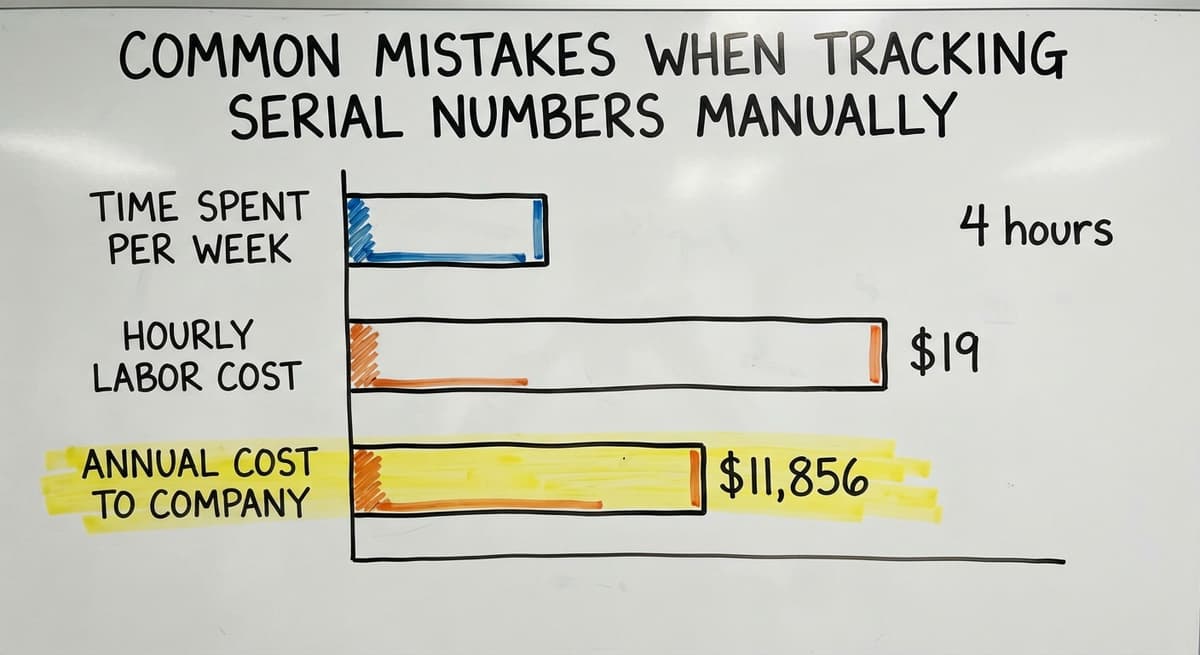
Three people spending 4 hours a week each on manual serial number maintenance, at roughly $19 an hour, costs about $11,856 a year in labor alone. That figure does not include the cost of the errors those hours still produce.
Getting Started with Serial Number Tracking
The first step is not buying software. It is understanding what you have.
- List the product lines that actually need serial-level tracking, using the criteria above
- Audit where serial numbers are currently recorded and who owns that process today
- Decide on your scan points: receiving only, or receiving plus shipping
- Choose software that fits the scale of your operation before buying scanners or labels
A phased start works well for most small warehouses. Capture serial numbers at receiving first. Once that is routine, add the shipping scan. The two scans together give you a complete record of what came in and what went out, which covers most warranty and recall needs without a complex rollout.
If you are ready to replace the spreadsheet with a system built around your workflow, the team at The Software Society builds custom barcode and inventory solutions sized for operations like yours. The accounting stays in QuickBooks. The item-level tracking moves into a system that handles what QuickBooks cannot.
Frequently asked questions
Is manufacturer serial number the same as VIN?
No. A VIN, or Vehicle Spotting Number, is a standardized 17-character serial number used specifically for motor vehicles under a regulated format set by NHTSA. A manufacturing serial number is a broader term for any unique code a maker assigns to one unit of a product. VINs follow a fixed government standard; other serial numbers follow whatever format the manufacturer chooses.
Is MFG the same as serial number?
No. MFG stands for manufacturer or manufacturing, and it usually refers to the maker of the product or the date it was made. A serial number is the unique code assigned to one specific unit. A product label might show both: the MFG date telling you when it was made, and the serial number telling you which unit it is.
How to tell manufacture date by serial number?
It depends on the manufacturer. Some encode the date directly into the serial number, for example the first 6 digits might represent YYMMDD. Others use a sequential number with no date embedded at all. Check the manufacturer's records or contact their support team with the serial number. There is no universal rule across all brands.
How do I look up a serial number?
Start with the manufacturer's website. Most brands offer a serial number lookup tool for warranty status or product registration. If you are a distributor or warehouse operator, look up the serial number in your inventory system to see its receiving date, current location, and shipping history. If records were kept in a spreadsheet, search there first, then contact the manufacturer if you need production details.
Can two products have the same serial number?
Two products from different manufacturers can share the same serial number string, because each maker sets their own format independently. Within one manufacturer, serial numbers should always be unique. If you receive 2 units from the same maker with matching serial numbers, flag it at once as a labeling error before the items enter stock.
Does QuickBooks track serial numbers?
Not at the individual unit level in most versions. QuickBooks tracks inventory by item type and quantity. Some higher-tier versions allow basic serial number fields, but they do not create a full transaction history tied to each unit across receiving, putaway, and shipping. Most distributors end up supplementing QuickBooks with a separate barcode system or spreadsheet for serial-level records.
How long should I keep serial number records?
Keep records for at least the full warranty period of the product. If you operate in a regulated industry such as medical devices, food equipment, or industrial safety, your regulator may need longer retention, sometimes 7 to 10 years. When in doubt, keep the records. Storage is cheap; reconstructing lost records during an audit or recall is not.
What if a product arrives with no serial number?
Document the issue at receiving before the item enters stock. Note the buy order number, the supplier, and the quantity of unlabeled units. Contact the supplier to confirm whether a serial number exists and request a labeled replacement or a correction. Do not assign your own serial number without the manufacturer's input, as it will not match their warranty or recall records.
Start with a free first look
A 30 minute call, your operation mapped, and a clear picture of what we would build. No obligation and nothing to install.
Book a callRelated guides
The rest of this guide, for the parts of the job this page does not cover.
Guides
- Serial Numbering
- Serial Numbers on Products
- Manufacturing Inventory Management Software
- Manufacturing Inventory Management
- Manufacturing Inventory Software
- Inventory Management System for Manufacturing
- 2d Barcode Readers
- Barcode Systems for Warehouse
- Barcode Reader Description
- Barcodes and Labels
- Warehouse Scanning System
- Alphanumeric Barcode
- Barcode Scanner Inventory System
- Lpn Barcodes
- Imager Barcode Scanner
- Upc Scanner Gun
- Barcode System for Inventory Free
- Inventory Management Software Barcode Scanner
- Package Scanning
- Quickbooks Inventory Scanner