


What Is The Main Purpose Of Inventory Management
Updated October 2026. This article was reviewed to reflect current wholesale trade data and inventory best practices for small and mid-size distributors.
The main purpose of inventory management is to have the right products, in the right quantities, in the right place, at the right time. It prevents 2 costly problems: running out of stock and holding too much of it. Done well, it connects purchasing, storage, and order fulfillment into one reliable flow so your team can fill orders correctly without tying up cash in stock you do not need yet.
Book a callThe Core Purpose of Inventory Management
Inventory management is the discipline of knowing what you have, where it is, and when to reorder. That sounds simple. In practice, most small and mid-size wholesale distributors run this process across spreadsheets, printed pick lists, and email threads, and the cracks show up fast.
When stock levels are off, your team makes bad purchasing calls. When reorder points are missed, a customer order cannot ship. When carrying costs climb, cash sits on shelves instead of working. The main purpose of inventory management is to close those gaps before they cost you a customer or a margin point.
Every section below maps one piece of that purpose to a problem you probably recognize from your own warehouse floor.
We build it for your operation, and the first look is free
If you would rather not compare products, describe how your operation already works and we build the system around it.
No build cost. You see it running on your own process first, and the monthly subscription starts only once it is live.
Book a callKeeping Stock Levels Accurate
Accurate stock counts are the foundation of every other inventory goal. Without a reliable count, every purchasing decision is a guess and every promise to a customer is a risk.
Manual counts on spreadsheets or printed sheets drift fast. A receiving clerk updates one file. A picker pulls from another. By end of day, the 2 records no longer match. The IRS makes this concrete: IRS Publication 538 states, "To figure taxable income, you must value your inventory at the beginning and end of each tax year." That is a legal requirement, not a suggestion, and it assumes your count is real.
Why Barcode Scanning Is the Standard Fix for Count Drift
Barcode scanning is the standard fix for count drift. As GS1 explains, its barcode standards exist to give every product a unique, scannable identity so systems can track it without manual entry. Accuracy is not a one-time event. It needs a live system that updates the moment a transaction happens.
Reducing Carrying Costs and Waste
How much does holding too much inventory actually cost your business? It costs you in 3 ways at once: cash tied up in product, warehouse space consumed by slow-moving stock, and the risk that the product expires, goes obsolete, or gets damaged before it ships.
Inventory management sets reorder points, which are the stock levels that trigger a new buy order before you run out, so you buy based on real demand rather than gut feel. A pallet of product sitting in your warehouse for 90 days is not an asset. It is a loan you made to your supplier with no interest.
Operations managers feel this in square footage and in cash flow. Cutting excess stock frees both.
The comparison is easier when one option is built for you
Off-the-shelf means fitting your process to the software. We do it the other way round, and the first look costs nothing.
Book a call
Preventing Stockouts and Missed Orders
A stockout happens when a customer order arrives and the product is not on the shelf. For a wholesale distributor with high-volume, repeat customers, 1 stockout can end a relationship that took years to build.
Inventory tracking prevents stockouts by triggering reorders before shelves go empty. The 2 tools that make this work are safety stock and lead-time tracking. Safety stock is a buffer quantity you keep on hand to cover unexpected demand spikes or supplier delays. Lead-time tracking tells your system how many days a supplier needs to deliver so the reorder fires early enough to matter.
Why Data Beats Running on Feel for Wholesale Distributors
The US Census Bureau's Monthly Wholesale Trade data tracks the national inventories-to-sales ratio for wholesale firms, and it shows how quickly that ratio shifts. A distributor running on feel rather than data is always one bad week away from an empty shelf. For high-volume, repeat accounts, consistent availability is the product. Price matters less than reliability.

Supporting Faster Order Fulfillment
When inventory data is accurate, your warehouse staff can pick, pack, and ship without stopping to verify counts or hunt for misplaced stock. That speed is a direct competitive edge.
Poor inventory visibility forces workers to search for items or wait for manual stock checks, and that time adds up. Consider 3 warehouse staff spending 6 hours a week each chasing down accurate counts. At the median wage for stock clerks reported by the US Bureau of Labor Statistics, that is real payroll spent on a problem a live inventory system removes.
Shorter fulfillment cycles also reduce the window for errors. A pick list built from stale data leads to wrong shipments. Wrong shipments lead to returns, credits, and frustrated customers. Accurate inventory data closes that loop before it opens.
What the FTC Requires You to Know
Fulfillment speed is not just a customer service issue. The FTC's Mail, Internet, or Telephone Order Merchandise Rule needs sellers to ship by the date they promise or notify the customer and offer a refund. An accurate inventory count is what lets you make a promise you can keep.
Improving Purchasing and Supplier Decisions
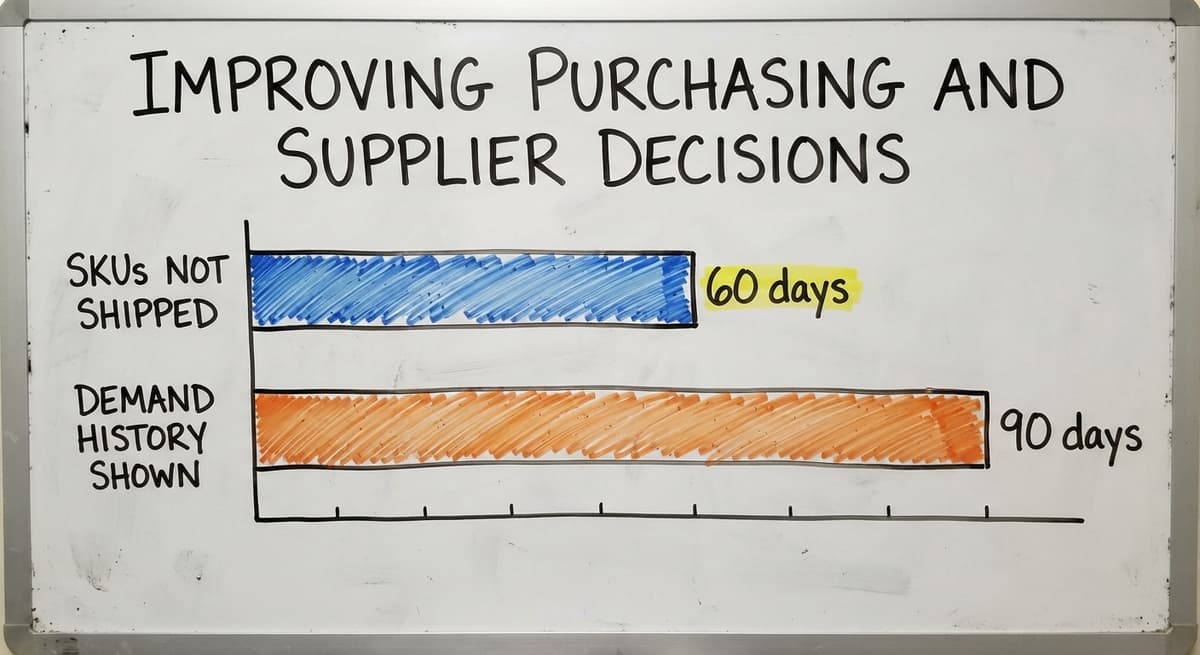
Inventory data shows which SKUs move fast, which move slow, and which have not shipped in 60 days. That visibility turns purchasing from a reactive scramble into a planned process.
Businesses running on spreadsheets and email often overbuy fast movers and underbuy slow ones because they are working from memory rather than data. A buyer who can see real velocity by SKU writes better buy orders. A buyer who can show a supplier 90 days of demand history negotiates better terms.
The NIST Manufacturing Extension Partnership offers vendor-neutral guidance on supply chain process, and its core message is consistent: visibility upstream prevents waste downstream. When your purchasing team can see what is selling and what is sitting, they stop filling the warehouse by feel and start filling it by plan.
Smarter buy orders also mean fewer emergency buys at premium freight rates.
See it running on your own process first
No build cost. The subscription starts once it is live and doing the job, not before.
Book a callTurning SKU Data Into Supplier Conversations
Here is what good inventory data lets you do in a supplier meeting:
- Show 90-day sell-through rates by SKU to justify quantity changes
- Flag slow-moving lines and request return or swap terms
- Negotiate lead times based on actual reorder frequency, not estimates
- Identify which suppliers cause the most stockout events and address it directly
None of that is possible when your data lives in 3 different spreadsheets that do not agree.

Giving Operations Managers a Single Source of Truth
When inventory lives in multiple places, no one has the full picture. One number sits in your accounting package. Another is on a receiving sheet from Tuesday. A third is in someone's inbox. Your team makes decisions from whichever version they happen to find first.
The purpose of inventory management is also to centralize that data so every person on your team works from the same count at the same moment. That removes the arguments about what the real number is. It removes the hour spent each morning reconciling 3 records before the day can start.
What Reconciliation Work Actually Costs You
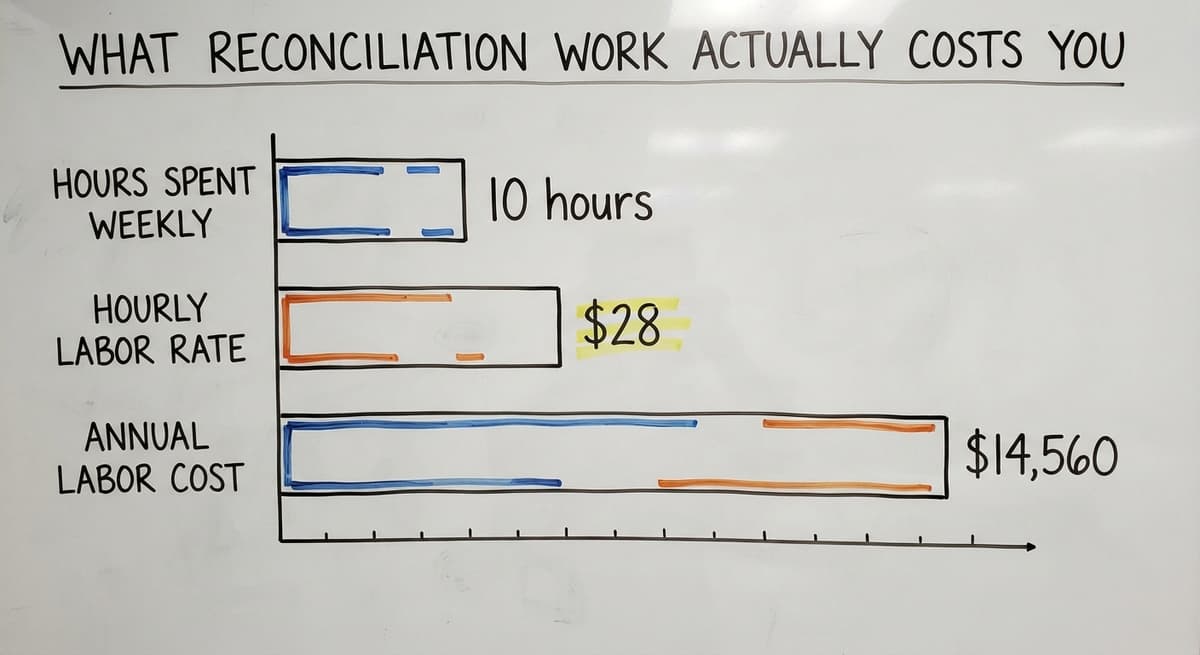
Operations managers at small distributors often spend 5 to 10 hours a week on this matching work alone. At $28 an hour, that is up to $14,560 a year in labor spent fixing a data problem rather than running the operation. A single source of truth converts that time into something useful. When everyone sees the same numbers, decisions happen faster and with more confidence.

How Inventory Management Software Serves This Purpose
Software automates the tracking, alerting, and reporting that manual systems cannot keep pace with. The right fit for a small or mid-size distributor is not a large enterprise system that needs months to implement and a dedicated IT team to run.
The gap most distributors need to fill sits between their accounting package and the warehouse floor. Your accounting software handles the books well. It was not built to manage live stock counts, reorder alerts, or pick-and-pack workflows. Inventory management software for wholesale distributors fills that gap without replacing the accounting layer you already rely on.
Not sure this is the right shape for your operation
Describe how the work runs today. We map it on a call and show you what it would look like built around that, before you spend anything.
Book a callHow Inventory Software Works Alongside Your Accounting Package
How custom inventory software works alongside your accounting package is a question worth asking before you buy anything. The answer should be that the 2 systems share data cleanly, so your accounting records stay accurate and your warehouse team works from a live count. Warehouse management solutions for small and mid-size operations are built around how those operations actually run, not around how a Fortune 500 distribution center runs. That distinction matters when you are choosing a system your team will actually use.
What to Look For in an Inventory System
A system built for your scale should do these things without requiring a technical expert to run it:
- Update stock counts in real time when a shipment is received or an order is picked
- Fire reorder alerts when a SKU hits its reorder point, not after it goes to zero
- Connect buy orders to receiving so discrepancies are caught at the dock
- Give every team member the same live count, whether they are in the warehouse or at a desk
- Feed clean data to your accounting package without manual re-entry
Replacing manual fulfillment processes with custom software does not have to mean a full system overhaul. It means closing the specific gaps where your current process breaks down.

Is Your Current System No Longer Working?
If your team spends more time managing data than filling orders, the answer is yes. These are the signs that show up first:
- Staff reconcile spreadsheets for an hour or more each morning before the day can start
- Stockouts and overstock situations happen regularly despite real effort to prevent them
- Customer complaints about late or wrong shipments are climbing
- Orders are tracked through email threads and printed pick lists that go out of date by noon
- No one can answer "how much of SKU X do we actually have right now" without checking 3 places
What These Warning Signs Actually Cost You
None of these problems feel abstract when you are living them. They feel like a slow drain on your team's time, your customers' patience, and your margin. The good news is that each one has a direct fix inside a well-run inventory management process. The right next step is an honest look at where your current process breaks down and what it costs you to leave it there.
Frequently asked questions
What is the purpose of inventory management?
The purpose of inventory management is to make sure the right products are available in the right quantities at the right time. It prevents stockouts that cost you orders and overstock that ties up cash. It also creates accurate data that supports purchasing, fulfillment, and financial reporting.
What is the main goal of inventory management?
The main goal is to keep stock levels accurate enough that your team can fill every order on time without holding more product than you need. That goal touches purchasing, warehouse operations, and customer service at the same time.
What is the primary purpose of inventory?
Inventory exists to buffer the gap between when you buy product and when a customer needs it. The primary purpose of holding inventory is to make sure demand can always be met without waiting on a supplier. Managing it well means holding only as much as that buffer needs.
What are the three key measures of inventory?
The 3 measures most operations managers track are stock accuracy (does the system count match the physical count), inventory turnover (how many times stock sells through in a period), and days on hand (how long the current stock would last at the current sales rate). Together they tell you whether your inventory is too high, too low, or well-matched to demand.
Why does inventory accuracy matter for a wholesale distributor?
A wholesale distributor fills high-volume, repeat orders on tight timelines. An inaccurate count means a promised order cannot ship, a reorder fires too late, or a buy order is written for stock you already have. Any of those errors can cost a customer relationship that took years to build.
How does inventory management software work alongside your accounting package?
A dedicated inventory system handles live stock counts, reorder alerts, and warehouse workflows that an accounting package was not built to manage. It passes clean transaction data to your accounting software so your books stay accurate without manual re-entry. The 2 systems each do what they are built for, and neither has to replace the other.
What is a reorder point and why does it matter?
A reorder point is the stock level at which a new buy order should be placed. It is calculated from your average daily sales and your supplier's lead time, with a safety buffer added. When the system fires a reorder at the right moment, you never run out and you never overbuy.
Start with a free first look
A 30 minute call, your operation mapped, and a clear picture of what we would build. No obligation and nothing to install.
Book a callRelated guides
The rest of this guide, for the parts of the job this page does not cover.
Guides
- Multi Location Inventory Management Software
- Inventory Management for Multiple Locations
- Inventory Management System for Manufacturing
- Inventory Management Pics
- B2b Inventory Management
- Jewelry Inventory Management
- Dental Inventory Management
- The Objective of Inventory Management is To
- Qr Code for Inventory Management
Common questions
- What is Inventory Management and Its Types
- What is Information Technology Inventory Management
- What is Risk Pooling in Inventory Management
- What is Stock Taking in Inventory Management
- What is Bin Number in Inventory Management
- What is the Purpose of a Warehouse Management System
- What Are the 5 Main Activities in a Warehouse?
- What is Inventory Listing
- What is Inventory
- What is the Best Warehouse Inventory Management System?
- What is the Difference Between Warehousing and Inventory Management
- What is B Type of Inventory in Warehouse Management
- What is Warehousing and Inventory Management
- What is the Best Inventory Management Software for Small Business
- What is the Best Inventory Management System for Small Businesses?