


What Are Serial Numbers Used For
Serial numbers identify one specific item, not a product type. Two identical laptops sitting side by side look the same, but each carries a unique code that tells them apart. That code is the serial number. Warehouses, distributors, and manufacturers use serial numbers to track where each unit has been, who owns it, and whether it is genuine.
Reviewed September 2026. Figures are worked from the assumptions stated beside them, so you can substitute your own and the arithmetic still holds.
Reviewed and updated: June 2025
Book a callWhat Are Serial Numbers Used For in Inventory Management?
A serial number is a unique identifier assigned to a single physical unit. Every other unit of the same product gets its own different number. Think of 2 identical laptops fresh from the factory. Same model, same color, same specs. The only thing that tells them apart is the serial number printed on each one.
That distinction matters the moment something goes wrong. A warranty claim, a return, a theft report, or a recall all need to point at one specific unit. Without serial number tracking, you can only point at a product type, and that is rarely precise enough.
Serial numbers are used across warehousing, distribution, retail, and manufacturing for exactly this reason.
We build it for your operation, and the first look is free
If you would rather not compare products, describe how your operation already works and we build the system around it.
No build cost. You see it running on your own process first, and the monthly subscription starts only once it is live.
Book a callSerial Numbers vs Barcodes vs SKUs
Serial numbers, barcodes, and SKUs often get used as if they mean the same thing. They do not.
| Term | What it identifies | Example |
|---|---|---|
| SKU | A product type | All 15-inch laptops in model X |
| Serial number | One specific unit | This particular laptop, unit 0047 |
| Barcode | A way to scan and read a number | Can carry either a SKU or a serial number |
A SKU, short for stock keeping unit, tells your system what kind of item something is. A serial number tells your system which exact unit it is. A barcode is just the printed format that lets a scanner read either one quickly.
SKUs, serial numbers, and barcodes are not competing systems. They work together. Your barcode might encode both the SKU and the serial number in the same scan.
As the IRS notes in Publication 538, "To figure taxable income, you must value your inventory at the beginning and end of each tax year." That valuation depends on knowing what you have and what it is worth, which is exactly where serial-level records earn their place.
The key point: a barcode is the delivery method, a SKU is the product label, and a serial number is the unit's fingerprint.

How Do Serial Numbers Track Where Every Item Has Been?
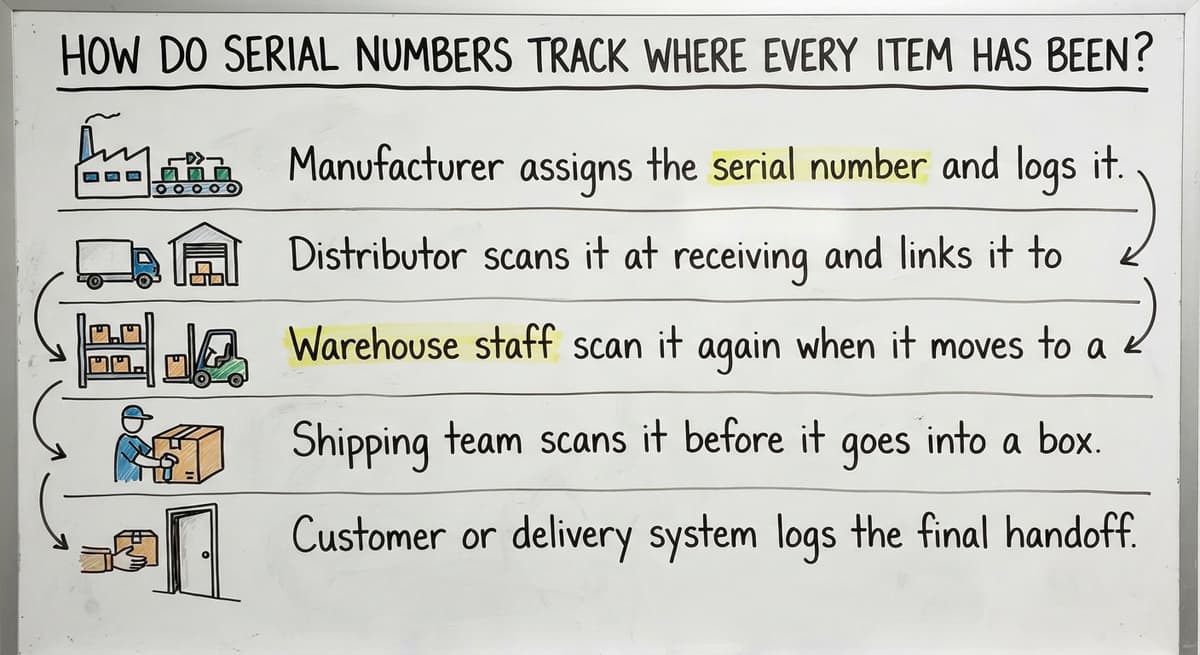
Serial numbers create a chain of custody, a logged record of every hand an item passes through from the manufacturer to the end customer. Each scan or log entry adds a timestamped record to that unit's history.
A distributor shipping medical devices needs to prove exactly when a unit left the warehouse and who signed for it. A serial number makes that proof possible. Without it, you have a shipment record for a product type, not for a specific device.
Here is what a typical chain of custody looks like for a serialized item:
- Manufacturer assigns the serial number and logs it at production.
- Distributor scans it at receiving and links it to a buy order.
- Warehouse staff scan it again when it moves to a pick location.
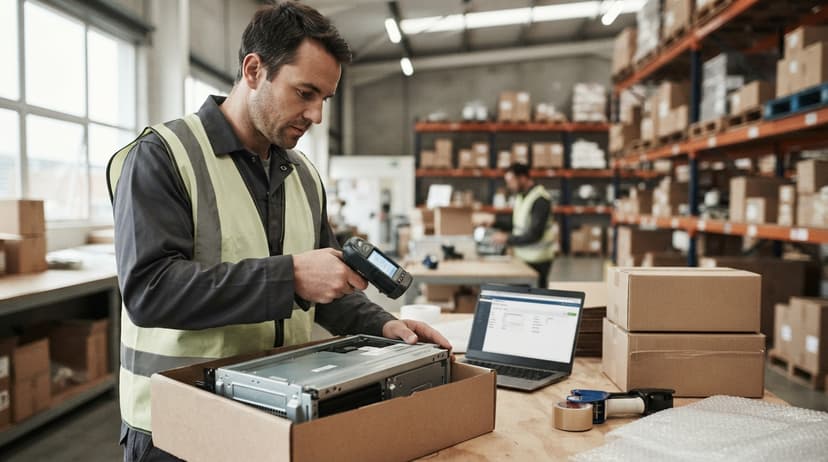
- Shipping team scans it before it goes into a box.
- Customer or delivery system logs the final handoff.
Every step is timestamped and tied to the same unique identifier. If a dispute arises at any point, the record is there.
A complete chain of custody is only possible when every handoff is logged against a single, unchanging unit identifier.
Warranty and Support Lookups
Serial numbers let manufacturers and distributors verify the buy date and ownership of any unit. When a customer calls about a repair or replacement, staff can pull the full item history in seconds.
This matters for 2 reasons. First, it stops warranty fraud. A serial number confirms which unit was actually sold and when. A customer cannot claim a unit is under warranty if the record shows it was sold 4 years ago or never passed through your system at all.
Second, it speeds up service. A support rep who can see the full history of a unit does not need to ask the customer to dig up a receipt. The record already shows the sale date, the shipping address, and any prior service calls.
For distributors who handle returns and repairs, serial-level warranty tracking cuts the time spent verifying claims and reduces the cost of honoring fraudulent ones.
The comparison is easier when one option is built for you
Off-the-shelf means fitting your process to the software. We do it the other way round, and the first look costs nothing.
Book a call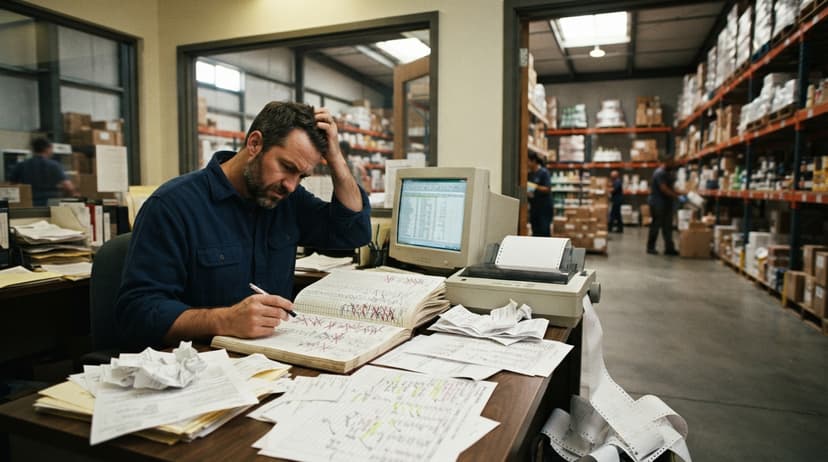
Catching Errors Before They Become Problems
Serial number scanning at receiving catches wrong items before they enter your stock. A staff member scans the unit's serial number against the buy order. If the numbers do not match, the system flags it at once.
The same check runs at shipping. Before a box is sealed, a scan confirms the right unit is going to the right customer. This matters most with high-value or look-alike products, where a wrong shipment is easy to make and expensive to fix.
Consider the math. One wrong shipment costs time to catch, a return label, a credit to the customer, and the labor to re-pick and re-ship. If your team ships 200 orders a week and catches even 1 wrong unit per week through scanning, that is 52 avoided errors a year.
A barcode inventory system built around serial number scanning removes the guesswork from both ends of the process. Staff scan, the system confirms, and the shipment moves.
Catching a wrong unit before it leaves your dock is always cheaper than recovering it after it arrives at the wrong place.

Recalls and Compliance
When a product recall happens, serial numbers let you find exactly which units are affected. Without serial tracking, a recall often means pulling an entire product line off the shelf, even units that are perfectly fine.
With serial records, you can check your stock against the recalled range in minutes. You know which units you still hold, which ones you shipped, and who received them. That precision protects your customers and limits your exposure.
Many regulated industries need serial number records by law. Distributors handling medical devices, electrical equipment, or food-contact products face specific traceability rules. A barcode inventory system that logs serial numbers at every step gives you the audit trail regulators ask for.
Serial tracking turns a potential recall crisis into a targeted, manageable response instead of a full product pull.
Preventing Theft and Counterfeiting
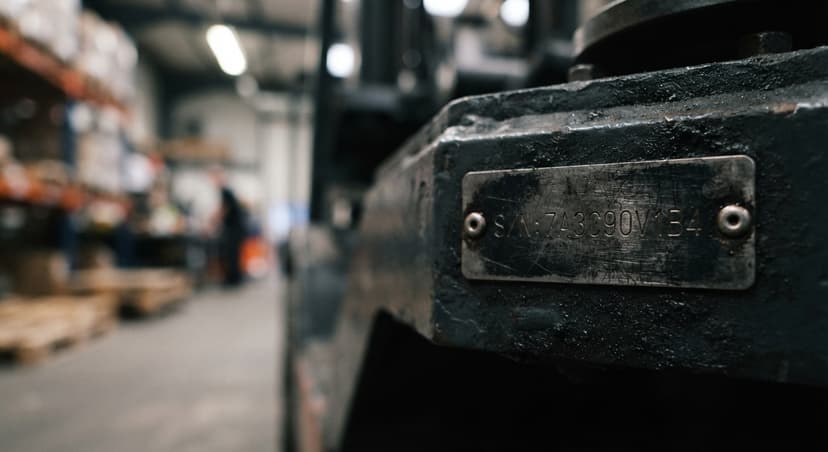
A registered serial number proves an item is genuine and came through a legitimate source. If a unit is stolen and re-enters the supply chain, a serial number check can flag it.
This is especially relevant for high-value inventory: electronics, power tools, branded equipment, and medical supplies. A buyer who checks the serial number against a manufacturer's registry can confirm the item is real and not a copy.
Serial records also serve as evidence. If a theft or counterfeit claim goes to insurance or legal proceedings, a timestamped log showing when and where the unit moved through your system is a credible record.
For high-value goods, a serial number is both a theft deterrent and a paper trail that holds up when it matters.
Serial Numbers in a Barcode Inventory System
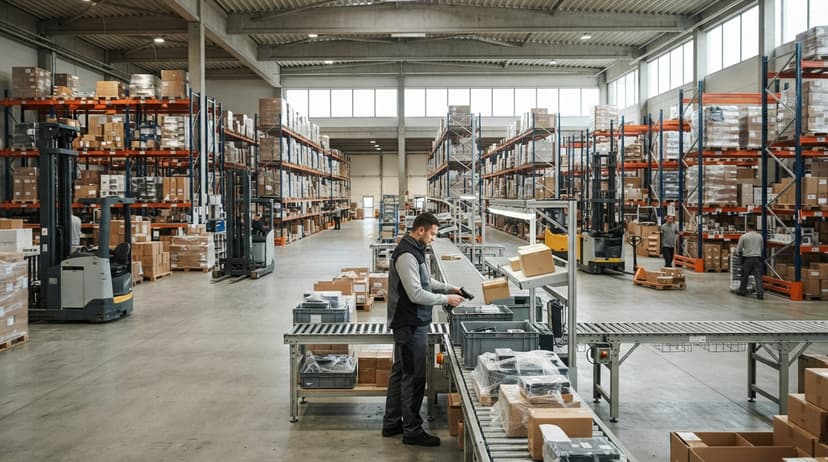
A barcode inventory system can encode and scan serial numbers automatically, without staff typing anything by hand. The barcode printed on the item carries the serial number. A scan at any point in the process logs which exact unit moved, when, and who handled it.
This removes manual data entry and the errors that come with it. A staff member who types a 12-digit serial number by hand will make mistakes. A scanner reads the same number in under a second with no errors.
Here is what serial scanning looks like in a working warehouse:
- Receiving: Staff scan each unit as it comes off the truck. The system links the serial number to the buy order automatically.
- Putaway: A second scan logs the storage location, so anyone can find the unit later.
- Pick and pack: The picker scans the unit before placing it in the box, confirming it matches the order.
- Shipping: A final scan closes the transaction and timestamps the departure.
This is where serial numbers move from a concept to a daily working tool. The system does the tracking; staff just scan.
A barcode inventory system turns serial number tracking from a manual chore into a live, searchable record that runs in the background of every transaction.

When Should You Start Tracking Serial Numbers?
Not every product needs serial tracking, and the answer depends on what you sell and what can go wrong. The right starting point is your own product mix.
Strong candidates for serial number tracking include:
- High-value items where a single wrong shipment or theft is costly
- Products sold with a warranty, where you need to verify buy date and ownership
- Regulated goods in medical, electrical, or food-contact categories
- Items that look identical but have different specs or setups
Bulk commodity goods like screws, packaging material, or raw stock rarely need serial tracking. The cost of logging every unit outweighs the benefit when the items are low-value and interchangeable.
A useful rule: if losing or misrouting one unit would cost you more than an hour of staff time to fix, that product is worth serializing. If a wrong count just means ordering a bit more next week, it probably is not.
The decision comes down to risk. Serialize the items where a mistake is expensive; skip it where the cost of tracking exceeds the cost of errors.
See it running on your own process first
No build cost. The subscription starts once it is live and doing the job, not before.
Book a callWhat Happens When You Track Serials in a Spreadsheet
Many small distributors start with Excel or a paper log for serial numbers. It works at first, when one person manages the file and volume is low.
The problems start when more people need to use the same records. Two staff members update the file at different times. Entries get duplicated. A unit gets logged as shipped when it is still in stock. The file grows, searches slow down, and no one is sure which version is current.
There is also no audit trail. A spreadsheet shows the current state of the data, not who changed what and when. If a warranty dispute or a compliance check asks you to prove when a unit left your facility, a spreadsheet cannot give you a timestamped, unedited record.
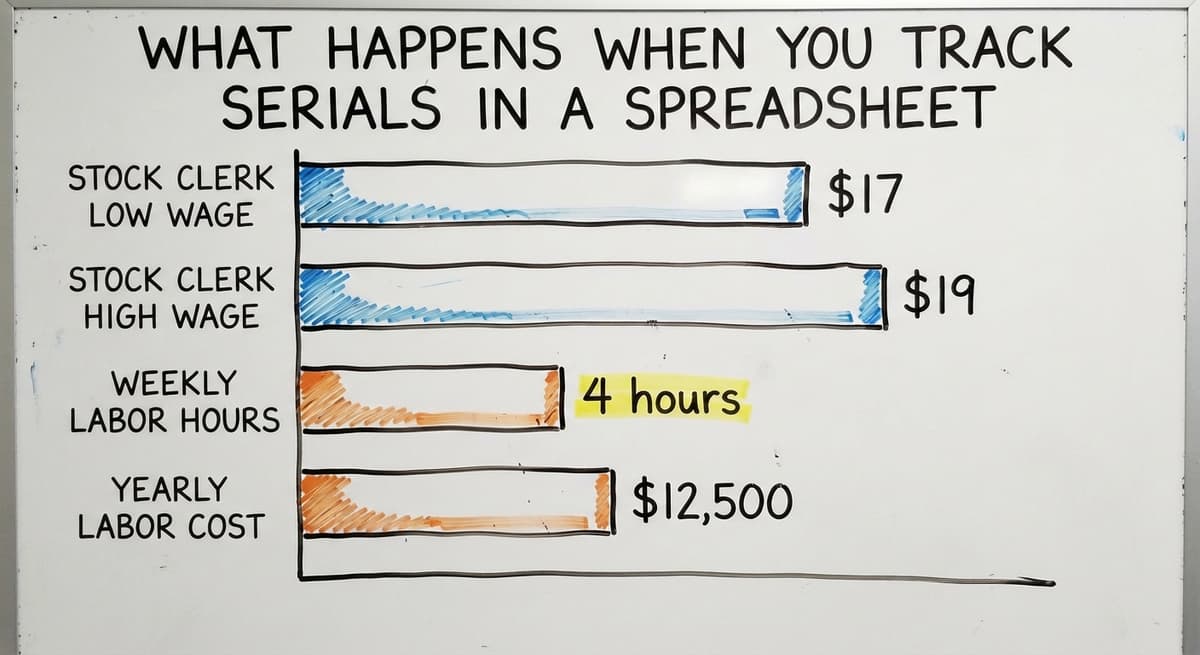
According to the US Bureau of Labor Statistics, stock clerks and order fillers earn a median wage around $17 to $19 an hour. Three people spending just 4 hours a week managing serial number spreadsheets costs roughly $12,500 a year in labor, before you count the errors that come with it.
A spreadsheet is a starting point, not a system. It works until it does not, and it usually stops working at the worst possible moment.
How a Custom System Handles Serial Numbers Differently
A system built around your workflow captures serial numbers at the right moment without adding steps. Staff scan a barcode, and the system does the rest. No separate log, no manual entry, no file to reconcile later.
The serial data connects directly to your existing records. If your operation runs through QuickBooks, a custom layer can pull that data in without re-entering anything. Every transaction in QuickBooks can carry the serial number of the unit it relates to, so your financial records and your inventory records stay in sync.
Every team member sees the same live view of item history. A customer service rep can look up a unit's full record without calling the warehouse. A warehouse manager can confirm what shipped yesterday without opening a spreadsheet.
The NIST Manufacturing Extension Partnership notes that supply chain visibility depends on data that is captured at the point of action, not reconstructed later. A custom system does exactly that: it captures the serial number when the unit moves, not when someone remembers to log it.
The difference between a spreadsheet and a purpose-built system is not just speed. It is whether your serial data is trustworthy enough to rely on when something goes wrong.
Common Questions About Serial Numbers
Are serial numbers the same as lot numbers?
No. A lot number, sometimes called a batch number, identifies a group of items made at the same time under the same conditions. A serial number identifies one specific unit within that group. A food distributor might track lot numbers to manage expiry dates across a batch. A medical device distributor tracks serial numbers to know exactly which unit went to which customer. Lot number tracking vs serial number tracking serve different purposes and are often used together on the same product.
Can QuickBooks track serial numbers?
Partially. QuickBooks Enterprise includes a serial number field, but it has limits. It does not scan barcodes natively, does not give you a full movement history for each unit, and does not connect serial data across all transaction types. For many small distributors, QuickBooks inventory handles the financial side well but needs a custom layer to handle true serial-level warehouse tracking. QuickBooks inventory limitations become visible quickly once volume or complexity grows.
Do I need special hardware to scan serial numbers?
Not much. A basic USB or Bluetooth barcode scanner costs $50 to $150 and works with most inventory software out of the box. If your items already have barcodes that encode the serial number, you can start scanning at once. If they do not, a label printer lets you print and apply serialized barcodes yourself. How to set up a barcode system for a small warehouse is simpler than most people expect.
What can people do with your serial number?
A serial number on its own is not sensitive data. Someone who has your product's serial number can check warranty status with the manufacturer, verify the unit is genuine, or register ownership. They cannot access your accounts, your personal data, or your financial records through a serial number alone. The risk is low for most consumer products. The main concern is if a serial number is used to make a fraudulent warranty claim on a unit you still own.
Which serial numbers are valuable?
Serial numbers themselves have no monetary value. The value is in what they prove. A very low serial number on a collectible or limited-edition item, such as a guitar, a firearm, or a vintage piece of equipment, can carry a premium because it signals early production. In those cases, the serial number is evidence of provenance, not a number with intrinsic worth.
Why would someone need a serial number?
The most common reasons are warranty claims, product registration, insurance records, and theft recovery. A manufacturer needs the serial number to confirm a unit is covered before authorizing a repair. An insurer needs it to confirm what was stolen or damaged. A buyer of used goods checks it to confirm the item is not stolen and is still under warranty.
What information can I get from a serial number?
What you can find depends on the manufacturer. Most serial numbers encode the production date, the factory or production line, and the model setup. Some manufacturers offer online lookup tools that show warranty status and registration history. A distributor's internal system can show the full movement record: when it was received, where it was stored, and when it shipped.
Frequently asked questions
What can people do with your serial number?
A serial number on its own is not sensitive data. Someone who has it can check warranty status, verify the unit is genuine, or register ownership. They cannot access your accounts or financial records through a serial number alone. The main risk is a fraudulent warranty claim on a unit you still own.
Which serial numbers are valuable?
Serial numbers themselves have no monetary value. The value is in what they prove. A very low serial number on a collectible or limited-edition item, such as a guitar or vintage equipment, can carry a premium because it signals early production. In those cases the serial number is evidence of provenance, not a number with intrinsic worth.
Why would someone need a serial number?
The most common reasons are warranty claims, product registration, insurance records, and theft recovery. A manufacturer needs the serial number to confirm a unit is covered before authorizing a repair. An insurer needs it to confirm what was stolen or damaged. A buyer of used goods checks it to confirm the item is not stolen and is still under warranty.
What information can I get from a serial number?
What you can find depends on the manufacturer. Most serial numbers encode the production date, the factory or production line, and the model setup. Some manufacturers offer online lookup tools that show warranty status and registration history. A distributor's internal system can show the full movement record: when it was received, where it was stored, and when it shipped.
Are serial numbers the same as lot numbers?
No. A lot number identifies a group of items made at the same time. A serial number identifies one specific unit within that group. Lot numbers are common in food and pharmaceutical distribution for expiry tracking. Serial numbers are used when you need to know exactly which individual unit went where.
Can QuickBooks track serial numbers?
Partially. QuickBooks Enterprise includes a serial number field but does not scan barcodes natively and does not provide a full movement history for each unit. For most small distributors, QuickBooks handles the financial side well but needs a custom layer to support true serial-level warehouse tracking.
When should a small distributor start tracking serial numbers?
Start when the cost of a single error, a wrong shipment, a disputed warranty, or a compliance failure, exceeds the cost of setting up tracking. High-value items, warranted products, and regulated goods are the first candidates. Bulk commodity items with low unit value rarely need it.
How does a barcode system use serial numbers in daily operations?
Staff scan the barcode on each unit at receiving, putaway, picking, and shipping. The system logs which exact unit moved, when, and who handled it. No manual entry is needed. The serial number ties every transaction to one specific item, giving you a complete, searchable history without extra paperwork.
Start with a free first look
A 30 minute call, your operation mapped, and a clear picture of what we would build. No obligation and nothing to install.
Book a callRelated guides
The rest of this guide, for the parts of the job this page does not cover.
Guides
- Manufacturer's Serial Number
- Serial Numbering
- Serial Numbers on Products
- Manufacturing Serial Number
- Tracking Number Barcode
Common questions
- What Are Serial Numbers
- What is a Serial Number on a Product
- Where Are Serial Numbers
- What Are the Numbers on a Barcode
- What is a Warehouse Management System Used For
- How to Read a Barcode Number
- What Does a Barcode Look Like
- What Do Barcode Scanners Scan
- What is the Most Important Part of Warehouse Organization
- What Are the Benefits of Warehouse Management System
- What is the Point of Warehouse Management System
- What Are the 7s Rules in a Warehouse?
- What is Picking and Packing in a Warehouse?
- What Are the Top 5 Warehouse Management Systems?
- What is Asn in Warehouse Management System
- What is a Warehouse Management System
- What is the Best Warehouse Inventory Management System?
- What is the Difference Between Warehousing and Inventory Management
- What Does Receiving Mean in a Warehouse?