


How to Record Inventory Shrinkage
Recording inventory shrinkage is a 5-step job: count, compare, value, post, and explain. Reviewed November 2026.
Inventory shrinkage is stock that the books list and the shelves lack. Count first. Then price the gap at cost.
Post a journal entry that debits an expense and credits inventory. Attach a reason and an approver to each entry.
Every step uses real numbers. Each one fits a spreadsheet or an accounting package.
Book a callWhat Is Inventory Shrinkage?
Shrinkage is the gap between book stock and shelf stock. Say the ledger lists 100 units. You count 92. The shrinkage is 8 units.
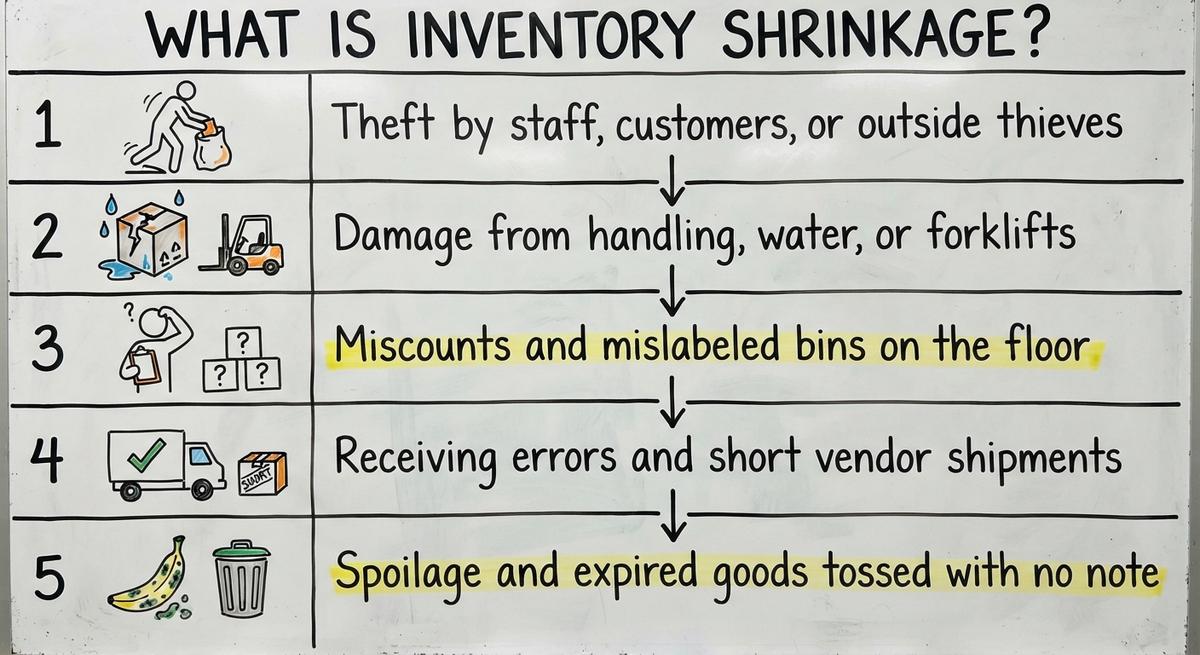
Five causes lead the list:
- Theft by staff, customers, or outside thieves
- Damage from handling, water, or forklifts
- Miscounts and mislabeled bins on the floor
- Receiving errors and short vendor shipments
- Spoilage and expired goods tossed with no note
Booking the gap keeps stock value, profit, and cost of goods sold (COGS) honest. COGS is the cost of the items you sold.
IRS Publication 538 says "you must value your inventory at the beginning and end of each tax year". A calendar-year business needs a count near December 31, 2025. A booked loss makes that value true.
An unbooked loss inflates profit. A $216 loss left off the books adds $216 of false profit.
Canada.ca hosts an archived tax bulletin on the same topic. It says "Section 10 of the Act and Part XVIII of the Regulations set out the rules pertaining to the valuation of inventory for this purpose." Every tax system sets valuation rules.
Booked losses keep reported profit close to the truth.
We build it for your operation, and the first look is free
If you would rather not compare products, describe how your operation already works and we build the system around it.
No build cost. You see it running on your own process first, and the monthly subscription starts only once it is live.
Book a callHow Can You Record Inventory Shrinkage in 5 Steps?
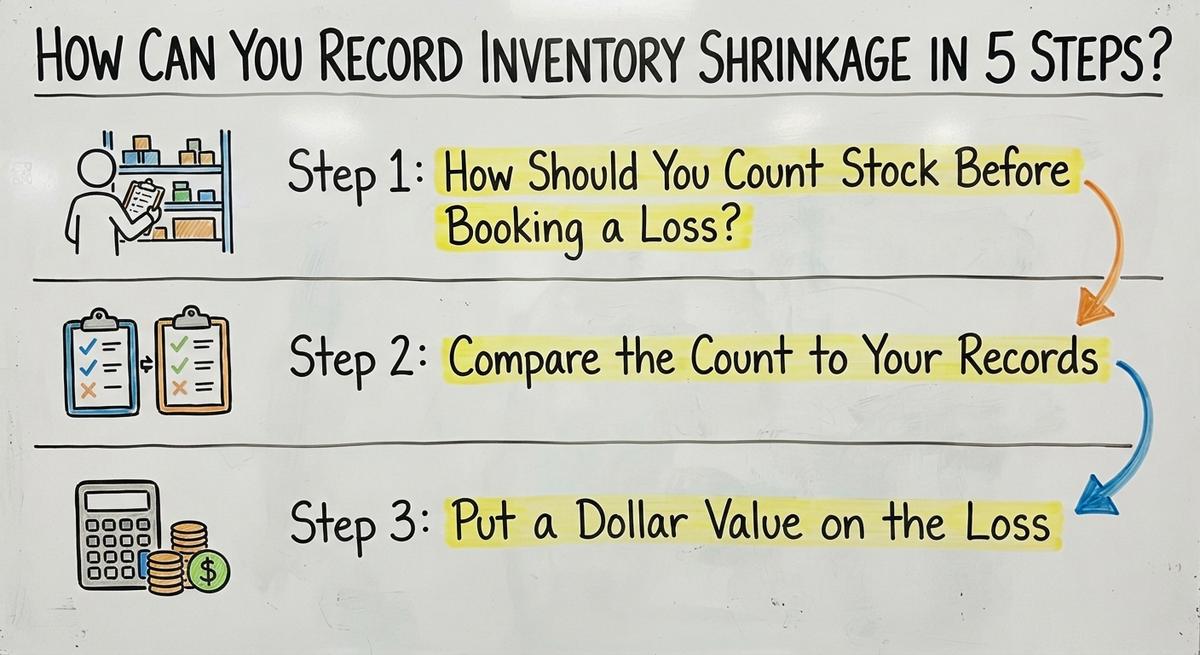
Five steps cover the whole job. The same steps fit a spreadsheet or any ledger app.
- Count the stock sitting in each bin.
- Compare the count with the book quantity.
- Value the loss at unit cost.
- Post the entry with the date of the count.
- Review the cause and log a reason.
Scan-based counts cut typing errors. GS1 sets the barcode standards that scanners read, listed at gs1.org/standards/barcodes. With scanners in hand, the 5 steps stay put.
Each step gets a short guide below. Follow them in order. The loss then becomes a record you can trace.
Follow the order and every loss leaves a trail.
Step 1: How Should You Count Stock Before Booking a Loss?
A count is a walk through every shelf and bin. Write down what you see, not what you expect.
Run a full physical inventory count or a cycle count. A cycle count is a count of one section at a time.
Prepare with this short list:
- Freeze receiving and shipping during the count.
- Use 2 people. One counts and one writes.
- Recount any large gap before you book it.
- Pick a quiet hour with no foot traffic.
Here is a case. A shop counts on Monday, June 30, 2025, at 6 a.m. No trucks arrive until 9. The count stays clean.
A clean count is the base for how to record inventory on hand. Small shops that want a tidy layout can see how to organize inventory for small business. Bins that are easy to find are easy to count.
A clean count makes every later step easier.
Step 2: Compare the Count to Your Records
Comparing is simple math: book units minus counted units. Flag only the items with a difference.
Here is the comparison sheet for 3 items:
| Item | Details |
|---|---|
| Item A | Book qty: 100. Counted: 92. Gap: 8. |
| Item B | Book qty: 40. Counted: 37. Gap: 3. |
| Item C | Book qty: 60. Counted: 60. Gap: 0. |
Check 3 things before you call a gap shrinkage:
- Receipts not yet posted
- Returns sitting on a dock or a cart
- Shipments sent out but not yet invoiced
Now test Item A. A late receipt of 5 units turns up on the dock. The true gap is then 3 units, not 8. Clear the paperwork first and book only what is left.
Item C needs no entry. Zero gaps need no journal lines.
Paperwork errors fade once you clear the dock.
Step 3: Put a Dollar Value on the Loss
Shrinkage cost is missing units times unit cost. Use what you paid, not the selling price.
Say Item A cost $12 a unit and Item B cost $40 a unit. Here is the math:
| Item | Details |
|---|---|
| Item A | Units short: 8. Unit cost: $12. Loss: $96. |
| Item B | Units short: 3. Unit cost: $40. Loss: $120. |
| Total | Units short: 11. Loss: $216. |
AccountingTools shows the same math at scale. It states "$50,000 ($1,000,000 book cost - $950,000 actual cost)" as the shrinkage amount.
Your costing method sets the unit cost. FIFO is a method that uses the oldest buy price first. Average cost is a method that spreads total cost across all units. Ask your accountant to confirm the method you use.
Unit cost, not price tag, sets the size of the loss.
Not sure this is the right shape for your operation
Describe how the work runs today. We map it on a call and show you what it would look like built around that, before you spend anything.
Book a callWhat Is the Inventory Shrinkage Journal Entry?
A journal entry is a record that moves value between accounts. The shrinkage entry debits an expense account and credits the inventory asset account.
Use the $96 loss from Item A:
| Account | Amount |
|---|---|
| Debit: Inventory Shrinkage Expense | $96 |
| Credit: Inventory Asset | $96 |
Post Item B the same way for $120. Or post one entry for the full $216.
Date the entry with the day of the count. Skip the day you got around to it. Add a note that points to the count sheet, such as "Count sheet 2025-06-30, bin A4." A reader can then find the proof in seconds.
Watch the asset move. Say stock sits at $10,000 before the entry. After $216 it sits at $9,784.
The entry lowers the asset and raises the expense by the same amount. The books now match the shelf.
Is Inventory Shrinkage an Expense?
Yes, shrinkage is an expense. The loss cuts profit by the cost of the missing goods.
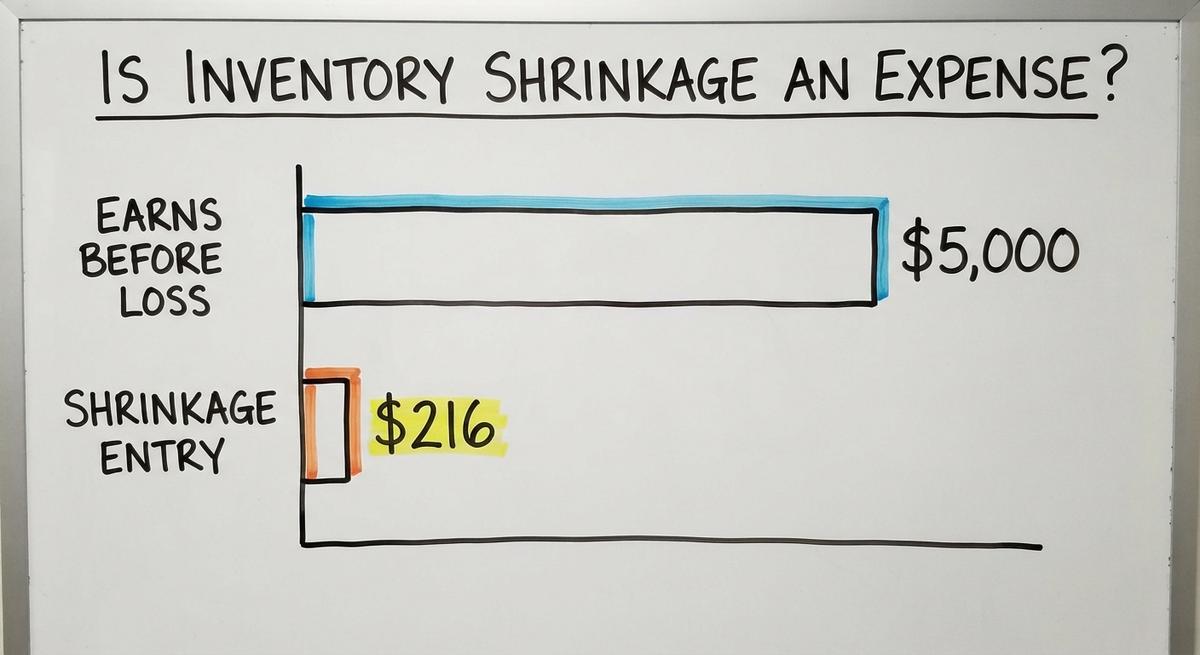
Say a shop earns $5,000 before the loss. After the $216 entry, profit falls to $4,784. You cannot hide the loss in the asset account. That account must show only what you own.
Some firms fold the loss into COGS. Others show it on its own line. Both methods treat shrinkage as a cost of doing business. Pick one method and keep it the same each period.
A stable method lets you compare months. A loss that moves between accounts hides the trend.
The comparison is easier when one option is built for you
Off-the-shelf means fitting your process to the software. We do it the other way round, and the first look costs nothing.
Book a call
Which Inventory Shrinkage Account Should You Use?
The shrinkage account is an expense account that holds stock losses. Small, normal shrinkage often sits in COGS. A separate account makes the loss easy to see.
Here are the 3 common setups:
- COGS line: Small losses sit inside the cost of what you sold.
- Shrinkage expense account: The loss shows on its own line each month.
- Separate line for big events: A flood or a break-in gets its own entry and note.
Your chart of accounts is the list of every account in your books. Add the new line there before the first entry. A new line takes about a minute.
Ask your accountant which setup fits your tax and reporting needs. The choice can change how a lender reads your margins.
A named shrinkage account is the easiest setup to audit.
How Do You Adjust Inventory in Accounting Software?
Software adjustments take 5 short actions. Enter the new on-hand count and pick the adjustment account. Many teams keep books in accounting software. The same flow works for inventory shrinkage there.

Menu names change by version. Check the help pages for your release before you start.
Follow this path:
- Open the inventory adjustment screen.
- Enter the new quantity for each item.
- Choose your shrinkage expense account.
- Add a memo with the count date and the reason.
- Save the file.
Using a spreadsheet instead? Use this path:
- Add one row per item with a gap.
- Fill in units short and unit cost.
- Multiply the two to get the loss.
- Sum the loss column for the entry total.
Keep the count sheet in a shared folder. A link in the memo lets anyone check the work later.
The memo is what turns an adjustment into a record.
How Can You Find Out Why Stock Is Going Missing?
Five reason groups explain most losses. Sort every gap into one group. A dollar total alone hides the cause.

- Receiving errors: The dock counted 48 and the paperwork said 50.
- Picking errors: A packer pulled the wrong item from the wrong bin.
- Damage: Broken or wet goods were thrown out with no note.
- Theft: Stock left without a sale.
- Paperwork gaps: A return or transfer was never posted.
Next, look for patterns by item, shelf, shift, or vendor. If 60% of the dollars come from one vendor, call that vendor.
A reason code is a short tag that names the cause of a loss. Use a tag on every adjustment:
- RCV marks a receiving error.
- PCK marks a picking error.
- DMG marks damaged goods.
- THF marks suspected theft.
- PPR marks a paperwork gap.
A tag on each line turns a plug number into a clue.

How Often Should a Warehouse Count Inventory?
At least 1 full count a year is the floor. Many sites also run cycle counts each month or quarter.
Set the pace by risk:
- Count fast-moving items every month.
- Count high-value items every month or sooner.
- Count slow, cheap items twice a year.
A calendar-year firm schedules its full count near December 31, 2025. Cycle counts fill the months between.
Small regular adjustments are easier to trace than one big year-end fix. Line counts up with month-end close. Each month's books are then right.
Guides on how to keep track of inventory in warehouse settings use the same rhythm. NIST offers vendor-neutral supply chain guidance for firms that want to tighten the process.
Frequent small counts catch a problem while the trail is fresh.

What Does a Full Month of Shrinkage Look Like?
A shrinkage rate is the loss divided by book value. Take the $216 loss against $10,000 of stock. The rate is 2.16%.
AccountingTools gives a larger case. A $50,000 loss on $1,000,000 of book cost is a 5% rate.
Here is the month in 6 moves:
- On June 30, 2025, count Items A, B, and C.
- Clear the late receipt of 5 units for Item A.
- Find a true gap of 3 units for Item A.
- Value each gap at unit cost.
- Post the entry with the count sheet note.
- Tag each line and get a second sign-off.
Track the rate each month. A rate that climbs from 2% to 4% signals a leak. The fix starts with the reason tags.
One rate per month shows whether losses grow or shrink.
See it running on your own process first
No build cost. The subscription starts once it is live and doing the job, not before.
Book a call
What Are the Common Mistakes When Recording Shrinkage?
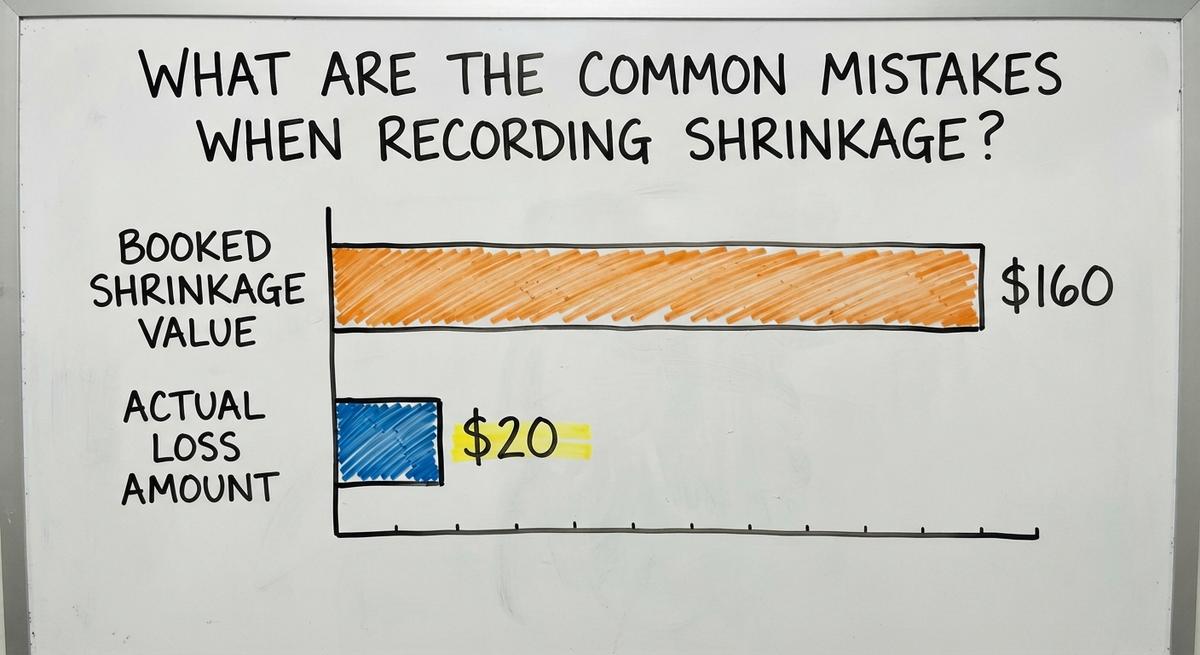
The top mistake is valuing the loss at selling price. Selling price includes profit you never spent. Use cost.
Watch for these 5 errors:
- Wrong value: Booking 8 units at a $20 price books $160 when the loss is $96.
- Late paperwork: A late receipt or unposted shipment looks like theft.
- No note: An adjustment with no reason cannot be traced.
- Loose records: Counts on printed sheets and email threads leave no clean trail.
- No review: The same person counts and adjusts with no second check.
Split the duties. One person counts. A second person approves the entry. If you want a base for tracking, read how to keep track of inventory small business teams can run with simple tools.
A second pair of eyes catches most of these errors.
How Can You Keep Shrinkage Records Clean as You Grow?
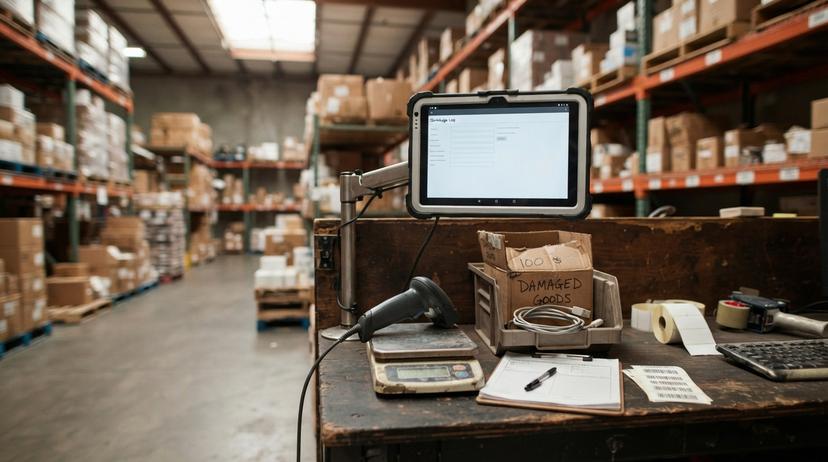
Clean records start with 1 count sheet format and 1 place for adjustments. Every team member then fills in the same fields.
Keep a simple log with 6 columns:
- Date of the count
- Item name or SKU
- Quantity missing
- Unit cost
- Reason tag
- Name of the person who approved
Spreadsheets and paper work at small scale. They break down as SKUs and staff grow. Retyping the same number in 3 places invites mistakes.
When manual re-entry causes errors, look for any provider or tool that fits your current workflow. Skip the big move to a new system. For next steps, see how to manage inventory for small business and how to create a barcode system for inventory. For a bigger site, read how to manage inventory in a warehouse.
The Census Bureau tracks wholesale inventories if you want a national benchmark. The Bureau of Labor Statistics lists pay for stock clerks. Use it to price the hours that manual counts take.
Good logs make shrinkage a number you can fix, not a number you plug.
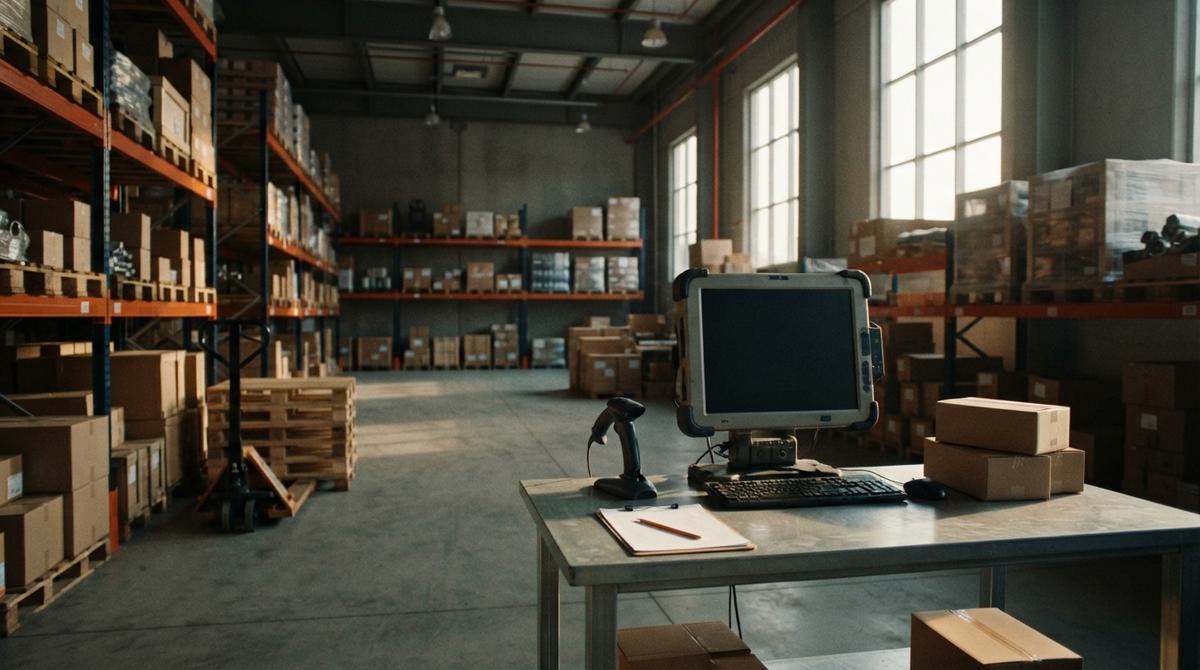
Next Step: Run One Count This Week
1 shelf is enough to start. Run a cycle count there. Compare the result to the ledger and value the gap at cost. Post the entry with a tag and an approver.
An accurate count also protects your promises to buyers. The FTC's mail order merchandise rule says you must ship when you said you would. Missing stock breaks that promise.
If your records live in scattered sheets and emails, pick one shared format today. Ask any provider you consider to show how it logs the reason and the approver for each adjustment. Then book your next count on the calendar.
One small count this week beats a big cleanup next year.

Frequently asked questions
How do you record inventory shrinkage?
Count the stock, compare it to book units, multiply the missing units by cost, and post a debit to an expense account and a credit to inventory. Note the reason and approver.
How do you calculate inventory shrinkage cost?
Subtract counted units from book units, then multiply by what you paid per unit. If 8 units are gone at $12 each, the loss is $96. Selling price plays no part.
What is the journal entry for inventory shrinkage?
Debit shrinkage expense or cost of goods sold, and credit the inventory asset. Use the count date. A $96 loss means a $96 debit and a $96 credit, with a note.
Which account do you use for shrinkage?
Use an expense account. Small, normal losses often sit in cost of goods sold. A separate shrinkage account shows the loss clearly. Your accountant can pick the best fit for your tax filing.
How do you adjust inventory in your accounting software?
Open the inventory quantity adjustment screen, enter the new on-hand count, and pick your adjustment account. Menus differ by version, so check the help pages. Add a dated memo.
How do you find the cause of shrinkage?
Tag each adjustment with a reason code, then review the tags monthly. Group losses by item, shelf, shift and vendor. Repeat spots point to the real problem.
Can small losses be ignored?
No. Small gaps add up and hide trends. Book each one at cost with a short reason. A $15 gap each week is $780 a year of untracked loss.
Start with a free first look
A 30 minute call, your operation mapped, and a clear picture of what we would build. No obligation and nothing to install.
Book a callRelated guides
More on the same work.
Guides
- Inventory Shrinkage is Recorded When
- Inventory Shrinkage Accounting Entry
- Calculate Inventory Shrinkage
- Inventory Audit Checklist
- Inventory Management Best Practices
- Moving Average Method Inventory
- Inventory Process Flow
- Warehouse Inventory Management Software
- Warehouse Inventory Tracking Software
- Warehouse Inventory Management Systems
- Best Inventory Software
- Quickbooks Inventory Management Software
- Warehouse Inventory Systems
- Classification of Inventory
- Inventory and Warehouse Management Software
- Custom Inventory Management Software
- Excess Inventory
- Closed for Inventory
- Warehouse Inventory Management System